
To mark the UN International Year of the Forest, I decided to write about the importance of trees, in my life and in everyone’s life. In my case, I grew up in rural Ireland in the 1950s, surrounded by trees. A ribbon of horse chestnuts lined both sides of the road that linked the Killaloe and Limerick roads. In summer, their intertwining canopies shut out the light which gave the road its name – the Dark Road. In the fields around our house, there were stands of oak, birch and sycamore. About 40 yards away to the south and west, my father planted a shelter belt of leylandis. We had different varieties of apple trees in the orchard and two pear trees.
I entered St. Columban seminary at Dalgan in 1962. The estate in which the seminary was built had extensive woodlands, full of indigenous trees such as oak, hazel, holly, ash, Scots pine, willow, elm and rowan. The woods also contained a number of exotic species, including a number of sturdy Cedars of Lebanon and a few Californian Redwoods. The trees had been planted in the 1820s by General Taylor who had fought alongside Wellington at the Battle of Waterloo. According to locals, the woodlands were planted to mark where different British regiments were lined up to do battle with Napoleon.
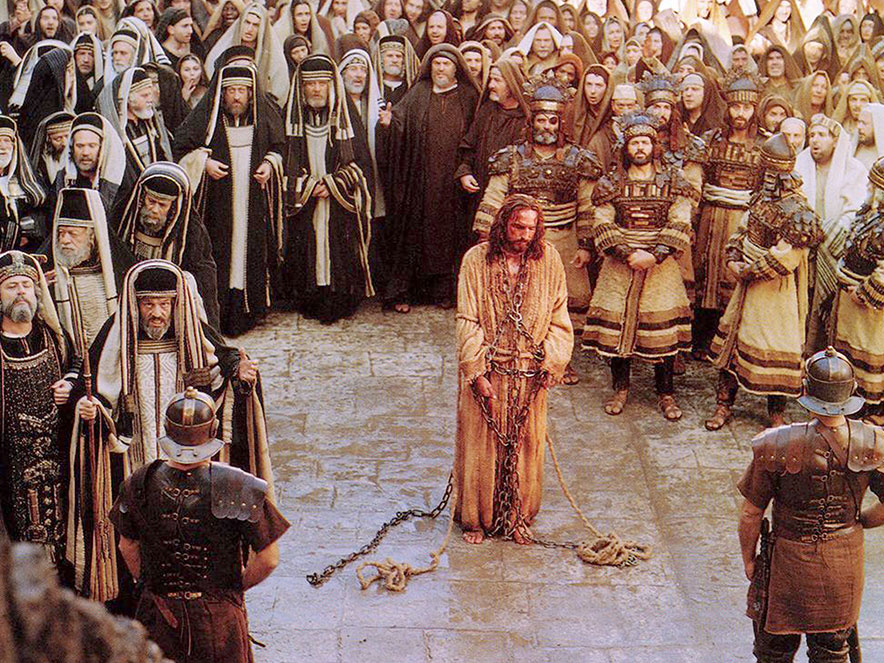
During my seven years in the seminary, I heard very little that might increase my love or respect for trees. Students were not allowed to walk in the woodlands and we were not even encouraged to give the trees the basic respect of knowing their names. There was one ceremony each year which gave prominence to a tree. It was the beautiful, plaintive melody which was sung during the Exaltation of the Cross on Good Friday. As the celebrant unveiled the Cross, the celebrant sang, Ecce lingnum crucis in quo salus mundi perpendit (Behold the wood of the Cross on which hung the Savior of the world). The faithful answered, Venite Adoremus (Come, let us adore!). The truth is that, we were not being asked to focus on the Cross, but on the figure of Christ which was nailed to it. Unfortunately, the natural world did not figure at all in our education for ministry in the 1960s. Little has changed in the intervening four decades in seminaries. Theology and Scripture presentations focus almost exclusively on the divine and human realms with little consideration for the rest of creation.
WORKING AMONG THE T’BOLI
After studying the local language, Cebuano, in the autumn of 1969 and the first half of 1970, I was assigned to the parish of Oroquieta in northwest Mindanao, Philippines. It was quite a peaceful place, but there were significant pockets of grinding poverty, especially among those living in the barrios. The Catholic Church in Mindanao was dedicated to promoting the well-being of people through a number of initiatives, especially in the area of land reform.
Everything changed in September 1972 when, the then president, Ferdinand Marcos, declared martial law. Many Church workers, especially those who were involved in promoting social justice, were arrested and some were murdered. For the next 14 years, the energies of Church people were focused on protecting the human rights of the people against both the military and the guerillas, as well as promoting social justice. During this time, I had little knowledge of or concern for the environment. The only time environmental degradation crossed my mind was when Panguil Bay in northwest Mindanao turned chocolate brown after a day or so of monsoon rains or a typhoon. Even then, my concern was more for the farmers who had lost the precious topsoil than for the integrity of the forest and the well-being of other creatures in the web of life.
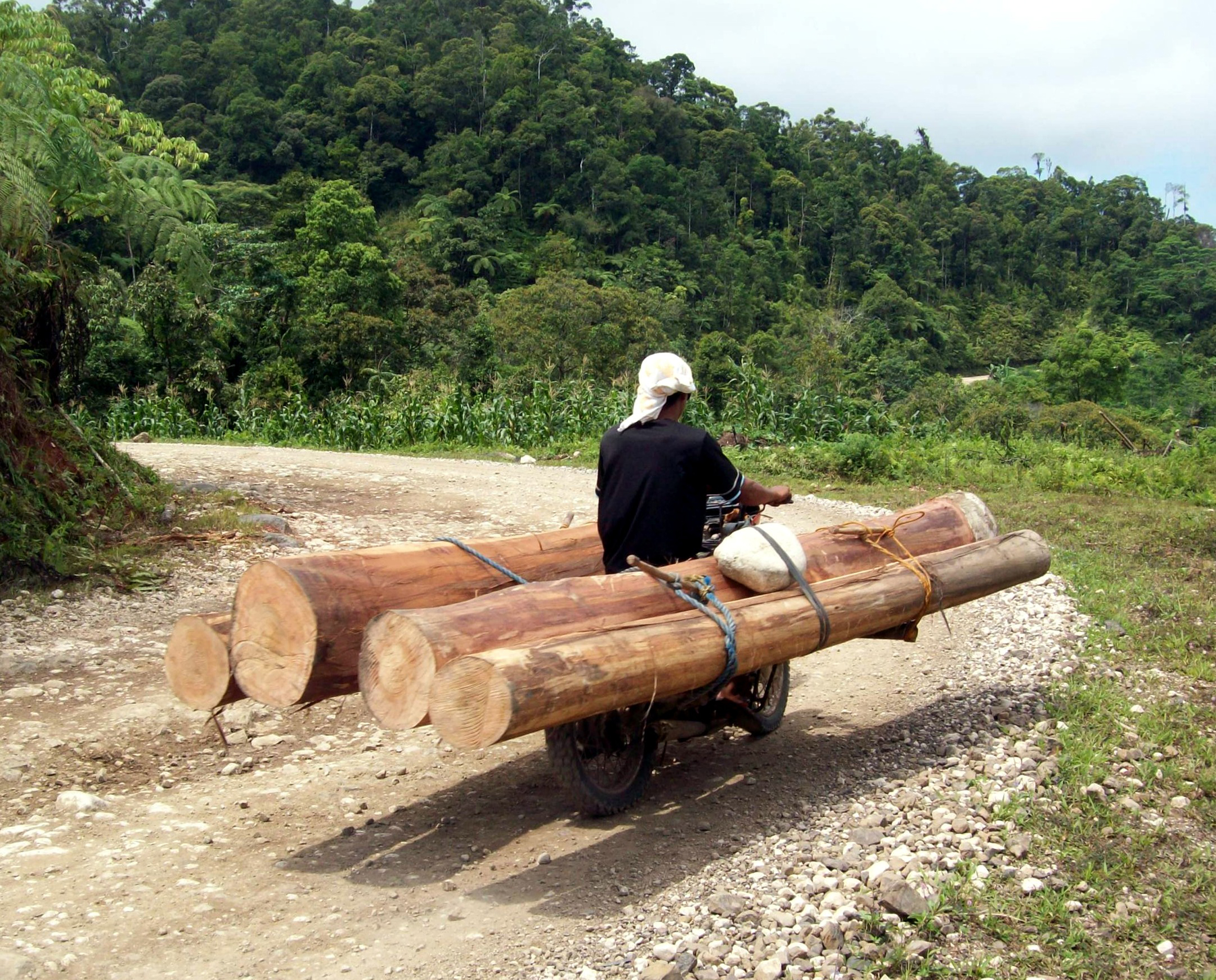
My interest in trees and forests blossomed during the twelve years I spent working among the T’boli people in the province of South Cotabato in Mindanao. The rainforests are a world of beauty, color and fruitfulness which encircle the globe in the tropical areas of Africa, Central and South America and Asia. At least half, and possibly as many as 80%, of the world’s animal and plant species live in the rainforests of the world. Unfortunately, this has not spared them from the bulldozers and chainsaws of global logging companies. In Mindanao, international and local logging companies plundered the rainforests, especially in the years following World War II. A few companies and individuals became extraordinarily wealthy.
I mentioned the destruction of forests in the Philippines, but rainforests have been plundered right across the globe, from the Amazon to the Congo and New Guinea. In 2011, only 60% of Earth’s original tropical forests remain. According to Astill writing in The Economist, “despite many campaigns by NGOs, vigils and rock concerts for the rainforests, and efforts to buy them, lease them, log and not log them, the destruction proceeds at a furious clip. In the past decade, the FAO (UN Food and Agriculture Organization) records show that around 13 million hectares of the world’s forests, an area the size of England, have been lost each year.”
SHRINKING FORESTS
According to the FAO, the world, in 2011, has about 4 billion hectares of forests. This covers 31% of the land area. But that statistics hides the fact that only one third of these forests are in their pristine state. The rest is seriously degraded; in some of these areas, there is only 10% of tree cover.
When people talk about forest destruction, they are usually referring to what is happening in the tropical forests of the Amazon, the Congo Basin, Indonesia and New Guinea. But boreal forests, comprised of spruce, birch, fir and aspen, form a band around the northern hemisphere. The places where one finds these forests include Russia, Scandinavia, Finland and Canada. Forest destruction can also be a problem in these areas. For example, in Russia, 55,500 square miles of forests were burned or cut between 2000 and 2005. This represented a massive 14% of the total forested area.
Climate change is one of the biggest threats which forests will face in this century. There will, of course, be winners and losers. Boreal forests will move further north and will grow 44% faster because of the increased carbon in the air. The downside, even there, is that the melting permafrost will release billions of tons of methane, which is a much more potent greenhouse gas than carbon dioxide.
Many predict that climate change could have a massive impact on the Amazon ecosystems. As it often happens in nature, small changes can have drastic consequences. To date, 18% of the Amazon rainforest has been cleared to produce pasture lands for cattle. The Amazon herd now stands at 40 million. The increase in soyabean production has also had a very negative impact on the integrity of the rainforest. A World Bank study, carried out in 2010, predicted that a further 2% loss could bring about a “tipping point,” especially in the relatively dry southern or southeastern areas of Brazil. The phenomenon, known as ‘dieback,’ which is already appearing on the fringes of the forest, could spread into the larger forest area.
If this is coupled with a rise of 3 degrees Celsius in average global temperature, then much of the Amazon would have disappeared before the end of this century. It would also release about 50 gigatons of carbon dioxide, which is the equivalent of ten years of global emissions from burning fossil fuel.
A NATURAL REGULATOR AND PROTECTOR
Forests play other vital roles in preventing soil erosion and regulating local climates. A study, carried out in Central America in the 1980s, showed that a single rainstorm can dislodge up to 150,000 kilograms of top soil from one hectare of hillside once the trees have been cut. The comparable figure from a forested hillside is a mere 44 kilograms. Intact forests regulate water run-offs and thus mitigate risks of flooding and droughts. Destruction of forests also impacts on rainfall. Cutting trees leads to a reduction in evapotranspiration which, in turn, leads to less rainfall.
Much of the rainfall in southern Brazil, northern Argentina and Paraguay is a direct result of the water recycling activity of the Amazon Basin. According to James Astill in The Economist, “a decrease in regional precipitation would be calamitous, but the actual effect could be much worse.” On hydrological grounds alone, protecting forests is essential for the future of agriculture. This is often not fully appreciated in tropical countries such as the Philippines.
What can people and Church institutions do to counter deforestation? One way is to refrain from buying timber unless it has the Forest Stewardship Council (FSC) trademark. This is an independent, not-for-profit organization established to promote responsible management of the world’s forests. The FSC label provides a credible link between responsible production and consumption of forest products, enabling consumers and businesses to make purchasing decisions that benefit people and the environment, as well as providing ongoing business value. FSC’s forest certification standard is recognized as the global gold standard for responsible forest management. Church organizations from the Vatican to individual dioceses and all religious congregations should pledge that they will only use FSC certified lumber in any building program.
CONSEQUENCES OF DESTRUCTION
I first became involved in attempting to protect the rainforest when I began working as a missionary among the T’boli people in 1980. Since then, many people have asked me why have these forests been wantonly and thoughtlessly exploited in recent decades. In my experience, the primary reason is that all the actors involved in forests management and exploitation – from the loggers, to government officials and even national departments of the environment – have viewed forests primarily as timber resources to be exploited to make money. Both the legal and illegal loggers have made phenomenal amounts of money from selling timber, particularly tropical hardwoods, to markets right across the world.
The vast fortunes which they have accumulated have made it easy for them to bribe politicians, government officials and regulators to turn a blind eye to the fact that they often cut more trees than allowed in their license and that few of them have ever fulfilled their obligations to reforest the area which they have exploited. Another reason is that the people who have made fortunes destroying the forest do not live in or near the forests. They are not affected by the soil erosion, or flash floods which follow in the wake of removing the trees and forest cover. In recent years, in the Philippines and other tropical countries where forests have been removed, flash floods and landslides have killed thousands of people and destroyed houses, roads, other infrastructures and ruined thousands of acres of farmland.
Those who destroy the forest are not affected when irrigation canals run dry because the forest vegetation can no longer act as a sponge to absorb water during the rainy season and secrete it into the rivers and irrigation canals during the dry season, so that farmers could sow and harvest their crops. Agriculturalists in tropical environments, such as the Philippines, estimate that to farm sustainably in such an environment requires that forests cover about 50% of the land area of the country. By 1998, the forest cover was less than 22.2% and the projection for 2010 was that it would further reduced to 6.6% unless effective remedial action was taken.
IMPOVERISHING POOR PEOPLE
Loggers are also not affected by the impact of forest destruction on marine life. In the Philippines, for example, deforestation is the primary reason why up to 70% of its coral reefs are now dead or greatly impoverished. What happens is that typhoons and heavy monsoon rains carry the soils of the forest down the rivers and out into the bays and lagoons where the silt chokes and, eventually, kills the delicate coral polyps. Since corals act as a nursery and feeding grounds for young fish, the destruction of corals rapidly depletes rich-fishing areas, which, in turn, impoverish poor people who depend on fish for their protein.
Those who destroyed the forests have no concern for nor interest in biodiversity. Biologists estimate that, in about six hectares of tropical rainforest, there are more species of trees than in all of Britain and Ireland. In its pristine state, Philippine forests contained 20,000 species of plants and 13,000 species of flowering plants of which 3,500 are found only in the Philippines. In the dipterocarp forests alone, there are more than 3,000 species of trees. The various species of trees have been marketed under the trade mark of Philippine mahogany, though there is no mahogany in the Philippines. The name was chosen by U.S. timber companies to sell this timber to an American public which placed a high value on mahogany.
The destruction of the forest has endangered thousands of other species. These include multiple species of mosses, fungi, epiphytes, algae, reptiles, mammals and 900 species and subspecies of birds, including the renowned Philippine eagle. All of that biological wealth has been squandered, abused and wantonly destroyed to satisfy the greed of a few very rich people. In ecosystems such as rainforests, one species is linked to a variety of other species through dynamic, interdependent, cooperative and symbiotic relationships. Studies have shown that the survival of each species is vital for the integrity of the rainforest. It is estimated that the extinction of one species can, over time, lead to the extinction of 16 other species. Mainly as a result of the destruction of rainforests across the globe, the earth is now experiencing the sixth greatest extinction spasm since life began 3.7 billion years ago. The culprit, one species: the homo sapiens.
GREEN WEALTH AND HEALTH
In recent years, people are beginning to highlight other benefits which the forest provides. In the current jargon, these are called ecosystems services. While I am not overly enamored with the title, because of its link with neo-liberal economics, the idea behind it is positive. According to the UN-backed Millennium Ecosystem Assessment, forests provide 24 ecosystem services. These can be grouped under a number of headings.
Firstly, forest ecosystems provide food, water, timber, fiber and medicine. In our search through the genetic library for new foods, medical drugs and natural pesticides, protecting the forest biodiversity is crucial. It is estimated that almost half of the drugs which we find in a pharmacy are derived from plants which grow in rainforests. Probably, the best known is quinine which has been used for the past three centuries in the treatment of malaria. The word is derived from the indigenous name quinaquina which means ‘bark of barks.’ The Jesuit missionaries in Latin America discovered the indigenous people treating those suffering from malaria with the bark. The story of how they brought this knowledge back to Europe is an extraordinary one full of drama, prejudice and intrigue. Catherine Caufield in her book, In the Rainforest, recounts how Oliver Cromwell, who may have picked up a mild form of malaria in Ireland, preferred to die of malaria rather than use what had become known as the Jesuit bark. The survival rate of children with lymphatic leukemia has been greatly enhanced by a drug which was derived from the rose periwinkle – a plant which is found in the rainforests of Madagascar. The common aspirin is derived from willow bark. Taxol, which is used in the treatment of breast cancer is derived from the Pacific Yew bark and the list goes on. The biologist Professor Edward Wilson, formerly of Harvard University, is convinced that it is no exaggeration to say that the search for natural medicine is a race between science and extinction, and will become more critically the case as more forests fall and coral reefs bleach out and disintegrate.
Other services which forests provide include: clean air, delivering reliable rains for agriculture, preventing landslides and soil erosion which silt up hydroelectric reservoirs in many parts of the tropics. Another UN-backed initiative, called The Economics of Ecosystems and Biodiversity (TEEB), estimates that “negative externalities” from forest loss and degradation cost between $2 trillion and $4.5 trillion each year. In the Amazon region, TEEB estimates that the forest contributes between $500 million and $1 billion for the livelihood and well-being of the estimated 10 million people who depend on the rainforest. Included in that calculation are the fish, food and thatch which they use for themselves and the value of the gums, oils, nuts and other goods which they harvest for sale. TEEB estimates that the contribution which the Amazon forests make in preventing siltation of hydroelectric reservoirs in Brazil is worth between $60 and $600 million.
A third raft of services which forests provide might be called cultural services. This was very evident to me during the years I spent working among the T’boli people. When loggers looked at the forests, all they saw was timber and money. The forest meant much more for the T’boli people. It provided them with timber and other forest products such as bamboo and rattan with which to build their homes. It also provided food in terms of fish, forest animals and a wide variety of edible plants. The forest was also their pharmacy. Shamans or healers within the community knew the curative potential of a variety of plants, mosses, animals and reptiles. The trees, plants, animals, birds, streams and waterfall of the forests were the source of their inspiration for the world of the imagination. This found expression in their music, stories, poetry and elaborate dances. The intricacy of their percussion compositions attempted to capture the sounds of the forest. Finally, the forest could be said to be their cathedral where they experienced a numinous presence.
PROTECTION SCHEMES
Groups, such as The Economics of Ecosystems and Biodiversity (TEEB), have begun to design schemes to save the remaining forests through economic instruments such as those envisaged in Payment for Ecosystem Services (PES). Some of these services include reducing greenhouse gas emissions from forest burning and rewarding countries for the carbon which their forests sequester.
One scheme to protect forests, which has emerged during the past few years, began with what was called Reduce Emission from Deforestation (RED). This concept emerged particularly from the climate debates at the United Nations Framework Conference on Climate Change (UNFCCC) in Montreal in 2005. Papua New Guinea and Costa Rica, countries which have large standing forests, came up with the idea of rewarding countries which were willing to reduce the amount of greenhouse gases released into the atmosphere thereby destroying forests. The following year, at the UNFCCC meeting in Bali, the host country, Indonesia, recommended that forest degradation must also be addressed. So another D was added to what became REDD. The following year, at the UNFCCC conference in Poznan, Poland, it was decided to recognize the climate benefits that come from managing forests in a sustainable way to conserve carbon stocks. A + sign was added so the scheme became known as REDD+ in March 2009.
REDD+ was one of the few positive things to emerge from the Copenhagen Climate Summit in December 2009. There was a commitment to make substantial funding available to launch REDD+ across the globe. In May 2010, 58 countries met in Oslo to hammer out details for a global REDD+ deal. To start the ball rolling, six countries, including Britain and Norway, agreed to provide $4.5 billion in funding by 2012. Because each country has different needs and priorities, designing a REDD+ program will not be easy and, certainly, a one-size-to-fit-all will not work.
The following are some elements which need to be taken into account. Firstly, a REDD+ must be identified in a country with a tropical forest. The size of the forest area is measured and an inventory is taken of the species of trees. This will make it possible to determine how much carbon is stored in the forest and how much carbon dioxide would be released if the forest was cut down or burned. Next, the value of keeping the carbon stored is calculated to work out how many benefits the REDD+ program could bring to the area. In countries where deforestation and forest degradation is extensive, the REDD+ program would calculate how much deforestation and carbon emissions are prevented by the program. Finally, an agreement would be drawn up among the country, the forest owners and indigenous people, and the organization which is prepared to fund the program.
INDIGENOUS’ AND CHRISTIANS’ ROLE
One thing which my experience among the T’boli taught me is that, to be successful, indigenous people must be included at every juncture in the process and they must benefit financially from the scheme. The T’boli and many other indigenous communities received no benefit from the destruction of their forests during the second half of the 20th century. The REDD+ program recognizes the need to involve indigenous people. It stipulates that there needs to be Free, Prior, and Informed Consent (FPIC) to all activities impacting on indigenous people, including monitoring and reporting.
Money for REDD+ which, effectively, will be a global PES coming from rich countries, international agencies and companies can use these carbon credits to offset emissions in other places. Given the amount of money involved and the potential benefits for everyone, the monitoring, reporting and verification procedures are crucial. Obviously, these processes must be transparent and conducted by independent and competent agencies. Most countries of the South object to having the finances for REDD+ housed at the General Environment Fund (GEF) at the World Bank, considering that the WB invariably sided with rich banks and rich countries during the Third World crisis of the 1980s and 1990s. The political economist Susan George pointed out in her book, Debt Boomerang, that, in the period from the 1980s till 1992, $420 billion were transferred from poor countries to rich counties by external debt payments alone!
REDD+ has the potential to protect biodiversity, reduce the impact of climate change and improve the lives of the poor. Catholic Church’s development agencies should get involved in promoting REDD+ programs.