
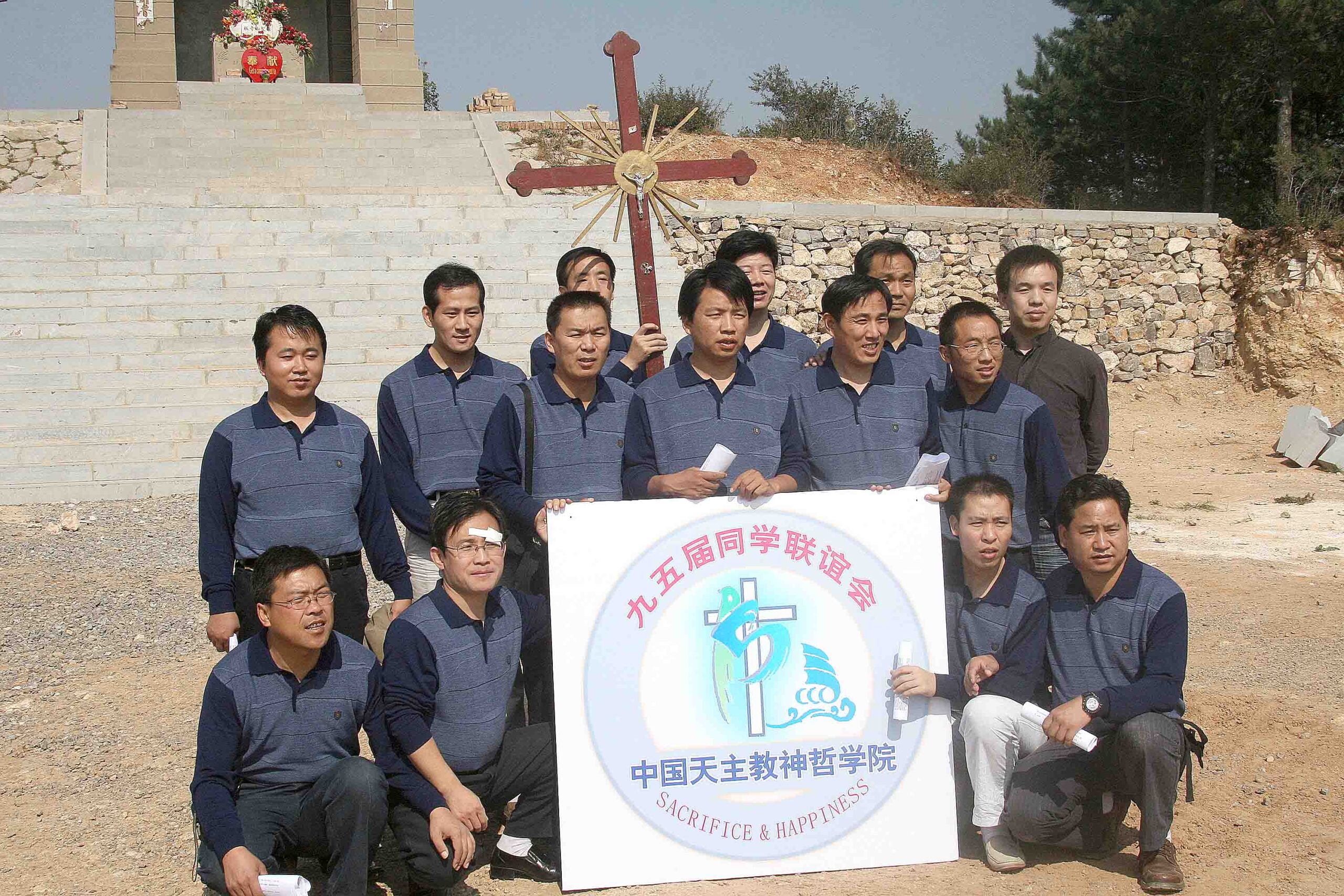
China’s problems with religious freedom are centuries old, as foreign religions were already looked on with suspicion when the first European missionaries reached the Asian powerhouse in the 13th and 14th centuries.
The Church did eventually make inroads into China, and was well established, despite the relatively small number of faithful in relation to the overall population, when the Communists took control of the whole country at the end of World War II.
What followed was persecution of the worst kind. Entire communities wiped out, priests killed and put into forced labor, bishops tortured and executed.
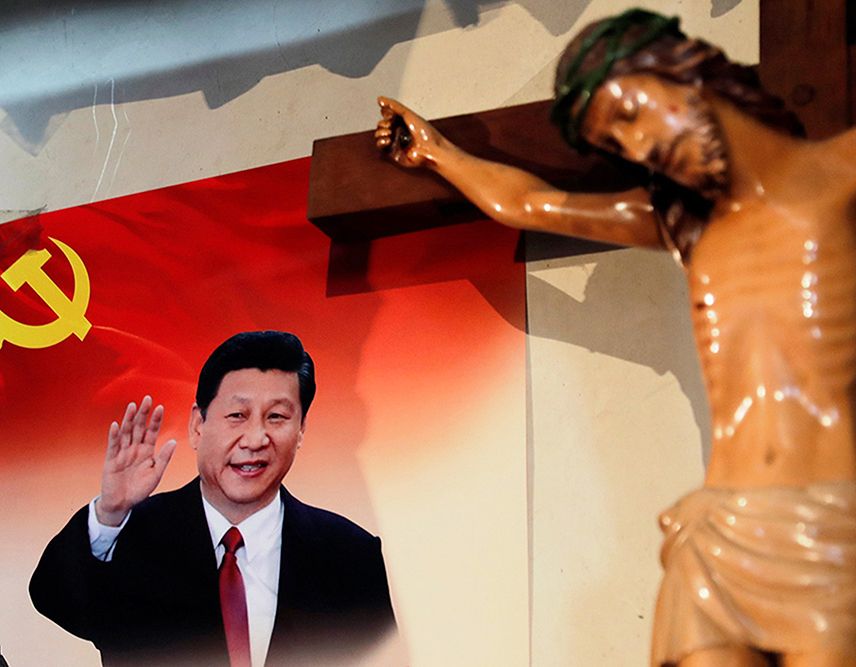
In 1957 the Chinese communist party decided to change track. Rather than try and stamp out Christianity completely, as North Korea attempted, it would try to coopt the Christians who still existed, forcing them to attend churches led by clergy loyal to the regime.
The government found willing priests and bishops and therefore opened a rift with Rome which would last decades. Beijing reserved the right to decide who should be ordained a bishop and other Chinese bishops would consecrate the chosen candidate. Rome said that anybody involved in these ordinations would face automatic excommunication, and continued to nominate its own men, who would operate underground.
UNDERGROUND AND PATRIOTIC
At the turn of the century China had two parallel hierarchies and a flock divided. Not everything, however, was that clear cut. Some bishops from the “patriotic” Church, secretly opened channels of communication with Rome, obtaining official recognition, either before or after their consecrations at the orders of the state. In some parts of the country officials were especially dedicated to their mission of ensuring total control of religion, but in others oversight was more lax, and the Church loyal to Rome operated more or less freely.
China’s stated aim has not been to eliminate Christianity, but to “Sinicize” it, that is, to bring it into line with Chinese values and culture. Needless to say, these values and culture are interpreted through the lens of a state which has officially embraced two opposing Western systems: communism and capitalism.
An important development took place in 2018, when Beijing and the Holy See signed an agreement, the exact details of which remain secret, but which include a process of joint-nomination of bishops.
The immediate and most promising effect of this deal was the recognition by Rome of the Chinese State-appointed bishops, which allowed the Church to put an end to a situation that, if allowed to persist a few generations, would have crystalized into a sort of Chinese Anglicanism. However, critics–of whom there are many–question the merit of the pact pointing out that despite the deal, China continues to persecute Catholics, including priests and bishops who refuse to register with the Patriotic Association.
In fact, even the Vatican has recognized that the deal has often been ignored by the Chinese, who when they see fit go so far as to restructure dioceses, and have made some nominations that Rome learned about only through the press.
More recently, though, in Wenzhou, the Holy See and Beijing negotiated the nomination of a new bishop. The interesting detail was that in its official statements China referred to the formerly underground bishop Peter Shao Zhumin as emeritus, thereby officially recognizing his episcopal status. Though this was seen as an important concession by China, it has had little effect on the situation of the bishop himself, who remains under house arrest.
INTEREST IN RELIGION
What the future has in hold for the diplomatic relations between Rome and Beijing is anybody’s guess, and depends mostly on the mood in China. But meanwhile, reports out of the country seem to indicate a booming interest in religion, despite state efforts to suppress it, and especially for Christianity. Evangelical churches grow at rates that alarm Beijing and may be leading it to double down on its efforts at Sinicization. Currently, children under the age of 18 are not allowed to enter Churches in most of the country, and there have been crackdowns on many Churches and Church buildings, with dozens if not hundreds of arrests, across the denominational spectrum.
Interestingly, the rise in interest in Christianity could be largely influenced by the State’s embrace of communism and capitalism. Though the former is inimical to Christianity and the latter, especially in its unbridled form, has also been condemned by the Church, they contain notions–such as a focus on alleviating poverty, fighting injustice and respect for individual rights–and elements of internal logic that are common to Christianity and would not be seen as foreign by modern Chinese citizens who are thirsty for a spiritual dimension to their lives that the State has deprived them of.
Christianity is not the only religion under pressure in China. The suppression and attempted state-control of Buddhism, especially in Tibet, continues unabated and has gone so far that an officially atheist state reserves the right to officially recognize reincarnations of important Lamas.
Muslims are not faring much better. The persecution of the Uyghurs, an Islamic Turkic ethnic group from the region of Xinjiang, has become quite widely known in recent years, and has shown no signs of letting up. Men in Xinjiang can be arrested for so much as letting their facial hair grow or publicly observing Ramadan and it is speculated that up to a million Uyghur Muslims are currently in concentration – or “reeducation”–camps in China. Unfortunately, international outrage has faded in recent years, and economic dependence on China leads many states to turn a blind eye to the problem
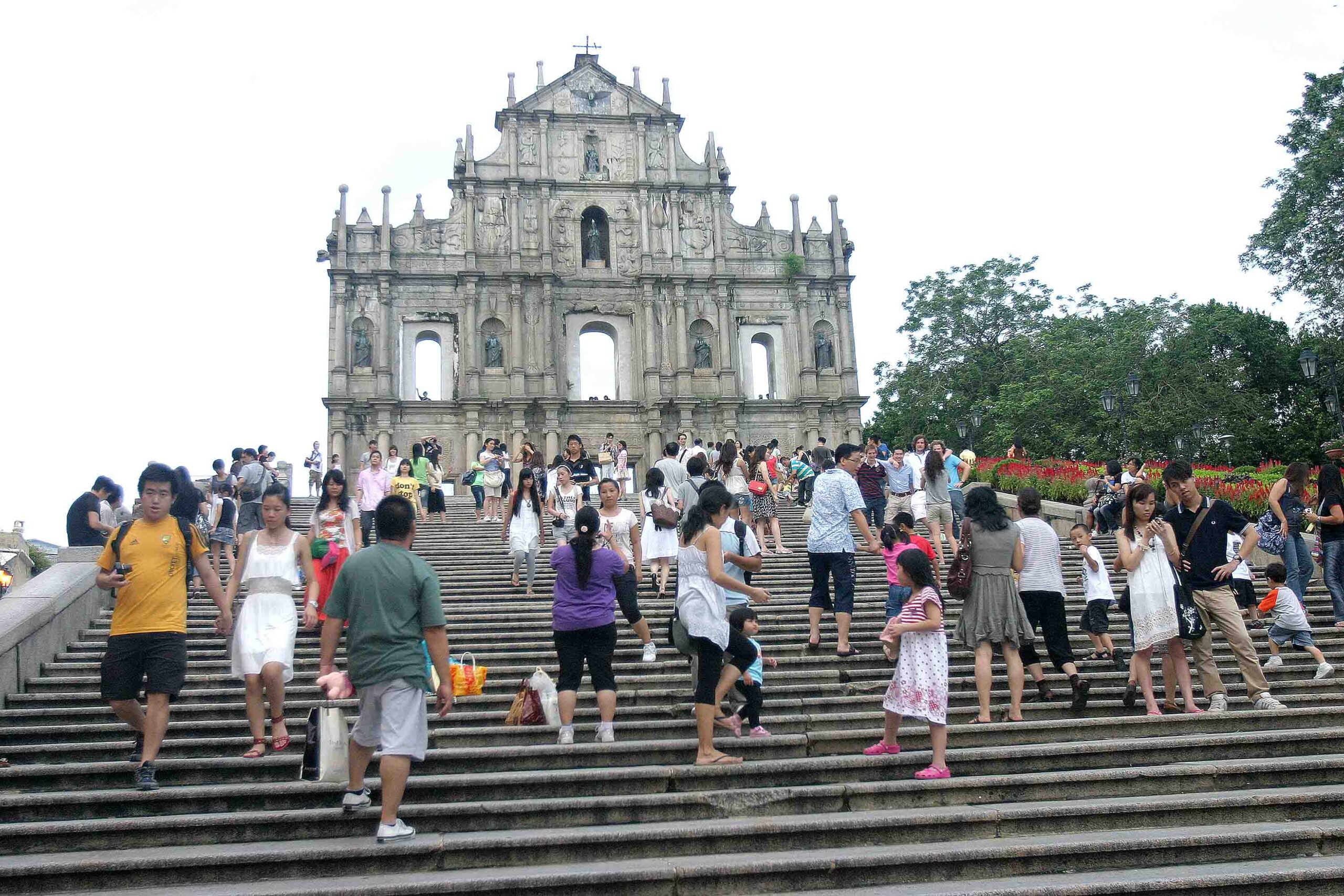
The only parts of China where full religious freedom still exists is in the special autonomous regions of Hong Kong and Macau, but as Beijing clamps down on social freedoms in those territories, there can be no guarantee that people will remain free to exercise and live out their religions in peace in the future.
Also worrying is the thought that the Chinese model for coexistence with organized religions will be taken up by other countries that have drifted into authoritarianism. Already, some Latin American dictatorships, such as Nicaragua and Venezuela, have tried to flex their muscles in their relationship with Rome, seeking to influence the nomination of bishops in their countries, exiling the ones that do exist or flatly refusing to allow them to carry out their duties.
With no signs of opening up to democratic values of freedom of expression, thought and movement, and yet continuing to thrive economically and in terms of international influence, China is encouraging many budding or already established dictatorships to follow suit, and that could be the worst possible news for religious freedom to come out of Beijing.