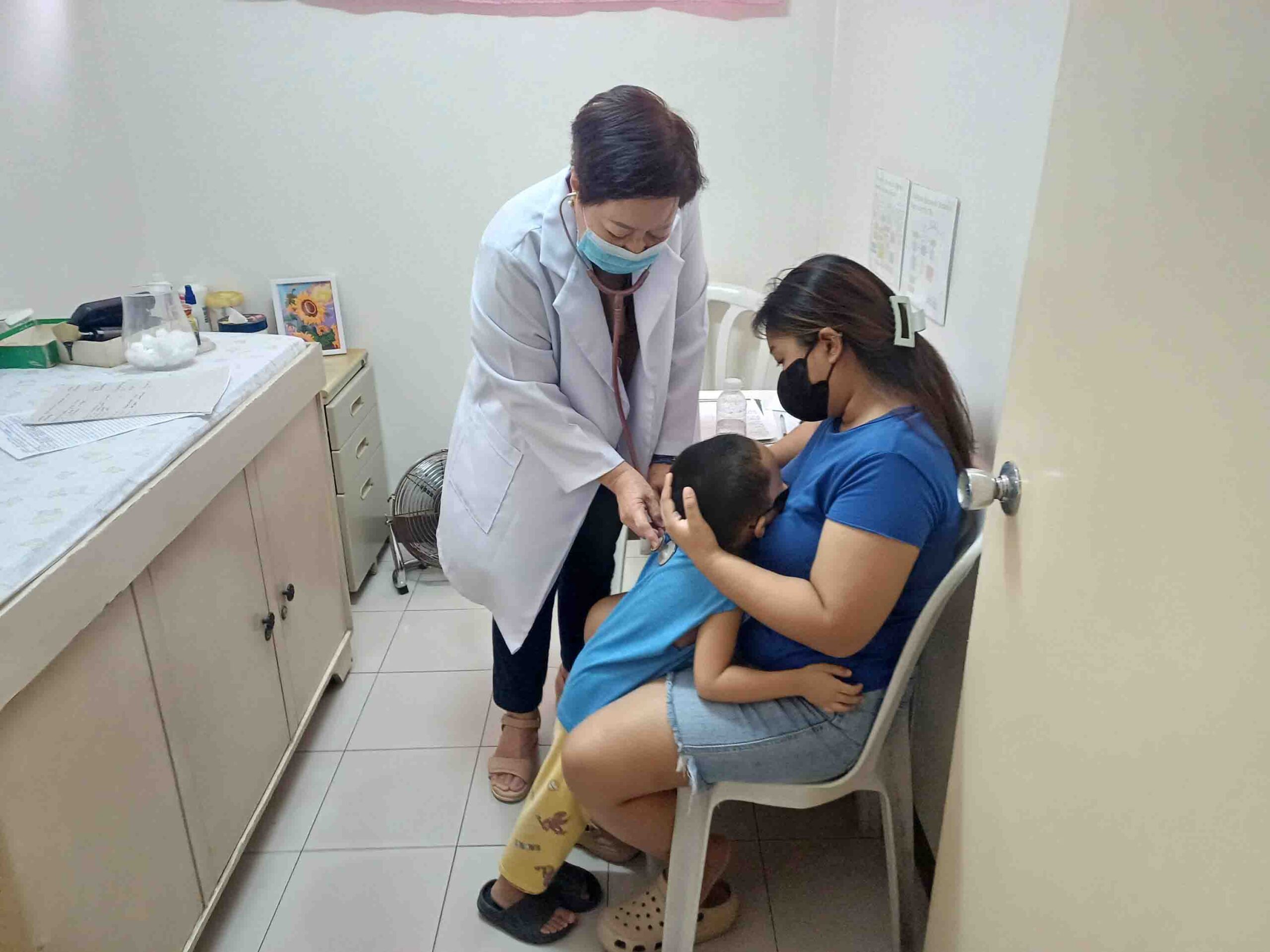
The clinic becomes quiet only after the last patient leaves. Plastic chairs are nudged back into place, papers are stacked, and the sharp smell of alcohol lingers in the air. Dr. Lourdes Sarmiento remains seated for a moment, shoulders easing, eyes resting, where the next patient had been. There is no ritual to mark the end of the day–no bell, no announcement. Just a pause, earned. Only then does the conversation begin.
For Dr. Sarmiento, this rhythm has been familiar for years. The work does not feel heroic to her, nor does she speak of it as sacrifice. When asked why she keeps coming back to this modest clinic run by religious sisters, she offers a line she has lived by for decades: “That’s my thanksgiving to the Lord.”
Her relationship with the clinic of the Adorers of the Blood of Christ began in 1996, when the sisters first opened an apostolate in barangay Culiat, Quezon City. Back then, the clinic known as St. Maria De Mattias Mission Center operated only on Sundays. Dr. Sarmiento was 46 years old, her children still in elementary school, and her professional life busy with responsibilities elsewhere. She joined from the beginning, offering her services when time allowed.
She did not imagine then that the clinic would remain part of her life for decades–sometimes quietly in the background, sometimes at its center. “I didn’t really plan this,” she says. “In this area, there are many religious congregations. Looking back, I see that the Lord was guiding me where to go.” That sense of being guided–rather than deciding–runs through her story. She speaks less of choice than of response, less of ambition than of gratitude.
A FARMER’S PRIDE
Dr. Sarmiento is a native of Culiat. Long before subdivisions filled the landscape, this area was farmland. Rice fields stretched across what is now a dense urban community. She remembers it clearly–the work, the seasons, the openness of the land. Her father was a farmer; her mother, a housekeeper. “I’m proud to be a child of farmers,” she says without hesitation.
Few from the neighborhood pursued higher education then. Transportation was difficult. She recalls walking long distances before tricycles became common. Studying medicine required persistence that went beyond intelligence or resources. When she graduated from Manila Central University in 1974, becoming a doctor felt not only like a personal achievement but a shared grace.
The barangay chairman would usually describe her to locals as the first legitimate native of Culiat to finish medical school. She does not repeat this with pride so much as with context. It explains why she never viewed her profession as something to keep to herself.
From the beginning, service was woven into her practice. Soon after graduating, she joined medical missions whenever she could–once a month, once a week, depending on availability. Most were within Metro Manila, held in parish churches or school grounds.
“That was my way of thanking the Lord,” she says. “For giving me the chance to graduate and become a doctor, even though my parents were not wealthy.”
Her career expanded in many directions. She opened a private clinic in Tandang Sora. Later, she ran a lying-in maternity clinic with two midwives who were her relatives. The clinic served mothers for eleven years, until similar facilities–many run by the Department of Health–became more common in the area. Patient numbers declined. Retirement age approached. The lying-in clinic closed quietly, without ceremony.
She also served as a school physician for years, including sixteen years at Claret School of Quezon City, from 1993 to 2011. She also was a school physician at Holy Family School of Quezon City. During her private practice, the roles demanded energy and availability. Nights were often interrupted by urgent calls.
“Sometimes you’re already asleep,” she recalls, “then you wake up and run to the hospital to assist in childbirth.” It was fulfilling work, but exhausting.
During those years, she stepped away from the sisters’ clinic. Not out of disinterest, but because there were only so many hours in a day. Service took different forms then, shaped by responsibility and necessity.
HAPPINESS IN SMALL ROOMS
Retirement in 2011 marked a turning point–not an ending, but a clearing. She did not renew her hospital affiliations. For the first time in years, her schedule opened. She traveled with a cousin, joining a pilgrimage to the Holy Land in 2012. A year earlier, she had attended World Youth Day in Madrid, accompanying a colleague from her years as a school physician.
In 2015, the sisters invited her back to the clinic. “I was happy,” she says. “I didn’t have much to do at that time.”
She returned without fanfare, settling into a new rhythm. Today, she consults at the clinic of Adorers of the Blood of Christ on Mondays, Wednesdays, and Fridays, and serves another congregation’s clinic on Tuesdays. There is no private practice anymore.
“Here is enough,” she says. Clinic days can be demanding. At the start of this year alone, patient numbers often exceeded fifty in a single day. Fatigue is inevitable, especially at 75. She acknowledges it plainly: “When there are that many patients, of course you get tired.”
The patients come from nearby barangays and sometimes from farther areas like Project 6, Project 8, and Pasong Tamo. Many know the clinic simply because it has always been there. Complaints range from coughs, fever, and flu to hypertension, injuries, and follow-up consultations. All ages pass through the small room. Some seasons bring waves of skin conditions. In the summer months, she performs minor procedures such as circumcision.
During the pandemic, the clinic stayed open every day. The need was constant. There is no dramatization in how she recalls that period–only a statement of fact, as though keeping the doors open was the most natural response.
She allows herself humor. On days when patient numbers soar, she jokes that if she charged consultation fees, she might already be rich. The joke lands lightly, undercutting any temptation to romanticize poverty or self-denial.
CATALOGUE OF TRIALS
Loss and sorrow are present in her life, but she does not foreground them. One of her three sons–the youngest–had died. The others are grown, with families of their own. Her husband, a urologist, once practiced alongside her. These details surface without embellishment, as part of a life fully lived rather than a catalogue of trials. What stands out is restraint.
She does not frame her return to the clinic as a dramatic calling or late-life redemption. Instead, she speaks of joy–quiet, practical joy.
“What’s important in life,” she says, “is that you find your joy and happiness in what you do.”
When asked what advice she would give young doctors, her answer is neither prescriptive nor grand. She tells them to work hard, to discover where they are happy, and to pay attention to where life seems to be leading them. “The Lord guides you,” she says. “Even when you don’t plan these things.”
Her understanding of faith is not abstract. It is embodied in routine–showing up, listening carefully, examining patients with the same attention whether it is the first or fiftieth consultation of the day. Thanksgiving, for her, is not a feeling but a practice.
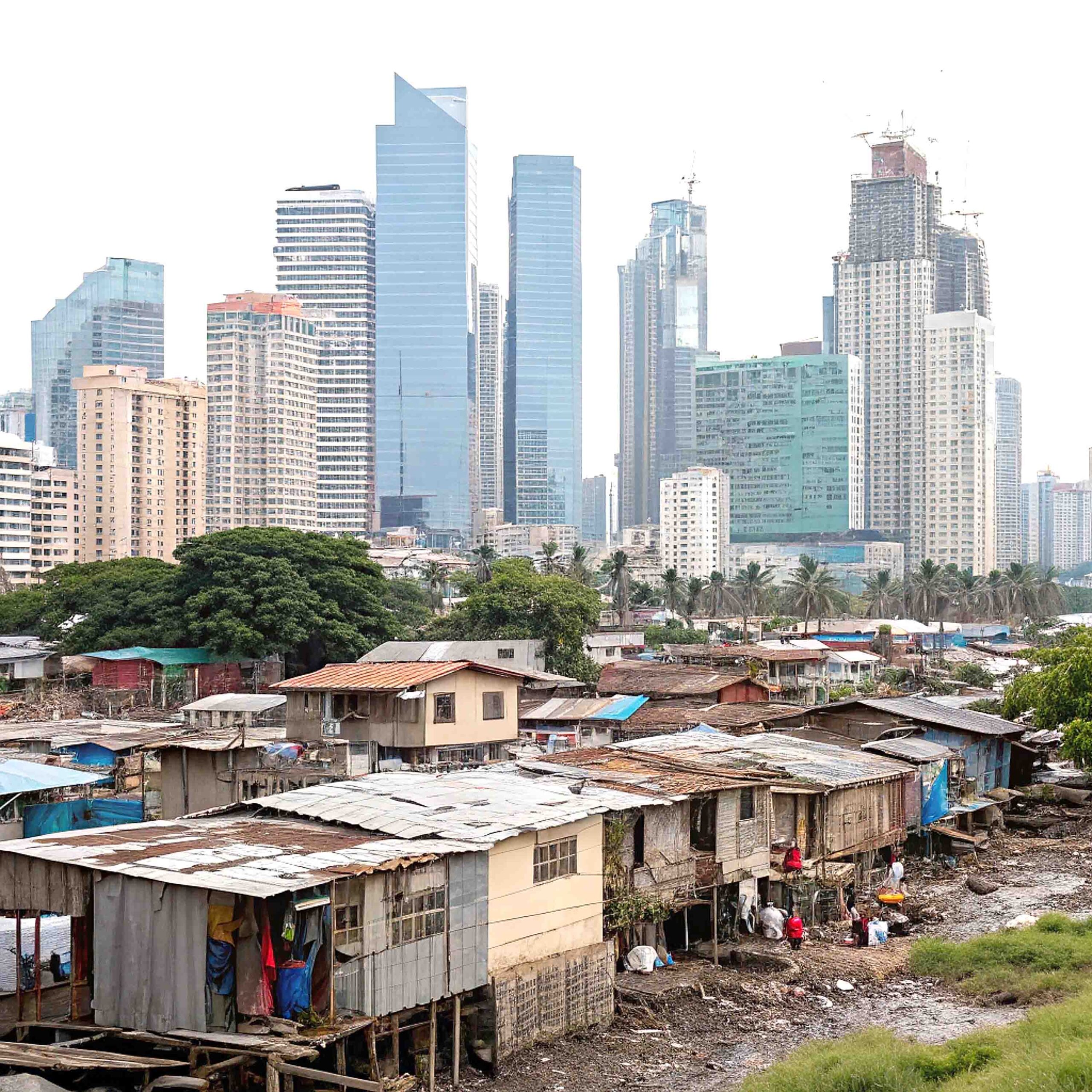
Outside, Culiat has changed almost beyond recognition. Subdivisions have replaced rice fields. Roads are crowded where paths once stretched open. Yet Dr. Sarmiento has stayed. She still lives in the same community where she grew up, serving people who share its history and its present challenges.
The clinic itself sits on land that once fed families through farming, was later marked by war’s remnants, and is now repurposed for care. In that sense, it mirrors her own journey–from farmer’s daughter to doctor, from private practice to volunteer service, from productivity to presence.
Since 1996, her life has intersected with this clinic in different ways–sometimes stepping away, sometimes returning, and always connected. The continuity is not in uninterrupted years of service, but in intention.
FAITH IN SERVICE
For Dr. Sarmiento, faith is not expressed in declarations but in repetition. She does not speak of grand calling or dramatic conversations, only of being guided–often without knowing where she was headed. Again and again, she returns to the same phrase: thanksgiving. For her, to practice medicine is to respond to grace already given. The clinic becomes a place where prayer takes a practical form: listening before speaking, touching with care, and staying when it would be easier to leave. In that quiet faithfulness, belief is less said than lived.
Service, for her, has matured into something gentler. In this season of life, care continues unhurried and enough. At the end of the day, Dr. Sarmiento does not tally hours or patients. She prepares to return home, to rest, to come back again on the next clinic day. There is no ceremony to mark this either. A thanksgiving that is practiced quietly, but in a white coat.