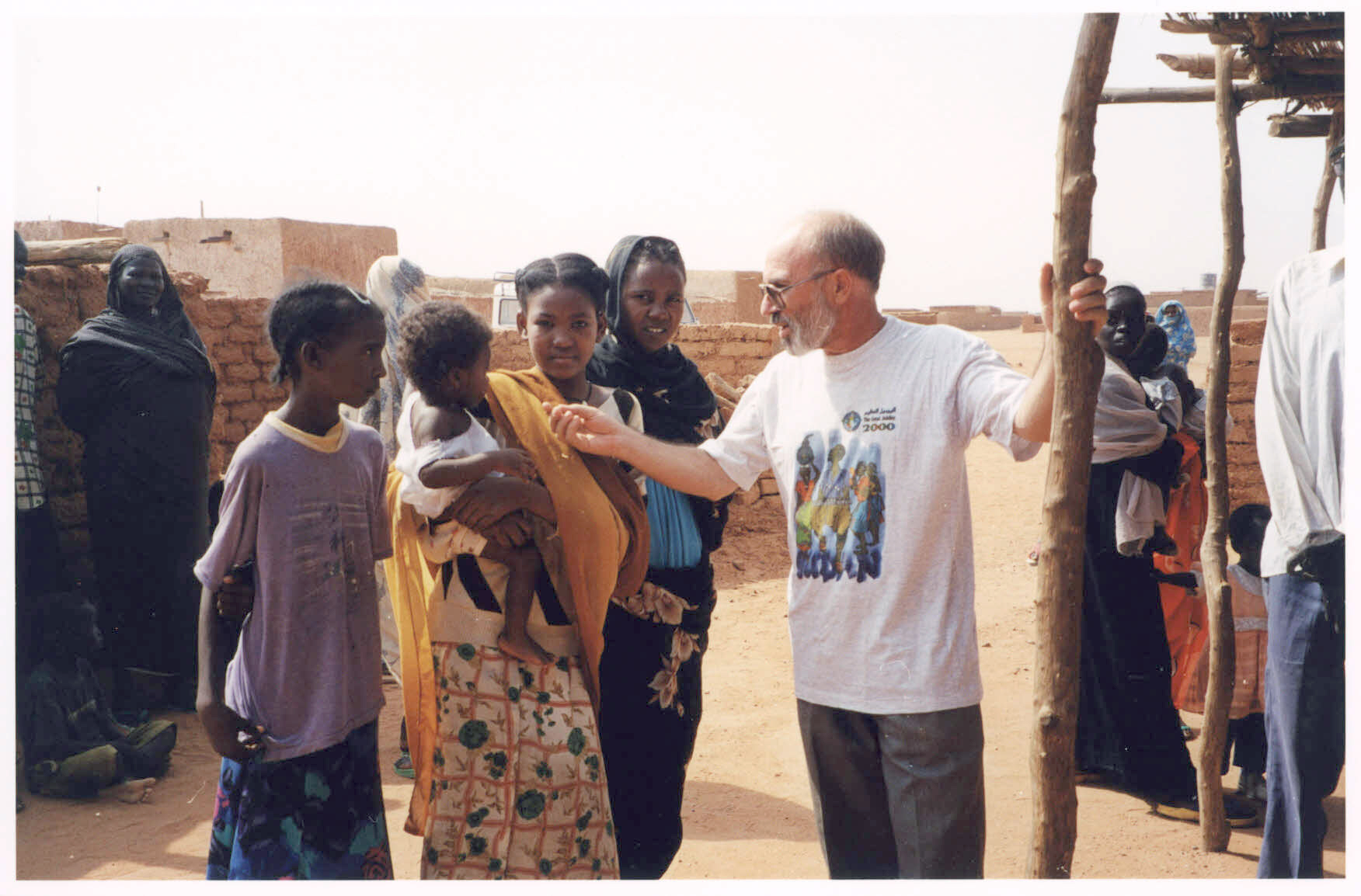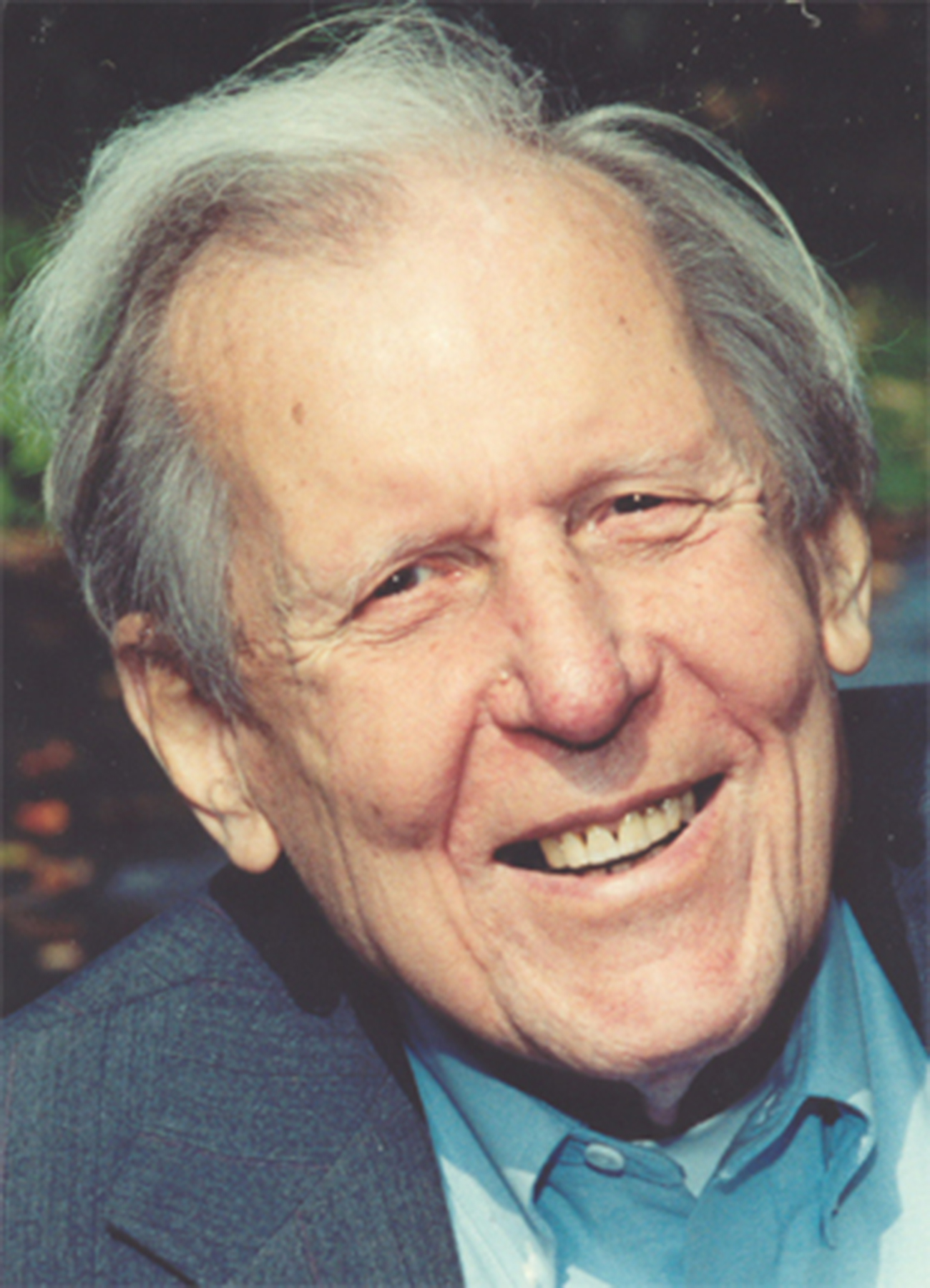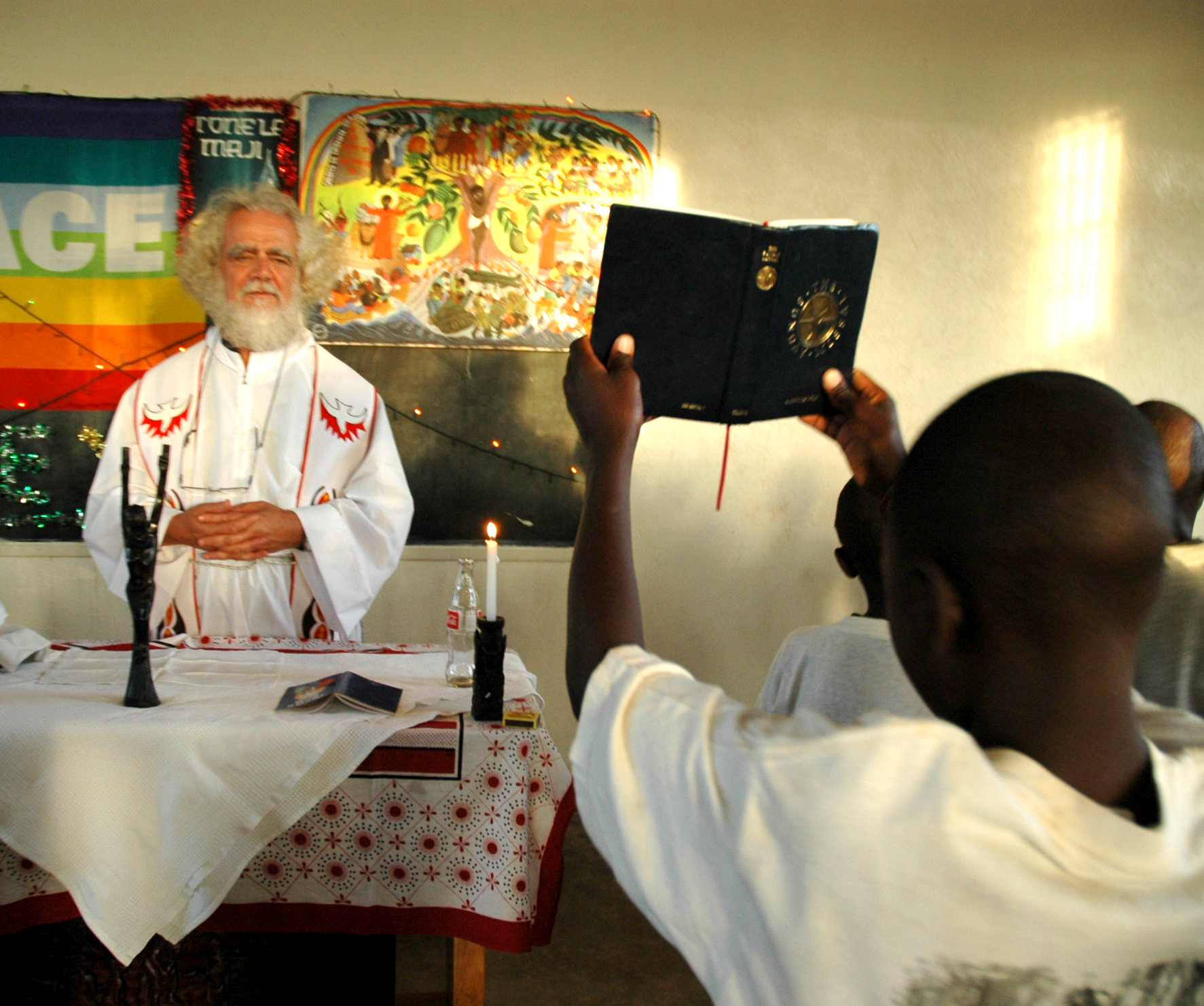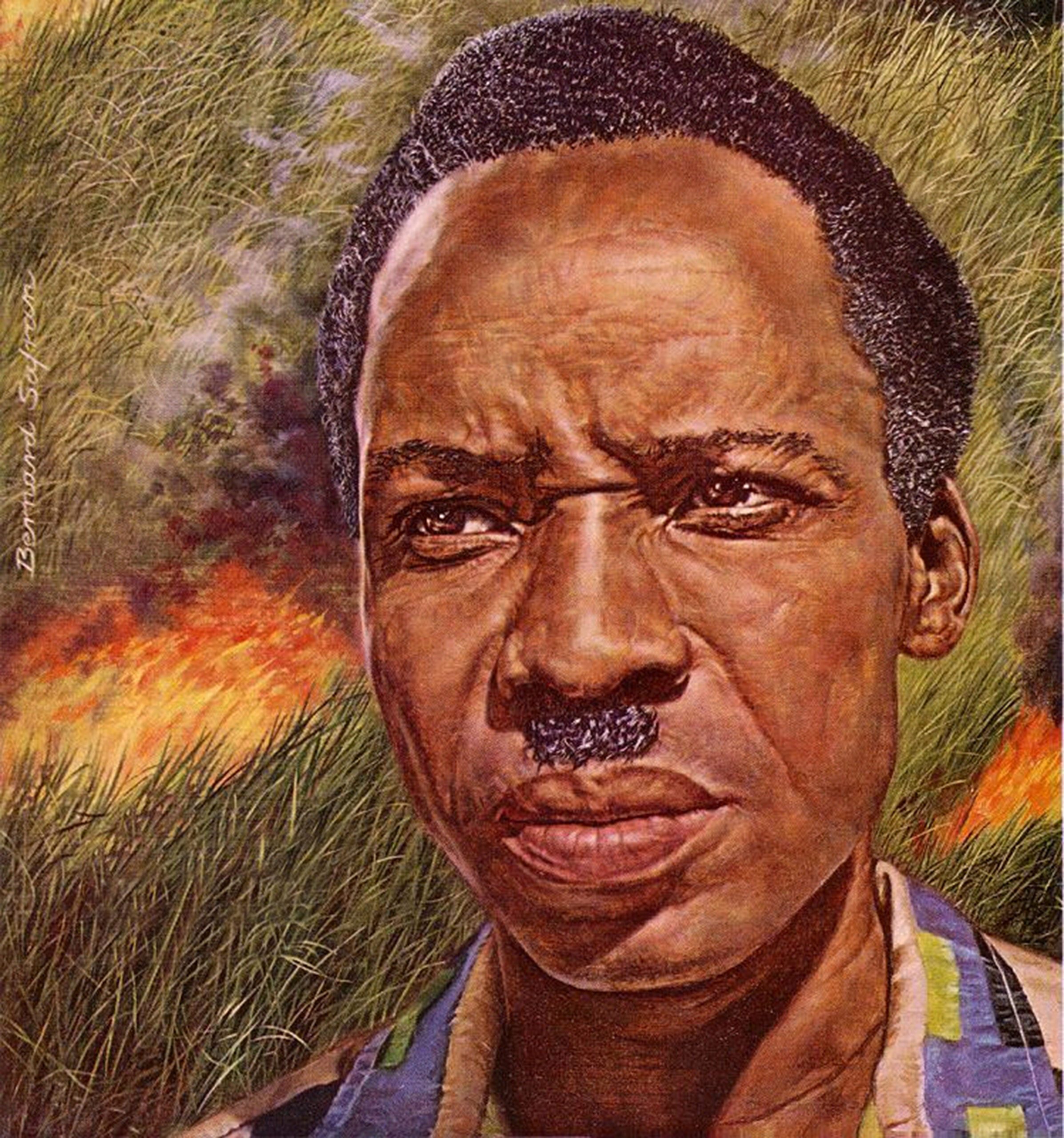
In 1955, Father Arthur Wille of the Maryknoll Missionaries was asked by Msgr. Grondin, the Prefect Apostolic of Musoma in Tanzania (at that time Tanganyika) to open a new mission among the Zanaki people, a rather small group, whose language had never been studied by the missionaries before. Father Arthur had arrived in Tanzania four years before, as a young missionary priest. Among the Zanaki, there was only one Christian family: a young teacher with his wife and two children. The young man had a good reputation, but was recently disqualified from teaching by the colonial administration because he had founded a political party advocating for self-rule. So, Msgr. Grondin suggested that Father Arthur should approach the teacher and ask to be taught the first elements of the Zanaki language. It would also be a dignified way to assist the young family with a small but regular income. So, Father Arthur went to meet Julius Kambarage Nyerere, who was to become the first president of Tanzania, and now known as the “Mwalimu” and the “Baba wa Taifa” (Teacher and Father of the Nation). That was the beginning of a lifelong friendship.
CATHOLIC BY ACCIDENT
Today, Father Arthur is over ninety, and he is always happy to speak about his friend Julius, even though he doesn’t show any excitement about the cause of beatification of Julius Nyerere that has been started by the Tanzanian Episcopal Conference. He recalls: “We spent a lot of time together even after the lessons. Julius loved to tell me about his life as a child. He was born in March 1922, in Butiama, near the eastern shore of Lake Victoria. Since the rains were very heavy on the day of his birth, he was called Kambarage, the name of an ancestral spirit who lives in the rain. His father, Burito Nyerere, was one of the eight chiefs of the Zanaki, a small ethnic group of less than fifty thousand people. Kambarage grew up in a simple grass hut, went barefoot and ate only one meal a day. He helped his mother with work in the fields and gardens. At the age of eight, he began tending his mother’s goats and spent the whole day in the fields. The British built a boarding primary school in Musoma town to educate the sons of the chiefs. However, Julius’ father was not eager to send his sons to this school. But the chief of the neighboring Ikizu people was a friend of Kambarage’s father and visited him frequently. On some occasions, Kambarage would engage him in the bao game. It is a difficult game to play. One needs to plan many moves ahead and remember them in order to win. Julius would regularly beat the Ikizu chief, who, one day told his father that he should send his son Kambarage to the school for the sons of the chiefs in Musoma.”
How did Kambarage became a Catholic? Father Arthur smiles: “I asked him the same question and he replied, ‘By accident.’ He explained that, one day, when the bell rang for the Religion class, his friend, Oswald, grabbed his hand and said, ‘Come we go to study with the padres.’ He went and never turned back. He had found his home. Before he entered Makerere University in Uganda, Kambarage wanted to be baptized. He went to Nyegina Mission some eight miles from Musoma town to ask for baptism. The priest, Father Mathias, a tough White Father (Missionary of Africa), told him that he had to be specially prepared to receive it. He answered that he had studied the catechism for 10 years and knew it well. Father Mathias would not be moved and said that he needed to be taught by the catechist like everybody else. The young intellectual humbly submitted.”
THE GOSPEL TRANSLATOR
At Makerere University, Julius was a serious student. He wanted to understand his faith well. He not only read but studied all the papal encyclicals. He also read the works of Catholic philosophers, such as Jacques Maritain and others, whose writings were available in the library. He was attracted to the essays by John Stuart Mills on representative government and the subjection of women.
“In the meantime,” continues Father Arthur, “we realized that Julius Nyerere was someone special. Father Walsh found for him funds to study in Scotland, but Julius turned it down twice. Why? He was afraid that spending a few years abroad in Europe, he would return less an African. He loved his culture. He loved his roots. He loved who he was. On the third offer, he accepted the money for the scholarship. Julius was anxious to marry his fiancée, Maria, when he returned. But Maria told him that, while she was willing to marry him before he left for Edinburgh, now she wanted to wait for some time – to know if, after three years living abroad, he had changed. She was a wise and strong woman, a very devout Catholic.”
How was Julius Nyerere as a teacher? “It did not take long for me to realize that he was the most intelligent person that I had ever met. In addition to teaching me each day in the rectory in Musoma town, he made up for me an English-Zanaki grammar and an English-Zanaki dictionary. He also translated all the Sunday Epistles and Gospels. In 1955, there was no good translation of the Bible in Swahili. He had to start using the only English Bible at that time. Once, after he asked me if he could use my Latin Missal, I asked him, in turn, if he knew Latin. He said, ‘Yes, I had a year of it in the university.’ Then, he continued to translate from Latin. One day, he came and told me that he found some of St. Paul’s Epistles difficult to understand. He asked me if I had a Greek New Testament. I asked him if he knew Greek. Again, he said, ‘Yes, I had a year of it in the university.’ I could not believe it! During these three months that Julius Nyerere taught me, Father Walsh came to visit him. Walsh told me that while Julius was studying in Scotland, he expressed the idea of becoming a priest. Walsh who knew him well and knew his attraction for politics told him that he did not think he had a vocation to the priesthood, but should continue to follow the path for which he was preparing himself. Julius followed this advice.”
THE CORRUPTION FIGHTER
Nyerere had to face many difficulties in his role as president. He had the great gift of being able to laugh at his own mistakes and correct his mistakes. Historians will undoubtedly enumerate his many successes and failures as president during the 24 years he was in office: the Army Mutiny in 1964, the detention of individuals, the revolution in Zanzibar, the union of Tanganyika and Zanzibar to create Tanzania in April 1964, the conflict with apartheid in South Africa and Zimbabwe, the war with Idi Amin in Uganda, and other problems that Nyerere had to deal with during his presidency.
Father Arthur did meet him occasionally during this time, mainly when he came on vacation to his village of Butiama. In their conversations, the Mwalimu continued to show his concern with justice and peace for his own people in Tanzania and the people of Africa in general. The father-pupil thinks that “his greatest contribution was his complete dedication to the welfare of all the inhabitants of the country. I am sure that whatever decision he had to make, this consideration was foremost in his mind. He fought all forms of corruption. There never was any accusation made against him. A local politician in Musoma once told me, “Because the Baba doesn’t take bribes, it is difficult for the sons to accept them.” His personal example of integrity is a great legacy that he has left his people. He was a faithful husband and a devoted father. He wanted his children to grow up like all the children in Tanzania. He did not want them to be “privileged.” At times, this would cause friction between him and his wife, Maria. Like all mothers, Maria wanted her children to get the best. Nyerere showed that he was one with the vast majority of the people of Tanzania who are peasant farmers. He enjoyed working in the fields, planting crops, weeding them, and harvesting them. When he was president, his vacations were spent in this way in his fields in Butiama.”
A HUMILITY LESSON
After his retirement in Butiama, Nyerere regularly attended mass in his home parish. He wanted to be just one of the parishioners, without any distinction, and wanted people to be at ease. Father Arthur recalls a small incident that shows his delicate attention to the feelings of others. “One October, a Tanzanian seminarian, during his pastoral training, was told by the priest in charge: “Next Sunday, you will give the sermon at the parish Mass.” It was World Mission Sunday. The seminarian worked hard all week preparing his homily. Sunday morning he stepped up to preach. Seeing the retired President Julius Nyerere sitting in the front row a few steps in front of him, he panicked, and forgot every word he prepared. He could hardly speak. “Today is World Mission Sunday!” he stuttered. “When we think of missionaries, we think of Wazungu (Swahili for “Europeans” or white persons) priests, but we are all missionaries. Everyone, every Catholic, must do something to spread his or her religion.” Trembling, he made the sign of the cross and sat down. The seminarian felt humiliated and thought his sermon was a total failure. Some months later when the seminarian came back for more training, a messenger arrived at the rectory to see the seminarian with an invitation from Nyerere to go to his home for dinner.
Around the table with the retired president and his wife Maria were a number of young children, their grandchildren. “Jimmy!” Nyerere said, “You lead the prayer.” Little Jimmy made the Sign of the Cross and said the prayer before meals in Swahili. When Jimmy was finished, Nyerere turned to the seminarian saying: “Ndugu (Brother in Swahili), this is the result of your sermon. That Sunday I began to think that I have not done much to teach my religion. These are some of my grandchildren. I’m calling them here to teach them their prayers.”
THE CHURCH AND THE MOSQUE
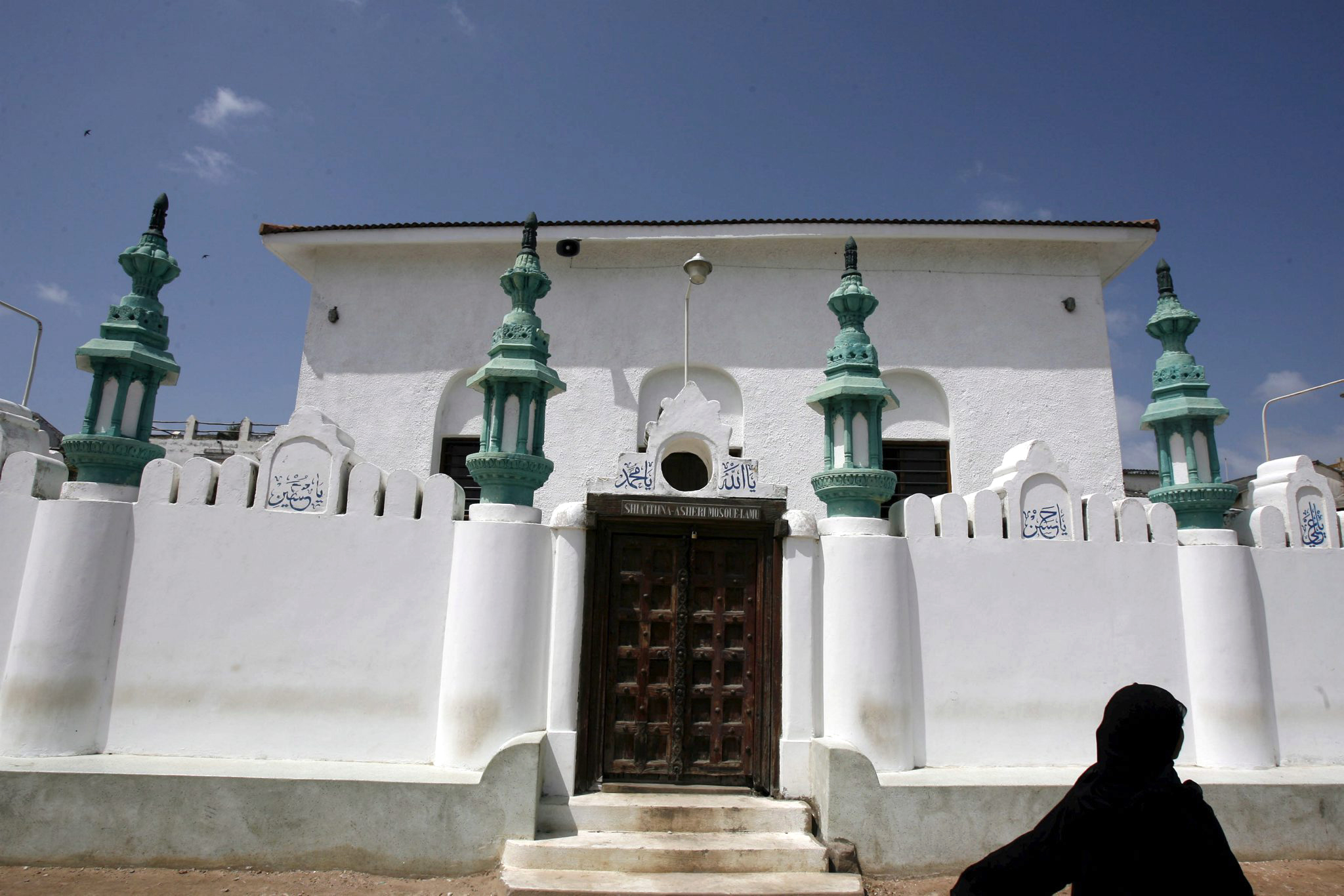
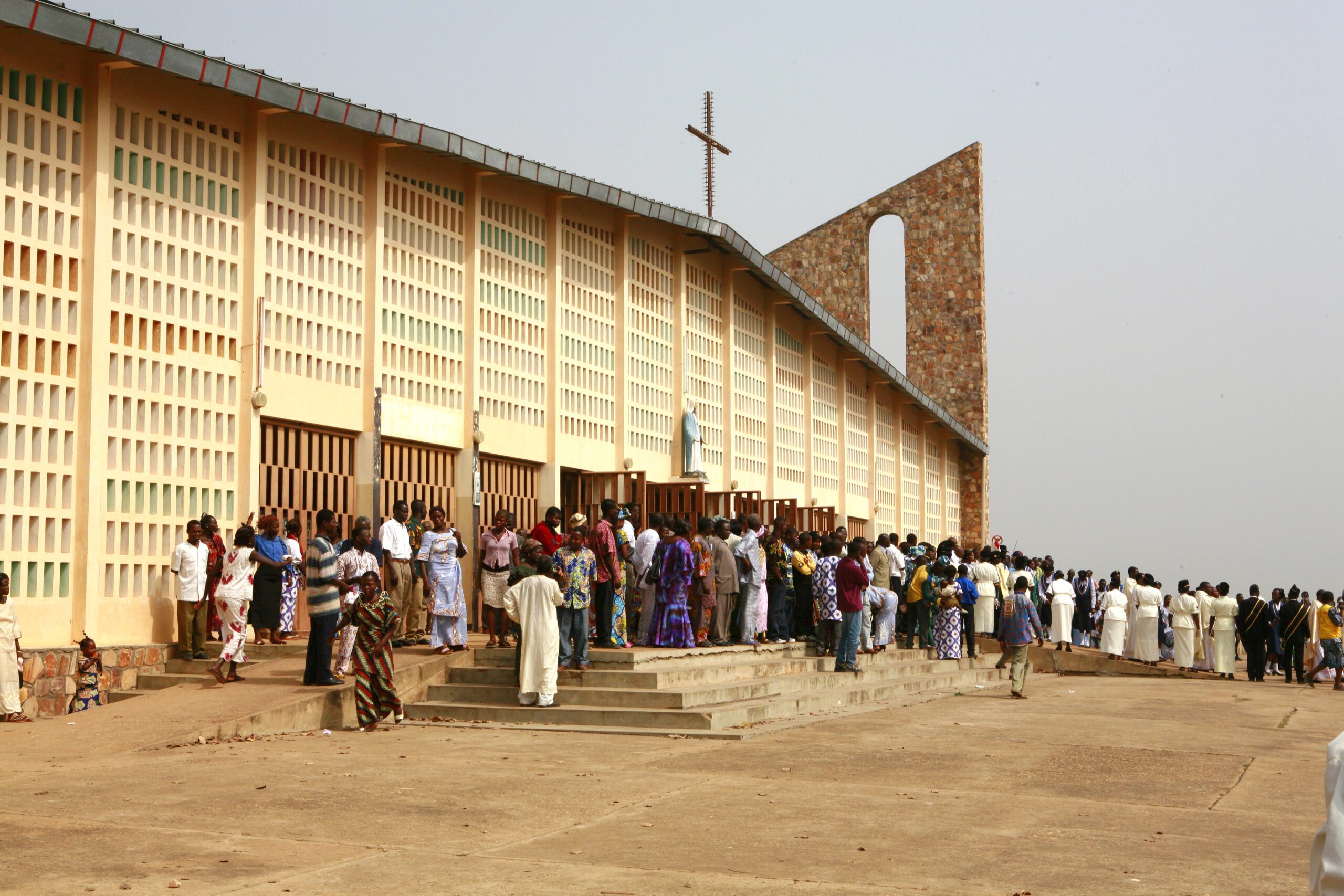
At the same time, Nyerere taught and encouraged all to respect other peoples’ religious beliefs. He had helped to raise funds to build a Catholic church in his village of Butiama. On the day it was blessed, he was very happy because now it would be easy for him to go to Mass every day. After the blessing of the church in Butiama, at the celebrations that followed, he was asked to speak. He told the Catholics there that they should help the Muslims in Butiama to build a mosque so that they, too, could have a place of worship.
Nyerere was very foresighted in realizing the great danger “tribalism” presented to Tanzania. In his campaign for independence, he had the remarkable gift of uniting the 120 ethnic groups of the country. During the campaign, some of the tribal chiefs opposed his party, TANU. They were receiving their salaries from the British Government. It was to their interest to preserve the status quo. Nyerere realized that the chiefs were the center of tribalism. They would continue to promote their own interests and the interests of each tribe. One of his first declarations after independence was to abolish all the chiefs in the country. He was the son of a chief. His brother Edward Wanzagi was chief of the Zanaki at the time of independence. In place of chiefs, he appointed government officials to carry on the work of the chiefs.
UNIFYING THE COUNTRY
His second move to diminish tribalism was to mix the secondary students who were studying in boarding schools. Instead of attending schools in their own district or tribal area, they were sent to other parts of the country so that they would learn to live with and appreciate students of other ethnic groups.
“Perhaps,” concludes Father Arthur, “the greatest attack on tribalism came from the emphasis that he put on Swahili as the national language. English continued to be a legal language but it took a second seat far behind Swahili. The widespread adult education classes throughout the country also helped Swahili to spread not only among students, but among the population in general. It has been an enormous unifying force. If today Tanzania remains a model for ethnic group harmony, it is because of Julius’ efforts.”