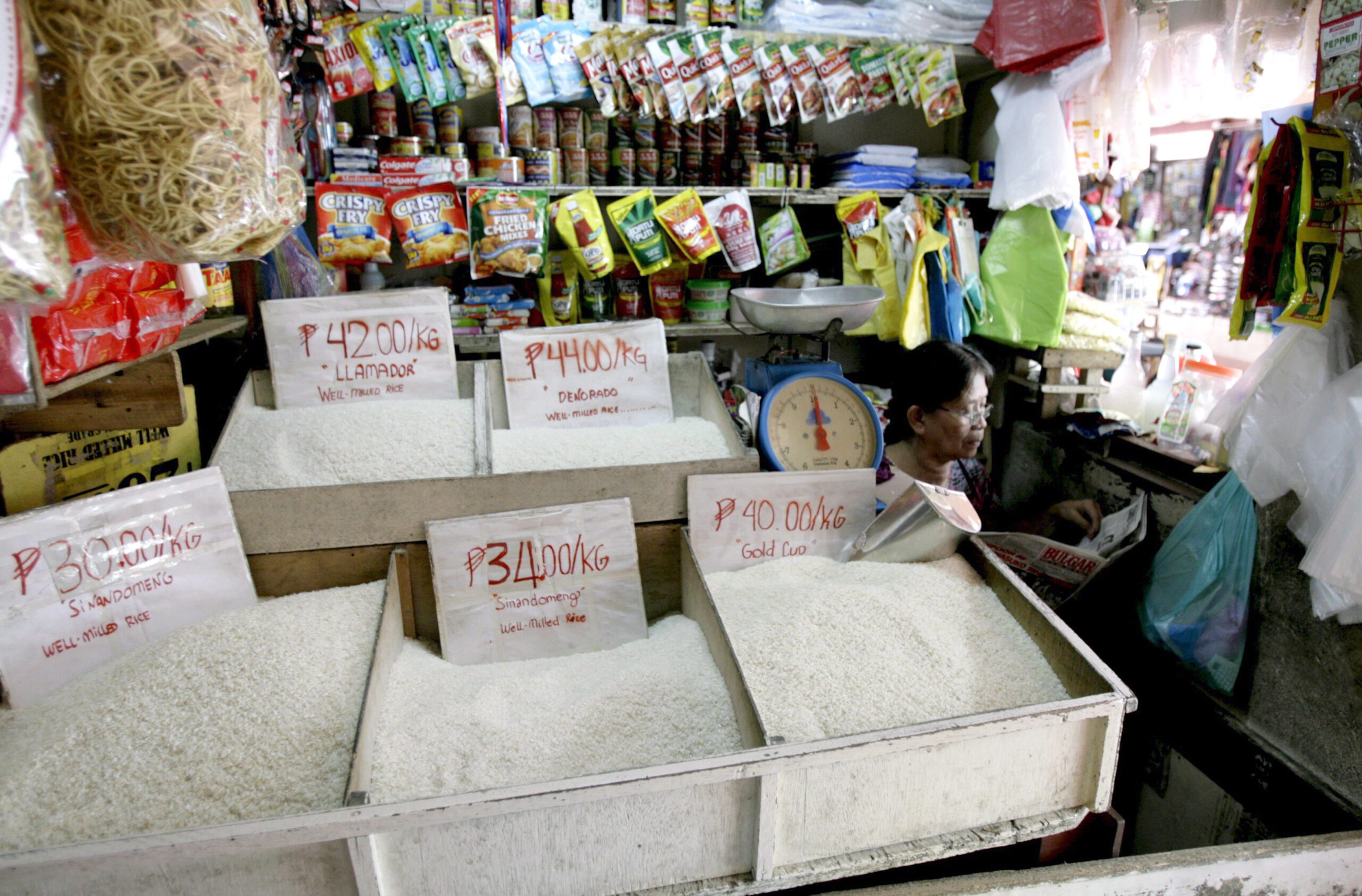

The space is too small for so many people. The counter’s table is hidden. It is the store of everything and of everybody. Customers glide their eyes over the shelves full of things. One asks for that soap, another for a Pepsi, a third stretches an arm to pay, another heads for the door with a packet of date fruits in his hand. The kindness of someone next to me is amusing: “Maalesh, ya khauaja” (“I beg your pardon, foreigner.”) “Do you have what I want?,” asks that someone jokingly, wishing to tease the unseen shopkeeper. The reply is prompt: “You know already, Mohammad, that you can choose freely and, whatever is not available today, will arrive bucra, in cha Allah” (“tomorrow, God willing”).
After a brief pause, that same voice – with the same warmth – switches to a tone of seriousness: “But if you seek salam (peace), you won’t find it here, now, and it’s very unlikely that it will come tomorrow. It has been asked and ordered by a lot of people in the whole world but, unfortunately, it has been elusive. Murmurs about the “pain and endless shame” of Darfur – as somebody present defined it – are heard. Another customer says: “All speak about us; but considering the reason why, it would have been better if we remained unknown to the whole world.”
Suddenly, everybody’s mouths are shut as a government military man enters and tries to make his way through the crammed place. With a kalashnikov rifle hanging from his shoulder, he looks hastily to the highest shelves.
No, he did not ask about prices. He did his shopping in a matter of seconds during which everybody in the store froze in suspense. The discomfort was broken as soon as he left. Almost immediately, someone tried to tranquilize the others. “There is nothing to fear in that one. On the contrary, by entering here, he showed his defeat. More than being an employee of the Sudanese Army, he tries to spend time and pretend to be accomplishing orders. He hasn’t had the guts to desert the military and earn a living in another way…”
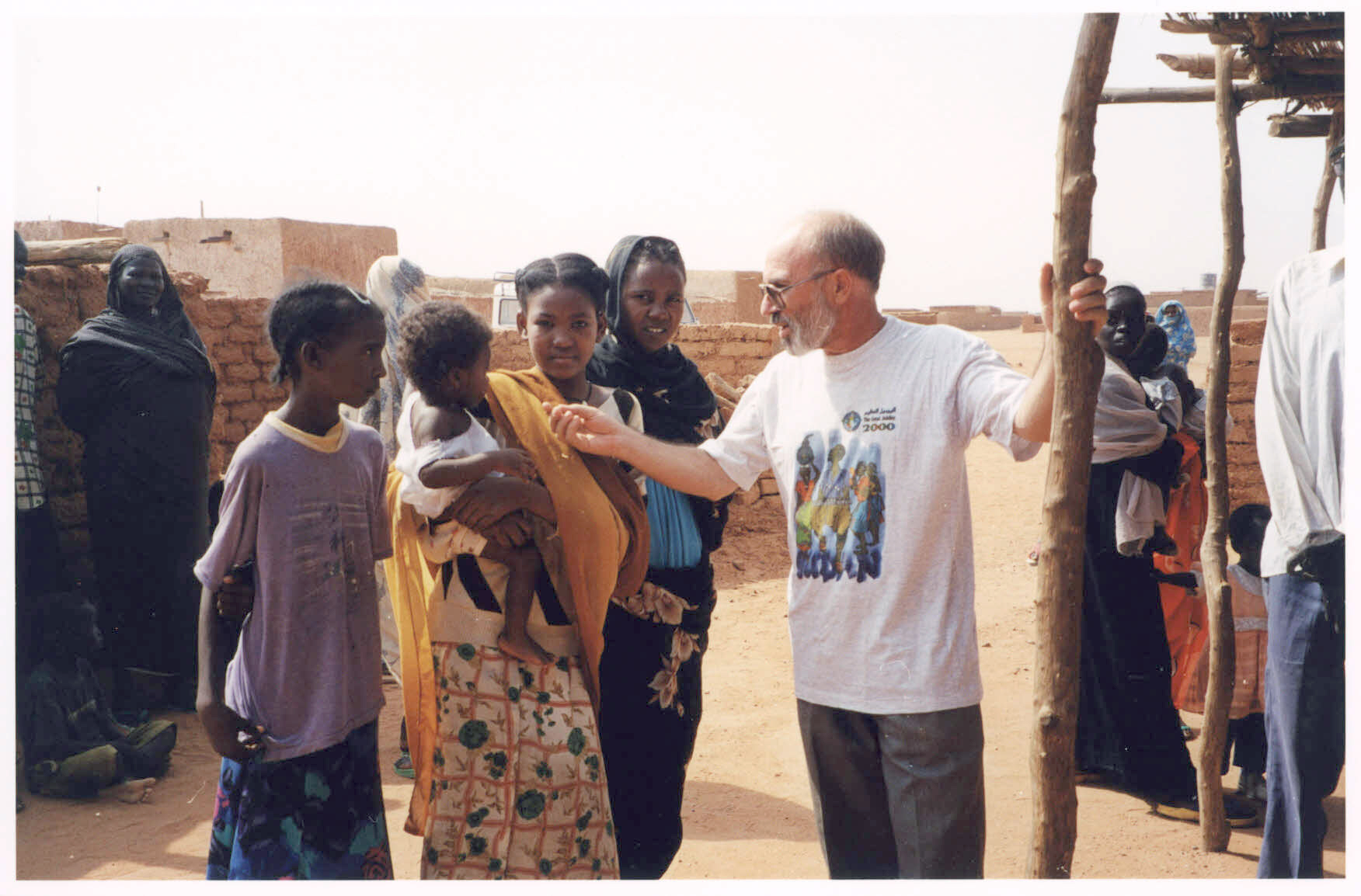
In the afternoon of that same day, while I was coming back from visiting the Catholic center of Taiba, the imam’s voice filled the air, chanting a call to prayer: “Allahu Akbar!” The loudspeakers were still echoing the invitation, when another voice came my way: “Salam, ya khauaja. Were you afraid this morning, in the store? It is unpleasant to have fellow-countrymen, Sudanese citizens, betraying us for a piece of bread earned badly. Let me take this opportunity to tell you that I appreciate and praise the quality of your work as a member of a non-governmental organization (NGO).” “It is true that I am a foreigner, but I am not working for any NGO,” I replied. “Well, if you are an Egyptian (the missionary’s physical appearance, lightly tanned skin and his good command of the Arabic language are certainly the bases of the assumption – Editor’s note.) and are attached to U.N./UNAMID, you enter in the same classification,” he insisted. “I don’t belong to the U.N. nor do I use a blue helmet or cap of UNAMID,” I retorted.
The man in a white jalabia (an Arab ethnic garment) took me for a jester and didn’t insist. When I told him that I was a priest of the Catholic Church, he concluded: “Then, it is clear. You were already here before this shameful and sad story started in Darfur. Apart from your Christian faith – which you chose – I know well your work in the education sector and your endeavors for people’s welfare. I myself worked in the construction of the church of Kosti and I dealt with many of your colleagues. I am a Muslim, as I’ve always been, but I get along well with you.”
SCREAMS OF PAIN
Every moment, we hear news of multiple criminal acts, inflicting pain and causing alarm, coming from many places of this western area of Sudan, to the point of transforming Darfur into an ugly stain on the globe map. The criminal and often deadly acts perpetrated by the Sudanese government that oppresses its own people of Darfur, are tolerated by the Arab world, a good part of the African governments, as well as China and other countries.
Influential personalities in Western countries speak cautiously and hesitantly about our drama, while their political interests neutralize and annul the right to justice, peace and life of these people.
However, the suffering cries of the Darfur people do not stop. They come almost immediately and straight from all directions. They come from Abujabra and Mujlad, to-be-explored petroleum areas and, at the same time, already strongly disputed by foreign companies. They come from the sides of Egypt, crossing the Libyan desert. They come from the steppe and savanna of Gineina, next to the Chadian border. They come from the forests of Redom, already toward the south of the country.
Why is there so much fear, violence and insecurity? Why the violation of so many women and minor girls? And the genocide? And the IDP (Internally Displaced People) and refugee camps outside the country? Why the anarchy and chaos everywhere in this our beloved Darfur? Sudan’s president, Omar Hassan al-Bashir, in spite of being charged by The Hague-based International Criminal Court, with war crimes and crimes against humanity – for playing an “essential role” in the murder, rape, torture, pillage and displacement of a large number of civilians in Darfur – continues to deceive people with promises of reconstruction of the destroyed areas and development of the region. Yet, peace continues to be absent from his plans. And he has not been lacking, at the international level, of opportunist partners with whom he has made criminal pacts over the innocents’ blood.
PLAYING WAR GAMES
Those who live in Sudan hear about peace constantly – in school, in the mosque or in the church. Also, at home and in the street, in occasional conversations. In fact, even the greeting in the country’s official language (“Assalam aleikum”) puts peace as the first desire for the person we meet. However, it is a word that, oftentimes, I hear with certain hesitation. Why? People speak about peace as an absent and very distant reality due to their day-to-day cruel experience of war. How can one give peace its absolute and sacred value when children play war games in the streets, with rifles of the size of the soldiers’ kalashnikov with whom they live daily?
In Kalma, not far away from one of the entrances of the Darfur’s largest IDP camp, a man stares into the cloudy horizon, with a lost glance, gazing at the storm of sand that is approaching. “Assalam aleikum!,” I greeted.
“Assalam, (peace), be at least with you, foreigner,” he answered. There are no orders or written prohibitions, but those responsible for security do not allow strangers to approach the camp. I know it is a dangerous and risky place to stop, but I made myself available to listen to Al Taher – the man’s name – realizing his pressing need to communicate.
“I lived around Bulbul. But then, the village was attacked and set on fire by the Janjaweeds. My wife was abducted, like so many other neighbors. We didn’t have confirmation to what happened to them but normally such abductions involve violating and beating people to death. I and my three children, like many others – some of them seriously wounded – were evacuated from the village. After four months here in Kalma and my body’s burns healed, I thought of the possibility of getting a job. I would have joined my eldest son, fifteen years old, who had already begun working in an improvised and rudimentary bricks’ factory, just four kilometers away. But, since two weeks ago, when the camp was fiercely attacked, nobody could leave. My own son was one of the nearly seventy dead. Tell me, foreigner, what to do. Where do I flee and build a decent life?
“We already know the government’s answer. Is it true that you have hidden weapons inside the camp?” I dared to ask. “There are a lot of people with guns. But the authorities knew that we could not organize a revolution against the government. That was an excuse to attack the camp. We were bombed at four o’clock in the morning, when it was still pitch dark, by the army and the police. We had two terrible days, until finally, humanitarian organizations could enter and help us. But since they invoked the revolution as an excuse, I tell you, ya khauaja: if, one day, that idea will be pursued by those living in the camp, I assure you that I will be one of the combatants.”
Meanwhile, we heard the noise of approaching strong motors. Al Taher, quickly sprang to his feet and went to welcome the agents of the Médecins Sans Frontières (MSF) organization that had just arrived. Immediately behind them, appeared another and longer caravan. A total of more than 100 men wearing blue helmets jumped nimbly off their vehicles – an armored car, two trucks and seven white Toyota Land Cruiser vans. The label – UNAMID – clear even from a distance, unmistakably indicates that they belong to the U.N. peacekeeping forces.
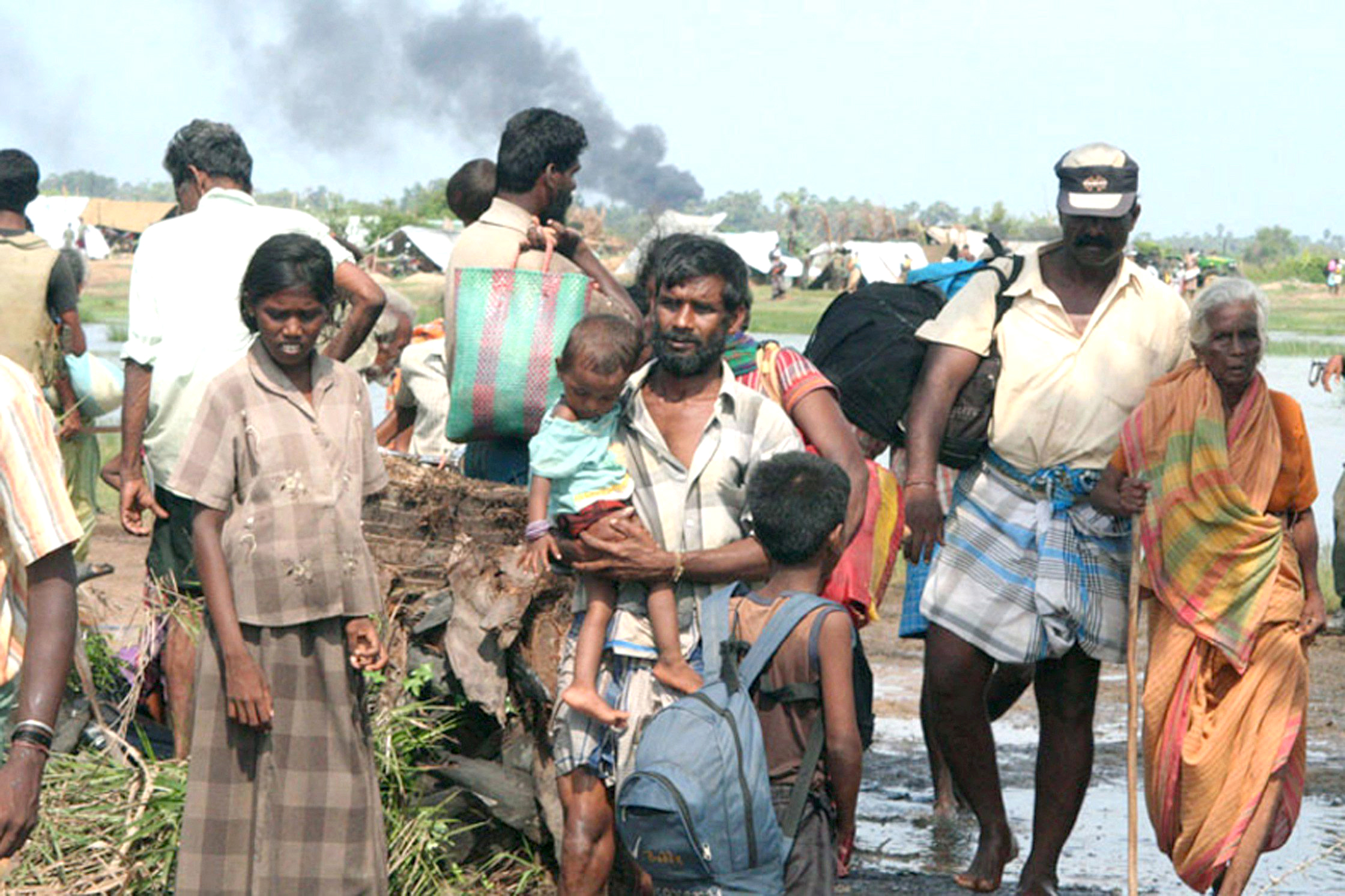
Kalma, the largest IDP camp in Darfur, gives shelter to about 100,000 people that, like Al Taher, were violently deprived of homes, belongings and, in many cases, also of some dear relatives. From the first razes, in March 2003, the displaced, totaling to more than 2.5 million – Al Taher’s colleagues of misfortune – survive in the region camps. But, in their tragedy, they came to know a new word that they won’t forget anymore. They pronounce it with gratitude: munazzama, humanitarian organizations (NGOs)!
PRAISES AND COMPLAINTS
In Darfur, there are visible human signs such as the desire and commitment to make justice and peace for all, especially for those who had the misfortune of falling prey to the Janjaweeds’ sanguinary hands. There are heroic gestures which aim at giving back to human beings the dignity that rightly belongs to them.
Praiseworthy are the efforts of the U.N. peacekeeping soldiers of UNAMID. However, the 19,000 men on the ground are insufficient and have limited resources (like critical transport and aviation assets) to fulfill its mandate and live up to the expectations of the people of Darfur. And there is another aspect that cannot be ignored: they do not have “teeth” in the form of a disarmament mandate – a basic requirement to achieve justice and peace. Not being able to grab the bull by the horns, they are little more than simple observers – of a terrible drama of death, dislodged, and mothers and daughters abused of their honor.
Beside the U.N. agencies and forces, there are the humanitarian organizations (NGOs) with their varied services – healthcare, feeding programs and development services – forming a 25,000-strong group of different colors, races and religious beliefs.
Then, there are the rebel/guerrilla forces. Led by two names known by all in the area – Khalil and Abduluahed – they are at present divided into more than 30 subgroups. Although with good intention of fighting for justice and peace for their fellow people of Darfur, they imitate, at times, the mistakes of their Janjaweed enemies they are combating with, and have become accomplices of the death of more than 300,000 people.
Corruption is practiced in broad daylight, with appalling brazenness, in remote villages as in the center of the city. Both Janjaweeds and rebels, and many anonymous thugs, emboldened by the reigning chaotic anarchy, assault, at gunpoint, the NGO vehicles. The organizations are thus constrained to keep them in the garage and travel using the much-to-be-desired public means of transportation, compromising the efficiency of their services. Sometimes, they opt to travel in local automobiles, willfully purchased, so as not to attract the attackers’ stealthy eye.
Even though it is possible to avoid some of these incidents in town, the truth is that there is no strategy to guarantee their safety in the interior areas. A few days ago, fright came to the group of Kenyan Eugene, one of the Red Cross drivers, in a mission-safari to Jebal Marra. “I felt a gun poked behind my head. In order to live, I had to give them the car keys” – the young chauffer, not yet fully recovered from the shock, tells me.
AL-BASHIR’S DECEPTION
Since the proclamation of its independence, in 1956, Sudan has not been able to get rid of its internal wars. A lot of people believed that al-Bashir, when he took control of the government in 1989, through a rather peaceful military coup, would fight for Sudan’s lasting peace and welfare. Talking to journalists, he affirmed: “I am coming from the trenches and my color is this of my uniform, green.”
But up to now, al-Bashir hasn’t demonstrated any will of leveling the ground to achieve peace. The contrary is true. He has been digging more trenches and has never abdicated the military green color as the maxim war authority.
Violence generates more violence and war doesn’t make peace. Darfur people suffer violence and death, but they have not lost hope. The military green color that comes from the trenches will be smashed and defeated by the (interior) fight that is the true jihad, the one that is blessed by God. We believe in conversion of colors and, much more, of hearts. We believe the belligerent green will give way to justice and peace in Darfur.