
The Church’s Birthplace

INTRODUCTION

The Church was born in the Holy Land. And, during some centuries, the Bishop of Jerusalem was the recognized authority over all Christians.

WRITTEN BY

SHARE THE WORD

PUBLISHED ON

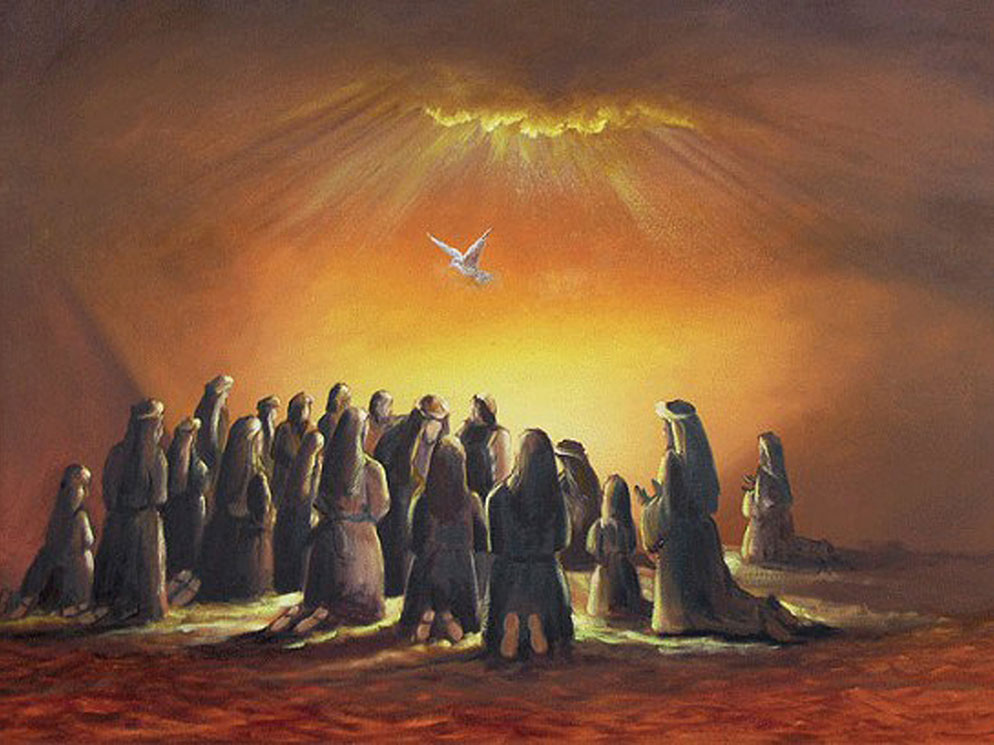
The Church was born in the Holy Land at Pentecost. At first, the original Jewish community was undivided. For the first four centuries, the community of Jerusalem did not experience any doctrinal division. The Bishop of Jerusalem was the recognized authority over all Christians. In the V century, new interpretations about the identity of Christ appeared and clashed. The Ecumenical Councils of Ephesus (431) and Chalcedon (451) condemned the views of Nestorius and Eutyche because they put into question the right understanding of Jesus as true God and true Man, one only person with two natures. The local Churches that did not accept this formulation were considered schismatic and organized themselves as separate from Rome. These are the Nestorian Church and the monophysite (those who believed in one nature of Christ) Churches: Syro-western, Armenian, Copt. The Church of Jerusalem remained faithful to the teaching of the Councils, but it was influenced by the presence of monks and pilgrims from monophysite Churches.

THE LATIN PATRIARCHATE
In the XI century, Western Christianity warmed up to the idea of taking control of the Holy Land from the Islamic forces to help local Christians and open the way to pilgrims. The arrival of the Crusaders meant the establishing of a Catholic hierarchy in Jerusalem and the Holy Land. The Latin Patriarchate was erected and lasted until 1291, when the Crusaders left Palestine.

With the Crusades, the Catholic Church gained an increasing influence in the Holy Land. The Franciscans arrived in the XIII century and established themselves in and around sacred sites. In 1336, they established a house in Jerusalem and, in 1342, Pope Clement VI gave them the Custody of the Holy Land. The Franciscans gave an important input to the local Church. They also contributed to the propagation in the West of two devotions originally from the Holy Land: the Way of the Cross, and the novena in preparation to Christmas.

From the XIII century, within the Greek Orthodox and the older Oriental Churches, some bishops started looking towards Rome. This phenomenon brought to the formation of Catholic Oriental Churches. These Churches accepted the authority of the Pope as universal shepherd of the only Church of Christ, but kept their liturgical, spiritual and theological traditions. In the Middle East, five Catholic Oriental Churches were born: the Chaldean Church in 1552; the Greek Catholic Church in 1724; the Armenian Catholic Church in 1740; the Syrian Catholic Church in 1773; and the Coptic Catholic Church in 1824. At the same time, the Maronite Church – from Lebanon – started expanding in the region.

HEBREW CHRISTIANS
In the XX century, Anglicans and Lutherans arrived in the Holy Land mainly to convert Jews. Once their plan failed, they turned to the Arab population, with little success. Many religious orders and institutes (Latin and Oriental) opened houses to serve the local communities. The same happened within the Orthodox Churches, which have known a time of renewal. A new trend in Israel is the growth of a local community of Christians of Hebrew expression.

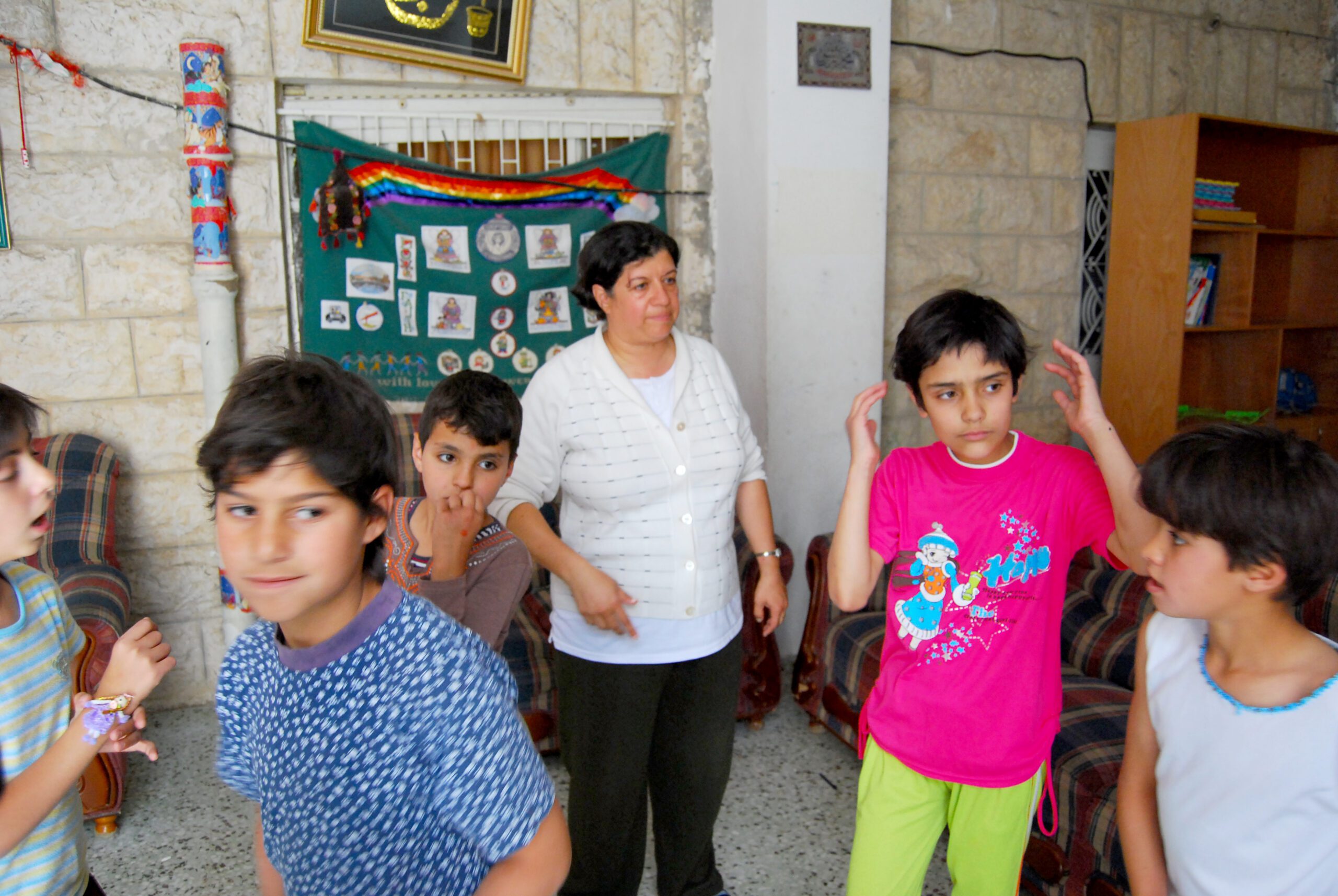
Today, the Holy Land has a global population of about eleven million people. The inhabitants of Israel are 7,250,000, of whom 1,500,000 are of Arab descent. The Palestinian Territories have a combined population of 3,850,000 people. The Christians are about 200,000: 135,000 in Israel and 65,000 in the Palestinian Territories. These numbers do not keep in account the number of Christians coming from Eastern Europe whose status is kept secret or not recognized officially. A learned guesstimate puts their number to 300,000 people. Anglicans and various Protestant Churches have a small following of about 7,000 people.

TWO PERCENT OF THE POPULATION
Christians in the Holy Land are about 2% of the population. At the beginning of the XIX century, they used to be around 10% of the population. Many have left the region because of the political uncertainty and the discrimination to which they were subjected. The majority of Christians live in Galilee and around Jerusalem. Taybeh is the only village entirely inhabited by Christians. In Jordan, the villages of Semakìeh, Fuhèis e Shàtana are also entirely inhabited by Christians

The Patriarch resided in Jerusalem until 1291. The title survived as a titular see until 1847, when a new Patriarch was sent to Jerusalem. During the long absence of a bishop, the Franciscans of the Custody of the Holy Land followed the life of the Church in Palestine. The Franciscans had an important role in keeping the Church alive, in promoting the various communities and offering catechetical support. In 1342, Pope Clement VI approved their work and erected the Custody of the Holy Land. The friars did work tirelessly to support local communities and assist pilgrims. Up to now, they are in charge of most holy sites.

The Latin Patriarchate was revived with the election of Bishop Giuseppe Valerga in 1847. The Patriarchate covered the whole of Palestine of the day, TransJordan and Cyprus. The community is well organized and controls numerous institutions: educational, social, cultural, ecumenical, interreligious, health centers… The local community is served by 70 parishes and more than 80 diocesan priests, to whom various Religious priests, Brothers and Sisters have to be added. In 1987, Msgr. Michel Sabbah, a Palestinian, was elected Patriarch of Jerusalem. Since 2008, Jordan-born Fouad Twal has been the new Patriarch.

COMMON CELEBRATIONS
The visits of Paul VI (1964) and John Paul II (2000) to the Holy Land, recent pastoral letters of the Catholic Patriarchs of the Middle East and other material prepared by the Latin Patriarch of Jerusalem, and the joining of the Catholic Churches in the Council of Churches of the Middle East have all promoted the ecumenical work at all levels. The local Christians live this dimension in sharing their lives, in solidarity, service and common moments of prayer. Many parishes in Palestine, Israel and Jordan have common celebrations, accept mixed marriages – often with the presence of ministers from the different Churches at the celebration of the Sacrament – share the Lenten season and the celebration of Easter.

Share Your Thoughts

All comments are moderated

From The Same Issue

The articles and content about this issue

From The Same Issue

The articles and content about this issue

From This Topic

The articles and content about this topic

From This Topic

The articles and content about this topic

Explore Other Topics

Browse other coverage

Explore Other Topics

Browse other coverage

WM SPECIAL

Presents, discusses and draws readers to reflect on issues of outmost relevance to the world today.


FRONTIERS

Very often, mission is carried out in frontier situations around the world. Those who embrace these situations have much to share.


UNITY IN DIVERSITY

Writer Ilsa Reyes will be exploring the richness of Pope Francis’s latest encyclical Fratelli Tutti with a view of helping our readers to get a grasp of the this beautiful papal document.


FRONTLINE

Puts to the front committed and inspiring people around the world who embrace humanitarian and religious causes with altruism and passion.


IN FOCUS

Focus on a given theme of interest touching upon social, economic and religious issues.


FAITH@50

As the Philippines prepares to celebrate 500 years of the arrival of Christianity. Fr. James Kroeger leads us in this series into a discovery journey of the landmark events in the history of faith in the Philippine archipelago.


INSIGHT

Aims to nurture and inspire our hearts and minds while pondering upon timely themes.


FILIPINO FOCUS

The large archipelago of the Philippines, in its richness of peoples and cultures, offers varied and challenging situations for mission.


FOLLOW ME

Reflections and vocation stories that shape up the lives of young people.


MISSION IS FUN

As humor and goodness of heart are qualities of Christian and missionary life, the new column “Mission is fun” will be publishing some anecdotes and stories that have happened in a missionary context to lighten up the spirits and trigger a smile in our faces.


LIVING COMMUNION

To help readers of World Mission live this year dedicated to Ecumenism, Interreligious Dialogue and Indigenous Peoples, Tita Puangco, writer and lecturer, shares in this section insights on the spirituality of communion.


WINDS OF THE SPIRIT

A historic view of the Catholic movements that emerged from the grassroots as an inspiration by the Holy Spirit.


BRIDGE BUILDERS

On the Year of Ecumenism, Interreligious Dialogue and Indigenous Peoples, radio host and communicator Ilsa Reyes, in her monthly column, encourages Christians and people of good will to be one with their fellow people of other sects, religions and tribes.


INTERVIEW

Questions to a personality of the Church or secular world on matters of interest that touch upon the lives of people.


WORLD TOUCH

News from the Church, the missionary world and environment that inform and form the consciences.


CARE OF THE EARTH

A feature on environmental issues that are affecting the whole world with the view of raising awareness and prompting action.


EDITORIAL

The editor gives his personal take on a given topic related to the life of the Church, the society or the world.


YOUNG HEART

A monthly column on themes touching the lives of young people in the Year of the Youth in the Philippines by radio host and communicator I lsa Reyes.


SCROLL

A missionary living in the Chinese world shares his life-experiences made up of challenges and joyous encounters with common people.


EXTRAORDINARY PEOPLE

Life stories of people who deserve to be known for who they were, what they did and what they stood for in their journey on earth.


ONE BY ONE

Stories of people whom a missionary met in his life and who were touched by Jesus in mysterious ways.


INCREASE OUR FAITH

Critical reflection from a Christian perspective on current issues.


SPECIAL MOMENTS

Comboni missionary Fr. Lorenzo Carraro makes a journey through history pinpointing landmark events that changed the course of humanity.


PROFILE

A biographical sketch of a public person, known for his/her influence in the society and in the Church, showing an exemplary commitment to the service of others.


WM REPORTS

Gives fresh, truthful, and comprehensive information on issues that are of concern to all.


LIFE'S ESSENTIALS

A column aimed at helping the readers live their Christian mission by focusing on what is essential in life and what it entails.


ASIAN FOCUS

Peoples, events, religion, culture and the society of Asia in focus.


THE SEARCHER'S PATH

The human heart always searches for greatness in God’s eyes, treading the path to the fullness of life - no matter what it takes.


INDIAN FOCUS

The subcontinent of India with its richness and variety of cultures and religions is given center stage.


AFRICAN FOCUS

The African continent in focus where Christianity is growing the fastest in the world.


JOURNEY MOMENTS

Well-known writer and public speaker, Fr. Jerry Orbos, accompanies our journey of life and faith with moments of wit and inspiration based on the biblical and human wisdom.


IGNATIUS STEPS

On the year dedicated to St. Ignatius of Loyala, Fr. Lorenzo Carraro walks us through the main themes of the Ignatian spirituality.


THE SEVEN LAST WORDS OF JESUS

Fr. John Taneburgo helps us to meditate every month on each of the Seven Last Words that Jesus uttered from the cross.


INSIDE THE HOLY BOOK

In this section, Fr. Lorenzo delves into the secrets and depths of the Sacred Scriptures opening for us the treasures of the Sacred Book so that the reader may delight in the knowledge of the Word of God.


CONVERSATIONS

Reflections about the synodal journey on a conversational and informal style to trigger reflection and sharing about the synodal path the Church has embarked upon.


VATICAN II

This 'mini-course' series provides a comprehensive exploration of Vatican II, tracing its origins, key moments, and transformative impact on the Catholic Church.


COMBONIS IN ASIA

This series offers an in-depth look at the Comboni Missionaries in Asia, highlighting their communities, apostolates, and the unique priorities guiding their mission. The articles provide insights into the challenges, triumphs, and the enduring values that define the Comboni presence in Asia.


BEYOND THE SYNOD

Following the Synod on Synodality, this series examines how dioceses, parishes, and lay organizations in the Philippines are interpreting and applying the principles of the synod, the challenges encountered, and the diverse voices shaping the synodal journey toward a renewed Church.


A TASTE OF TRADITION

This series introduces the Fathers of the Church, featuring the most prominent figures from the early centuries of Christianity. Each article explores the lives, teachings, and enduring influence of these foundational thinkers, highlighting their contributions the spiritual heritage of the Church.


A YEAR OF PRAYER

In preparation for the 2025 Jubilee Year under the theme “Pilgrims of Hope,” 2024 has been designated a Year of Prayer. World Mission (courtesy of Aleteia) publishes every month a prayer by a saint to help our readers grow in the spirit of prayer in preparation for the Jubilee Year.


OUR WORLD

In Our World, the author explores the main trends shaping contemporary humanity from a critical and ethical perspective. Each article examines pressing issues such as technological advancement, environmental crises, social justice, and shifting cultural values, inviting readers to reflect on the moral implications and challenges of our rapidly changing world.


CATHOLIC SOCIAL DOCTRINE

This series unpacks the principles of Catholic Social Doctrine, offering a deep dive into the Church's teachings on social justice, human dignity, and the common good.


HOPEFUL LIVING

Hopeful Living’ is the new section for 2026, authored by Fr. James Kroeger, who dedicated most of his missionary life to the Philippines. In this monthly contribution, he will explore various aspects of the virtue of hope. His aim is to help readers align their Christian lives more closely with a hopeful outlook.


PHILIPPINE CROSSROADS

Filipino Catholic scholar Jose Bautista writes each month about how the Philippines is at a crossroads, considering the recent flood control issues and other corruption scandals that have engulfed the nation. He incorporates the Church’s response and its moral perspective regarding these social challenges.


BIBLE QUIZ

Test your knowledge and deepen your understanding with our Bible Quiz! Each quiz offers fun and challenging questions that explore key stories, themes, and figures from both the Old and New Testaments.


Shopping Cart