
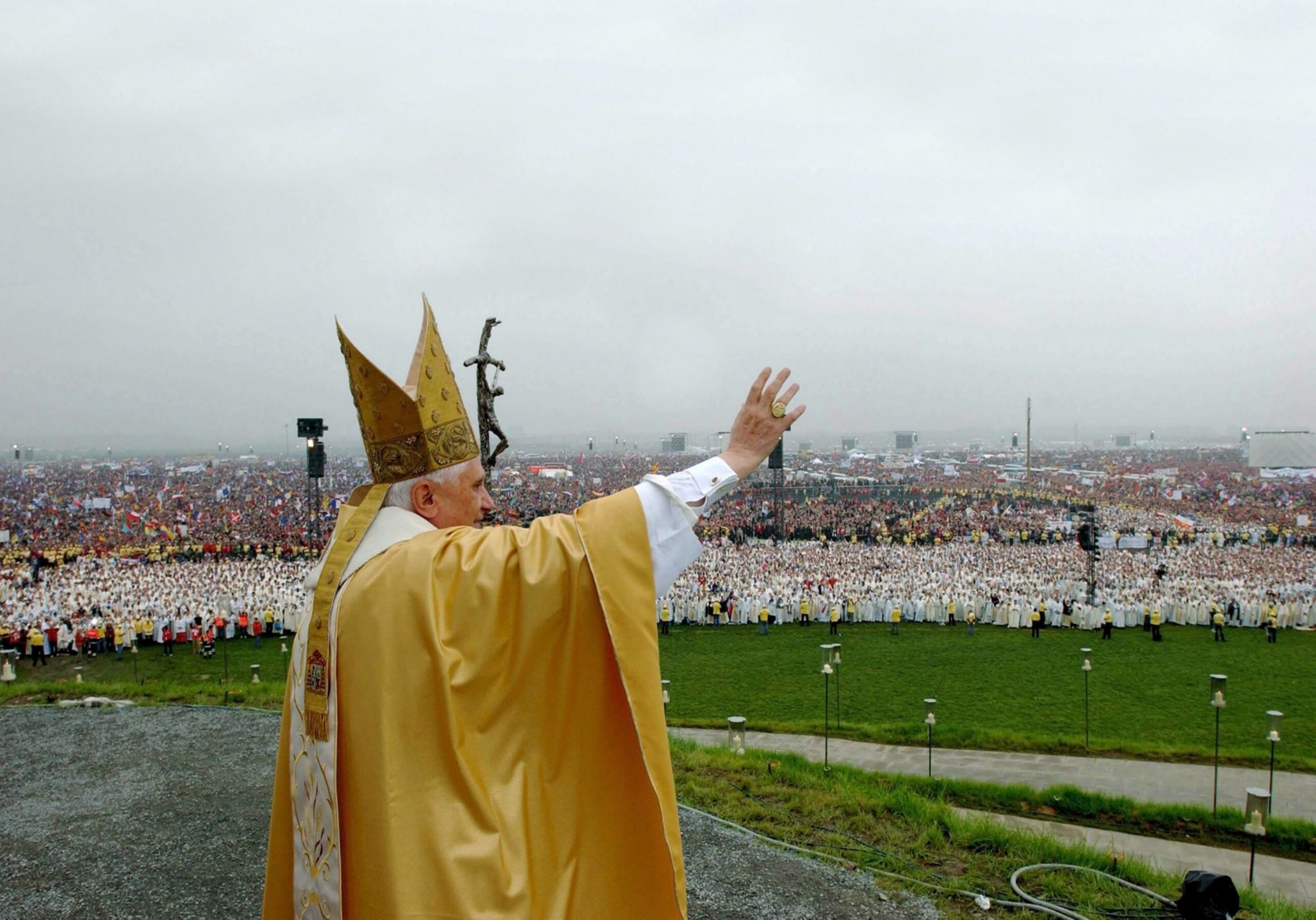
Many commentators, from a variety of backgrounds, have welcomed the recent papal encyclical on social justice, Caritas in Veritate (Love in Truth). Writing in the L’Osservatore Romano, the French Minister for Labor, Xavier Darcos, said that, in the light of the current global financial crisis, Caritas in Veritate had come at an opportune moment and was like a ray of light in the midst of dark clouds. Darcos commended Pope Benedict for his precise and well-documented analysis of the economic crisis facing humankind today. He went on to stress that the Pope, having critiqued the ideology of unregulated markets and hedonistic consumerism, went on to explore the path of gift, gratuity and sharing in shaping economic policies.
The Pope wrote about the “pernicious effects of sin” in the market, especially when there is a “speculative use of financial resources that yield only to the temptation of seeking only short-term profit.” Such practices make no contribution to the long-term well-being of society, nor do they promote robust social systems which are an essential prerequisite for stable development. Benedict XVI calls on those involved in the financial markets, in banks, trading rooms and regulatory agencies, to discover a genuine ethical foundation for their activities. Otherwise, the sophisticated instruments which they use in trading will only serve to betray the interests of savers. Darcos praised the Pope’s call for a new alliance between faith and reason.
In the United States, Jim Wallis, the editor of Sojourners, welcomed the encyclical. Since 1971, Wallis and his group has been attempting to articulate the biblical call to social justice which will have a transformative effect on individuals, communities, the church, and the world. It comes as no surprise that he highlighted the Pope’s insistence on promoting justice and seeking the common good of all. The more we strive to secure a common good corresponding to the real needs of our neighbors, the more effectively we love them. Every Christian is called to practice this charity in a manner corresponding to his (her) vocation and according to the degree of influence he (she) wields in the polis (city). This is the institutional path – we might also call it the political path – of charity, no less excellent and effective than the kind of charity which encounters the neighbor directly, outside of the institutional mediation of the polis. Wallis points out that the Pope is not against companies or individuals making profit. However, once profit “becomes the exclusive goal, if it is produced by improper means and without the common good as its ultimate end, it risks destroying wealth and creating poverty.”
Recklessly chasing profits was one of the main causes of the current global financial and economic crisis. In the light of this crisis, Benedict XVI calls on everyone, especially those in the financial community, “to replan our journey, to set ourselves new rules and to discover new forms of commitment.” Wallis focuses on the Pope’s concern that often the “downsizing of social security systems is the price to be paid for seeking greater competitive advantage in the global market, with the consequent grave danger for the rights of workers. Budgetary policies with cuts in social spending, often made under pressure from international financial institutions, can leave citizens powerless in the face of old and new risks; such powerlessness is increased by the lack of effective protection on the part of workers’ associations. Through the combination of social and economic change, trade union organizations experience greater difficulty in carrying out their task of representing the interests of workers, partly because governments, for reasons of economic utility, often limit the freedom or negotiating capacity of labor unions” (No. 25).
Wallis and others were surprised by Pope Benedict’s suggestion for reforming the United Nations so that it could become a “true world political authority,” which would give poorer countries a more effective voice in decision-making. That does not happen at the moment. The writ of such a body might include managing elements of the global economy in a way that would preclude the kind of financial meltdown which occurred in 2008. It could also play a robust role in promoting disarmament among the nations, so that people everywhere might be able to live in peace. This would free up massive amounts of global resources and energy which are currently used to prop up military establishments in many countries. Instead, the money ought to be used to combat poverty, promote education, health care and sustainable development.
NO GUARANTEE FOR DEVELOPMENT
In Caritas in Veritate, Benedict XVI pays tribute to the encyclical of Pope Paul VI, Populorum Progressio. In that encyclical, published in March 1967, Paul VI critiqued a development ideology which concentrated on merely increasing economic growth without taking into account what the Pope called integral human development. When Benedict XVI surveys the forty years since Populorum Progressio, he is particularly struck by the fact that “the world is becoming progressively and pervasively globalized (No. 9). He sees this as a great challenge for the Church because the “de facto interdependence of people and nations is not matched by ethical interaction of consciences and minds that would give rise to truly human development goals that possess a more humane and humanizing value” (No. 9). Pope Benedict acknowledges that Pope Paul VI did grasp “the interconnection between the impetus towards the unification of humanity and the Christian ideal of a single family of peoples in solidarity and fraternity” (No. 13).
In chapter One of Caritas in Veritate, Benedict invites us to re-read Populorum Progressio. According to him, there are two guiding principles in that encyclical. “The first is that the whole Church, in all her being and acting – when she proclaims, when she celebrates, when she performs works of charity – is engaged in promoting integral human development… The second truth is that authentic human development concerns the whole of the person in every single dimension” (No. 11). One important element is the recognition that eternity and the transcendent values of the Gospel of Jesus must not be excluded when working for or assessing true development.
One of the most striking differences between 1967 and 2009 is that state-sponsored Marxists and atheistic regimes have almost vanished from the face of the earth. Though driven by utopian dreams of progress, these institutions ended up oppressing and exploiting the very people they claimed they were liberating. On the other hand, Pope Benedict does not share the optimism of those wedded to a neo-liberal economic agenda of free trade and the untrammeled movement of capital who believe that a rising tide will raise all boats. Benedict, like his predecessor, is also wary of the “technocratic ideology so prevalent today” (No. 14). Both popes are “fully aware of the great danger of entrusting the entire process of development to technology alone because, in that way, it would lack direction. He is adamant that, “the sharing of goods and resources, from which authentic development proceeds, is not guaranteed by merely technical progress and relationships of utility, but by the potential of love that overcomes evil with good (cf. Rom 12:21), opening up the path towards reciprocity of consciences and liberties” (No. 9).
Pope Benedict is also convinced that institutions by themselves are not able to guarantee human and earth well-being. He writes: “In the course of history, it was often maintained that the creation of institutions was sufficient to guarantee the fulfillment of humanity’s right to development. Unfortunately, too much confidence was placed in those institutions, as if they were able to deliver the desired objective automatically” (No. 11). The same critique applies to the neo-liberal, corporate capitalist ideology that has led us into the current financial and economic crisis. At a press conference in the Vatican, Dr. Stefano Zamagi, who helped draft the document, denied that the encyclical was anti-capitalist, but added that it “views capitalism in its historical dimension and goes beyond it.”
The Pope goes on to claim that, “in reality, institutions by themselves are not enough, because integral human development is primarily a vocation and, therefore, it involves a free assumption of responsibility in solidarity on the part of everyone.” The Pope’s perspective is not confined to grounding one’s behavior in proper ethical norms. There is a fundamental theological dimension to development which the Pope expresses as follows, “Only through an encounter with God are we able to see in the other something more than just another creature, to recognize the divine image in the other, thus truly coming to discover him or her and to mature in a love that becomes concern and care for the other” (No. 11). In paragraph 15, Benedict returns to this theme and quotes Populorum Progessio which states “that there is no true humanism but that which is open to the Absolute, and is conscious of a vocation which gives human life its true meaning.” He returns to this theme in the conclusion, “only a humanism open to the Absolute can guide us in the promotion and building of forms of social and civic life – structures, institutions, culture and ethos – without exposing us to the risk of becoming ensnared by the fashions of the moment” (No. 78).
THE PATENTS’ INJUSTICE
Chapter Two of Caritas in Veritate is devoted to articulating a vision of development. I would like to draw attention to very positive aspects of the latest encyclical. In No. 22, the Pope raises serious questions about the current global patenting regime. He writes: “On the part of rich countries, there is excessive zeal for protecting knowledge through an unduly rigid assertion of the right to intellectual property, especially in the field of health care.”
This is very obvious in Africa where many people are suffering from HIV/AIDS. The drugs which are necessary to treat the illness and allow a person to lead a “normal” life are very expensive. According to the economist Ha-Joon-Chang, they cost, on average, between $10,000 and $12,000 per year. This is three or four times the average yearly income of people even in South Africa. In countries such as Uganda and Tanzania, where the disease is very prevalent, it is 30 to 40 times the average income.
Naturally, African governments wish to import generic ‘copies’ of these drugs from countries such as Brazil or India because the cost is only 2% to 5% of the patented drugs. In 2001, 41 pharmaceutical companies took South Africa to court and claimed that importing generic drugs was a breach of the Trade-Related-Intellectual Properties (TRIPs) of the World Trade Organization (WTO). After a sustained campaign by many groups around the world, which cast the pharmaceutical companies in very bad light, the lawsuit was withdrawn.
Ha-Joon Chang argues that the companies’ claims that patents are essential to fund research are only half true. He quotes thirteen fellows from the Royal Society in Britain who wrote a letter to the Financial Times during the height of the HIV/AIDS debate stating that “patents are only one means for promoting discovery and invention. Scientific curiosity, coupled with the desire to benefit humanity, has been of far greater importance throughout history.” He also points out that a lot of the basic research needed to produce modern medicines is funded by governments or non-profit seeking organizations. In the United States in the year 2000, only 43% of funding for drug research came from the pharmaceutical companies. The government covered 29% of the cost and the remaining 28% came from charities and universities.
If patents on drugs inflate prices and put the medicines out of the reach of the poor, patents on food crops are even more problematic. While most people do not take medicine each day, they have to eat each day. So, if one extends the logic of the Pope’s teaching to cover food crops, patents on these are morally questionable especially in light of what Pope Benedict writes in No. 27 of Caritas in Veritate. He begins with the reality of hunger in the modern world. Almost one billion people go to bed hungry each night. The Pope reflects on this in the light of the Gospel imperative to “feed the hungry” (Mt 25:35, 37, 42). He analyses the institutional causes of hunger and makes a number of suggestions for promoting sustainable agriculture in poor countries. The list includes “investing in rural infrastructures, irrigation systems, transport, organization of markets, and in the development and dissemination of agricultural technology that can make the best use of the human, natural and socioeconomic resources that are more readily available at this level.”
The report published in 2008 by the International Assessment of Agricultural Science and Technology for Development (IAASTD) made recommendations on many of these issues. A collaborative venture involving public bodies, such as the World Bank, the United Nations Environment Program, the World Health Organization and representatives from governments, NGOs and scientific bodies and over 400 scientists, anticipated the kind of holistic research which the Pope called for in the encyclical. It does not endorse the claims of the biotech industry that genetically modified (GM) crops will feed the world. It argues that small-scale farmers and ecologically sensitive methods of farming are the way forward. The encyclical, while endorsing this approach, add a vital moral and legal element to the argument when it calls for the necessity to “cultivate a public conscience that considers food and access to water as universal rights of all human beings, without distinction or discrimination.” I would argue that this right makes patents on food crops morally more questionable. This is particularly true in the light of the principle of gratuitousness which runs like a thread throughout the encyclical.
THE CORPORATIONS’ THREAT
Pope Benedict XVI has many insightful things to say about economic activities in Chapter 3 of Caritas in Veritate. While he accepts that markets play an important role in economic affairs, there is no support for the “free market” and light-touch regulation of neo-liberal economics. He writes that “the social doctrine of the Church has unceasingly highlighted the importance of distributive justice and social justice for the market economy, not only because it belongs within the broader social and political context, but also because of the wider network of relations within which it operates” (No. 35). In the following paragraph, he opposes the ‘survival of the fittest’ understanding of the role of markets. “In and of itself, the market is not, and must not become, the place where the strong subdue the weak” (No. 36). Pope Benedict is not impressed by an argument, often used at the height of the Celtic Tiger (Ireland), that wealth creation ought to be left to the entrepreneurs, while the politicians have a role in distributing wealth. “Perhaps, at one time, it was conceivable that, first, the creation of wealth could be entrusted to the economy, and then the task of distributing it could be assigned to politics. Today, that would be more difficult, given that economic activity is no longer circumscribed within territorial limits, while the authority of governments continues to be principally local” (No. 37).
I had hoped that, in the light of this paragraph and especially his ideas in No. 40, he would engage in a major critique of the role played by multinational corporations in the current global economy. In paragraph 40, he writes: “Without doubt, one of the greatest risks for business is that they are almost exclusively answerable to their investors, thereby limiting their social value. Owing to their growth in scale and the need for more and more capital, it is becoming increasingly rare for business enterprises to be in the hands of a stable director who feels responsible in the long term, not just the short term, for the life and the results of his company, and it is becoming increasingly rare for business to depend on a single territory.” Already in No. 22, he wrote that, ”among those who sometimes fail to respect the human rights of workers are large multinational companies as well as local producers.” In No. 25, he called attention to the “new forms of competition between States as they seek to attract foreign businesses to set up production centers, by means of a variety of instruments, including favorable fiscal regimes and deregulation of the labor markets. These processes have led to the downsizing of social security systems as the price to be paid for seeking competitive advantage in the global market, with consequent grave danger for the rights of workers, for fundamental human rights and for solidarity associated with traditional forms of the social State.”
I thought that the Pope might have followed on with an incisive critique of the unprecedented and distorting power of multinational corporations in the global economic and political spheres. Unfortunately, he didn’t. His analysis is primarily focused on the role of the market, the state, civil society and ethical and religious values that ought to underpin the economic enterprise. (See pages 28-31)
In Caritas in Veritate, Pope Benedict criticizes one contemporary practice of multinational company, namely outsourcing. The Pope writes that, “the so-called outsourcing of production can weaken the company’s sense of responsibility towards stakeholders – namely the workers, the suppliers, the consumers, the natural environmental and broader society – in favor of the shareholders, who are not tied to a specific geographical area and who, therefore, enjoy extraordinary mobility” (No. 40).
There is extensive evidence that corporations have colonized the political process in the United States through large donations to politicians and expensive lobbying. In the 2000 presidential election, the tobacco giant Philip Morris donated $2.8 million dollars to the campaign of George W. Bush. On taking office, the federal government abandoned lawsuits against tobacco companies which could have cost tobacco companies over $100 billion.
The biotech companies were well represented in President George W Bush’s Cabinet. The Secretaries of Defense, Health, and Agriculture had close connections with the biotech company Monsanto. The influence that corporations wield is not confined to the Republican Party. In his presidential campaign, Barak Obama attacked the power of the business lobby in Washington and said that he would root this out if elected. His supporters felt let down and very angry when he appointed Michael R. Taylor to the Food and Drug Administration. Taylor had been Vice-President for Public Policy at Monsanto corporations from 1998 to 2001. He was Deputy Commissioner for Policy for the Food and Drug Administration from 1991 to 1994 when that agency approved the use of Monsanto’s GM growth hormone for dairy cows. After a federal investigation, he was exonerated.
Critics, however, fear that he will use his present position to push poor African countries into accepting GM crops. He can count on the support of the Bill and Melinda Gates Foundation which is also promoting unsuitable, biotech agriculture in Africa. The main beneficiary will not be the people of Africa but Monsanto.
A TASK FOR THE UNITED NATIONS
There are very few global institutions which can monitor and police multinational corporations’ behavior whether it be in terms of working conditions or environmentally destructive practices. As governments succumbed to corporate pressure, the economist Noreena Hertz claimed that the ordinary citizen, whether in the Minority or Majority World, has not been protected from the ravages of neo-liberal economics. She believes that political institutions in many Western democracies have been hijacked by the corporations and, for the most part, do their bidding. In reviewing her book for The Tablet, Terry O’Sullivan wrote: “Meanwhile, those citizens, or at least those that could afford to, have, in every sense, bought into this new arrangement, happily exchanging their democratic birthright for a mess of consumerism.” The public trust in the financial system has collapsed since the beginning of the current financial crisis in 2007, but this skepticism has not overflowed into the publics’ perception of the dominant role which multinational companies play on the national and international stage.
Efforts to make multinational corporations more ecologically, economically and socially accountable have been under way since the 1960s. It was on the agenda of the UN Conference on Trade and Development (UNCTAD) in Santiago in 1972. That led to the UN Economic and Social Council (ECOSOC) setting up a UN Commission on Transnational Corporations as a research and administrative body. This body draws up codes of conduct for multinational corporations. That ground to a halt with the election of Ronald Reagan as president in 1980. Reagan saw no reason to regulate multinational corporations. His policy was continued by his successor President George Bush. In 1991, his Administration wrote to all the U.S. embassies requesting that they lobby governments to oppose any restrictions being imposed on multinational corporations by the UN Code of Conduct. This lobbying was so successful that further attempts to get codes of conduct on other corporations were effectively halted. A few had already been agreed upon such as the 1981 International Code of Marketing on Breast-Milk Substitutes. This came about because of pressure from the World Health Organization (WHO), the United Nations Children’s Fund (UNICEF) and numerous non-government organizations, some of them Church-related.
It is ironic that the demise of the UN Commission on Transnational Companies coincided with the UN Conference on Environment and Development (UNCED), popularly known as the Earth Summit, which took place in Rio de Janeiro in June 1992. The pay off for getting the corporate world to financially support the Summit was to emasculate the UN agency which had attempted to regulate multinational corporations. The UN agency was killed off in stages. Firstly, there was a reduction in staffing levels. Secondly, the agency was transferred from New York to Geneva, and finally, it was disbanded.
There are not too many options in the international arena to curb the power of multinational corporations. One avenue which ought to be pursued more vigorously is through anti-trust legislation. This was introduced in the late 19th century to stop any single corporation getting a virtual monopoly on goods or services. For example, Microsoft controls over 90% of the software that runs on desktop computers globally. During the anti-trust case taken by the U.S. Department of Justice against Microsoft, the government produced accusations that Microsoft bullied potential competitors out of the market. At the end of the trial in June 2000, Judge Thomas Jackson found Microsoft guilty of “misusing its monopoly power” and determined that it should be broken up. It was fortuitous for Microsoft that the appeal was heard during President George W. Bush’s first term. The U.S. Court of Appeal, while it upheld a number of Judge Jackson’s conclusions, criticized the judge and did not direct that Microsoft be broken up.
In No. 67 of Caritas in Veritate, Pope Benedict calls for reform and an enhanced role for the United Nations. As part of its remit to “manage the global” economy, the United Nations should revive the Commission on Transnational Corporations and empower it to regulate these entities so that they work for the common good of people and the planet.
EMPOWERING THE WORLD COMMUNITY
In Caritas in Veritate, Pope Benedict is very critical of the casino-like practices which led to the collapse of the financial markets in 2008. In No. 65 he is adamant that “finance, therefore – through the renewed structures and operating methods that have to be designed after its misuse, which wreaked havoc on the real economy – now needs to go back to being an instrument directed towards improved wealth creation and development.”
Apart from developing new structures of accountability, he writes that “financiers must rediscover the genuinely ethical foundation of their activity, so as not to abuse the sophisticated instrument which can serve to betray the interests of savers. Right intention, transparency, and the search for positive results are mutually compatible and must never be detached from one another.” In the next paragraph, he calls for “the regulation of the financial sector, so as to safeguard weaker parties and discourage scandalous speculation and experimentation with new forms of finance, designed to support development projects, (as) positive experiences that should be further explored and encouraged, highlighting the responsibility of the investor.”
How can this be accomplished at the international level when, in recent years, governments have promoted deregulation of the capital markets which has led directly to the present crisis? In No. 67 he proposes a new role for the United Nations Organization and other multilateral financial institutions. The institutions alluded to here cover the International Monetary Fund (IMF) and the World Bank (WB). He believes that there is a “strongly felt need, even in the midst of a global recession, for reform of the United Nations Organization, and likewise of economic institutions and international finance, so that the concept of the family of nations can acquire real teeth.” The Pope believes that a strengthened United Nations would be better to do such things as, “manage the global economy: revive economies hit by the crisis.”
THE AMBIGUOUS ROLE OF TECHNOLOGY
In Chapter 6 of Caritas in Veritate, Pope Benedict turns his attention to the “Development of Peoples and Technology.” He writes in No. 68 that “the development of peoples goes awry if humanity thinks it can re-create itself through the ‘wonders’ of technology.” In the following paragraph, he quotes from Populorum Progressio (41) where Pope Paul VI writes that “human spirit, increasingly free of its bondage to creatures can be more easily drawn to worship and contemplation of the Creator.” Pope Benedict develops this line of thought when he writes: “Technology enables us to exercise dominion over matter, to reduce risks, to save labor, to improve our conditions of life” (No. 69). Pope Benedict ends that paragraph with the sentence: “Technology, in this sense, is a response to God’s command to till and to keep (cf. Genesis 2:15) that He entrusted to humanity, and it must serve to reinforce the covenant between human beings and the environment, a covenant that should mirror God’s creative love.”
By including the environment, I thought the Pope would critique technology, not just from a perspective of how it affects human life, but also its impact on the environment. Unfortunately, he does not. Even though he calls attention to the allurement which modern technology has for human beings, he believes that there is a danger that “the worldview that follows from this vision is now so dominant that truth has come to be seen as coinciding with the possible” (No. 70).
Pope Benedict has important things to say about the means of social communication which are such a part of life today (No. 73). According to him, it is absurd to claim that they are neutral – hence unaffected by any moral considerations concerning people. “Often, such views, stressing the strictly technical nature of the media, effectively support their subordination to economic interests intent on dominating the market, and not least, attempt to impose cultural models that serve ideological and political agenda.”
The next area the Pope focuses upon is the area of bioethics. He considers that, “particular crucial battleground in today’s cultural struggle between the supremacy of technology and human moral responsibility is the field of bioethics, where the very possibility of integral human development is radically called into question (No. 74). He is particularly concerned about the technical ability of biotechnology to manipulate human life in areas such as “in vitro fertilization, embryo research and the possibility of manufacturing clones and human hybrids. The Pope is alarmed about the technical possibilities which the ‘culture of death’ has given to modern societies at both the embryonic stage and also at the end of life.
There is no reflection in the encyclical about the use of biotechnology in both the plant and animal world, or the morality of patenting life in any form even though he did include the covenant with the environment in No. 69. Neither does he deal with nanotechnology which could cause all kinds of problems for both humans and the wider earth community.
The Vatican Council gave very little guidance in this area also. In fact, it praised the bright side of technology and was blind to its dark side. In Gaudium et Spes, we read: “Through his labors and native endowment, man has ceaselessly striven to better his life. Today, however, especially with the help of science and technology, he has extended his mastery over nearly the whole of nature and continues to do so” (No. 33). Even in the 1960s, it was obvious to many commentators that contemporary technologies were having a huge negative impact on the biosphere, but the bishops at Vatican II were not sensitive to this reality. Today, we know for certain that modern technologies are changing the chemistry of the air. Through burning fossil fuel, humans have increased the percentage of carbon dioxide in the air by over 40%. The consequences of this for human beings and the wider earth community are enormous. Even though the average global temperature has only risen by 0.8 degree Celsius since the middle of the 19th century, many places around the world are experiencing severe weather conditions.
Severe storms which were expected to occur once in a hundred years are now happening more often. Increase in the level of the seas will make life difficult and, impossible, for those who live on the shoreline. We are also sterilizing the biosphere. A rise of one or two degrees Celsius could lead the extinction of between one third and one half of all species. This wide-angle biospheric perspective is absent from Caritas in Veritate and much of Catholic Social Teaching.
THE DOMINATION THEOLOGY
Writing in Working Notes, Brendan MacParlin, S.J. maintains that, “free market theory clings to the idea that there are only individual economic exchanges, and no such things as society.” This was the economic vision promoted by the Austrian philosopher and economist, Friedrick Hyek (1899-1992) and Milton Friedman (1912-2006). Their policies were put into practice by both President Ronald Reagan in the U.S., Margaret Thatcher in Britain and General Pinochet in Chile.
MacParlin argues that, in Caritas in Veritate, Pope Benedict challenges the Enlightenment’s focus on individualism and develops his thought in the context of a variety of relationships which defines who we are. In this way, he creates a space for us to think about human interaction on a variety of fronts, including the economic one. Early on in No. 7 of Caritas in Veritate, Pope Benedict XVI writes: “Besides the good of the individual, there is the good that is linked with living in society: the common good. It is the good of ‘all of us,’ made up of individuals, families and intermediate groups who together constitute society.”
This is what Pope Benedict XVI and before him Pope Paul VI, means by integral human development. The term ‘integral human development’ or its equivalent ‘authentic human development’ appears over 20 times. In his introduction to Chapter 2, Pope Benedict recalls Pope Paul VI’s understanding of development. “First and foremost, (it meant freedom) from hunger, deprivation, endemic diseases and illiteracy. From the economic point of view, it meant the active participation, on equal terms, in the international economic process; from the social point of view, it meant their evolution into educated societies marked by solidarity; from the political point of view, it meant the consolidation of democratic regimes capable of ensuring freedom and peace. What Populorum Progressio and even Caritas in Veritate overlook, in common with the Catholic Social Teaching, is that life-giving personal and social relations and every aspect of a sustainable economy must always be embedded in vibrant and sustainable ecosystems. Otherwise, they have no future: If you cannot breathe air for five minutes, you will die: if you cannot drink fluids for 5 days, you will die of thirst, and if you cannot eat for 60 days you will die of hunger.
One could extend the notion of ‘gift’ or ‘principles of gratuitousness’ which Pope Benedict introduces at the beginning of Chapter 3 of the encyclical. He sees it “as an expression of fraternity.” I would argue that giftedness is rooted in the dynamic processes that mark every stage in the emergence of our Universe and Planet. The very atoms in our bodies, the iron in the hemoglobin in our blood were probably created in the cauldron of the supernova explosion 8 or 9 billion years ago. The dying star ‘gifted’ the Universe with the heave elements, such as carbon, which are necessary for any life to occur. The same is true of the calcium in our bones. It is a gift of the stars.
The energy needed to sustain the lifestyle of middle class people in the Minority World and the rich in the Majority World are a gift of the Lower Carboniferous Period, 350 million years ago. Giant ferns and horsetails decomposed, often in swampy areas, and over millions of years, were transformed into the fossil fuel which provides the energy for our way of living today. It is estimated that if we used human muscle power as a way of computing our energy needs, fossils give each one of us the equivalent energy of 20 to 30 slaves working 24 hours per day to meet our needs from food to transport and the energy which is powering the computer I am using. We owe a great debt of gratitude to those creatures and to the earth’s processes which transformed them into the energy we use.
Today, we are completely dependent for our food needs on plant life and other species that graze on plants. All in all, we are linked through close biological and genetic bonds with the living world. Other creatures have more than merely instrumental value for us humans, as sources of food, clothing or medicine. If you look through a high-powered microscope, you will see that God has taken as much care in creating other species, especially smaller ones, as He has in creating humans.
Unfortunately, Populorum Progressio, which Pope Benedict has used as a sounding board for his own reflection in Caritas in Veritate, is silent about the gifts we have and do receive from the Earth. Populorum Progressio is also silent about the massive and irreversible destruction of the Earth that was clear to many commentators in the early 1960s, such as Rachel Carson.
Forgetting the Earth is endemic in recent Catholic thought. Everyone would admit that Vatican II embodied a liberating vision of what it means to be a Christian in the modern world. It gives excellent guideline on how Catholic Christians ought to return to the sources of the Christian life in the Bible and read the Scriptures with new eyes; how the new vision of the Church ought to deepen our commitment to social justice and affect our approach to other Christian Churches and other Faiths. Sadly, it is silent on what was happening to the Earth.
While the doctrine of creation is mentioned in Lumen Gentium (The Dogmatic Constitutions of the Church) No. 36 and in Dei Verbum (the Dogmatic Constitution on Divine Revelation), it views all the creatures in the natural world, be they marine creatures, or land based or flying through the sky, as there primarily for human use. This ‘domination theology’ is evident in Gaudium et Spes (The Constitution of the Church in the Modern World). “For man, created to God’s image, received a mandate to subject to himself the earth and all that it contains and to govern the world with justice and holiness” (No. 34).
A MISSING CHAPTER
My critique of Catholic Social Teaching from an ecological perspective has not the intention to denigrate it but to help us realize that there has been little sensitivity to the Earth and other creatures in Catholic teaching in recent centuries. Unless we truly understand our past, with both its good and bad aspects, we will not be able to experience the “ecological conversion” which Pope John Paul II called for in 2001. The reason is to be found in the quotation from Lord Acton that “those who cannot learn from history are doomed to repeat it.”
According to the historian Keith Thomas in his book Man and the Natural World, “in Tudor and Stuart England, the long-established view was that the world had been created for man’s sake and that other species were meant to be subordinated to his wishes and needs. This assumption underlay the actions of that vast majority of men who never paused to reflect upon the matter. But those theologians and intellectuals who felt the need to justify it could readily appeal to the classical philosophers and the Bible.” Homocentric assumptions are so deeply embedded in our culture that we need to confront them directly if we want to develop a new understanding of the place of humankind within the Earth-community and also the longer story of the formation of our Universe.
As I pointed out, Vatican II also shared this anthropocentric bias. In Gaudium et Spes (The Constitution of the Church in the Modern World), “according to the unanimous opinion of believers and unbelievers alike, all things on Earth should be related to man as their centre and crown” (No. 12). This echoes the philosophy of the Stoics, who taught that “nature existed solely to serve man’s interest,” rather than the teachings of the Hebrew or Christian Scriptures. The Book of Job in Chapters 38 and 39, rejects an exclusively human-centered view of creation.
But while the Stoics and people, such as René Descartes and Francis Bacon, may have subscribed to such views, the vast majority of tribal people in the world and believers in Hinduism or Buddhism hardly share them. They would be much closer to the views attributed to Chief Seattle who wrote: “If all the beasts were gone, we would die from a great loneliness of spirit, for whatever happens to the beasts happens to all of us. All things are connected: whatever befalls the Earth, befalls the children of the Earth.”
An exclusively homocentric view of creation is understandably for people like Archbishop Ussher of Armagh who calculated in the 1630s that the Earth was only six thousand years old and that all the creatures that we see now were there from the very beginning. Today, we know from the various sciences that the Earth is over 4 billion years old and that there were fully functioning ecosystems in place, for example, in the Lower Carboniferous Period, 354 to 324 million years ago. At that time, there were no flowering plants, or insects, birds or mammals, but there were giant horsetails and an array of other creatures, most of which are now extinct. Theologically, I am sure that God would have spoken the Genesis words, ‘it is good’, over this and other phases of evolution of life on Earth. He/She would not be waiting until Homo sapiens arrived over one million years ago to give meaning to creation!
Despite its great achievement in helping to bring the Catholic Church into the modern world, Vatican II remained almost exclusively human-centered. One initiative during the Council could have led to a more sensitive presentation on the rights of other creatures if it had been pursued vigorously. In response to an appeal from the National Catholic Society for Animal Welfare in the U.S, the Vatican undertook a symposium on animal rights in October 1962 under the chairmanship of Archbishop Pietro Palazzini, the secretary for the Congregation of the Council. The symposium had two aims, to compile Church teaching on animals and to promote a greater sensitivity to the needs of animals and to have this enshrined in legislation. Unfortunately, the deliberations at that seminar or its recommendations did not make their way into the documents of Vatican.