
When Sr. Brenda Imdeke, FMSJ, first arrived in the little town of Witu in the diocese of Malindi on Kenya’s East Coast, she spent most of her time moving around the neighborhood visiting families wherever she was allowed in. As elsewhere in Africa, hospitality is a sacred duty among the largely Muslim local population of this part of Kenya. But, otherwise, people are wary of the sisters and priests at the nearby Catholic Mission suspecting they have come to proselytize. At times, local youths shout insults and it is rare for anyone to call in at the Mission. How, in such an atmosphere of mistrust, do you go about breaking the ice? How, from a perspective of interfaith relations, do you start a “dialogue of life,” establishing normal cordial human relations? For Sr. Brenda, the breakthrough came as a totally unexpected free gift. Here is her story:
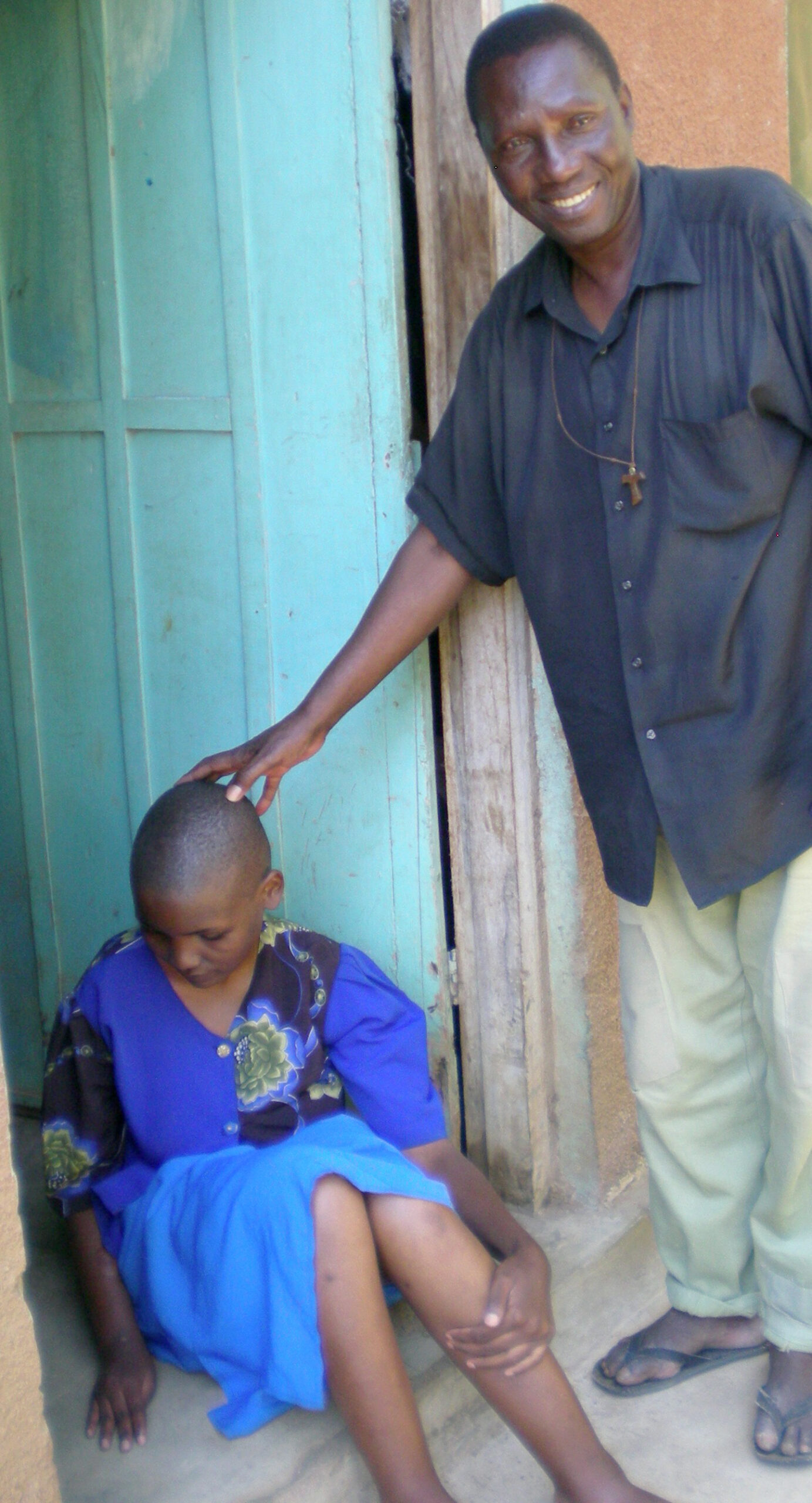
After about seven months, on one of her visits, she happened upon a middle-aged woman who was afflicted with what looked like a terrible skin disease. Her whole body was covered with blisters not unlike severe burns and, from time to time, the skin would peel off revealing naked flesh and causing severe bleeding. The smell was unbearable. Fearful of contamination, everyone except her ageing mother had abandoned her. At first, Mwanaharusi, as she named herself, was reserved. But she accepted Sr. Brenda’s offer of assistance. And, from then on, Sr. Brenda came on daily visits to wash her and provide basic nursing care.
Not long after, Mwanaharusi agreed to be taken to the nearest hospital on Lamu Island. The journey proved more arduous than anticipated. People who saw her instinctively kept their distance. The captain of the boat ferrying passengers from the mainland to the island refused to take her. Even the nurses at the hospital initially shied away. But, eventually, she was admitted and kept there for two weeks. The medical diagnosis left no doubt about the seriousness of her condition: HIV/AIDS related tuberculosis of the skin. Back home, after two weeks, Sr. Brenda continued her daily visits accompanied on one occasion by one of the priests at the Mission Station, Filipino Fr. Mario Dimapilis, who had become curious where she was going everyday.
I WAS NOT AFRAID
Tells Sr. Brenda: “Astonishingly, in this Muslim environment, he was allowed to see her. At first, he was petrified at the sight of Mwanaharusi’s abhorrent state with her bald head and open bleeding wounds. But he managed to overcome his revulsion and talk to her. As for me, I somehow managed to look beyond her repulsive appearance. I was not afraid. The danger of infection did not bother me. Someone had to do this labor of love. Doctors at Lamu hospital insisted that I be tested for HIV infection. The test mercifully proved negative. Over the months that followed, Mwanaharusi began to open up to me and we became close friends. She even told me how she had contracted HIV and had infected her husband.
As her condition slowly deteriorated, we decided to take her to the district hospital in the principal town in the area, Malindi. I carried her into the Mission pick-up unprotected as no one else would touch her. Our parish priest, Fr. Adolf, like everyone else, was petrified at the sight of her. ‘Oh my God…’ was all he could say, before blessing us and assuring us of his prayers for the journey.
“Mwanaharusi was very keen to talk during the two hours journey to Malindi. She talked about her three children, the youngest of whom was born when she was already infected. Mercifully, the baby had not been contaminated. She spoke of her estranged husband, her impending death. At the hospital, the scenes of Lamu were repeated. Nurses drew back in panic and minutes later reappeared in protective clothing wearing plastic gloves. The car was a complete mess. Feeling very put out, Mwanaharusi dissolved into tears and then clammed up altogether. I then learned that the proper drugs needed for her treatment were not available at the hospital. So I had to drive all the way to Mombasa to get them. I left Malindi with a heavy heart. A few days later, Mwanaharusi died.”
NOW YOU’RE ONE OF US
In her last will, she stipulated that, should she die in Malindi, she did not want to be buried there – as local Muslim custom would have it. Instead, her body should be taken back to Witu, to the Catholic mission for Sister Brenda to see. And before her remains would be interred, Sister should be invited to view her body one last time. ‘Ansindikize’: “I want her to send me off,” she had instructed her relatives. Unaware of the details of the funeral arrangements, Sr. Brenda nearly missed the burial and when she got there late, the elders were upset about the delay but, again, age-old custom forbidding women to be present at the grave was put aside and she was invited to see the body one last time.
Little did she suspect what would happen during the days that followed. Her months long self-forgetting dedication, together with Mwanaharusi’s unheard of deathbed stipulations, were the starting point of a profound change of attitude of the whole Muslim community at Witu. A real miracle and a watershed! From then on, doors began to open; gone were the customary reserve and couples felt free to share their domestic problems. The Mission, too, was no longer considered out of bounds and people would come to celebrations at the Mission. Real social relations were established. Those youths who were slow in sensing the change of mood and occasionally kept shouting insults were severely corrected. “We thought you had come to convert us, but now you’re one of us,” people began to say. On one occasion, a preacher ‘on crusade’ who insisted on spelling out the supposed iniquities of the Catholic Church was sent packing.
And Sister Brenda? Doctors insisted that she undergo the statutory three separate tests for HIV infection over a period of six months. All proved negative. “Sometimes, you just don’t know what moves you,” she observes with a smile.