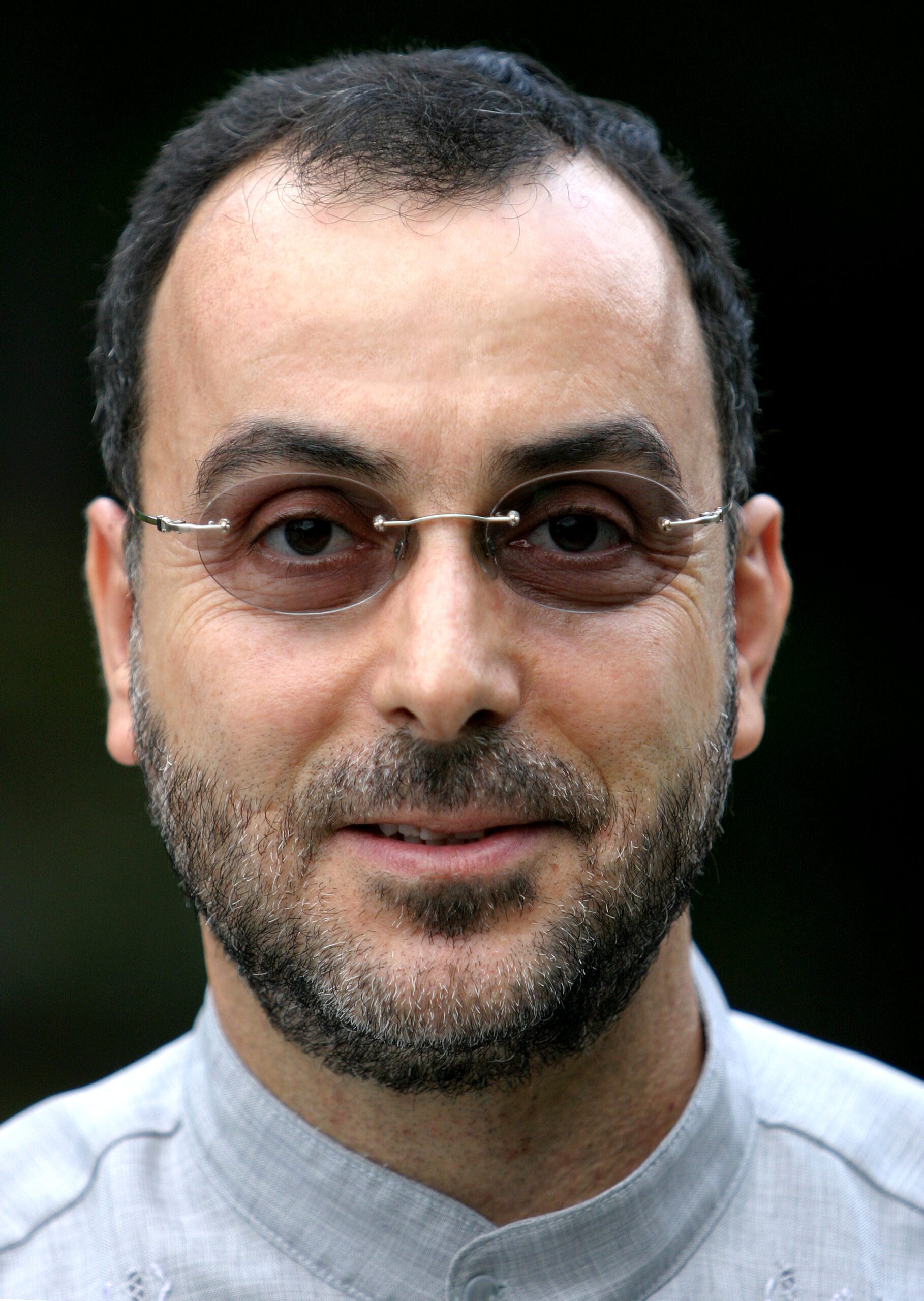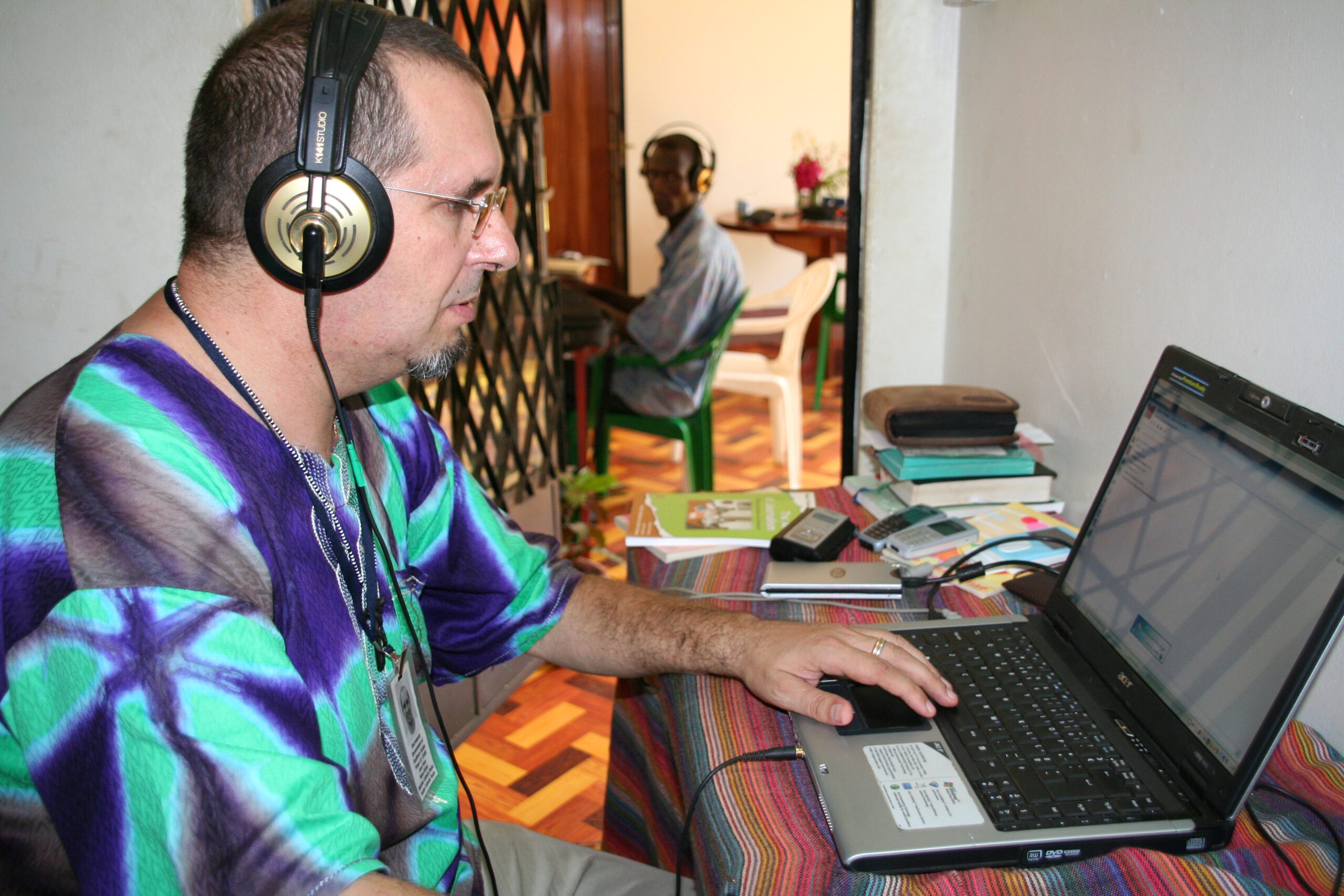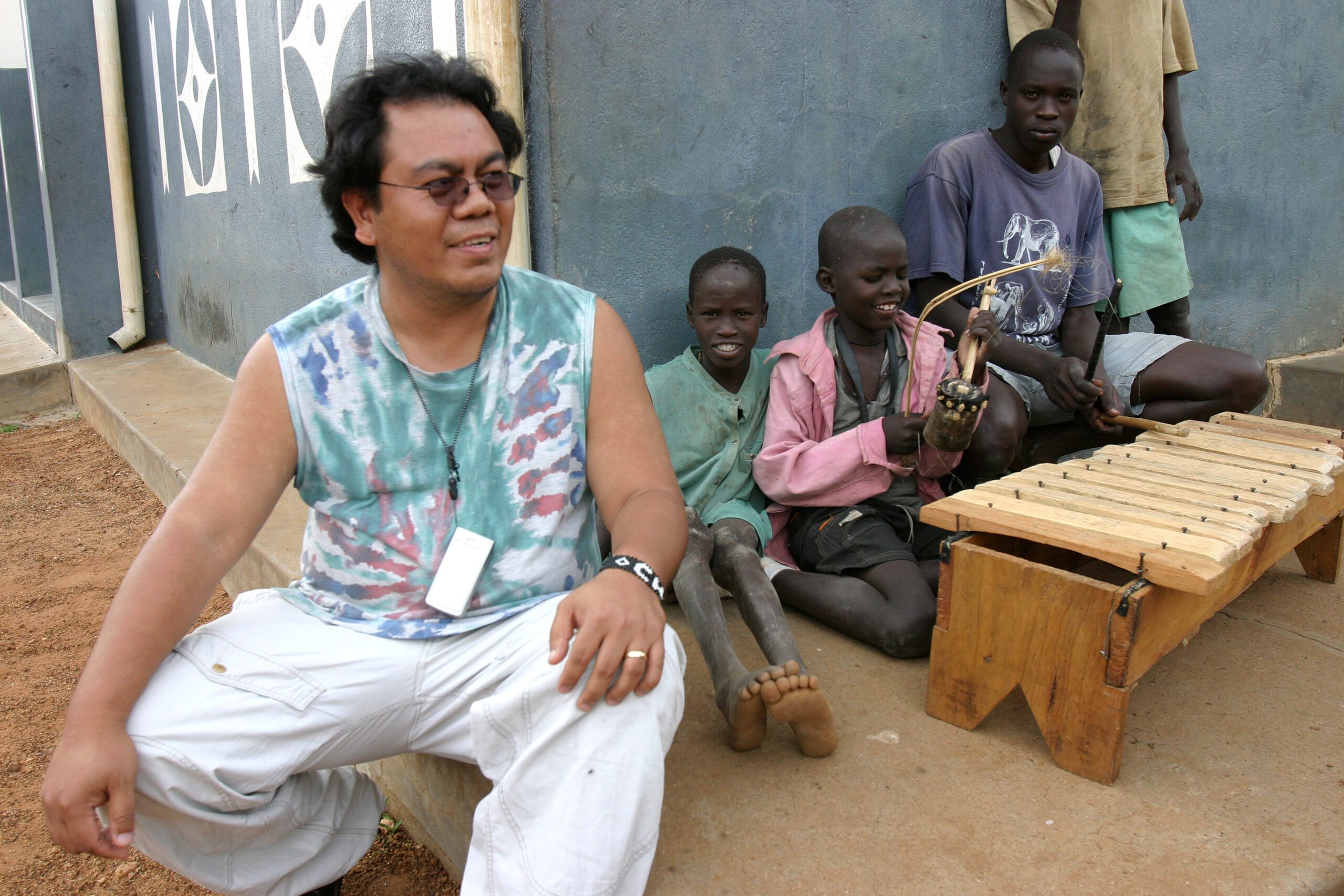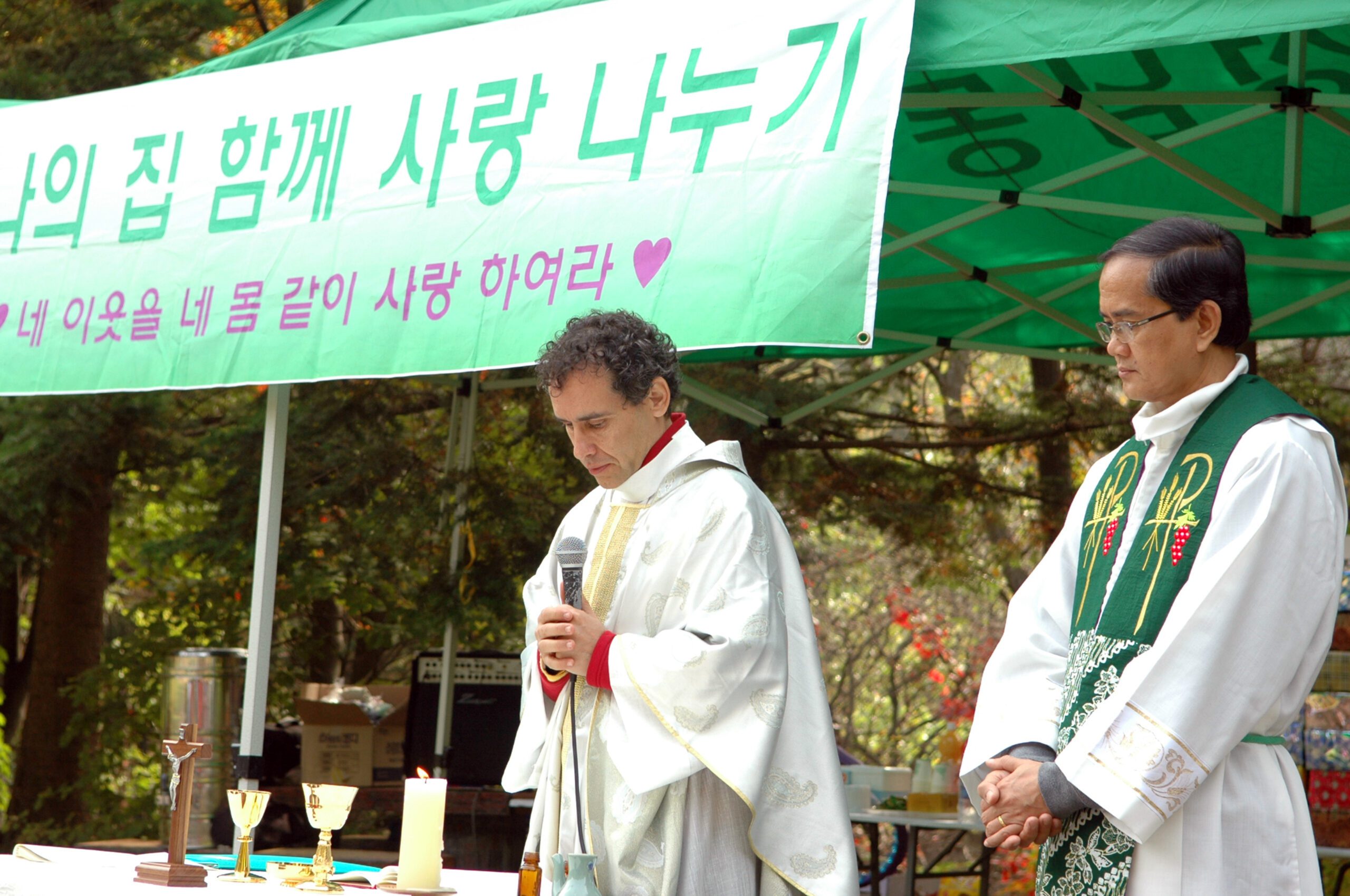

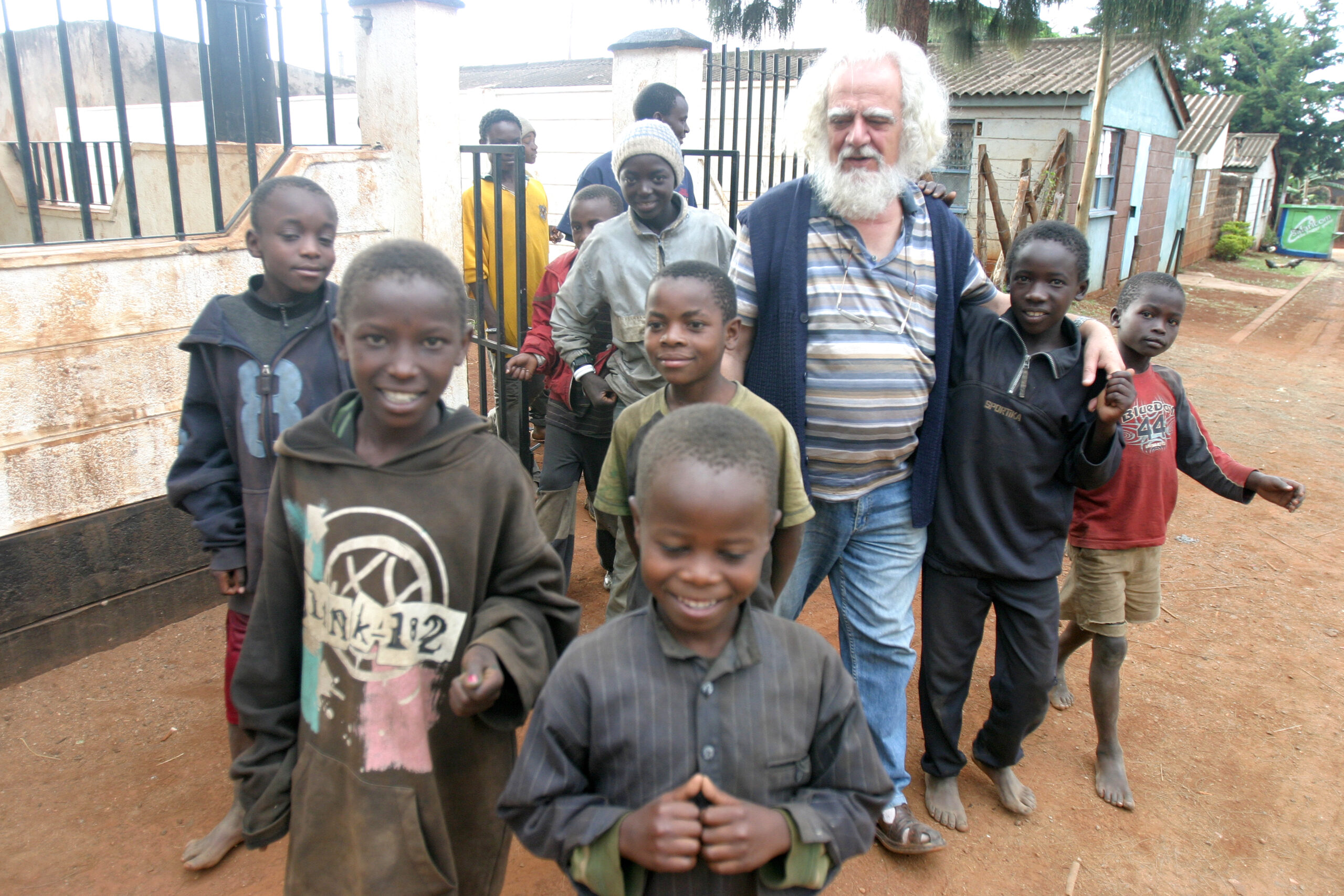
His appearance is that of an Old Testament prophet as portrayed in the classical Hollywood movies, but his behavior is far from such a cliché. Comboni Missionary Fr. Renato Kizito Sesana is very discreet: talks softly, dresses poorly and prefers to be away from the multitude. However, behind his rather shy attitude and elusive presence, the man has a true prophetic spirit − of reflection and commitment to the poor and a firm determination to uplift them with his strenuous work and farsighted vision.
The author of the African Insight section in the pages of World Mission is, in the words of a colleague working in Nairobi, the city which has been Father Kizito’s working base for the last 20 years, “a volcano of ideas and initiatives.” His foresight and dedication, together with the skills and efforts of his collaborators, make things happen especially in favor of the most neglected children and youth. (To get acquainted with the amazing range of activities to which Kizito wholeheartedly lends his time and skills, the following sites could be consulted: www.koinoniakenya.org, www.koinoniazambia.org and www.koinoniasudan.org)
THE PASSION FOR COMMUNICATION
Communication is Kizito’s other long-standing passion. Since he was asked to work for the Italian Comboni magazine Nigrizia and became its youngest editor, never has he left the field of communication. He remarks: “Even the time I was in Zambia in the bush, I wrote two books and kept writing articles for different publications.” He was not put off even by the way he was forced to leave New People − the Kenyan-based magazine he had founded and directed for 7 years − as a consequence of its uncompromising stand on the first African Synod in 1994.
According to a popular Italian proverb, “When God closes a door, He opens a window.” One of the opened windows for Kizito was the Kenyan paper The Nation for which he wrote weekly articles for five years. “They are still asking me to resume my collaboration,” he says leaving the impression that it won’t be long until he embraces that challenge again. Meanwhile, he kept writing for magazines and papers all over the world.
Teaching communication was another of his commitments. He taught an elective course in Tangaza College for 14 years. When he withdrew, he was the oldest teacher there. The course developed into a full-program which gives a degree in Social Communication. He confides that after being removed from New People, Tangaza’s headmaster wrote to his Superior General requesting for his services to start the Department of Social Communications. But, to his relief, permission was not granted. He confesses: “Truly, to be an academician, didn’t appeal much to me.”
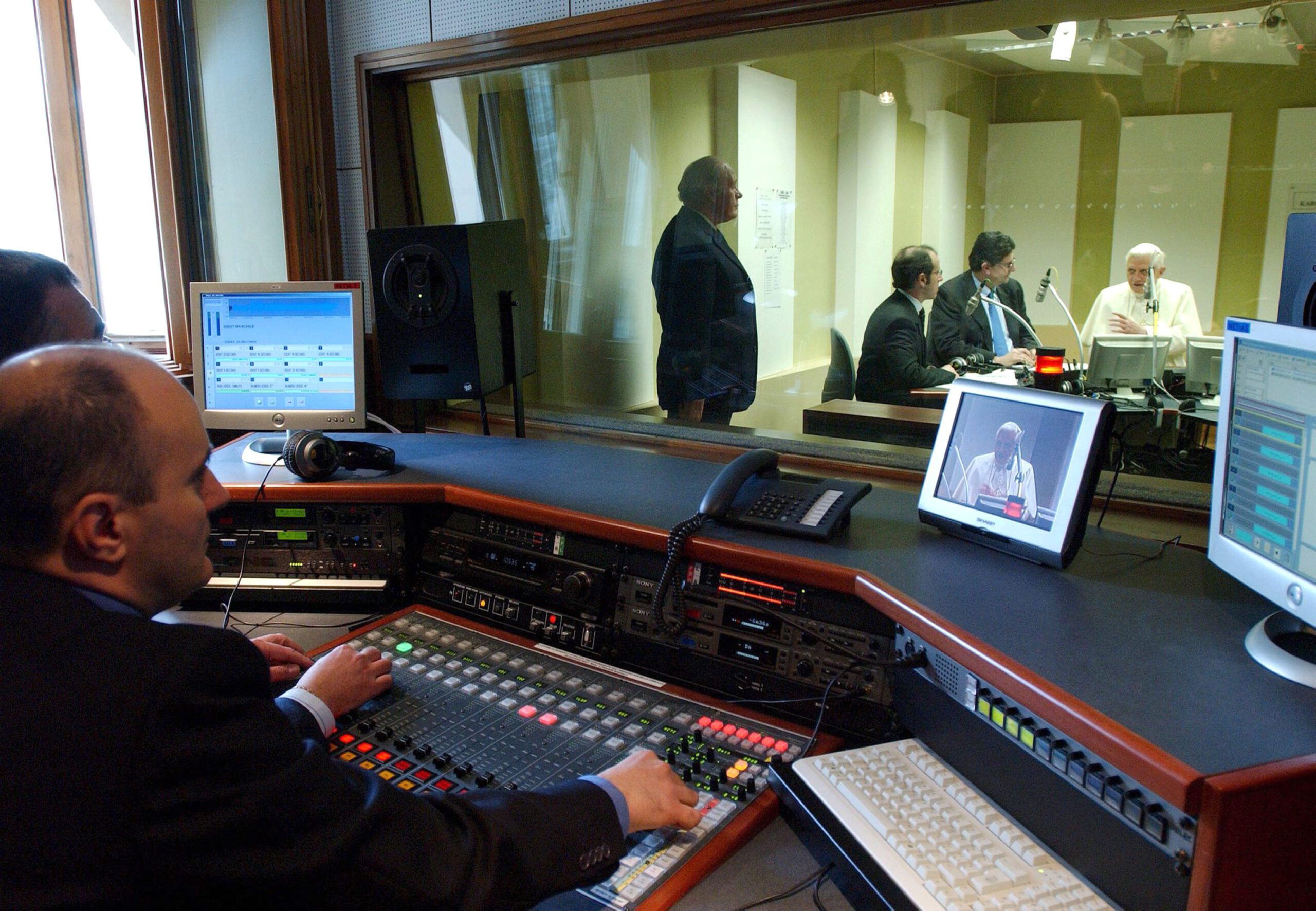
Later on, he was involved in the Catholic Radio of Kenya − a project of the Episcopal Conference. He was called in 1999 to study and set it up. “It took long,” Kizito explains, “because the government at that time didn’t give us the license. We were ready to broadcast in 2001 but we had to wait until 2003. We got the permission only from the new government, three weeks after (President Daniel Arap) Moi was defeated. We hired the people and we went on air in July 2003.”
He worked in Radio Waumini until the end of 2005. A Kenyan priest succeeded him − a condition that he had requested when he accepted the job. He still follows the Radio, but now his link with communication is basically writing to post in his blog (see: http://kizito.blogsite.org) and for different magazines and associations which occasionally ask for his texts. Whenever there are stories happening in Kenya, he is usually interviewed by Italian TV stations. He has been writing a book every two years. And he announces he is preparing one, at the moment, about children to be published at Christmastime.
DOOR OPENER
The media, however, have never took all his time and energy. He confesses: “Communication was never my main project, even when I was supposed to be full-time in New People or in Radio Waumini. Because I think to do communication properly in our field, it is important to have facts to communicate. For me, it is important to be involved in the youth ministry and so on… Now, what is taking most of my time are the different projects of Koinonia, especially the street children, here (in Nairobi) and in Zambia. In Sudan, there are no street children, fortunately, but we have schools to provide education for the children and youth.”
What is Koinonia? It is the community he founded to live with the youth as a family, support each other and tackle the work together. He tells how it started: “It is an idea that came to me in 1980. When I went to Lusaka, I was alone and I wanted to have people around me to work and to share my life and dreams with. I asked some young people whom I had baptized and confirmed if they were interested in joining me. The community started officially in 1982.”
Kizito left Zambia in 1985, when the community was still new. Few believed it would survive after his departure! He kept going back there and helping them. “It had its ups and downs but it is still there after more than 25 years. We have a big farm where some families and some single people live and take care of roughly 70 children. The two oldest ones have finished secondary school with very good results and they are going to university.”
In Nairobi, he founded a similar community that counts around 30 members, sans any recruitment. If someone is interested in helping, he/she is asked to come to their regular formation meetings − generally once a month − and, after one full year, the youth is either in or out.
The community is organized. The supreme organ is the yearly general assembly where the ones in charge of the different structures are elected. By right, Kizito can go into any commission, any meeting… basically as an adviser. Up to a few months ago, he was not one of the trustees (they used to have four trustees in Kenya). But they saw the need: “They asked me to be a trustee, because I am well-known and it makes a difference in a public office − it opens some doors. For instance, we applied for a community radio. We got the permission from the Ministry of Information, but we needed the frequency from the Communication Commission of Kenya (CCK). When the community members who were following up the issue, received a very funny letter from CCK, I decided to call on them and introduced myself as a member of Koinonia. The frequency was immediately given.”
A BIG JOB
The number of street children being cared for by Koinonia is remarkable: “We have 240 children in our houses and we follow up around 250 who have already left our premises. We are following them up for a period of time to ensure that they are integrating into normal life. We are also monitoring 100/150 who are still in the street or with their family but at risk of going back to the streets.”
This is a big job because it is not enough to have houses for them. When children become teenagers and youth what are they going to do? The community has to support them and provide activities to enable them to get a job and to mingle in the mainstream of society.
Shalom House, one of Kizito’s latest realizations in a rather well-off area of Nairobi, was built with two aims in mind: to generate funds and to give work to former street children. Most of the 45 people working there, in different capacities, are former street children. He explains that it is difficult for them to leap from Kivuli to a company because they have been marked as street children. It is easier if they have a “recycling” passage through one of Koinonia projects, like the Baraza Café. Therefore, Shalom House acts as their catapult to the work market.
Other activities are connected with the street children. Kizito gives an example: “In Kivuli, for instance, we provide homecare to AIDS terminal patients. If mothers of former street children volunteer for such mercy work, we have to find a micro-credit project to support them… The activities are wide-ranged.”
MANY STORIES
A relationship with a street child starts in many different ways. “Each child has his own,” notes Kizito. The great majority of children are approached by Koinonia social workers, some of them, former street children, too. Sometimes, children come by themselves; other times they are brought by the police. Kizito puts forward an example: “Joseph (a little child I had met in Kivuli) and his elder brother were brought by the police in June 2005, taken from a house for street children where they were undernourished and beaten. The police closed the house down and brought 15 of them to us.”
Social workers know where children usually gather and sleep − their bases − which change constantly. They go there, talk to the children, try to win their respect, trust and love, see what are the most serious cases and, whenever possible, they try to mediate and reunite them with their respective families.
The first serious questions addressed to the children are: “Where is your family?” “Can we get in touch with them?’ Sometimes, the children don’t want that and social workers have to proceed very slowly. But it’s a must: they should open up and tell them where their relatives are, so that they can be contacted. In some few cases, it is possible to reunite the child with them soon. If the problem is money to buy the uniform and send the child to school, the social workers provide it and visit the family regularly to ensure that the child goes to school.
In other cases, it takes longer to find a solution. Children are followed up in the street and the situation of each is assessed − age, period of time he has been in the street and out of school and, especially, his willingness to be rehabilitated. They are encouraged to come to the drop-in center in Kibera to learn some kind of discipline − keeping the time, abiding rules of behavior and attending some lessons of English, Mathematics, etc. Later on, they are brought to visit children’s homes, two or three times, from October to December, so that they will see what life there is like. If no other solution is possible and there’s room available, children are accepted as boarders of one of the houses. Generally, this happens at the end of the year so that they are able to start regular school in January.
When they decide to enter the house, that means they have made a personal choice: they are convinced and they will stay. A child who comes in without the necessary preparation will most probably not stay and there’s the risk of spoiling the chances of somebody wanting to help him.
Children live as if they were in a normal family. A precise program is not imposed on them because the aim is to reunite them with their families, the latest, after three years. Meanwhile, social workers keep in touch with children’s kin and encourage the mothers to come, to do some volunteer work as a sign they appreciate the work being done for their children. Mothers who do so are helped by a micro-credit project which may enable them to get some financial stability and welcome back their children.
However, this is not always possible either because the mother is a drunkard or a prostitute and doesn’t want to leave the job. In some few cases, social workers were never able to contact any relative, so they are compelled to care for the child until he is old enough to make his own choices. If one does well in school, they support his studies until he gets a degree. More often, they help the children get a trade. Kizito reaffirms: “Each one is a case. Some were trained as mechanics while residing with us in Kivuli because, as teenagers, they were too fragile to be by themselves. In other cases, we helped three or four of them, all studying as mechanics, to rent a room and to live independently. We adapt to the needs of each one of them.”
RESPONSIBILITY AND CREATIVITY
The strength of Kizito’s approach to street children compared to others? “Our strength is that we have local lay people who know the reality well and are fully integrated into the situations. They don’t have the restraints − economic and mental − the religious have. They are able to operate freely and they are successful.”
At the beginning, they didn’t have former street children, but they had people coming from the lower class in society who were very close to the world of the street children. Even though “in Kivuli, the first two or three years,” Kizito recognizes, “we were making mistakes and we were losing children. We would start the year with 60 and finish with 45 or even 40.”
Then, there was a turning point: “One evening, the twin brothers were whispering to each other for a long time. I didn’t pay much attention. But, the following day, I asked one of them: ‘What were you talking about?’ After some hesitation, he answered: ‘He wanted to leave, but I convinced him to stay because this is the right place for him.’ The elder children take responsibility of the younger. This creates a familial atmosphere: in spite of being an institution, they feel at home, they feel loved, they feel the others are taking care of them. In most of other houses I know, up to 40% of the children go back to the street.”
Kizito trusts his collaborators and delegates responsibilities. He promotes the principles of creativity and responsibility: “I work to instill in my co-workers and in the children the principle of responsibility and creativity. They are able to do things by themselves. They don’t need others to do things for them. In the houses, the elder children must take care of the younger ones.”
Undoubtedly, this helps to have a high success rate: “We lose around 5%. In Kivuli, we didn’t lose any child for four consecutive years. Last year, we lost one who went back to the street on his own. Then we lost two in Tone la Maji (Drop of Water in Kiswahili) and we lost one in Ngong Hills.”
SPIRIT OF SERVICE
Could such variety of projects continue without Kizito’s presence and supervision? He thinks so: “I think we have a group of very mature and responsible persons − some of them former street children − who could go on without me. It would be more difficult for them to start new projects, because money is needed. But the running of the project in itself, they should be able.”
Projects require financing. Koinonia in Rome, now registered as an NGO, is helping them. But, in Nairobi, they are committed to raise funds to depend less on overseas money and make projects self-supporting. The project in which they are putting more hopes − to generate funds and to create jobs − is Koinonia Information Technology (IT) which employs seven people with the manager and has just been registered as a company. It has got 49% of a company’s share that works for phone companies and it is very profitable. The contract is considered very promising.
Father Kizito sees his legacy as “the spirit of service to these poor people, especially the children and the youth. I work so that those kids who are gifted are able to do something − not necessarily great or important − and will have a chance to grow as independent human beings.” But he is not thinking of withdrawing soon from his many commitments and challenging responsibilities − in Kenya, Zambia and Sudan (Nuba Mountains).
Asked how he would describe his missionary life, he muses: “I try to make the Gospel relevant in the different situations − through my example and work, more than through my words.”