A Five-Century Devotion

INTRODUCTION

According to tradition, the image of the Santo Niño was brought to Cebu by the great Portuguese navigator Ferdinand Magellan, who was killed there. One Spanish soldier found the statue in a house spared by a fire some years later. For almost five centuries, it remained a Cebuano devotion, and spread all over the Philippines.

WRITTEN BY

SHARE THE WORD

PUBLISHED ON

When Msgr. Francisco Mendoza was the parish priest of the Santo Niño Church in Tondo, Manila, he told, in 1992, the following true story: One day, an old lady with wooden shoes and shabby clothes approached him. She offered him a fat envelope. When he opened it, he saw much money inside. He told her, “Lola, maybe you will need this money more than me. The Church will always have other sources of donation.”

Then she began to cry. “Please accept it because I promised the Santo Niño to give all my money to this shrine. Two nights ago, around 2:00 a.m., a small child awakened me from my sleep. His face is like that of the Santo Niño image here in this church! I am not from here. I am just a visitor, trying to do my devotion. He awakened me because there was a small fire on my altar. In one tap of my hands, I extinguished the fire. Had I been late, my house would have burned down and I would be dead. Out of thanksgiving, I told the Santo Niño that I will give all my savings to this shrine. I am sure that He will not desert me.”
The Monsignor continued: “After sometime, she returned to see me. She was well dressed. She said: ‘I told you that He will not desert me. Look at me!’”

A CEBUANO TRADITION
Devotion to the Child Jesus goes back to early times. Church Fathers like St. Athanasius (296-373 CE), bishop of Alexandria and St. Jerome (340-420) were among the early devotees. Other worshippers were St. Bernard of Clairvaux, St. Francis of Assisi (who introduced the Nativity scene on Christmas), St. Anthony of Padua, St. Rose of Lima, St. Teresa of Avila were among the later devotees. Many sculptors had carved images of the Holy Child, one was done in 1340 with a bird in his right hand.

Devotion to the Child Jesus was popular in Spain. It is no wonder that, in 1521, Ferdinand Magellan, the great Portuguese navigator at the service of the Spanish crown, presented a statue of the Santo Niño to Rajah Humabon, the ruler of Cebu during the mass baptism of the first Christians there. In an encounter with the natives, Lapu-lapu killed Magellan. Upon the arrival in Cebu of the next Legazpi-led expedition in 1565, the Cebuanos fled from the avenging Spaniards. One of the Spanish soldiers found the statue in the house that was spared by a fire.

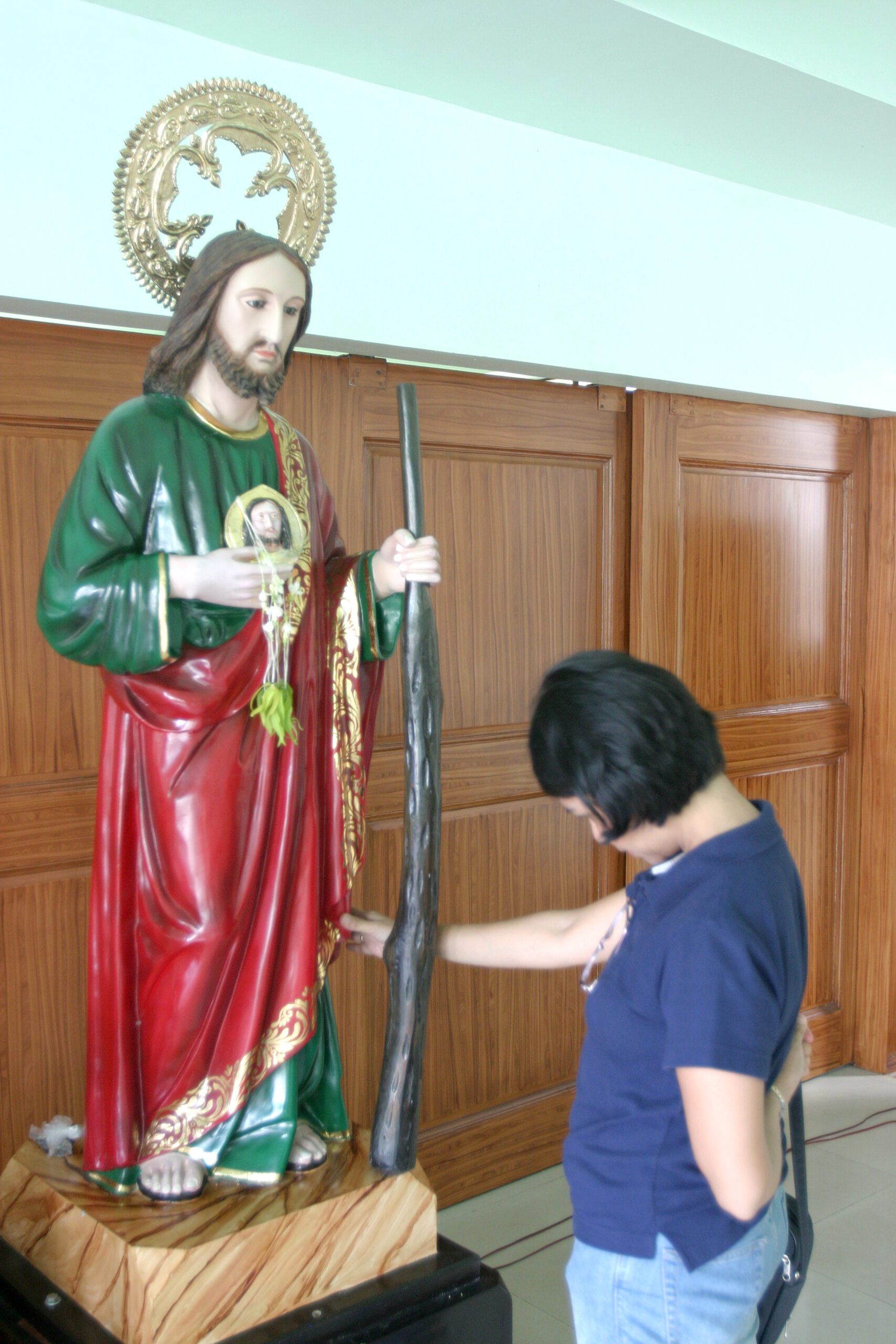
That statue was dressed in the native style with materials that show it was the object of Cebuano veneration, with Christian and native practices. From Cebu, the veneration spread throughout the Philippines. The many statues have quasi-military ranks. If one statue is a lieutenant in one place, and another is a colonel elsewhere, the general Santo Niño is in Cebu.

THE THEFT AND THE FLOOD
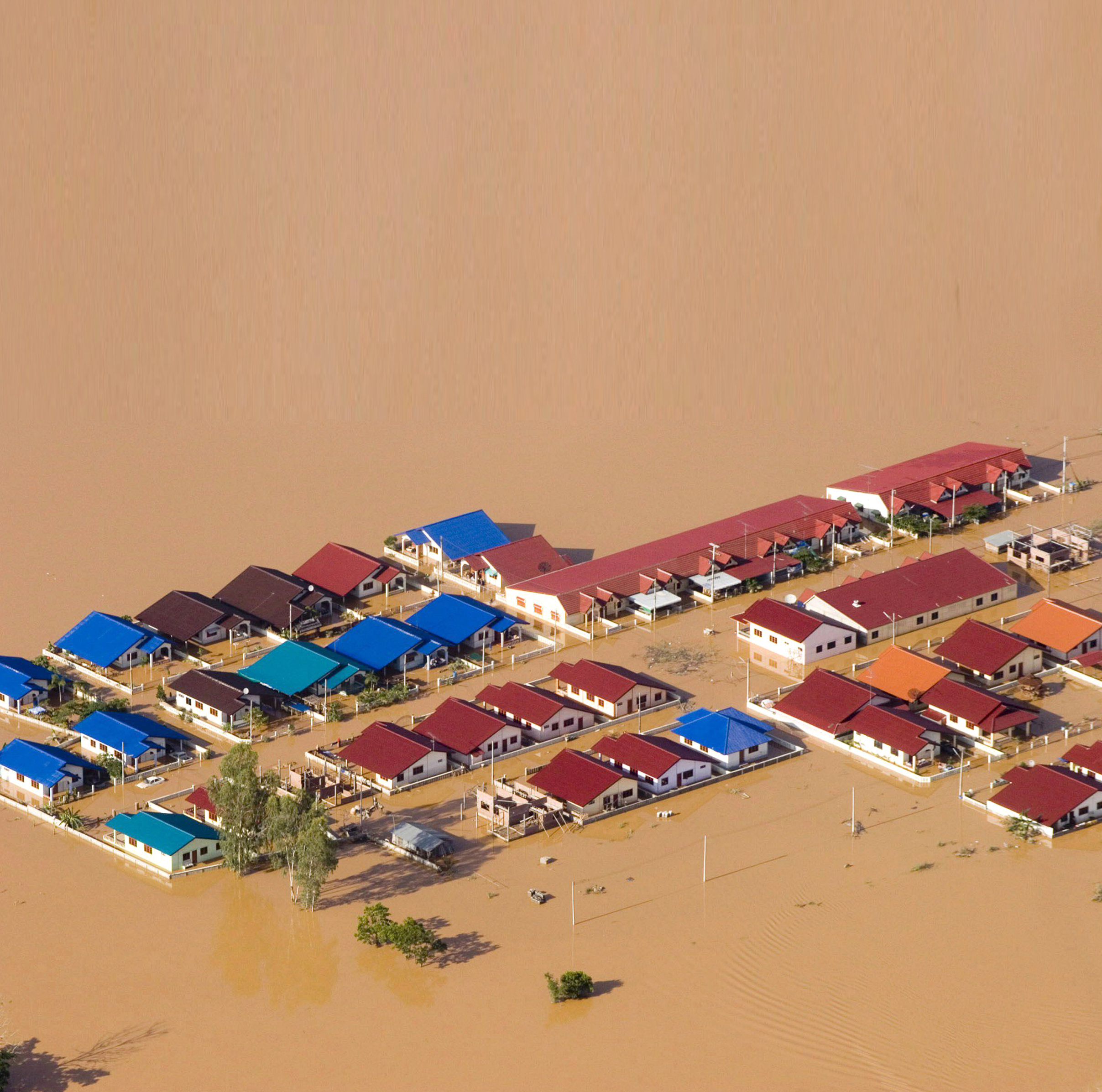
The increase in the devotion to Santo Niño in Manila can be attributed to one incident. On 14 July 1972, a thief stole the image of the Santo Niño from the church in Tondo. He hid himself in the confessional, and when he was alone, he unscrewed the glass covering and took the image. Then a forty-day deluge of rain, which not only flooded Metro Manila but also central Luzon, followed. The newspapers printed photos of one-storey public school buildings under water. The people attributed the flood to the theft of the Santo Niño.

Imelda Marcos, who was the First Lady then, used all her connections to retrieve the statue. They recovered the ivory face, hands, and feet from an antique dealer. On August 2, she returned the restored statue in a six-by-six truck that drove through the flooded streets. Right after returning it, the rain stopped and sun shone again. That occasion motivated the increase of the devotion to the Santo Niño in Manila.

THE “SECRET MEETINGS”
At Mount Sinai, God appeared to the Jews in lightning and thunder. “When the people heard the thunder and the trumpet blast and saw the lightning and the smoking mountain, they trembled with fear and stood a long way off. They said to Moses, ‘If you speak to us, we will listen; but we are afraid that if God speaks to us, we will die.’” (Ex. 20:18-19). But as the preface of Christmas puts it, “In the wonder of the Incarnation, Your eternal Word has brought to the eyes of faith a new and radiant vision of Your glory. In Him, we see our God made visible and so are caught up in love of the God we cannot see.” It is the theology of self-emptying (Phil. 2:1-11). If an innocent child melts the hearts of adults, so the Holy Child becomes most approachable. Devotees beg for mercy, even threaten Him for refusal of petitions, give thanks and make promises.

Numerous stories of the Santo Niño in Cebu are about the “secret meetings” of the Child Jesus with His Mother, the miraculous Lady of the Rule from Opon, Mactan. The meetings would be revealed in the robes of both statues with the amor seco (a weed that attaches itself to clothes as one passes by).

But there are also deviations. One devotee of the Santo Niño said that anything you ask from Him will be granted. The devotee added: “If that Nazareno believed in the Santo Niño, He would not have been crucified!”

PRAISES AND THREATS
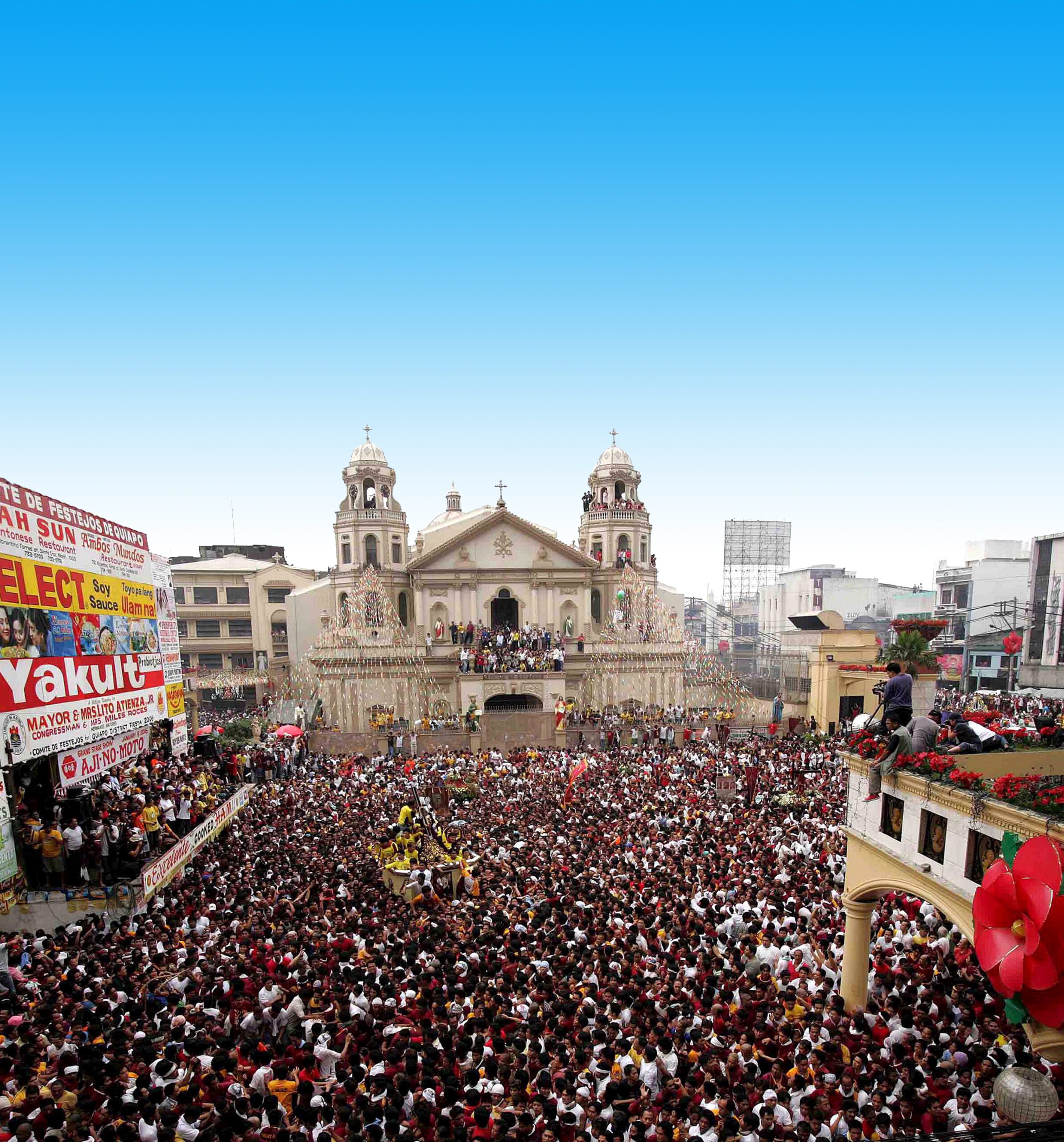
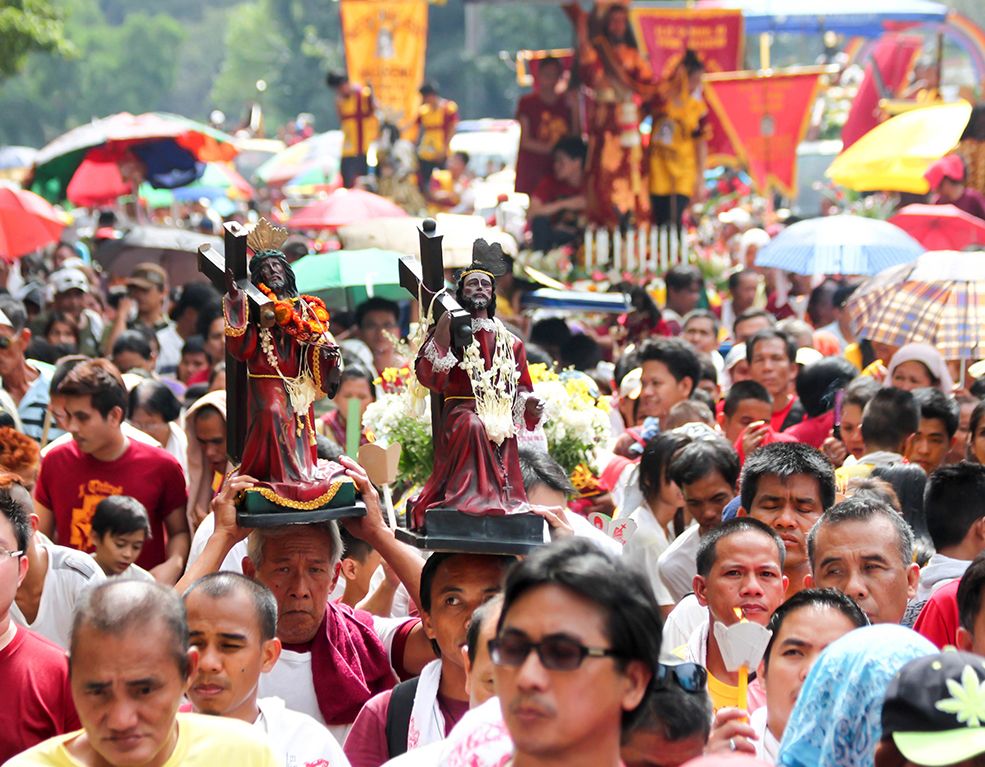
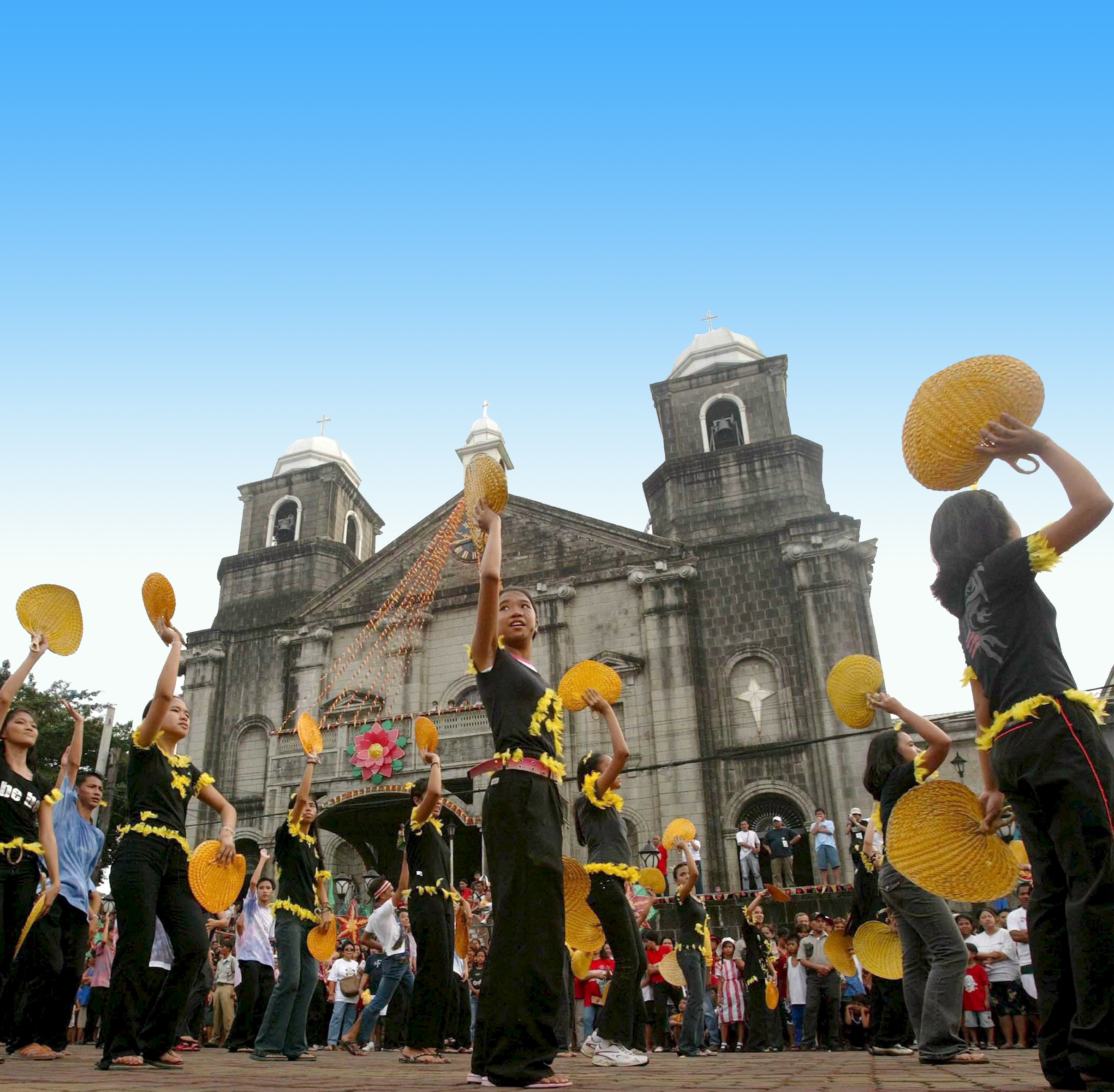
In Cebu, one form of the cult is through the Sinulog, a series of rhyhmic, jerky bodily movements with shouts of Pit Senyor (equivalent to Praise the Lord)! In Kalibo, its counterpart is the ati-atihan where the devotees cover their faces and arms with soot, to imitate the dark Aytas, the original and indigenous people of the area. From Cebu and Kalibo, the practice has spread throughout the Philippines, especially in Metro Manila. The procession of Manila has different bands with their respective majorettes. The men carry the statue on a bier, and they sway with the music of the bands. Other devotees carry their own images raised above their heads and dance with the music. Others parade their own statues in pedal-powered tricycles and pushcarts. The Santo Niño is dressed in different costumes, such as a farmer, a policeman, in baby diaper, with shades and baseball caps.
In times of drought, farmers bring the statue in a procession to the river and dip it, threatening to leave Him there unless He brings rain.

THE TRAVELING IMAGES
Some devotees form organizations similar to Basic Ecclesial Communities for the service of their devotion to the Santo Niño. In the case of Manila, the parish has the Confraternity of Santo Niño, an official organization under the parish. It has its set of officers. But there are other organizations in the parish. Those who possess a statue of the Santo Niño maintain their own group.

The members propagate the devotion by moving the statue from house to house. It can stay for three days in a given place. Members of the confraternity accompany the statue. They have prayer vigils in the house where the image temporarily dwells. Neighbors and friends of the host family join. This is a form of proclamation. n

Share Your Thoughts

All comments are moderated

From The Same Issue

The articles and content about this issue

From The Same Issue

The articles and content about this issue

From This Topic

The articles and content about this topic

From This Topic

The articles and content about this topic

Explore Other Topics

Browse other coverage

Explore Other Topics

Browse other coverage

WM SPECIAL

Presents, discusses and draws readers to reflect on issues of outmost relevance to the world today.


FRONTIERS

Very often, mission is carried out in frontier situations around the world. Those who embrace these situations have much to share.


UNITY IN DIVERSITY

Writer Ilsa Reyes will be exploring the richness of Pope Francis’s latest encyclical Fratelli Tutti with a view of helping our readers to get a grasp of the this beautiful papal document.


FRONTLINE

Puts to the front committed and inspiring people around the world who embrace humanitarian and religious causes with altruism and passion.


IN FOCUS

Focus on a given theme of interest touching upon social, economic and religious issues.


FAITH@50

As the Philippines prepares to celebrate 500 years of the arrival of Christianity. Fr. James Kroeger leads us in this series into a discovery journey of the landmark events in the history of faith in the Philippine archipelago.


INSIGHT

Aims to nurture and inspire our hearts and minds while pondering upon timely themes.


FILIPINO FOCUS

The large archipelago of the Philippines, in its richness of peoples and cultures, offers varied and challenging situations for mission.


FOLLOW ME

Reflections and vocation stories that shape up the lives of young people.


MISSION IS FUN

As humor and goodness of heart are qualities of Christian and missionary life, the new column “Mission is fun” will be publishing some anecdotes and stories that have happened in a missionary context to lighten up the spirits and trigger a smile in our faces.


LIVING COMMUNION

To help readers of World Mission live this year dedicated to Ecumenism, Interreligious Dialogue and Indigenous Peoples, Tita Puangco, writer and lecturer, shares in this section insights on the spirituality of communion.


WINDS OF THE SPIRIT

A historic view of the Catholic movements that emerged from the grassroots as an inspiration by the Holy Spirit.


BRIDGE BUILDERS

On the Year of Ecumenism, Interreligious Dialogue and Indigenous Peoples, radio host and communicator Ilsa Reyes, in her monthly column, encourages Christians and people of good will to be one with their fellow people of other sects, religions and tribes.


INTERVIEW

Questions to a personality of the Church or secular world on matters of interest that touch upon the lives of people.


WORLD TOUCH

News from the Church, the missionary world and environment that inform and form the consciences.


CARE OF THE EARTH

A feature on environmental issues that are affecting the whole world with the view of raising awareness and prompting action.


EDITORIAL

The editor gives his personal take on a given topic related to the life of the Church, the society or the world.


YOUNG HEART

A monthly column on themes touching the lives of young people in the Year of the Youth in the Philippines by radio host and communicator I lsa Reyes.


SCROLL

A missionary living in the Chinese world shares his life-experiences made up of challenges and joyous encounters with common people.


EXTRAORDINARY PEOPLE

Life stories of people who deserve to be known for who they were, what they did and what they stood for in their journey on earth.


ONE BY ONE

Stories of people whom a missionary met in his life and who were touched by Jesus in mysterious ways.


INCREASE OUR FAITH

Critical reflection from a Christian perspective on current issues.


SPECIAL MOMENTS

Comboni missionary Fr. Lorenzo Carraro makes a journey through history pinpointing landmark events that changed the course of humanity.


PROFILE

A biographical sketch of a public person, known for his/her influence in the society and in the Church, showing an exemplary commitment to the service of others.


WM REPORTS

Gives fresh, truthful, and comprehensive information on issues that are of concern to all.


LIFE'S ESSENTIALS

A column aimed at helping the readers live their Christian mission by focusing on what is essential in life and what it entails.


ASIAN FOCUS

Peoples, events, religion, culture and the society of Asia in focus.


THE SEARCHER'S PATH

The human heart always searches for greatness in God’s eyes, treading the path to the fullness of life - no matter what it takes.


INDIAN FOCUS

The subcontinent of India with its richness and variety of cultures and religions is given center stage.


AFRICAN FOCUS

The African continent in focus where Christianity is growing the fastest in the world.


JOURNEY MOMENTS

Well-known writer and public speaker, Fr. Jerry Orbos, accompanies our journey of life and faith with moments of wit and inspiration based on the biblical and human wisdom.


IGNATIUS STEPS

On the year dedicated to St. Ignatius of Loyala, Fr. Lorenzo Carraro walks us through the main themes of the Ignatian spirituality.


THE SEVEN LAST WORDS OF JESUS

Fr. John Taneburgo helps us to meditate every month on each of the Seven Last Words that Jesus uttered from the cross.


INSIDE THE HOLY BOOK

In this section, Fr. Lorenzo delves into the secrets and depths of the Sacred Scriptures opening for us the treasures of the Sacred Book so that the reader may delight in the knowledge of the Word of God.


CONVERSATIONS

Reflections about the synodal journey on a conversational and informal style to trigger reflection and sharing about the synodal path the Church has embarked upon.


VATICAN II

This 'mini-course' series provides a comprehensive exploration of Vatican II, tracing its origins, key moments, and transformative impact on the Catholic Church.


COMBONIS IN ASIA

This series offers an in-depth look at the Comboni Missionaries in Asia, highlighting their communities, apostolates, and the unique priorities guiding their mission. The articles provide insights into the challenges, triumphs, and the enduring values that define the Comboni presence in Asia.


BEYOND THE SYNOD

Following the Synod on Synodality, this series examines how dioceses, parishes, and lay organizations in the Philippines are interpreting and applying the principles of the synod, the challenges encountered, and the diverse voices shaping the synodal journey toward a renewed Church.


A TASTE OF TRADITION

This series introduces the Fathers of the Church, featuring the most prominent figures from the early centuries of Christianity. Each article explores the lives, teachings, and enduring influence of these foundational thinkers, highlighting their contributions the spiritual heritage of the Church.


A YEAR OF PRAYER

In preparation for the 2025 Jubilee Year under the theme “Pilgrims of Hope,” 2024 has been designated a Year of Prayer. World Mission (courtesy of Aleteia) publishes every month a prayer by a saint to help our readers grow in the spirit of prayer in preparation for the Jubilee Year.


OUR WORLD

In Our World, the author explores the main trends shaping contemporary humanity from a critical and ethical perspective. Each article examines pressing issues such as technological advancement, environmental crises, social justice, and shifting cultural values, inviting readers to reflect on the moral implications and challenges of our rapidly changing world.


CATHOLIC SOCIAL DOCTRINE

This series unpacks the principles of Catholic Social Doctrine, offering a deep dive into the Church's teachings on social justice, human dignity, and the common good.


HOPEFUL LIVING

Hopeful Living’ is the new section for 2026, authored by Fr. James Kroeger, who dedicated most of his missionary life to the Philippines. In this monthly contribution, he will explore various aspects of the virtue of hope. His aim is to help readers align their Christian lives more closely with a hopeful outlook.


PHILIPPINE CROSSROADS

Filipino Catholic scholar Jose Bautista writes each month about how the Philippines is at a crossroads, considering the recent flood control issues and other corruption scandals that have engulfed the nation. He incorporates the Church’s response and its moral perspective regarding these social challenges.


BIBLE QUIZ

Test your knowledge and deepen your understanding with our Bible Quiz! Each quiz offers fun and challenging questions that explore key stories, themes, and figures from both the Old and New Testaments.


Shopping Cart