
We start the year 2008 with the hope that this year will be a better time for peace in the world. This hope guides us always in our journey of life. We are called to see the signs of peace today, without ignoring the signs of violence.
Those who belong to specific religions, and those who do not have any religion but work for the common good, can be considered “believers” of peace. Religions today play an important role for the peace of the future, and we try to see and understand now the signs of peace.
Doing this reflection, we concentrate on Christianity and Islam, the two biggest religions, whose followers together form 55% of the population of the world and directly or indirectly are influencing humanity for the future of peace.
The interreligious efforts among Christians and Muslims are becoming more relevant today. One can ask “Why?” For sure, one answer is that the times require more dialogue because of the violence in the world; but if we go deeper into this question, we find that we are still in the stage of “dialogue as a strategy.” The great challenge is to move from “dialogue as strategy” to the “spirit of dialogue.”
THE FEAR OF CONVERSION
Can we say that there is a spirit of dialogue today among Christians and Muslims? Firstly, we need to accept that the “spirit of dialogue” for a Christian and for a Muslim is different, because Muslims and Christians are guided by a different understanding of this concept arising from our respective traditions and beliefs. Secondly, we also know that both Christians and Muslims are often guided by a “dialogue” which is the fruit of fear and struggle, and not a real dialogue. However, there are signs among Christians and Muslims that we have to recognize and evaluate in their own context.
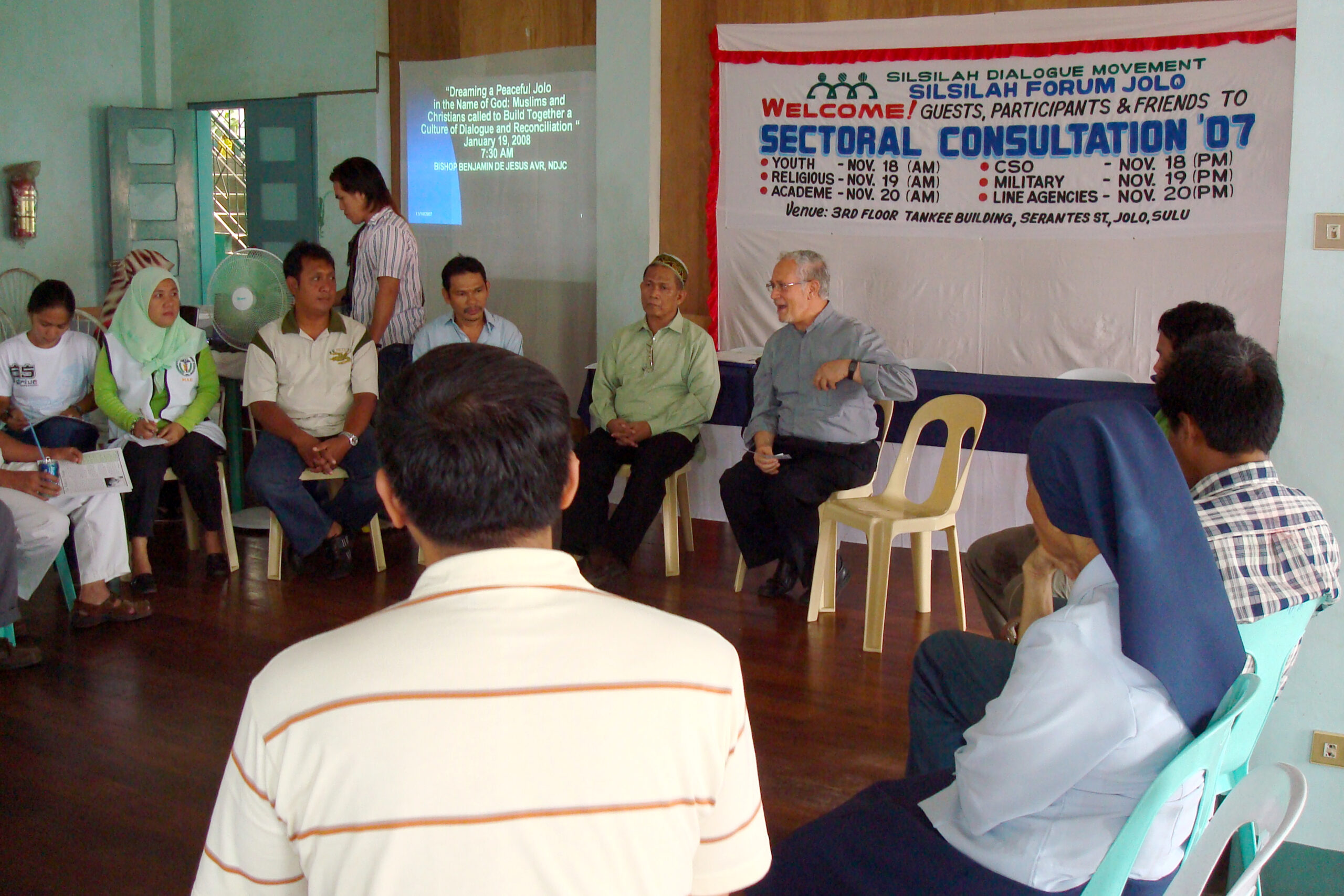
In the Philippines, the country that I know best because of my thirty years of mission in Mindanao and my commitment through the Silsilah Dialogue Movement, I observe that many Christian religious groups are now doing programs in line with dialogue for peace. In more recent time, we can observe a similar spirit among Muslims groups, although they have a certain fear that the programs of dialogue and peace in Mindanao promoted by Christians are strategies to sideline or forget the real issue of their “struggle for self determination.” For some, there is also the fear that such programs are really attempts coming from the majority Christian groups to convert them. We cannot deny that the same fear of conversion is in the mind of Christians, observing some very active groups who encourage and promote “balik Islam” (the conversion of Christians to Islam).
Silsilah Dialogue Movement, the first group started in the Philippines in 1984 to promote dialogue and is still very active, has been in contact with almost all the religious groups in many ways, especially giving formation on dialogue and peace through summer courses, for the last twenty-three years. The Movement has touched the lives and the hearts of thousands of Christians and Muslims and many of them are now in the front lines of many dialogue and peace programs.
CULTURE OF PEACE
For sure, the group that has most influenced the development of interest in Christian-Muslim dialogue in the last eleven years in Mindanao has been the Bishops-Ulama Conference (BUC), formed by the Catholic bishops of Mindanao, bishops of some Protestant groups and the Muslim religious leaders (ulama) of a respected group of ulama in the Philippines, the Ulama League of the Philippines.
The interest in interreligious dialogue, especially Muslim-Christian dialogue in the Philippines and many other parts of the world, has been often promoted in relation to the need of peace because of the world situation of violence. Thanks to the United Nations which, through UNESCO, is promoting the “Culture of Peace,” we can count today on many efforts, at the government level and the level of many other groups and institutions that promote the culture of peace in the Philippines.
We cannot ignore also the efforts of the Philippine government, through the Office of the Presidential Adviser for the Peace Process (OPAPP) and the many efforts of a good number of embassies based in the Philippines to promote dialogue and peace.
Even if many of the dialogue and peace efforts in the Philippines and other parts of the world are guided by fear, we cannot ignore this phenomenon and we are called to read the signs of the times as a signal to make use of the “momentum” to move for a better and deeper dialogue for peace. This “momentum” is challenging us in the Silsilah Dialogue Movement to promote the spirituality of life-in-dialogue as a way to promote the Culture of Dialogue, path to peace. It is an effort to encourage people to reflect on a process of a personal transformation to reach the stage of social transformation, path to peace.
MESSAGE TO THE MUSLIMS
In the context of this “momentum” of searching for peace I’d like to mention here the great effort of interreligious dialogue started with Vatican II in the sixties and, almost at the same time, the special commitment for peace in 1967 made by the Catholic Church when Pope Paul VI declared January 1 of every year as the Universal Day of Peace. On that occasion, the pope sends to the world, every year, a message of peace. In the same spirit, the Pontifical Council for Interreligious Dialogue (PCID) has encouraged dialogue, sending to the Muslim Umma on the last month of Ramadan the message “Christians and Muslims: called to promote a culture of peace.” Also relevant is the effort of the World Council of Churches (WCC) which represents most of the Protestant denominations. They have given special attention to dialogue and peace since the end of the Second World War.
The Muslim Umma has observed this new trend of dialogue among Christians and has answered with some forms of collaboration and dialogue, especially from the year 1986 when Pope John Paul II promoted the first day of prayer for peace in Assisi.
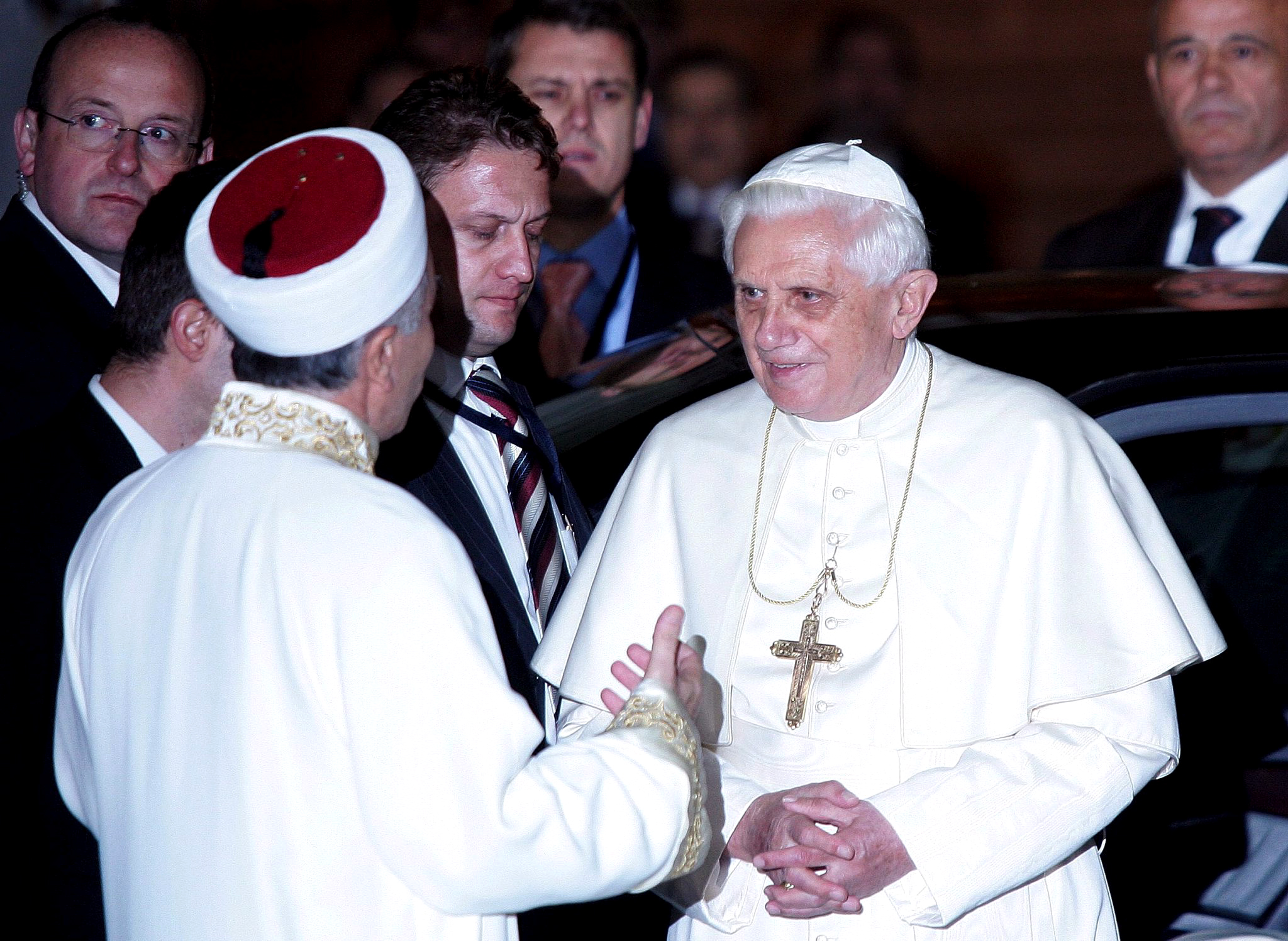
One relevant sign of dialogue coming from the Muslim Umma is the “open letter and call” of 138 Muslim leaders not only to Pope Benedict XVI, but also to the Orthodox Patriarch of Constantinople, the Archbishop of Canterbury and the leaders of the Lutheran, Methodist, Baptist and Reformed Churches. The title of the letter: “A Common Word between Us and You” was taken from the Qur’an (Sura 3:64) addressed to Jews and Christians considered by the Muslims the “Peoples of the Scripture.”
A RELEVANT SIGN
It is the first relevant sign of dialogue in history coming from the Muslim Umma. Although not all the 138 are the top Muslim leaders, nevertheless, they are leaders highly respected and the letter comes after that of the 38 Muslim scholars addressed to Pope Benedict XVI after his lecture in Regensburg.
The new letter of the 138 Muslim religious leaders is a good sign of dialogue especially because quotations are taken from the Qur’an and from the Bible and clearly condemns violence, saying: “As Muslims, we say to Christians that we are not against them and that Islam in not against them − so long as they do not wage war against Muslims on account of their religion, oppress them and drive them out of their homes (cf. sura 60,8).
The letter adds a special note to those who use violence even among the Muslims: “To those who, nevertheless, relish conflict and destruction for their own sake or reckon that, ultimately, they stand to gain through them, we say our very eternal souls are all at stake if we fail to sincerely make every effort to make peace and come together in harmony.”
THE COMMON ENEMY
As a conclusion of these few points of reflection, we can say that this is the worst time of history, but it is also the best of time, for the ideal of dialogue. This time is in our hands; we have a great responsibility for future peace. We are called to read the messages of this “momentum” to build a peace based on the centrality of God in history. We have to fight as Christians and Muslims, together with people of other religions, to remove the common enemy of materialism and relativism that are destroying our life and our future.
I hope the new generation will forgive us because we have lost our way with our violence and materialism. Though we have regained with courage what we have lost, still we will give them a wounded world, offering hope that comes from wounded healers and passing to them the torch of the “Olympians of Peace.”