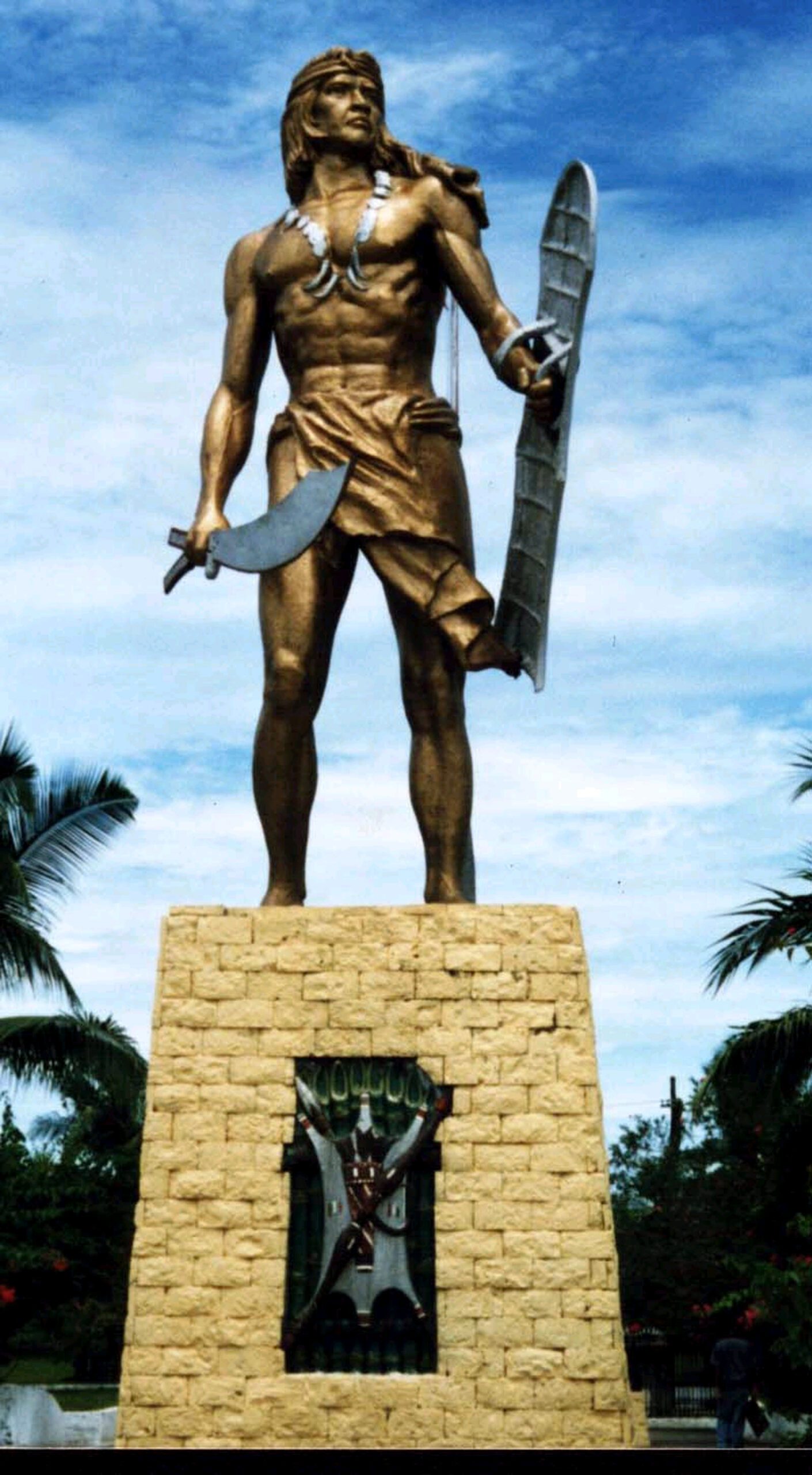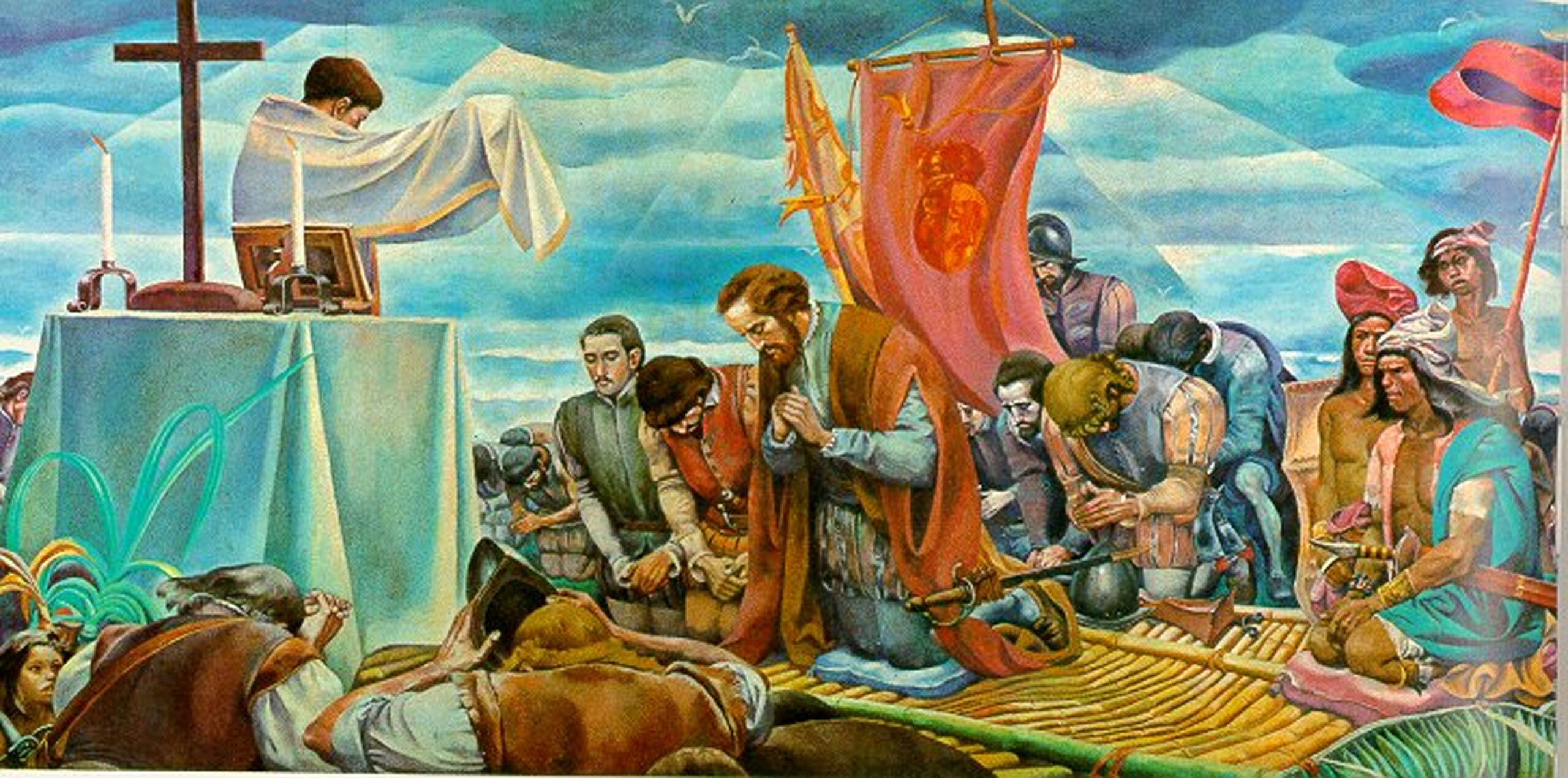

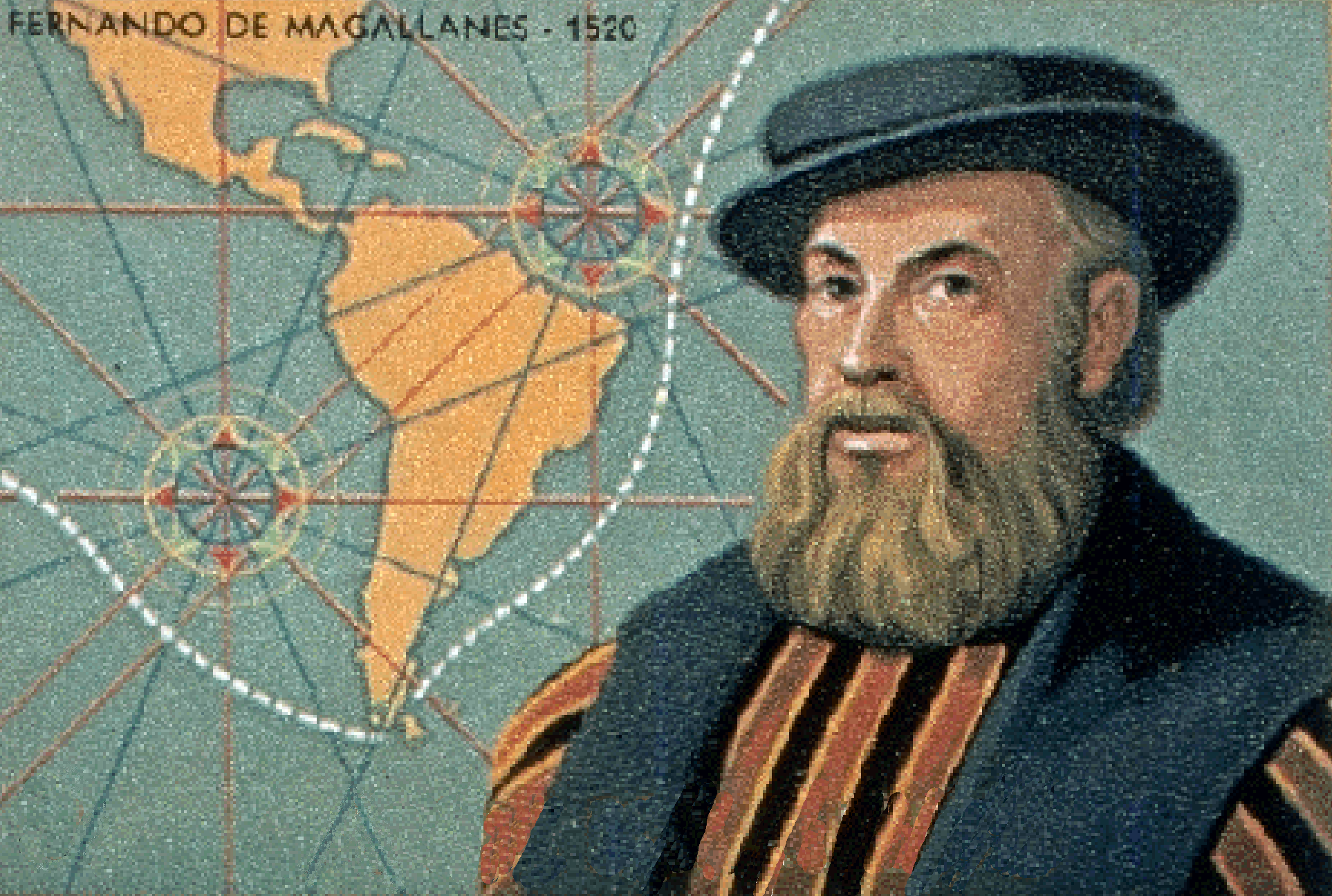
Some experts consider Ferdinand Magellan − his Portuguese name is Fernão de Magalhães − the greatest explorer of all times, a kind of Alexander the Great of the seas. Because nobody before dared and accomplished so much. He proved that the Earth is round, that ancient geography was wrong, that one could circumnavigate the American continent and that, crossing the globe from East to West following the movement of the Sun, one would gain a day. Only this discovery would feed speculation about time and eternity in the following centuries. In modern times, the notion of time, space and matter relativity allowed space travels that explore the universe. Not by hazard, the first spacecraft sent to the planet Venus by NASA was baptized Magellan.
To a Filipino, he may appear as just another naughty adventurer because biased history books show him as the man who “discovered” the Philippines or the man who started Spanish colonization − in the 1500s, he was, in fact, at the service of the Spanish crown more worried in finding the “spiceland.” But a man, like history, is not just an isolated island, a small and defined piece of an archipelago. Magellan, surely, is not. If one wants to follow a fashionable trend − cultural relativism − one would say: Ok, all our troubles started with him. This kind of thought is predominant in the world of resentment, of bad governance and of low self-esteem. From Africa to Asia or America, the message is almost always the same: he “discovered” us and this means that, after all these centuries, he is still guilty for the underdevelopment, the poverty, the corruption that undermine our society.
On the other hand, one could state, with all propriety, that nobody discovers another. Discovery is a patronizing word and must be reserved to science, technology and deserted spaces on Earth or in the infinite skies above. But, in another sense, it also means to bring to a more general knowledge the existence of lands and populations hardly known outside a restricted area. In the same sense that, in my own lifetime, I knew poor rural people in my country who lived just some kilometers away from the seashore but only saw, for the first time, the Atlantic when they were in their 50’s or 60’s. One cannot imagine the awe they felt… That was indeed a real discovery!
EXPERIMENTAL KNOWLEDGE
As a matter of fact, I prefer to think about Magellan as the man who − forgive the simile − like God, gave names to the then unnamed parts of the world. The Pacific Ocean − is there a more beautiful ocean’s name? − was named by him, as well as the Magellan Strait, which is so full of dangers that no one dared to cross it before, or the Patagonia, a strange and still mysterious name meaning, in the old Portuguese word, “men with big foot.”
Until someone proves the opposite, Magellan was the man who, more than anyone else, “baptized” places in the world. But while one thinks about this, one might as well think of the big uncertainties he also faced then: suffering from all kinds of diseases, misfortunes and treachery, in fragile wooden ships which, perhaps, no one would dare to use nowadays to cross the sea during a stormy night.
Let us be clear. I’m not a defender of colonization of any kind, neither of the old forms based on a strange mixture of “evangelization,” commerce and the force of weapons (I thank John Paul II for having asked the world’s pardon for this.) nor of the “new wave,” inspired by the “gospel” of free trade, exploitation and… even more sophisticated weapons. But, as a European, I feel grateful for all the blessings I got. One can translate these in a word: civilization. That was the result, to a great extent, of the Renaissance movement led by people like Magellan who proved that one cannot think without an experimental basis, relying only on “sacred texts” and old traditions. If this movement, and the men who provided the evidence that supported it, had not existed, we could be now like the Islamic extremists.
ENRICHING DIALOGUE
As a Portuguese, I appreciate all the “good colonization” my country had gone through because I would not have been the same without it. The alphabet came from the East, numbers from the Arabs, thought from the Greeks, technical achievements, administration, law and language from the Romans. The pearl on top of this heritage came from the Middle East: the Jewish-Christian legacy. It reached me because my country has been a part of the Roman Empire. Let me say more: without the Arabs that occupied a great part of Europe, Greek thought would have not reached us: it was saved by them and, after that, copied in Christian monasteries. The first maps the Portuguese used to navigate were drawn by Jews and the navigation techniques were also developed by the Arabs.
Denial of this heritage − erasing the past and following victimization tactics − would have led me, perhaps, where the Islamists are now: in a suicide collision route that denies God and reason. Frankly, I do prefer the results of my fertile “colonization,” such as discovering that God is Life, Love and Logos (Divine Wisdom). Furthermore, who knows exactly what is a discovery? Nobody knows who discovered the fire, the wheel, agriculture or the taming of animals. In the course of human history, the biggest advancements are usually the result of the actions of generations and, as a collective achievement, discoveries belong to all humankind. Such was Magellan’s, with the almost mystic strength and knowledge that led him to face tremendous dangers and misfortunes in his adventures.