Religion is the soul of a culture, and culture is the language of religion. What do we mean by culture? One way of understanding culture is to focus on its three dimensions, three layers, three horizons: the material, the human and the spiritual. There is nothing sacrosanct about these names. One may call them differently provided we do not neglect the specific dynamics of each of them.
The material or cosmic dimension is the perceptible, measurable and quantifiable dimension. It constitutes the address, as it were, of all reality. It locates everything that is, everything that we say, and renders it perceptible.
Nothing can be part of reality if it does not have a locus in the world of perception. This may sound strange but it is true. The dynamic of this dimension constitutes the dynamic of the world of things. It expresses itself in the language of precision and proof. The more precise the language, the more faithfully it represents this dynamic. Its truth, which focuses on meaning, demands verification or falsification.
However, the cosmic dimension is only the first dimension. Connected with it is the human dimension, the dimension of the world of person. Corresponding to the dynamic of the perceptible is the dynamic of the perceiving dimension, the dimension of consciousness. Its dynamic expresses itself and is evident in the language of love, warmth and affection, of friendship, fidelity and responsibility. Its truth, which is embodied in the experience of meaningfulness, is to be discovered in art, music, poetry and, above all, in human relationships.
Intimately connected with these two dimensions is a third one, the depth-dimension. The perceptible dimension is endlessly perceptible. Perceptibility has no limit in any culture. The perceiving dimension on its side, too, has no limit either. The ability to perceive also is endless in any given culture. This is because the depth-dimension is operative in both the dimensions and makes them, as it were, “endless.” Its language is the language that makes sense and deepens meaning in life.
RELIGIOUS PLURALISM
These three dimensions constitute the horizon of a culture and give it a specific thrust. This specificity is irreducible and ultimately responsible for the phenomenon of religious plurality. Now, what are the challenges of religious plurality? Every culture has its own approach to and its own understanding of God, Man and World. This gives rise to two problems: One, given the specificity of a culture, no cultural understanding of God, Man and World can be extrapolated in another culture. That is, no cultural understanding of God, Man and World can be taken as a norm for the diverse cultural understandings of God, Man and World. Two, if this is so, can cultures communicate with one another?
The challenge before us then is to transform religious plurality into religious pluralism. Plurality is a factum, pluralism is a faciendum. Plurality is a given, pluralism is a grace. What does this mean and what are its implications? When traveling, for example, we encounter plurality. We see people but we don’t know them and they don’t know us. We might even enter into a conversation with them and exchange pleasantries or perhaps even serious reflections. When we part, we usually go our own separate ways. Even if we may have happened to share some common concerns, rarely does a community emerge from such encounters. The wall of strangeness that separates the strangers is not really broken down. Good feeling might emerge and we may depart with a positive attitude but that will not be extended to other members of the strangers’ community because such encounters are one-to-one. Indeed this one-to-one characteristic is the reason for the fact that plurality remains. There is no denying that such encounters are laudable and that they may even help build bridges between individual persons, but the respective communities of these individuals do not appear to come closer through such encounters.
For plurality to be transformed into pluralism, a number of conditions have to be fulfilled, the most important being the following: The diverse communities have to recognize and acknowledge each other as partners in a legitimate and valid enterprise however different their respective self-understandings may be. This is not at all equivalent to saying all religions are equal or that they are all saying the same thing. Precisely because the religious traditions are different, there is need to recognize and acknowledge the validity of their different ways.
THE OTHERS AS PARTNERS
For us Christians, this is not an easy thing because of our imperialistic self-understanding and colonial understanding of other religions. In the past, our humility made us believe that we are the chosen ones and in colonial times our humility disappeared and we came to believe in the superiority of our religion. This is true at least of the Catholic tradition which, equipped with the power to bind on earth and in heaven, hasn’t been able to take the other religious traditions seriously.
The result? Neither have the other traditions taken us seriously. There has been no concerted effort on the part of the leaders to work out an official self-understanding of their tradition which recognizes and acknowledges the others as partners in an analogous enterprise. As long as this continues, no amount of prayer meetings in Assisi, no amount of visits to synagogues and mosques will help. (By the way, I think our supreme pontiffs have not yet visited Hindu temples, indigenous shrines and Dalit villages.)
Only in an official self-understanding can a community recognize the worth and value of other traditions. Such a self-understanding tells us how we stand with regard to the search and riches of the other traditions. In fact, it tells us whether and how we are related or not related to one another. This official self-understanding has to percolate to the hoi polloi [“the masses” in Greek] in the course of time. All along, just the opposite has taken place. This rigid attitude has animated the faithful. Now, we find it difficult to convince them to open up to other religions and cultures.
ALL ARE PART OF A RAINBOW
It is such an opening up that transforms plurality into pluralism. In Christian language, this means that we need a Christology that embraces all cultures and religions. We need a Christ who is more than Jesus, though we confess that Jesus is the Christ. If we equate Christ and Jesus in every way, then we give up our belief that Jesus was truly man. Everything was created in and through Christ but not through Jesus. Jesus came into history at a definite time, but Christ was before time and remains outside time.
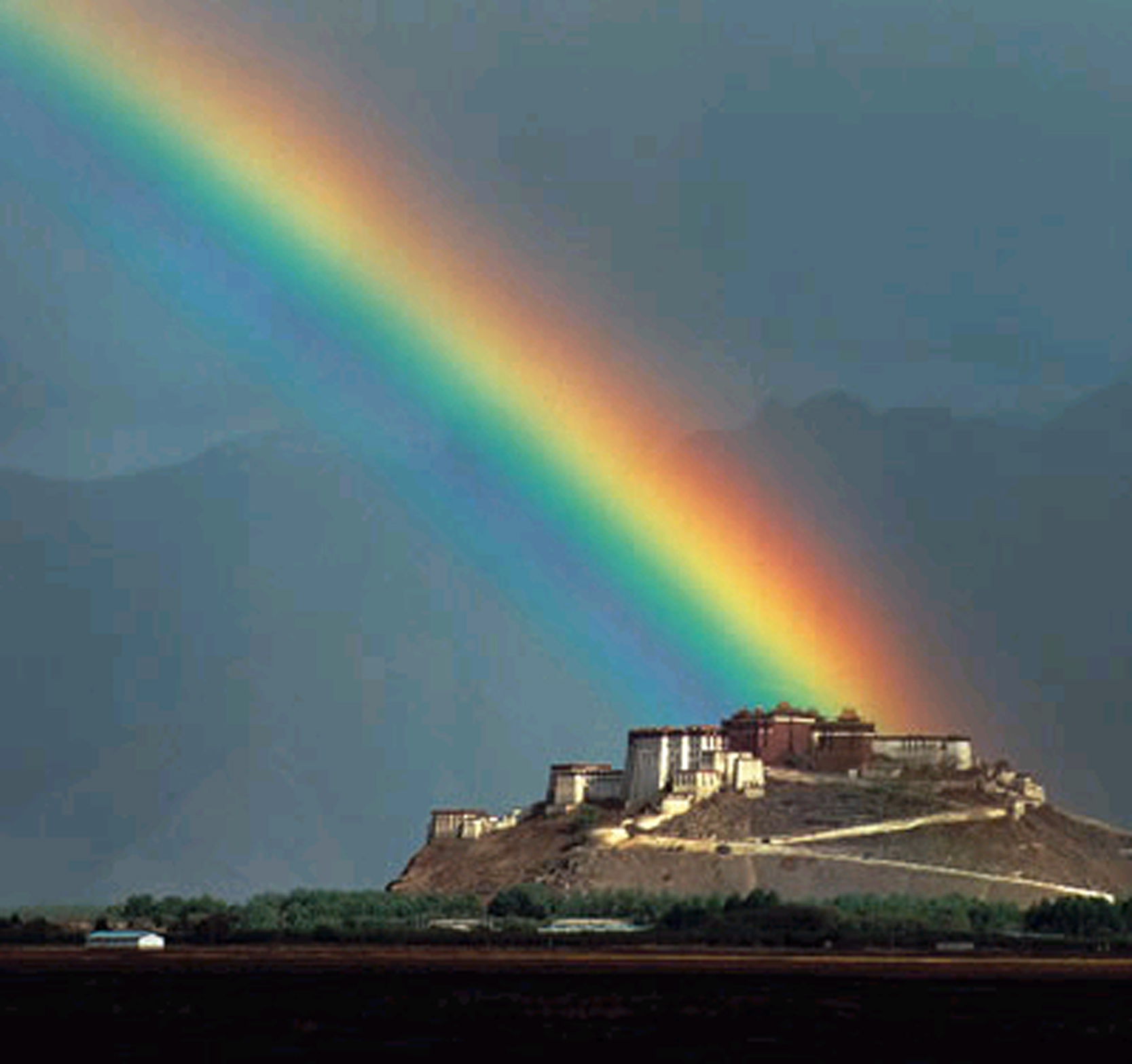
It is this mystery, which we Christians call the Christ, that is the “content” of all revelation and religion. Everything that was created was created through Him and there is nothing that is not created through Him. A specific aspect of this Christ was revealed in Jesus. What other traditions call revelation or whatever is equivalent to it could be said to be other facets of the Christ. It is the one Christ (for whom other traditions have other names) who is present and operative in all religions and cultures. Each in its own imperfect manner reveals the presence and operation of the Christ who is all in all. In fact, we can understand revelation as a rainbow which is refracted in the different colors of the revelations. There is not a plurality of colors but a pluralism because they are all part of one rainbow.
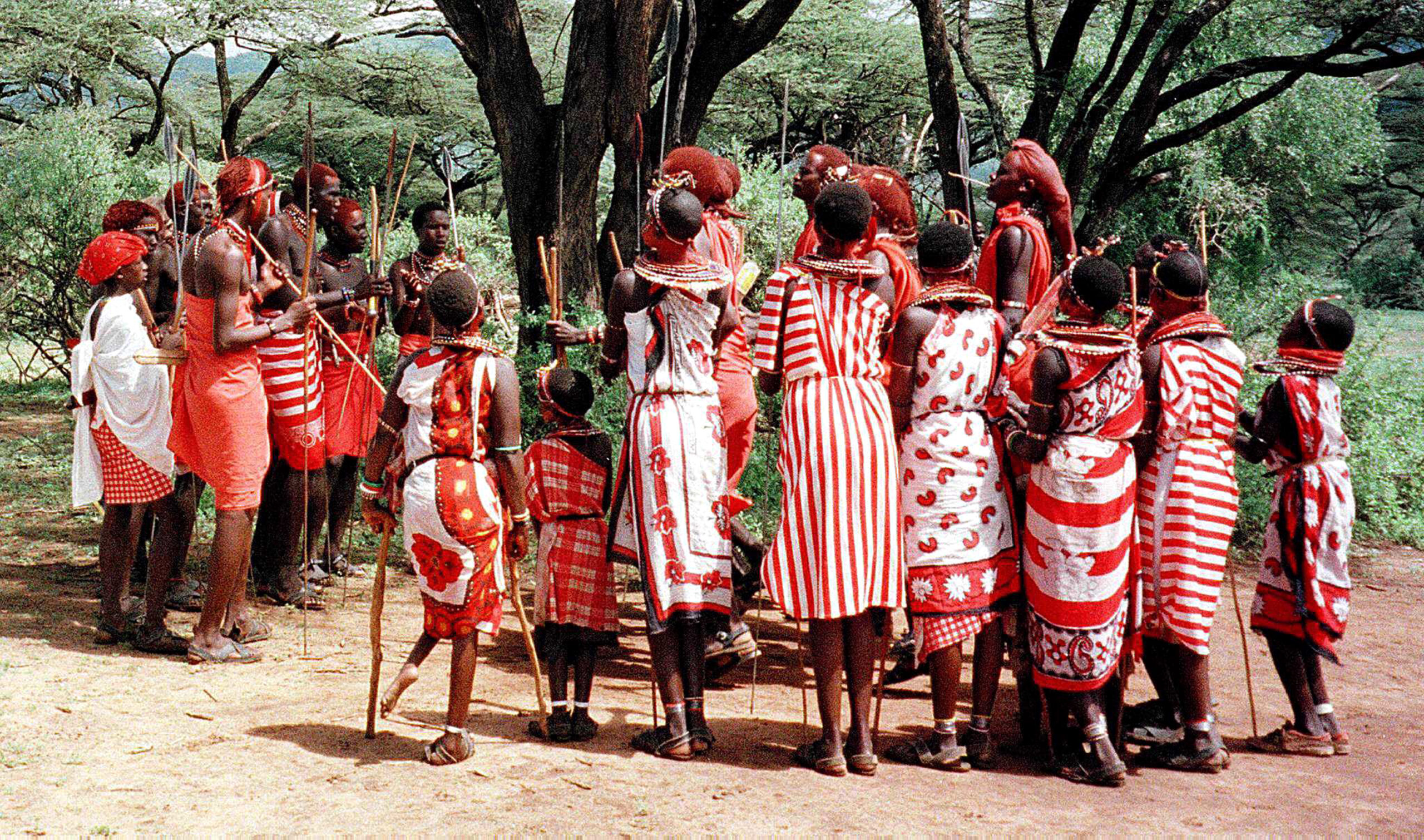
In Asia, religions live cheek by jowl. Our neighbors are Buddhists of different traditions, Confucianists, Daoists, Jews, Muslims of different branches, Hindus who are Shaktas, Shaivites, Vaishnavas, Sikhs of diverse schools, to say nothing of the believers belonging to the primal religions. We grow up and are socialized in a multireligious and multicultural atmosphere. Every culture is a specific world in which specific beliefs are at home. Our Christian calling expects of us not to destroy these beliefs but to purify them and in the process purify our own beliefs through harmonious interaction. Christians are called upon to transform this religious plurality in Asia into religious pluralism.
COMPLEMENTARITY AND HARMONY
John Paul II expressed this aptly in his Ecclesia in Asia (6), thus: “All of this indicates an innate spiritual insight and moral wisdom in the Asian soul, and it is the core around which a growing sense of ‘being Asian’ is built. This ‘being Asian’ is best discovered and affirmed not in confrontation and opposition, but in the spirit of complementarity and harmony. In this framework of complementarity and harmony, the Church can communicate the Gospel in a way which is faithful both to her own Tradition and to the Asian soul.” The expression “complementarity and harmony” is best illustrated in the metaphor of the rainbow in which the refracted colors harmoniously complement each other. Harmony and complementarity could constitute the watchwords of Christian witness in Asia.
We face today on all sides, at all levels, confrontation, not harmony. As Asian Christians, we must make sure that we are part of the solution, not part of the problem. We can change the confrontational mode if we learn to discover our originary harmony with one another and with nature. Our solution is the Mystery we call the Christ and whom other traditions call by other names. Christ is our Rainbow, our Peace and our Reconciliation. Our common witness has to be the witness to this Christ who is our peace and our reconciliation. How? “For He [Christ] Himself is our peace, who has made the two one and has destroyed the barrier, the dividing wall of hostility.” (Ephesians 2:14) “For the kingdom of God is not a matter of eating and drinking, but of righteousness, peace and joy in the Holy Spirit.” (Romans 14:17) “All this is from God, who reconciled us to Himself through Christ and gave us the ministry of reconciliation: that God was reconciling the world to Himself in Christ, not counting men’s sins against them. And he has committed to us the message of reconciliation. We are, therefore, Christ’s ambassadors, as though God were making His appeal through us. We implore you on Christ’s behalf: Be reconciled to God.” (2 Corinthians 5:18-20)
ANIMATED BY THE SPIRIT
Peace and reconciliation are not mere words. They are words which are animated by the Spirit and to which we have to open ourselves. To quote John Paul II from his encyclical Redemptoris Missio (59): “Other religions constitute a positive challenge for the Church: they stimulate her both to discover and acknowledge the signs of Christ’s presence and of the working of the Spirit, as well as to examine more deeply her own identity and to bear witness to the fullness of Revelation which she has received for the good of all.”
The keyword here is witness because the challenge of other religions stimulates her to: discover and acknowledge the signs of Christ’s presence; the working of the Spirit; and examine more deeply her own identity; all this in order to bear witness to the fullness of Revelation which she [the Church] has received for the good of all.
Christ’s presence, the Spirit’s work and our identity have to bear witness to the fullness of Revelation. More concretely, our witness is to the presence of the Christ and the working of the Spirit in religions and cultures. It is this that gives us our true identity because it has to do with our relationship with other religions and cultures. The fullness of revelation refers to the revelation through the Christ in the Spirit everywhere and at all times.
“The Spirit manifests Himself in a special way in the Church and in her members. Nevertheless, His presence and activity are universal, limited neither by space nor time” (Redemptoris Missio, 28). Discovering and acknowledging this has to do with our identity on the one hand and with the fullness of Revelation on the other.
WITNESSING PEACE AND JUSTICE
Interestingly, Mathew 25:31-46 gives us an important hint with regard to discovering and acknowledging Christ’s presence in the wretchedness of the earth and his way of making us participate in the process of becoming just and doing justice. This is an essential aspect of our witness. Our witness to justice today cannot stop at the level of the individual but has to express itself at the societal/structural level. Roman documents have spoken repeatedly of the four areas of dialogue: dialogue of life, dialogue of common concerns, dialogue of experts and dialogue of spiritual exchange. For Asia, all the levels of dialogue are relevant. However, given the minority situation of Christians in Asia, the most effective will be the dialogue of life and common concerns. It is here that our witness will be tangible and effective.
Common concerns, especially the concern for peace and justice, bring out unambiguously our solidarity with all. That is why it is important to deepen common concerns and commitment. Rather than doctrinal precision, common concerns [and] common horizons can motivate and unite people of different views and different ways of living. Though we may have different ideas about peace and justice, coming together will have the effect of complementing and correcting our different approaches. In the process, we shall together be witnessing to peace and justice.
THE GOSPEL OF THE ROSE
There is a great deal of difference between witnessing and advertising. Witnessing is not a doing, not a making, not a manipulating. It is being. It is being on the same or similar wavelength. It is being in solidarity. Advertising informs; authentic witness transforms. Advertising is aggressive; it is rarely straightforward but almost always calculating and self-centered.
Authentic witnessing is not self-centered but personal, hence societal and structural, because a person is a network of relationships with the Divine, the human and the cosmic. Authentic witnessing is straight-forward, never calculating but ever open to taking risks. It moves, touches and transforms.
A young man was traveling in a bus with a baby in his arms. The baby was crying uncontrollably but the young father was lost in thought, apparently not heeding the cries of the baby. At last the fellow passengers could no longer keep quiet. They confronted the young man: “Don’t you see your baby is crying? Can’t you attend to him?” At this, the young man came to himself as if from deep sleep. Softly and hesitatingly, he began to speak: “My wife died in hospital just a short while ago and I am going home to get money to pay for the hospital charges.” At this, the whole atmosphere in the bus changed dramatically. Some began attending to the baby, while others tried to console the young man.
Gandhiji (Gandhi), who had witnessed a different kind of Christianity in South Africa, advised the missionaries in India to follow the gospel of the rose. The very being of the rose witnesses to its scent and beauty. It does not need any advertisement. The Sermon on the Mount speaks of the salt of the earth and the light of the world. Could we have better metaphors and parables for our witness?
“You are the salt of the earth; but if the salt has become tasteless, how can it be made salty again? It is no longer good for anything, except to be thrown out and trampled under foot by men” [Matthew 5:13]; “You are the light of the world. A city set on a hill cannot be hidden” (14); “Nor does anyone light a lamp and put it under a basket, but on the lamp stand, and it gives light to all who are in the house.” (15) “Let your light shine before men in such a way that they may see your good works, and glorify your Father who is in heaven. (16)
DIALOGUE AND RECONCILIATION
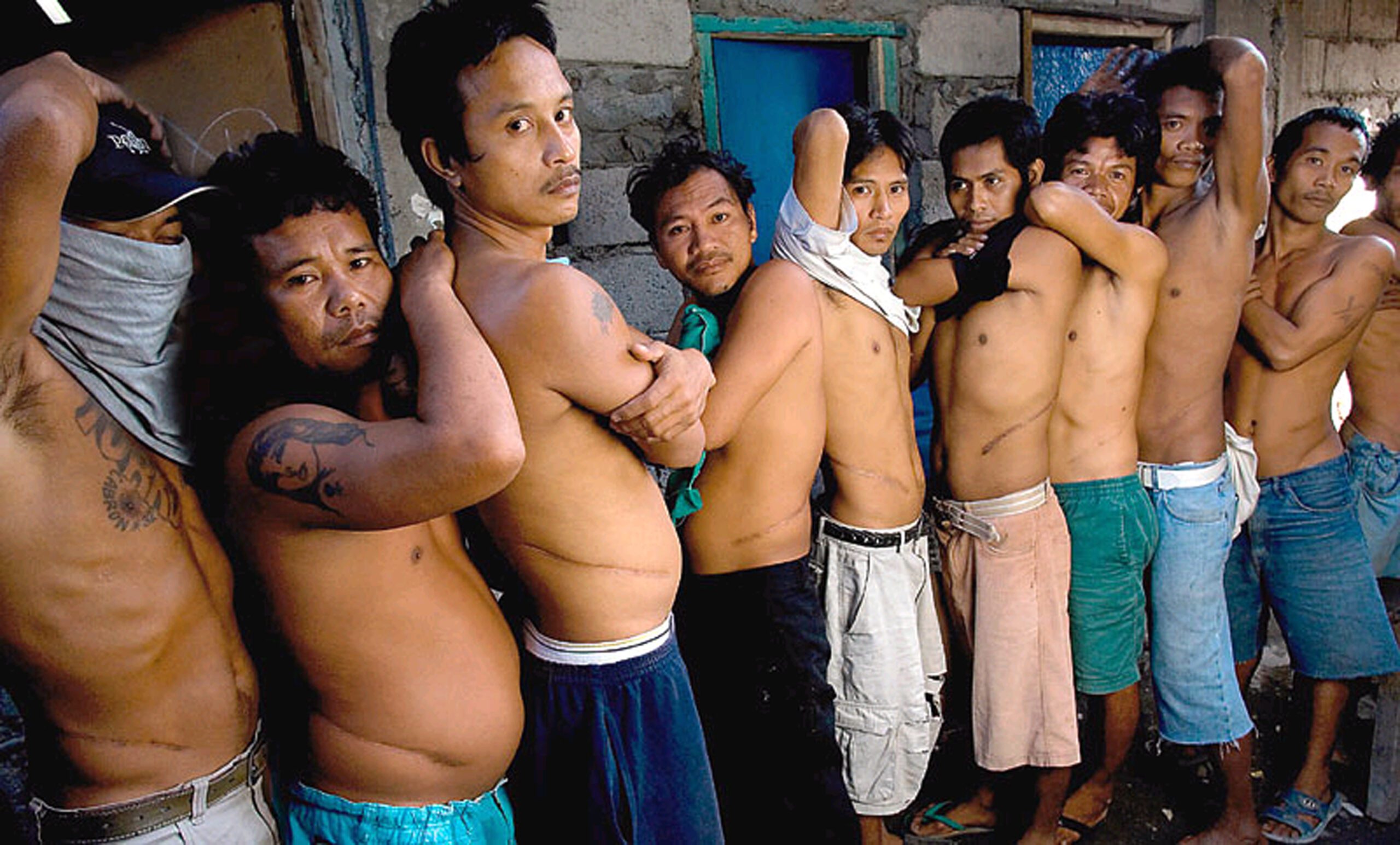
We speak of common witness. In spite of our doctrinal differences, our common witness could be like this: Given the specific characteristics of the Asian context, namely deep religiosity on the one hand and massive injustice on the other, our common witness has to be to the Christ who reveals Himself in the other religions and to the Christ (of Matthew 25:31-46) who is to be discovered in the hungry, the thirsty, the lonely, the needy, prisoners, refugees, the marginalized, the Dalits.
The first aspect of this Christ whose Spirit is at work in the religions of the world is to be discovered and discerned in and through dialogue and reconciliation. The second aspect of this Christ has to be realized through work for justice and peace. Neither lip service nor charity is in place here. Social, economic and political analysis of our respective situations has to accompany our commitment for justice and peace.
Speaking as an Asian Christian, I think of this whole process of witnessing to the whole Christ, the Cosmotheandric Christ, not so much in terms of formulations and preaching, but as consisting of three levels expressed in three biblical metaphors: 1) Washing of Feet; 2) Breaking of Bread; and 3) The Descent of the Holy Spirit.
• Washing of feet or Diakonia is the hallmark of the believing Christ. Washing of feet not just of the individuals but service to the whole world, to Man and Nature. God has created us as part of the world and the world as part of us. We are inextricably related to the universe. Our thinking and acting has to be all-embracing like that of the Heavenly Parent who makes His sun shine over the good and the bad and the rain fall over the just and the unjust.
• Breaking of Bread or Koinonia is the second hallmark of the witness of the believing Christian. Sharing and community formation and reconciliation have to characterize our thinking and acting and believing. God was in Christ reconciling everyone and everything to Godself. Christian identity is to be measured through the realization of these two metaphors. It is then that the third metaphor of the descent of the Holy Spirit will be actualized.
• The Descent of the Holy Spirit, the Spirit who is forever renewing the face of the earth, the Spirit who, in the first place, urged us to wash feet and break bread, the Spirit of Love and Understanding, will see to it that we all understand each other, in spite of differences in our traditions and our history, so that God will be all in all.
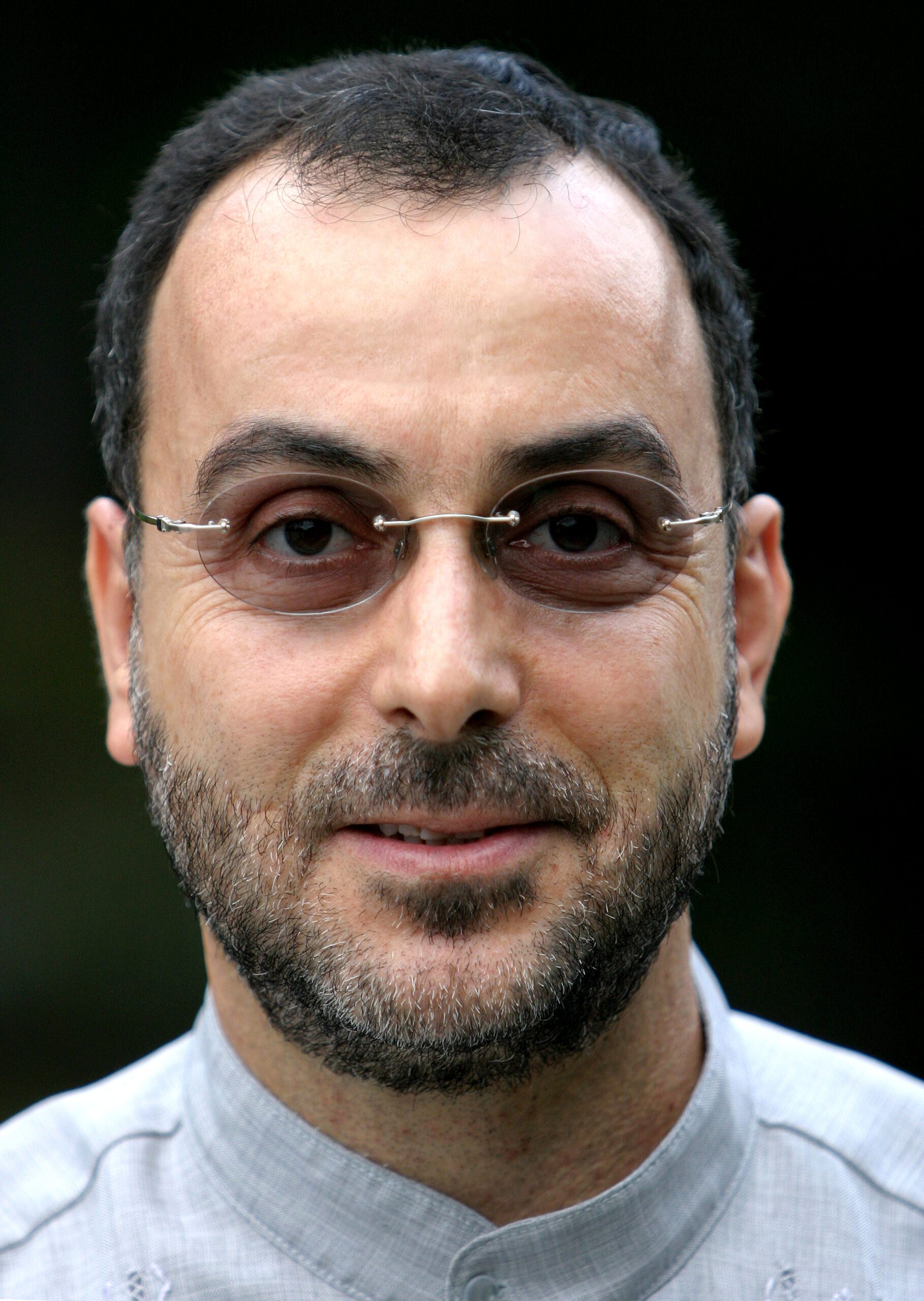
* A version, edited by World Mission, of “Common Witness in the Context of Religious Plurality in Asia,” a paper presented at the fourth seminar of the Asian Movement for Christian Unity in Kuala Lumpur. Father Francis D’Sa, a Jesuit born in Goa, is a professor in Indian Religions and Theology of Religion at the Pontificium Athenaeum, in Pune, India, where he has founded the Institute for the Study of Religion, which researches in religion, especially Hindu traditions, and organizes interreligious and interdisciplinary conferences. He is a member of the Asia Ecumenical Committee, a body set up for joint cooperation and joint work by the Christian Conference of Asia and the Federation of Asian Bishops’ Conferences. Father D’Sa has also helped to start two projects in rural areas of India: MAHER for battered women and their children, and ISHWARI to train young village women.