
A Poetic Salvation History

INTRODUCTION

The pabasa, which began during the Spanish colonization, was a catechism tool for the mostly illiterate population. After some time, it evolved to a poetic form of a salvation story, understood as a social epic and inspiring people’s freedom struggles. There is no doubt: this “sanctifying devotion” is truly Filipino.

WRITTEN BY

SHARE THE WORD

PUBLISHED ON

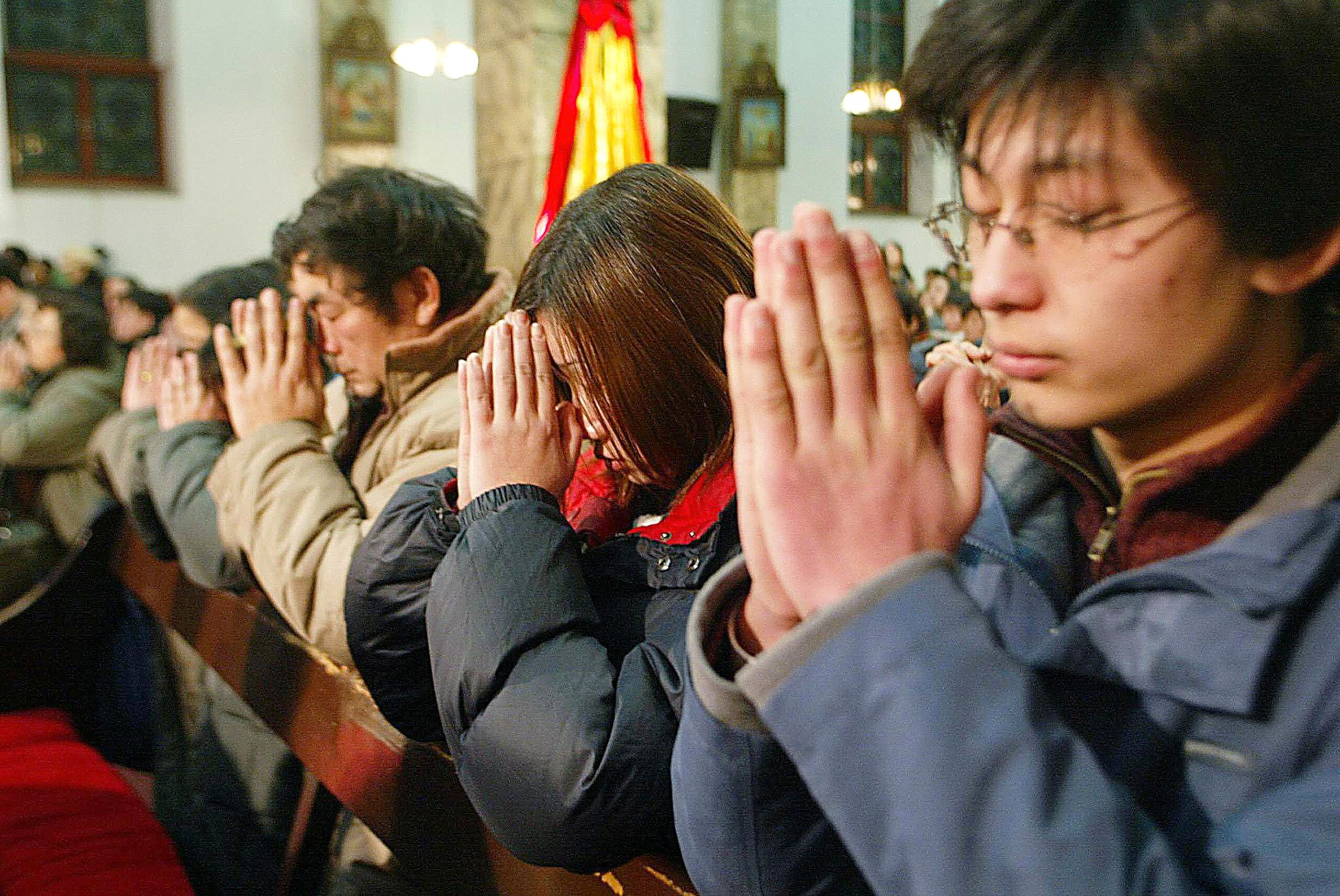
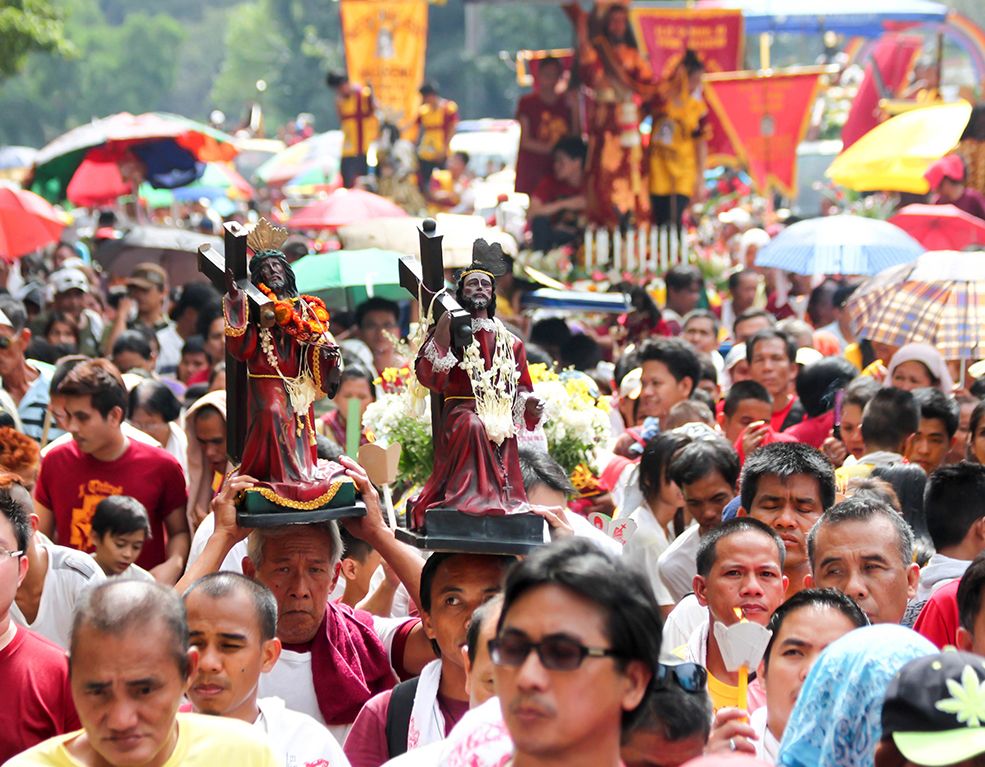
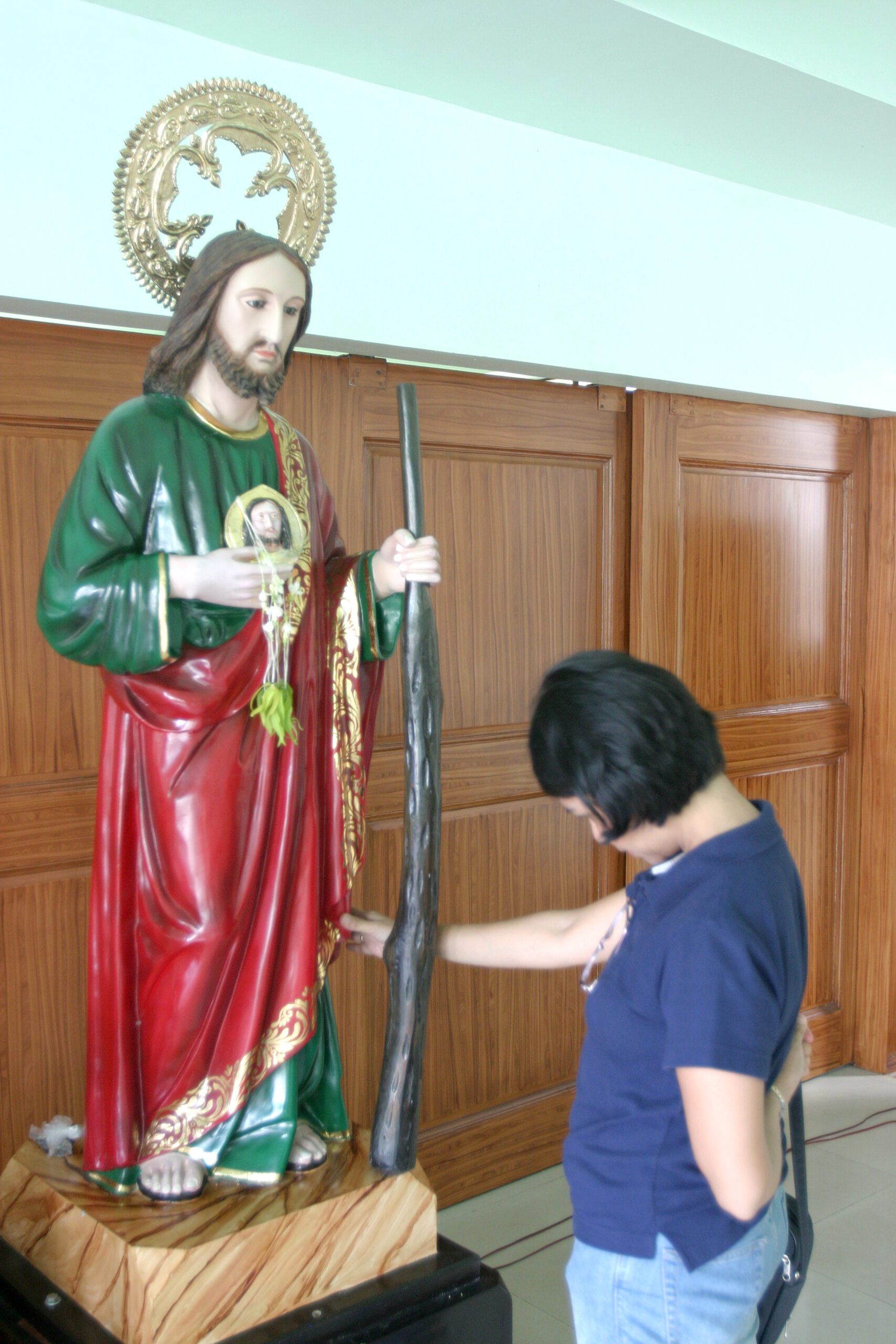
During Holy Week, from Holy Monday to Holy Thursday, Filipinos in Luzon chant the passion (pasyon) of Christ. In Metro Manila the chanting is usually done with a sound system and people gathered before an improvised altar with sacred images, candles and a crucifix.

Although the term is on reading (pabasa), the poetic text is sung or chanted. For the old people of Batangas, to read is not merely something passive; it also includes pronouncing the words and using tones as in chanting.
The extent of the pabasa tradition is more common in Tagalog-speaking areas, less among the Ilocanos and lesser still in Mindanao where there are Tagalog settlers.

Pabasa is a poetic version of the salvation history, from creation until St. Helena, the Constantine’s mother, finds the true cross in Calvary. Because the pabasa includes the pasyon, the two names are often interchanged as synonymous. The powerful image provides a portrait of Jesus they can identify with. For example: He is from Galilee,/ A man poor and lowly/ Who shelters in others’ roots./ Furthermore, his father/ Is just a simple carpenter/ Devoid of fame and wealth/ Living in poverty/ Without property of his own.

ILLITERATE CATECHISM
The pabasa, which began during the Spanish colonization of the Philippines, was a catechism tool for the mostly illiterate population. Fr. Juan Jose Delgado reports that the pasyon was already popular in 1740.
The Roman ritual encouraged, as salutary, that dying persons pronounce the name of Jesus. The thoughts of a dying person should be focused on the mercy of God as depicted in the story of The Passion. Now since the natives did not all like to live in the settlements in order to be nearer their fields, the distance posed a pastoral problem. The missionaries had two solutions. The first was the Magpa-Hesus ritual; the other was to bless the sick and read the Gospel whenever they were brought to town.

Concerning the Magpa-Hesus ritual, the Jesuit missionaries organized some Catholic laypersons belonging to the ruling class in towns in order to help their fellowmen grow in faith. These laymen were to care for the sick and the dying. The ritual also counter-checked the practice of calling the native priests/priestesses (babaylans) who chanted dirges during the wake.

The earliest communities then were those surrounding the death bed. From the devotion with the Magpa-Hesus, arose the primitive form of the pasyon. The Mahal na Pasyon served as a substitute for the rosary and the Magpa-Hesus rituals. Then it extended from the scene of the dying into a wider audience.

A SOCIAL EPIC
The first known pasyon was Gaspar Aquino de Belen’s Mahal na Pasiyon ni Hesukristong Panginoon Natin na Tula (printed in 1704). The most popular text is the Kasaysayan ng Pasyong Mahal ni Hesukristong Panginoon Natin (the Account of the Sacred Passion of our Lord Jesus Christ). It is called as Pasyong Pilapil because Fr. Mariano Pilapil edited, in 1814, a pasyon-text of unknown authorship which the people already used. It is also called Pasyong Henesis because it begins with creation and ends with the last judgment. Hence, the topic is not only the passion but the entire salvation history. From being a ritual for the dying, the pasyon became a Holy Week devotion for the masses.

INSPIRING FREEDOM
Although there are different versions of the Pasyon, most Tagalog-speaking places use the Kasaysayan ng Pasyong Mahal, or briefly, Pasyong Mahal. Of the many pabasa versions, one text from Ilocos Norte consists of 53 chapters, made up of 3,207 stanzas, each with five lines.

Since it was one of the few literary works available to the farming population, the text also functioned as a traditional social epic, which sank in or shaped the people’s consciousness. According to Reynaldo Ileto, the reading and dramatization of the passion of Jesus shaped the style of peasant brotherhood that led to the uprisings during the Spanish and American periods.

The farmers in rural communities introduced the pabasa into the Lenten traditions. Because Lent falls between the time of planting and harvest and farmers were practically idle, they had time for the pabasa.
As the pabasa became more popular, it was an occasion for socialization and drinking, for young men to meet young women, which led to a number of pregnancies.

SANCTIFYING PRACTICE
The text begins with a prayer to the Blessed Virgin Mary. The topic extends from creation (Genesis) and ends beyond the New Testament with a message to all concerning repentance and salvation. Besides using biblical sources, the pabasa also uses apocryphal or extra-biblical embellishments. For example, it mentions that the apple was the forbidden fruit, although the Bible only mentions the forbidden fruit. It describes how St. Anne gives birth to the Virgin Mary; that the three kings (Melchor, Gaspar and Baltazar) came, respectively, from Persia, Arabia and Saba; that Joseph died in the arms of Jesus and Mary; that the groom in the wedding at Cana was John the Evangelist who later left his wife to join Jesus; that when Jesus washed the feet of the apostles at the Last Supper, he foretold pope, bishops, and priests. It also mentions the death and assumption of Mary, that the Blessed Trinity crowned her, and that Empress Helena found the true cross.

Once started, the participants take turn in chanting the pabasa according to their own style. The participants believe that doing so will sanctify themselves and the community.

COMMUNAL MEAL
To have a pabasa may be motivated by somebody’s panata or vow. The said vow may be out of thanksgiving for a petition granted, or a wish to have a prayer answered.

The pabasa involves the community. Upper class families may serve as sponsors. More often, the pabasa was held in the houses of the middle class in order to become more accessible to the rest of the community. But it can also be done in a street corner with the bare essentials. The people involved are not only those who take part in the singing but also who prepare the food and ginger tea.

After the completion of the pabasa, a communal meal is shared by all. The meal aspect is essential because eating has a social function of cementing people and making them interact with each other.

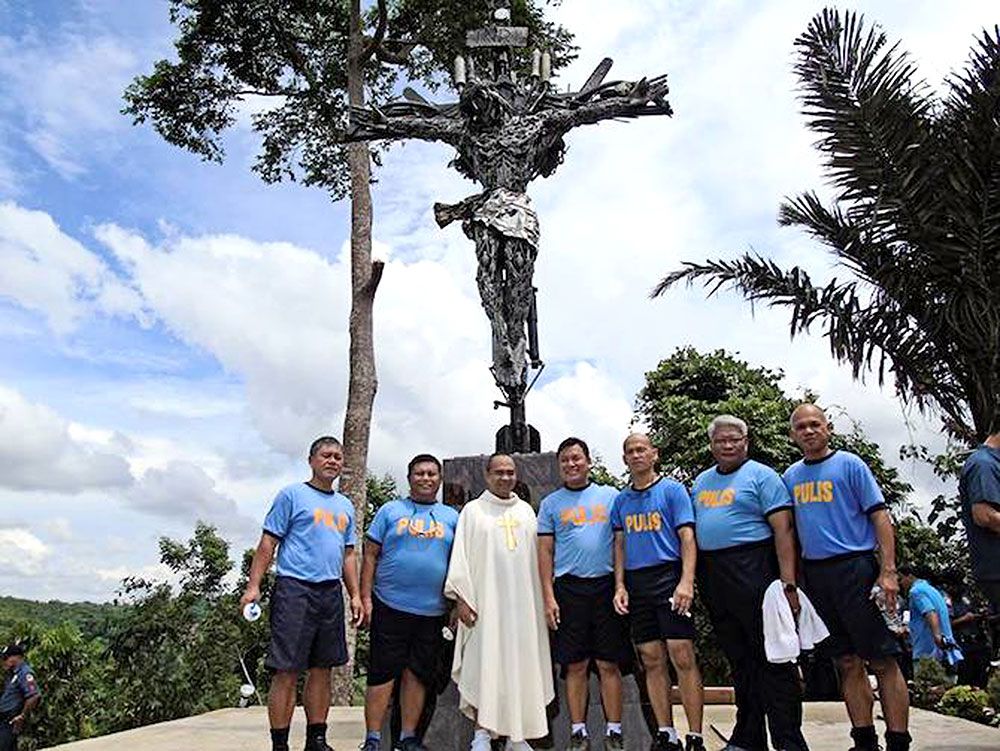
Shouldering the meal is the role of the hermano/hermana mayor, the big brother/big sister. This inferior-superior relationship also strengthens the hierarchical nature of Philippine society. In the Holy Week of 2007, the mayor of Manila ordered his policemen to chant the pabasa in Plaza Miranda, Quiapo.

In short, the pabasa is one of the several devotions that is truly Filipino.

Share Your Thoughts

All comments are moderated

From The Same Issue

The articles and content about this issue

From The Same Issue

The articles and content about this issue

From This Topic

The articles and content about this topic

From This Topic

The articles and content about this topic

Explore Other Topics

Browse other coverage

Explore Other Topics

Browse other coverage

WM SPECIAL

Presents, discusses and draws readers to reflect on issues of outmost relevance to the world today.


FRONTIERS

Very often, mission is carried out in frontier situations around the world. Those who embrace these situations have much to share.


UNITY IN DIVERSITY

Writer Ilsa Reyes will be exploring the richness of Pope Francis’s latest encyclical Fratelli Tutti with a view of helping our readers to get a grasp of the this beautiful papal document.


FRONTLINE

Puts to the front committed and inspiring people around the world who embrace humanitarian and religious causes with altruism and passion.


IN FOCUS

Focus on a given theme of interest touching upon social, economic and religious issues.


FAITH@50

As the Philippines prepares to celebrate 500 years of the arrival of Christianity. Fr. James Kroeger leads us in this series into a discovery journey of the landmark events in the history of faith in the Philippine archipelago.


INSIGHT

Aims to nurture and inspire our hearts and minds while pondering upon timely themes.


FILIPINO FOCUS

The large archipelago of the Philippines, in its richness of peoples and cultures, offers varied and challenging situations for mission.


FOLLOW ME

Reflections and vocation stories that shape up the lives of young people.


MISSION IS FUN

As humor and goodness of heart are qualities of Christian and missionary life, the new column “Mission is fun” will be publishing some anecdotes and stories that have happened in a missionary context to lighten up the spirits and trigger a smile in our faces.


LIVING COMMUNION

To help readers of World Mission live this year dedicated to Ecumenism, Interreligious Dialogue and Indigenous Peoples, Tita Puangco, writer and lecturer, shares in this section insights on the spirituality of communion.


WINDS OF THE SPIRIT

A historic view of the Catholic movements that emerged from the grassroots as an inspiration by the Holy Spirit.


BRIDGE BUILDERS

On the Year of Ecumenism, Interreligious Dialogue and Indigenous Peoples, radio host and communicator Ilsa Reyes, in her monthly column, encourages Christians and people of good will to be one with their fellow people of other sects, religions and tribes.


INTERVIEW

Questions to a personality of the Church or secular world on matters of interest that touch upon the lives of people.


WORLD TOUCH

News from the Church, the missionary world and environment that inform and form the consciences.


CARE OF THE EARTH

A feature on environmental issues that are affecting the whole world with the view of raising awareness and prompting action.


EDITORIAL

The editor gives his personal take on a given topic related to the life of the Church, the society or the world.


YOUNG HEART

A monthly column on themes touching the lives of young people in the Year of the Youth in the Philippines by radio host and communicator I lsa Reyes.


SCROLL

A missionary living in the Chinese world shares his life-experiences made up of challenges and joyous encounters with common people.


EXTRAORDINARY PEOPLE

Life stories of people who deserve to be known for who they were, what they did and what they stood for in their journey on earth.


ONE BY ONE

Stories of people whom a missionary met in his life and who were touched by Jesus in mysterious ways.


INCREASE OUR FAITH

Critical reflection from a Christian perspective on current issues.


SPECIAL MOMENTS

Comboni missionary Fr. Lorenzo Carraro makes a journey through history pinpointing landmark events that changed the course of humanity.


PROFILE

A biographical sketch of a public person, known for his/her influence in the society and in the Church, showing an exemplary commitment to the service of others.


WM REPORTS

Gives fresh, truthful, and comprehensive information on issues that are of concern to all.


LIFE'S ESSENTIALS

A column aimed at helping the readers live their Christian mission by focusing on what is essential in life and what it entails.


ASIAN FOCUS

Peoples, events, religion, culture and the society of Asia in focus.


THE SEARCHER'S PATH

The human heart always searches for greatness in God’s eyes, treading the path to the fullness of life - no matter what it takes.


INDIAN FOCUS

The subcontinent of India with its richness and variety of cultures and religions is given center stage.


AFRICAN FOCUS

The African continent in focus where Christianity is growing the fastest in the world.


JOURNEY MOMENTS

Well-known writer and public speaker, Fr. Jerry Orbos, accompanies our journey of life and faith with moments of wit and inspiration based on the biblical and human wisdom.


IGNATIUS STEPS

On the year dedicated to St. Ignatius of Loyala, Fr. Lorenzo Carraro walks us through the main themes of the Ignatian spirituality.


THE SEVEN LAST WORDS OF JESUS

Fr. John Taneburgo helps us to meditate every month on each of the Seven Last Words that Jesus uttered from the cross.


INSIDE THE HOLY BOOK

In this section, Fr. Lorenzo delves into the secrets and depths of the Sacred Scriptures opening for us the treasures of the Sacred Book so that the reader may delight in the knowledge of the Word of God.


CONVERSATIONS

Reflections about the synodal journey on a conversational and informal style to trigger reflection and sharing about the synodal path the Church has embarked upon.


VATICAN II

This 'mini-course' series provides a comprehensive exploration of Vatican II, tracing its origins, key moments, and transformative impact on the Catholic Church.


COMBONIS IN ASIA

This series offers an in-depth look at the Comboni Missionaries in Asia, highlighting their communities, apostolates, and the unique priorities guiding their mission. The articles provide insights into the challenges, triumphs, and the enduring values that define the Comboni presence in Asia.


BEYOND THE SYNOD

Following the Synod on Synodality, this series examines how dioceses, parishes, and lay organizations in the Philippines are interpreting and applying the principles of the synod, the challenges encountered, and the diverse voices shaping the synodal journey toward a renewed Church.


A TASTE OF TRADITION

This series introduces the Fathers of the Church, featuring the most prominent figures from the early centuries of Christianity. Each article explores the lives, teachings, and enduring influence of these foundational thinkers, highlighting their contributions the spiritual heritage of the Church.


A YEAR OF PRAYER

In preparation for the 2025 Jubilee Year under the theme “Pilgrims of Hope,” 2024 has been designated a Year of Prayer. World Mission (courtesy of Aleteia) publishes every month a prayer by a saint to help our readers grow in the spirit of prayer in preparation for the Jubilee Year.


OUR WORLD

In Our World, the author explores the main trends shaping contemporary humanity from a critical and ethical perspective. Each article examines pressing issues such as technological advancement, environmental crises, social justice, and shifting cultural values, inviting readers to reflect on the moral implications and challenges of our rapidly changing world.


CATHOLIC SOCIAL DOCTRINE

This series unpacks the principles of Catholic Social Doctrine, offering a deep dive into the Church's teachings on social justice, human dignity, and the common good.


HOPEFUL LIVING

Hopeful Living’ is the new section for 2026, authored by Fr. James Kroeger, who dedicated most of his missionary life to the Philippines. In this monthly contribution, he will explore various aspects of the virtue of hope. His aim is to help readers align their Christian lives more closely with a hopeful outlook.


PHILIPPINE CROSSROADS

Filipino Catholic scholar Jose Bautista writes each month about how the Philippines is at a crossroads, considering the recent flood control issues and other corruption scandals that have engulfed the nation. He incorporates the Church’s response and its moral perspective regarding these social challenges.


BIBLE QUIZ

Test your knowledge and deepen your understanding with our Bible Quiz! Each quiz offers fun and challenging questions that explore key stories, themes, and figures from both the Old and New Testaments.


Shopping Cart