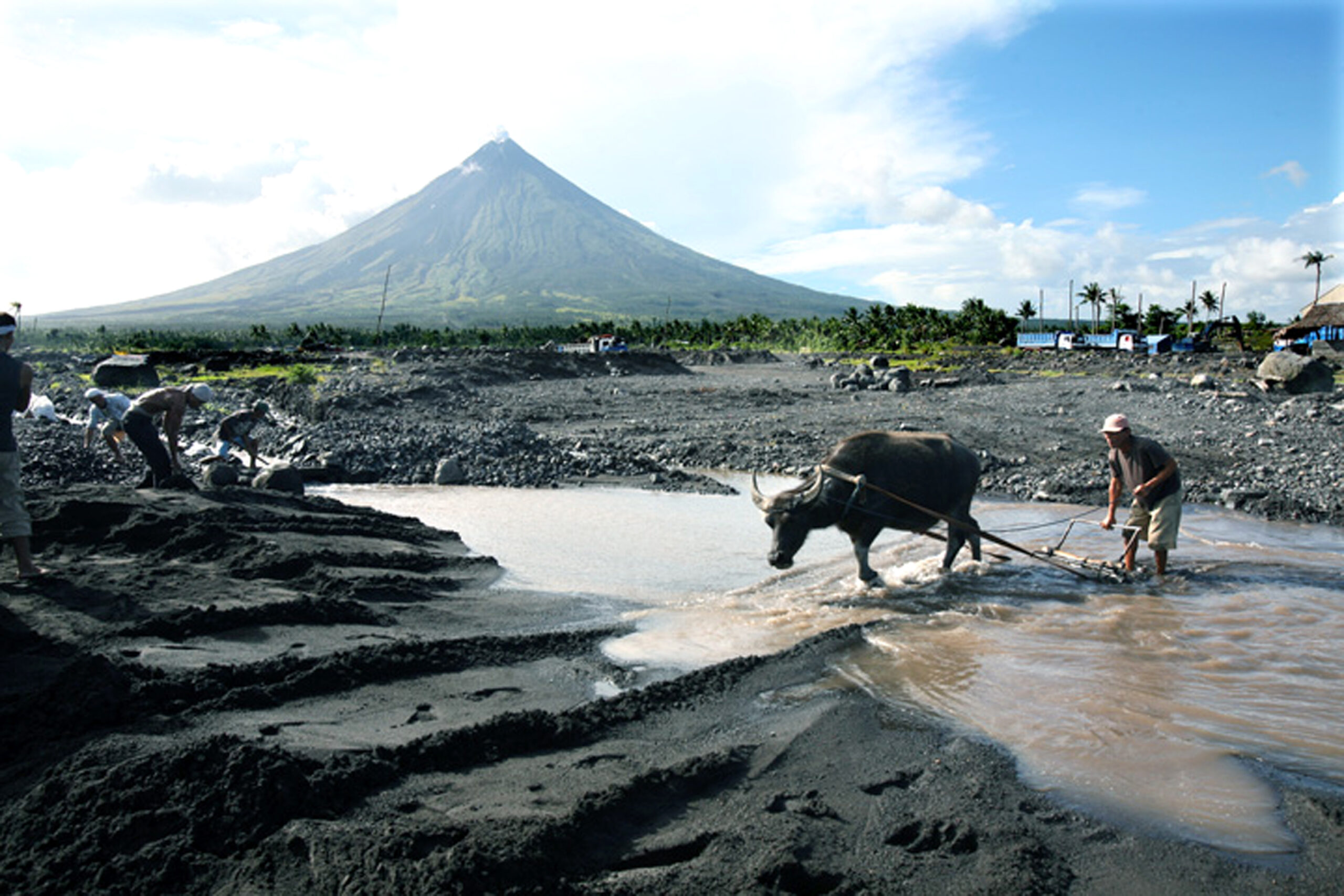

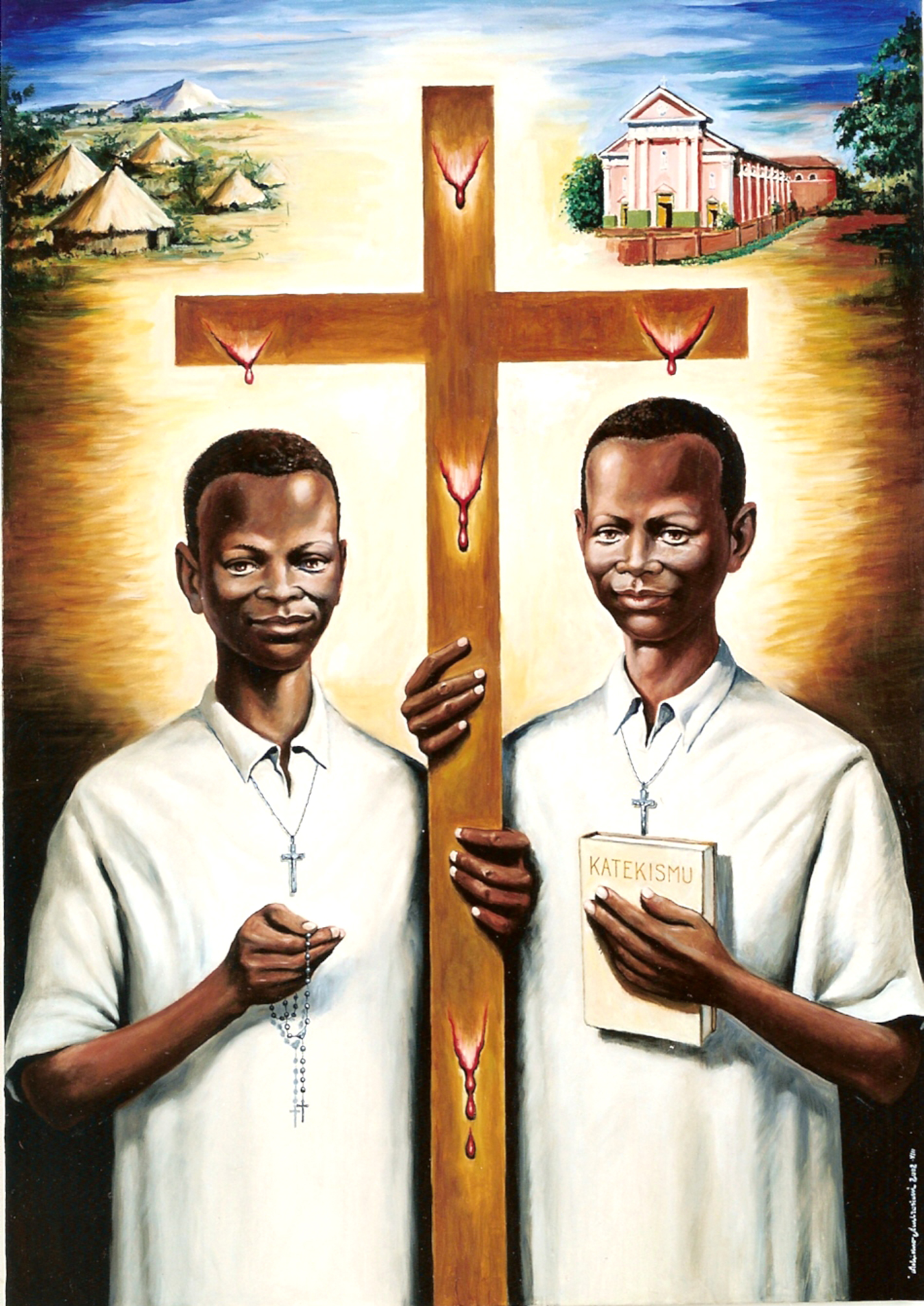
In the beginning of the 20th century, in the vast area of savannah in the North-Eastern part of Uganda, bordering with the Sudan, life was going on as it had from time immemorial: the antelopes, buffalos, lions and the other great games were roaming the plains as they had done since the beginning of creation and the humans were scratching the soil for the traditional crops of millet, peanuts and sesame.
In 1915, two Italian Comboni missionaries arrived in Kitgum, the main settlement of that area of northern Uganda: Fr. Antonio Vignato and Fr. Giuseppe Beduschi. They were the forerunners who had come to see the place and decide if it fitted their aims. A month later, two of their confreres arrived, Fr. Gian Battista Pedrana and Fr. Cesare Gambaretto. They settled in the midst of the people, “around the fire,” as they say there, to listen, converse, and announce the Gospel. This was something new for the tribe of the Acholi, who had always lived in fear of the white people (Arabs and Europeans) who had appeared sporadically in their land: the Arab slave traders and ivory merchants and the British colonial officers who had recently arrived and imposed forced labor, an imposition that had even produced a rebellion in the mountains.
ENCOUNTERS OF FRIENDSHIP
The missionaries soon began gathering together the listeners in the villages, initiating a catechumenate with some of them. Daudi and Jildo were among the first who joined the instruction. Jildo’s father, who later became a Christian, remembers his encounter with one of the missionaries, Fr. Cesare: “He would visit my family often. He loved the children, and Jildo was one of the first to get to know the Father.”
These were encounters of friendship. The missionary taught them the Christian prayers and spoke to them of Jesus, the Son of God, who became a man in the womb of the Virgin Mary and died on the cross to save us. He did this through the recitation and explanation of the Rosary, telling them the history, the events. Jildo and Daudi were struck by these stories and the figure of the missionary who moved about from village to village. The two boys decided, together with others, to follow the missionary as far as Kitgum. Daudi and Jildo were around 16 and 14 years old, respectively, when they started their journey to go to the mission in Kitgum, being both children of pagan families.
CHRISTIANS AND CATECHISTS
In Kitgum, they learned the catechism of St. Pius X, translated two years earlier into the Acholi language by Fr. Pasquale Crazzolara, who would become one of the greatest African linguists. Daudi had brought with him a girl he intended to marry. But after some time, the girl, struck by a devastating attack of chiggers in her feet, had to return home. Daudi put her out of his mind and continued to attend catechism classes with great determination. Jildo also showed himself to be a determined boy. His father declared that he himself would take food to the catechumenate in Kitgum, because his son was so wrapped up in his new commitment as not to be concerned in the slightest with eating.
Daudi and Jildo received Baptism and Holy Communion in 1916. The missionaries chose some of the newly baptized to train as catechists and sent them among the people in far-away villages, just as Jesus had done with His disciples. Daudi and Jildo were chosen. Both of them had shown willingness to make any sacrifice in order to proclaim the salvation of Jesus Christ. They no longer wanted to return to their villages. They were ready to go wherever they would be commissioned.
In 1917, a year after the celebration of the Sacrament of Confirmation, the two young converts were sent to Paimol, because the incumbent catechist, Antonio, had met a premature death. Paimol was a hilly area about fifty miles from Kitgum, with various villages, one of which, called Palamuku, became the place of their martyrdom. Now, after the sacrifice of Daudi and Jildo, the village is called Wi-polo (“Heaven”) by the local Christians.
DEATH IN “HEAVEN”
Before their departure, Fr Cesare spoke to them: “So you are willing to go to Paimol. What if they kill you?” Daudi replied, “We will go to heaven. Antonio is already there, isn’t he?” Jildo reiterated, “Father, you surely are not afraid like the others? Jesus and Mary are with us.” Surprised by the faith of the two youths, Fr. Cesare went silently into his room and came back with a catechism and a rosary for each of them. Kneeling, Daudi and Jildo received the tools of their apostolate. Together they recited a Hail Mary, and the Father blessed them and sent them on their way.
In Paimol, they were welcomed by the vice-chief of the clan. He offered them food, but Daudi and Jildo would not accept food without earning it by their labor. In the morning, before sunrise, they would beat the drum to call the children to the recitation of the prayers and a short period of catechism. The children would then go to their activities in the fields and pastures, while the two catechists, before going to their own work of farming the land, would recite the Rosary since they could not attend Mass.
Their daily program continued in the afternoon. After working in the fields, they would wash their feet and hands and eat, then would call the children together once again by the sound of the drum, resume their teaching of prayers and catechism, and conclude in the evening, before going to bed, with the recitation of the Rosary. We have the people’s witness for this: “When Daudi and Jildo lived in Paimol, the kids were happy to go see them and they too were glad to receive the kids. All the people in the village, with no exceptions, loved them for the good they did. They were totally devoted to doing their duty, until they were killed. They died in the precise fulfillment of their duty.”
SACRIFICE AT DAWN
From 1916 onwards, the situation had become very difficult in Paimol for a drought had brought famine to that region. The tribal chieftain of Paimol, Lakidi, had been arrested, tried, and imprisoned in Kitgum by the English colonial authorities on the false accusation of illegal possession of weapons. The local rebels and the slave traders and ivory merchants were intolerant of the commitment of the catechists, who with their teaching were introducing a disturbing element into their sinister, flourishing business and immoral conduct that was contributing to the spread of venereal diseases.
They sought the alliance of the ajwakki (sorcerers) and accused the Christian religion of Daudi and Jildo of the evils that had occurred: famine, pestilence, and oppression by foreigners. From hatred to the elimination of the catechists was a brief step. It would be a lesson to all and a diktat to abandon the Christian faith they had brought! The plan to kill the catechists was prepared. One of the attackers, Okidi Ibrahim, dragged Daudi out of the hut and beyond the fence, and having ordered him in vain to abandon the Christian faith, mortally wounded him with a spear. Jildo, who had been left in the hut because he was too young, came out and started yelling, “If you killed Daudi because he taught the new religion, then kill me too. I also taught the religion with him.” Opio Akadamoi grabbed him and ran him through with a lance, then finished him off with a dagger. It was Sunday, October 20, 1918. The two boys were 18 and 16 years old, respectively.
Their bodies were abandoned in the grass, until a merciful hand pulled their remains to a spot near an isolated anthill. Their relics were then transported to the Mission Church of Kitgum, where they had been baptized. Fr. Cesare started immediately to collect testimonies about their martyrdom. The depositions of all the witnesses affirm that the two catechists were killed “for nothing” meaning that they had nothing to do with reasons for the uprising. The witnesses added that they died “for the sole reason of teaching religion.” Daudi Okelo and Jildo Irwa were beatified in Rome, on Mission Sunday, October 20, 2002, by Pope John Paul II. It was exactly the day of their martyrdom.
Daudi and Jildo remind those who wanted to kill them that no one would ever be able to bar the door to Jesus Christ. Today, thanks also to them, Uganda definitely belongs to Christ: Christians make up 70% of Uganda’s 25 million people. The best fruit of their martyrdom has been a host of catechists in northern Uganda. Many of them have sealed the announcement of the Gospel with their blood. In the Diocese of Gulu alone – to which Kitgum belongs – at least 80 catechists have been killed in the past twenty troubled years.