
World War II is raging in the Far East. The Japanese army has invaded the surrounding countries: Singapore, Southern China, Thailand, the Philippines… Everywhere the cruelty and fanaticism of the Japanese soldiers have spread terror and the grim fate of the people in their prison camps will remain in the collective imagination and be the object of famous films like The Bridge Over the River Kwai by David Lean or novels like King Rat by James Clavel.
It is against this somber background that God performed a tiny, personal miracle that transformed the life of a Japanese young man in his twenties, simple, humble follower of the tradition of Zen Buddhism: Shigeto Oshida.
Years later, many times, Fr. Oshida used to mention the circumstances of his encounter with the German Catholic youth who was instrumental to him in meeting Christ: “As soon as I saw that Christian man I already believed. I did not yet know the dogmas, but I already believed. I had no problem in accepting the dogmas because I first believed in the testimony of a true Christian.”
How transparent must have been the goodness of Christ in the face of that youth! Fr. Oshida used to talk at length of his journey as a young man into Zen and how, going through the dignified silence of Zen, he immediately believed in the Man who died on the cross pleading for universal forgiveness: “Forgiveness is silence within silence. Christ is the heart of Zen.”
PRAYERS IN THE SANATORIUM
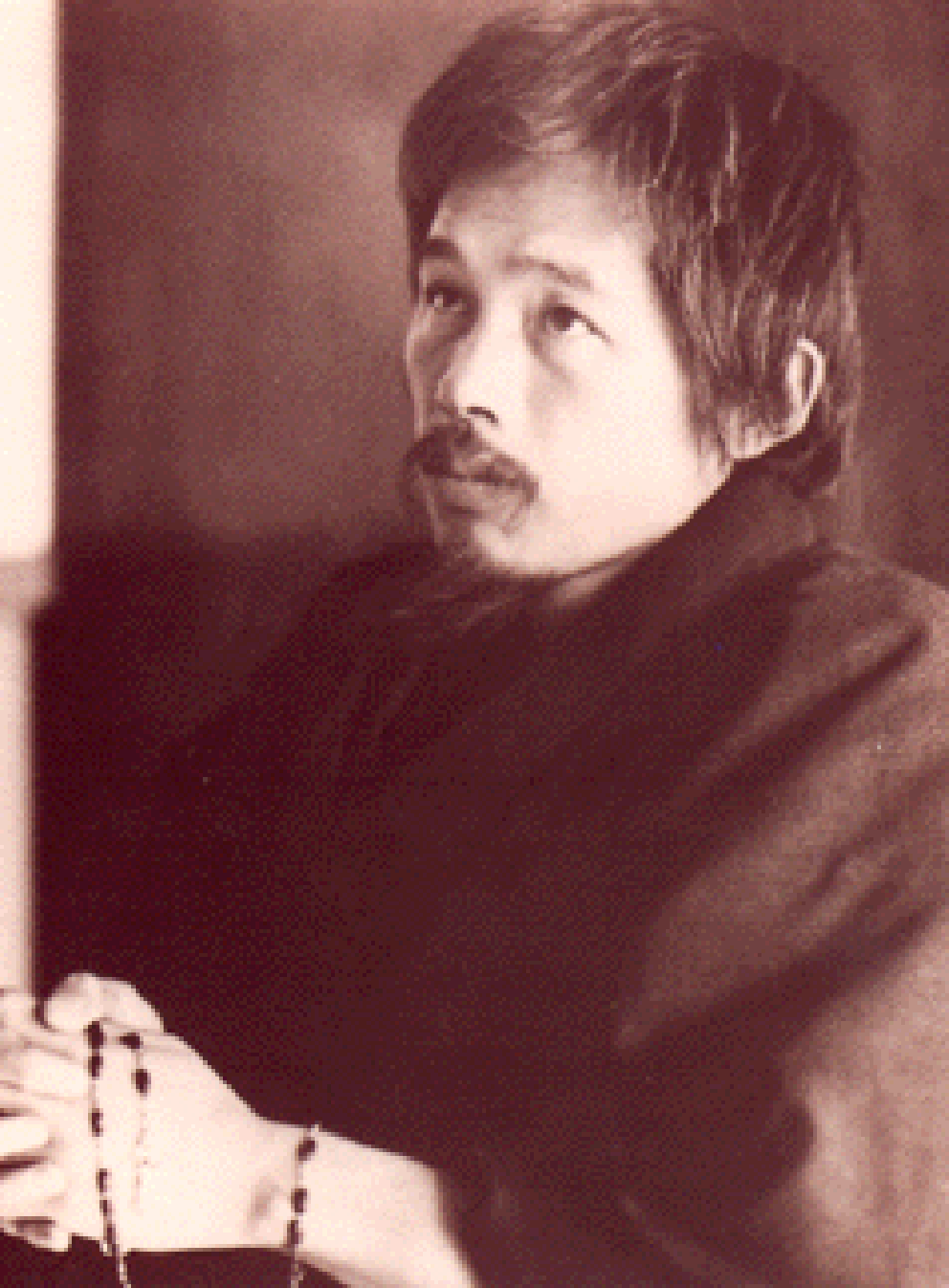
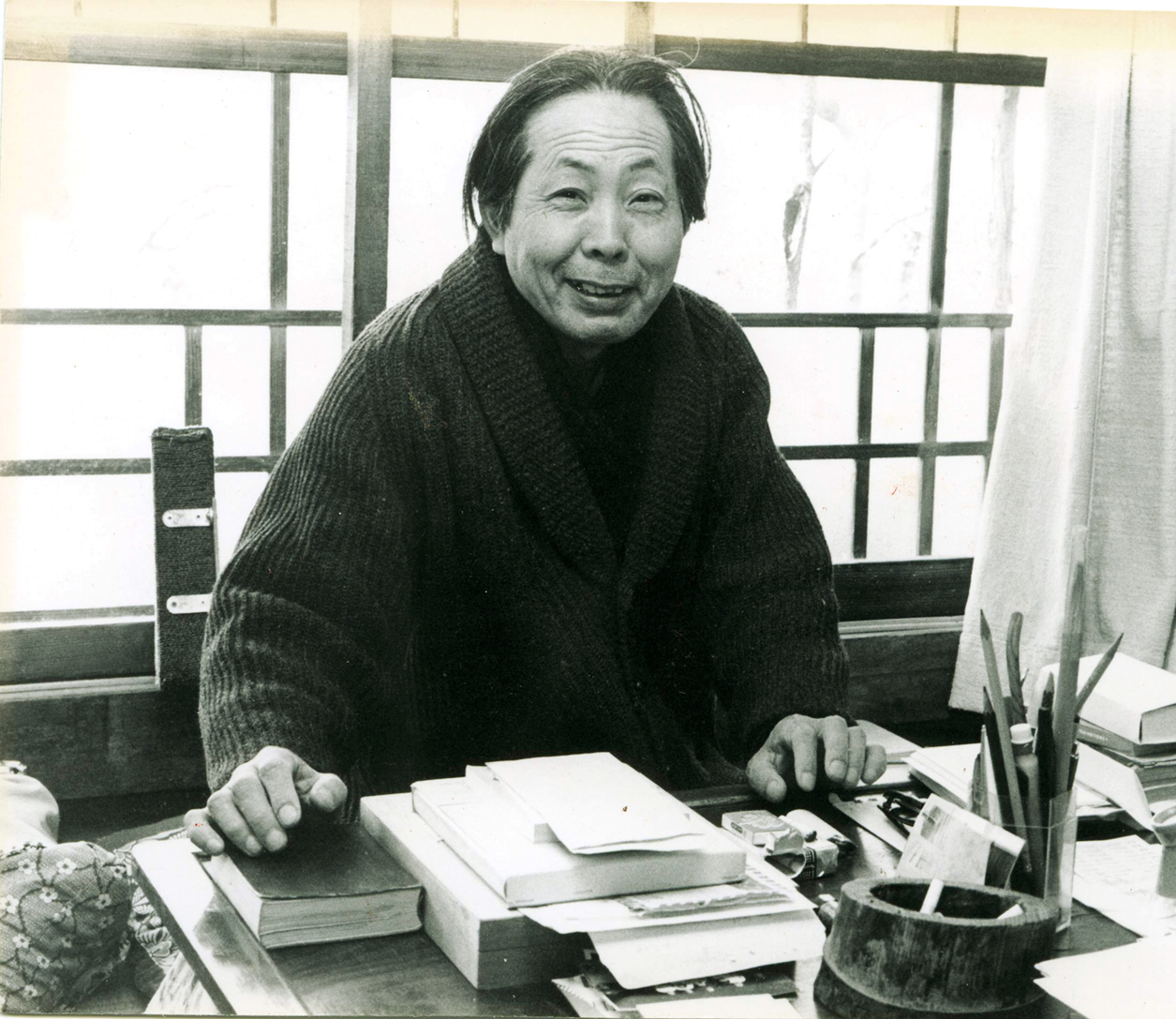
Fr. Vincent Shigeto Oshida, OP, was born in Japan in 1922. After becoming a Christian, the young Oshida felt the desire to dedicate his life to Christ as a religious and was attracted by the Dominican Order. But he fell sick with TB and was confined in a sanatorium. It is there that a small community was born around him made up of his fellow patients who liked to pray with him and sit with him in Zen meditation. He already had the feeling that living and thinking in a Dominican monastery was not going to be natural to him. For the Wisdom tradition is to be simple with ourselves in order to be open to God. On that occasion, however, Jesus did not give him a clear answer, so he continued in his vocation.
Before joining the Dominicans, he sought an answer from Jesus in the Eucharist as to whether or not he should enter that Order. He felt he could not be truly simple in that Order. One of his Japanese friends had a similar question, asking his Jesuit spiritual director whether he was fit to begin life in a religious community without living a daily psychological self-contradiction. The answer he received was that he was not to think about that kind of thing at this stage of his development, that questions like that are good for more developed spiritual persons.
PLEASE DO IT FREELY
Taking his cue from his friend, he no longer gave too much thought to his own question concerning simplicity. Shigeto Oshida, who used to describe himself as “The Buddhist who met Christ,” became a Dominican in 1951.
After his priestly ordination, he continued to persevere in his Dominican vocation. He was sent to Canada to study theology. Upon his return to Japan, he was hospitalized once more for tuberculosis and had surgery which removed half of his right lung. He was then transferred to a sanatorium for convalescence in the district where he later settled. Here, in the sanatorium, around his person, a small community of silence and prayer was born for a second time.
After approximately thirteen years of relative silence, except for conversations with his Dominican provincial, he decided to talk with his local superior. He spoke about how he was torn apart by the urge to give up the western lifestyle of the Dominican convent and adhere to the simplicity of his Zen upbringing. The superior said: “I do not quite understand what you are doing. You are sitting in the Zen position in our little chapel. I must be honest. I do not like what you are doing. We see many young people are following you now. I do not like it.”
Then there followed a moment of silence, after which the superior said to him clearly, “But, my son, even if I do not understand it, and even if I do not like it, I have no right to prevent you from doing so.” His voice softened, “Please do it freely.” It was so that, at last, Fr. Oshida left the convent and created a small hermitage, where he and those who joined him lived in solidarity with their neighbors and practiced a way of life made up of manual labor, prolonged Zen meditation and a Christian liturgy of luminous simplicity.
THE GRASS HERMITAGE
It was 1964 when Fr. Oshida, by then 39 years old, opened the hermitage Sooan in order to make room for all those who were attracted by his way of life (Soo means grass, an means hermitage). Sooan was in the village of Takamori, in the province of Nogano, not far from the sacred mountain, Fuji. It was built like a traditional peasant hut. Takamori’s hermitage was not an organization neither an institution. It was a humble place that fitted naturally in the rice fields, the streams and the rural life of the surrounding villages.
God gave Fr. Oshida forty years to stay in the silence and simplicity of Sooan and to pursue his search for Christ’s face and his listening to makoto (the truth/event). Makoto can be true only when people have become completely simple and sincere. This happens within the deepest silence. Such people, bathed in silence, might someday then encounter a new makoto and discover the “Hand” or “Word” of God through this new experience. God works through our simplicity.
Simplicity can be like a “sacrament.” In the Christian tradition, a sacrament is a visible sign pointing to the presence of invisible grace. In Zen, it is precisely the simple and everyday things that have a sacramental character.
There is nothing special about drinking tea, meeting people, going about one’s daily work, playing with children, or taking delight in nature; but it is in the elements of ordinary life that the mystery of existence opens up. A Zen poem puts it as follows: “How excellent! How miraculous! I carry water. I cut wood.”
THE SACRAMENT OF SIMPLICITY
Ultimately, it is perhaps this radical simplicity that makes the greatest impact on the Christians who journey into the landscapes of Zen Buddhism. Above all, however, they have learned something about true humanity. They have discovered the sacrament of simplicity.
It is this simplicity that people sought in Fr. Oshida and that he took with him when he went out to preach retreats or hid in the pages of the many books he wrote. Fr. Oshida preached the retreat to the Bishops of Asia once and he started it by asking the bishops to go out into the field and plant rice! In the beginning, there was some resistance. But just the same, he made them do it so that they may realize that they are simply “collaborators” in the plantation of the Lord. They can start, but it is God who brings forth the harvest.
One day, he received a visit from a Buddhist nun. He saw her standing at the door of the community grass hut. “I feel like I have come back home,” she said. Next morning, she assisted at the Mass. She was truly involved in it. Fr. Oshida wrote: “I could feel her involvement, could feel the weight of her being sink most deeply into the Mass. After Mass, she remained in the chapel. One of our sisters was also there. After a while, she approached the sister and was obliged to confess, “Do you understand a heart of gratitude that is almost sad?” She was weeping. I was waiting for her outside the chapel and addressed her when she appeared. “What happened?” I asked.
She replied, “In Buddhism, we have what we call ‘unifying communication’ between Buddha and ourselves, but in your place, the Hand of God appears visibly before our eyes.” Tears continued to flow down her cheeks. Some months later, I received a telephone call from her telling me of a dream in which she was being baptized. Her official position at that time was one of presiding at a temple near Osaka. I gave her no answer in relation to her dream. However, I am sure that her experience was an epiphany for her and that she is carrying the mystery of Christ in her being.”
BEAUTY AND PEACE
In the convent of Takamori, in the last days of his life, Fr. Oshida spent long time contemplating the way autumn dresses the surrounding hills in colors. Looking at the leaves falling gently on the ground, he uttered the words that will remain on his lips until the last breath: “God is marvelous! Amen, Amen!” He left this world in a state of profound silence, crossing to the other side of life while resting in a deep sleep. His face in death was radiant with beauty and peace. It was November 6, 2003.
Fr. Oshida was buried on the fifth day after his death by his followers and friends: the simple, wooden coffin was placed in the midst of the trees of the Sacred Memorial Wood that commemorates the victims of all the conflicts. After a prayer vigil that lasted throughout the night, the Mass was celebrated among the trees, near the small spring, and then the coffin was lowered into the earth, just behind the chapel of the hermitage, in front of the statue of Mary holding the Child Jesus. Some grains of rice were placed inside the coffin and then the tomb and the ground around it were strewn with beautiful autumn leaves: red, yellow, golden… These simple gestures in the celebration fittingly made present the religious figure of Fr. Oshida.
TO RENEW MEDITATION
Fr. Oshida was a great witness of the adventure of the Spirit in our time, a pilgrim and a pioneer of the fecundity of the way of Zen that encounters the Gospel. This encounter took place in his life in a radically simple way, without any type of complication, without duplicity, without hesitations, because it actually took place in the depth of the soul where the original creativity reminds us of God’s creative breath. He welcomed the Gospel in his Japanese soul. It was as if the goodness of Buddhism had met the goodness of Christianity.
The Jesuit William Johnston, who spent most of his life in Japan and who is a well- known scholar of spirituality, writes: “Christians might not only avail of the riches of oriental meditation but they should become leaders in a movement of which Christ would be the center – a meditation movement which would humbly learn from Zen. I have told Japanese Christians – and I believe it is true – that they have an important role to play in the development of Christianity. Their vocation is to renew meditation within the Church (because of their Zen tradition) and interpret it to the West.”