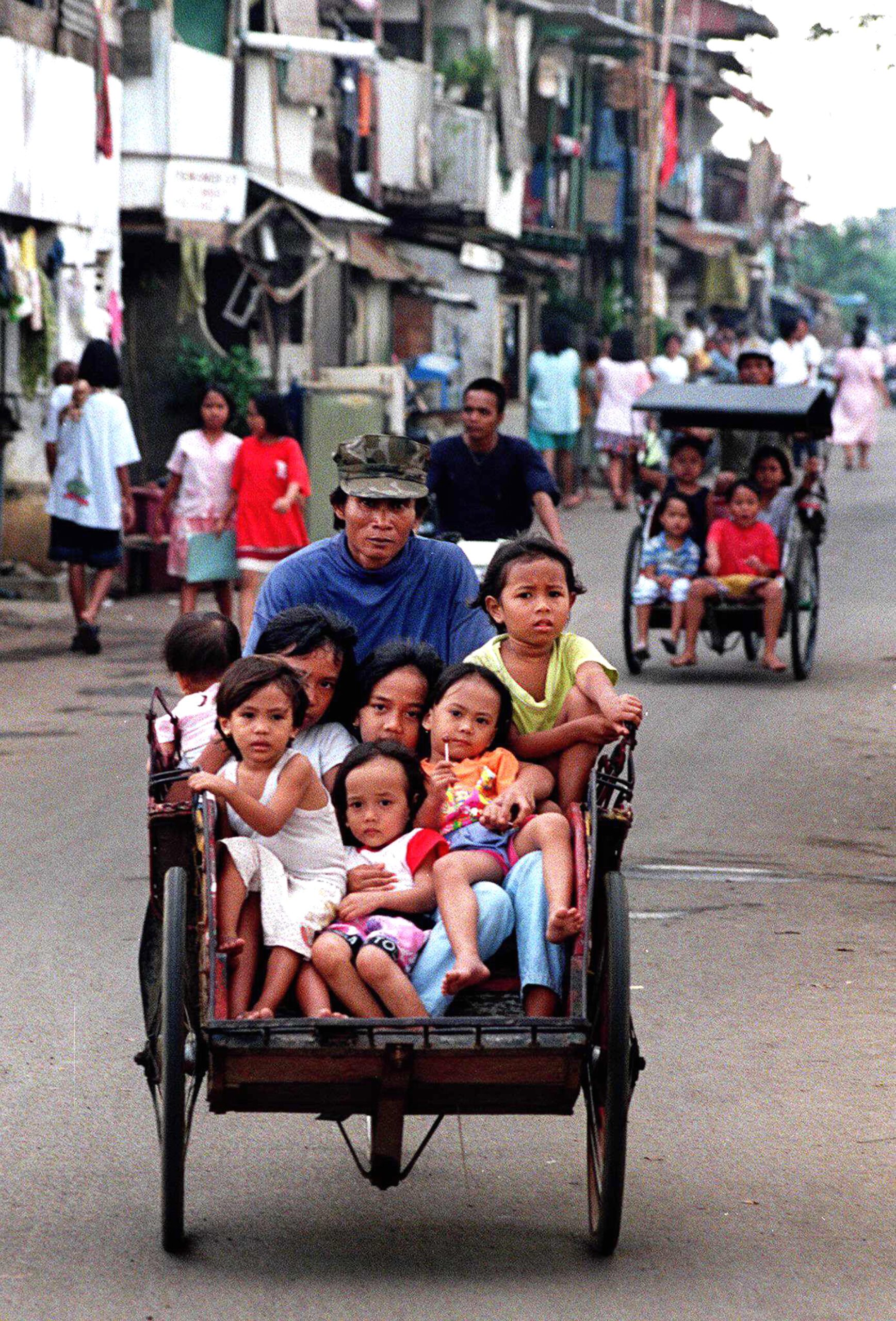
Metro Manila. How will this city, which has already huge problems, handle the expected additional 5 million people to its population by 2015, raising the total number from 10 to 15 million people? Will the city, which is typical of many large Asian cities, still be able to offer residents a simple, but decent life or will problems of congestion, employment, basic services and transport cripple it?
Solutions will be found all right for no modern city has totally collapsed due to increased population but will the solutions be for the common good or will they serve only the interests of the better-off? We choose Manila but it could easily be Jakarta, Delhi, Karachi or any other Asian cities which have vast slums, poverty, underemployment, transport and basic services problems.
Some experts believe that the most effective way to solve these and other problems of the cities is to have governments listen to the voice of the lower-income groups and allow them to participate in important decision-making processes.
BETTER TRANSPORTATION
Transportation is a good example. Some 92% of the people who travel each day in Metro Manila use land transportation − jeepneys, cars or buses. Only 8% use the light rail. The average vehicle speed in the city is about 15 kph, much lower compared with the average speed in New York City of 40 kph, though New York has major traffic problems of its own, especially in Manhattan. Traffic crawls nowadays in Manila. What will it be like if the number of vehicles increases by 50%, to keep pace with the population growth, in eight years? There is no way to create enough new roads and there is not enough money for elevated roads like those in Bangkok. It may be quicker to walk in the Manila of the future. Sidewalks, however, if they would still exist at all, should be already packed with people.
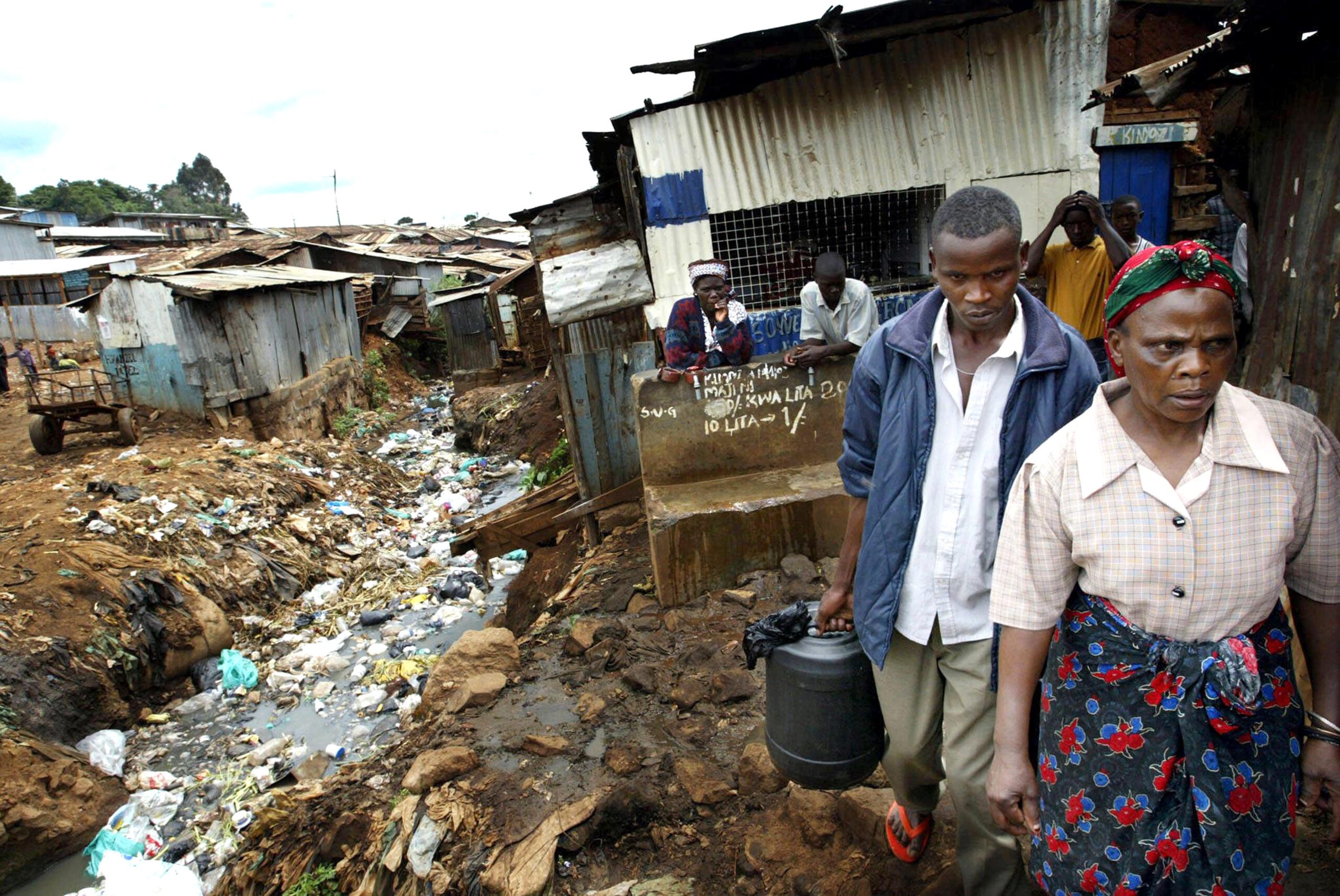
What can be done? Light rails can be extended far out into the countryside, making it possible for people to commute to work from far distances but, then, this will be very expensive. How many people will be able to afford the fare if this kind of transportation is not subsidized? Filipinos may become walkers like the citizens of Nairobi’s slums who walk to work each morning covering distances of up to 10-12 kms. Thousands of men and women head out at daybreak like migrating herds of the country’s grasslands.
One solution would be to ban the use of private cars in the center of the city. Or cities can discourage the use of cars by charging extra tariffs. Singapore began to do so years ago. New York is experimenting with the idea. The absence of cars allows public buses and jeepneys to ply more productively.
Private car owners agreed to the ban in Singapore because there is good public transport available. But this is not the case in Manila. If car use would be limited, will the car owners accept it? Will the city be able to assert the common good by limiting car use and improving public transportation? It will if it sees the lower-income people as the prime constituency to whom it must answer after election time.
THE EDUCATION CHALLENGE
Education is another challenge. Public education is already stretched to the breaking point. President Gloria Macapagal-Arroyo has decided that the standard teacher/pupil ratio in the country is 1:100, in two shifts. Can a young teacher give a meaningful education to 100 little children? Will the teacher even know their names? Besides, schools lack chairs, textbooks and teaching aids.
Philippine education is deteriorating, studies agree, and it is deteriorating at the worst possible time, when the nature of the economy is changing and quality education is needed more than ever for the global economy of the future. How can this weakened Manila school system handle another 1 or 2 million youngsters in a few years and, at the same time, improve its performance? Wealthy families send their children to private schools, so they are hardly involved in improving public schools.
Money alone will not solve the problem but, on the other hand, there is no solution without money. Part of the solution is certainly a matter of allocating sufficient fund in the national budget for good teachers’ salaries, school construction, chairs, desks, textbooks, etc. But will Congress insist on prioritizing education and raising the needed taxes? Are there enough congresspersons seriously committed to public schools? It seems there are not enough because the education budget remains stagnant or is reduced every year. The children of the congressmen and women are not in public schools and there are strong pressures on them to increase, instead, other budgets, the military, for example, and provide infrastructure (especially in their home districts), instead of assisting public schools. Maybe the schools must wait until ordinary citizens have the political organization needed to elect mayors and members of Congress who will speak for the concerns of ordinary students.
THE HARDEST PROBLEM
And work? Who will find work for the extra millions of workers? What jobs will be available, when there are already hundreds of thousands of unemployed or underemployed adults in Metro Manila? There will most likely be fewer factory jobs, since countries like China can manufacture items more cheaply. Many of the jobs available will require well-trained high school and college graduates, that the weakened school system has difficulty producing. In Cavite, for example, factories routinely want candidates for jobs to have a college degree.
Work opportunities are the hardest of all problems to solve since decisions on the nature of a poor country’s jobs are made outside as much as, and maybe more so than inside the country nowadays. One way to proceed is to improve the education system so the graduates are capable and flexible enough to work in any future employment situation. Also the labor union movement must be invigorated.
SAVING LAND FOR THE POOR
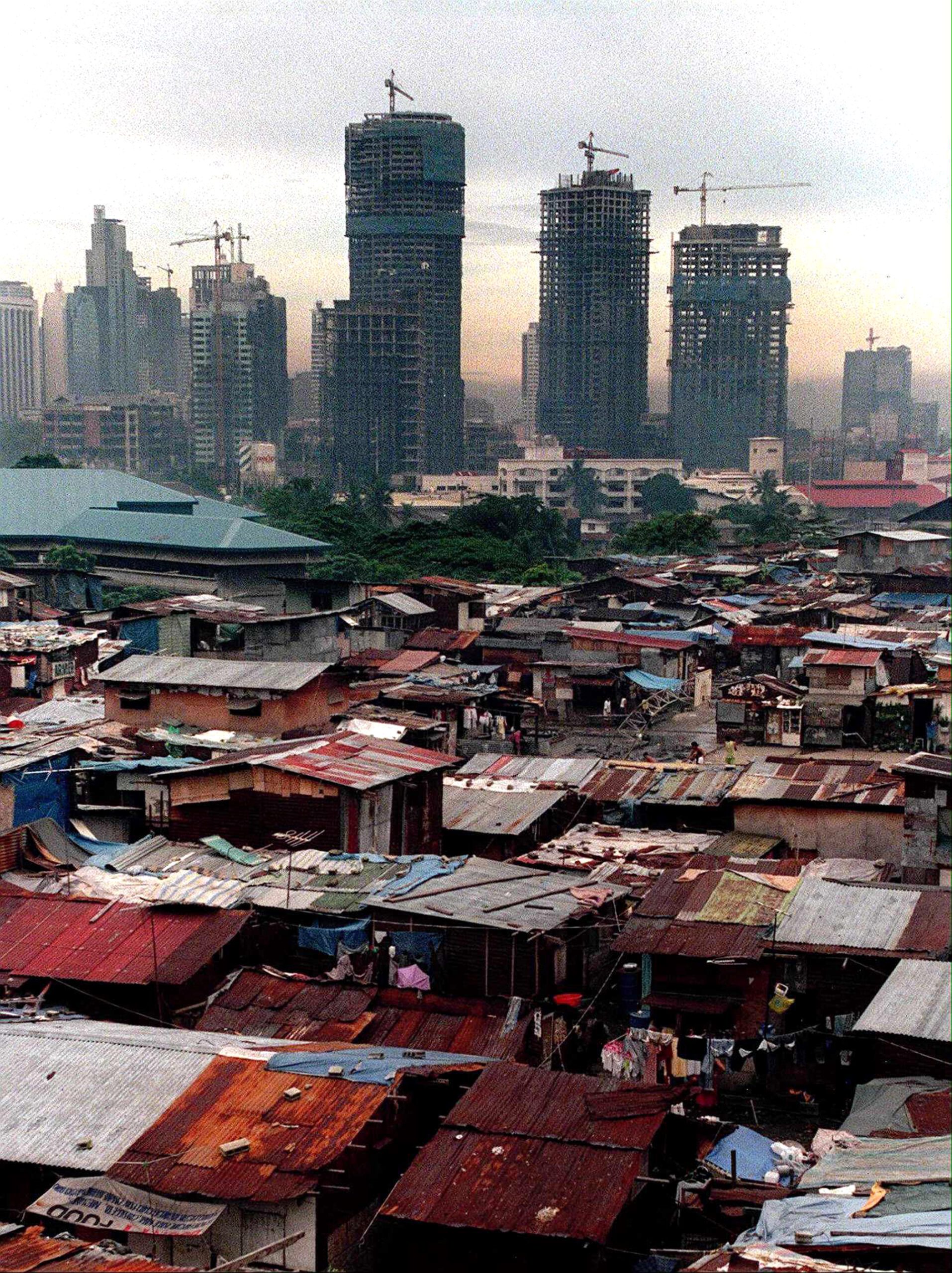
In 2015, the great majority of the additional millions to Manila’s population will be poor people − if the past is an indication. At present, the urban poor are 40-50% of the population, about 4-5 million people living in hundreds of those so-called “slums,” despite the people’s efforts to improve the neighborhood. The poor lack land tenure security which means the fear of eviction is ever present.
Experts warn that there will be more and more pressure on available urban land because of demands by foreign and local entities for improved infrastructure, office space, entertainment complexes and luxury housing due to the globalized economy which is largely urban in nature.
Evidence of this pressure is already seen in the growing number of evictions for infrastructure purposes. To clear waterways (canals and rivers) and roadways, the Metro Manila Development Authority (MMDA) plans to evict 80,000 slum families. Evictions along the railroad tracks so the system can be modernized will reach nearly 50,000 families in Metro Manila; 30,000 families will be evicted for a toll road in Quezon City; another road along Manila Bay from Tondo running North will evict 20,000, and there are a score of other projects on the planning board. Meanwhile existing urban poor areas are teeming. In Quezon City, the number of slum families has grown from 7,000 in 1982 to approximately 45,000 these days. In Parola, Tondo, 12,000 families live on 20 hectares, a density of 600 families (3,000+persons) per hectare.
How will the city find room for another 5 million people, most of them poor? Experts agree that some form of land acquisition must be undertaken by the government − some call it “land banking” − to set aside enough land so the poor can have a secure, legal place in the city. Government should buy idle land, expropriate, or foreclose mortgaged properties, or do whatever is needed to acquire enough land, the experts advise. Clearly, this will not happen unless the voice of the poorer voters is heard in City Hall and Congress. To achieve such representation, the poorer sectors must be organized, in a democratic way, to engage in partisan politics.
Davao City in the south of the country has just set aside $2 million to develop a 25 ha.-resettlement area as part of its land banking scheme. Without such a solution, the slums will be uncontrollable.
THE CHURCH’S ROLE
What is said of education and land is true of basic necessities − food, water, light, clinics, sanitation, etc. The government will not improve services unless compelled to do so by a strong popular representation in Congress and active poor people’s organizations. Such a voice does not exist at present. Solutions that benefit all citizens will happen if all citizens are able to sit together at the negotiating table, rich and poor.
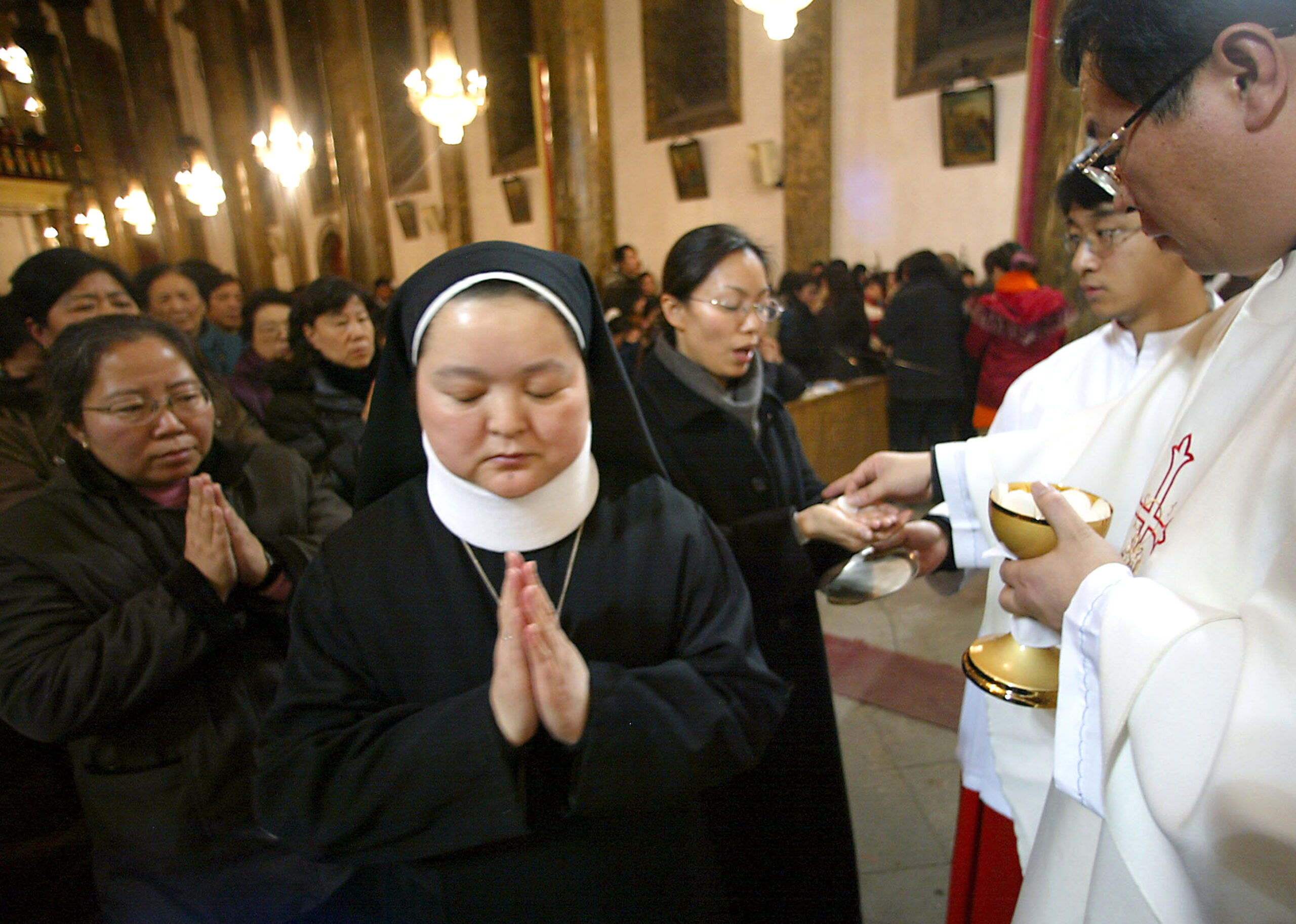
The Church has an extremely important role in helping form the Metro Manila of the future. It can intercede, on behalf of the poor, and educate its wealthier members to find solutions that are fair to all. Perhaps, most important, it can be with the poor and help them form their organizations that will bring them into the decision-making processes that affect the whole of Metro Manila. It is doubtful if change can come without the Church.
We ask how can Metro Manila respond to the presence of 5 million more people by 2015. No need to ask if it can respond. It will, as it has in the past, receive the armies of new arrivals, but what will the city be like? From the air, will it look like a vast, crowded wasteland, the color of a mushroom, relieved only by a few pockets of shining high-rise buildings and the pruned green compounds of the rich? Or will it look pretty much as it does now, but without the numerous slums, and with much more greenery and factories?
The future will be determined by the degree to which the city makes the welfare of its poor people a high priority. If the poor are empowered to sit down with the well-off and decide on plans that are acceptable to both, then there is hope. Education will receive the funding it needs; an educated work force will emerge. The use of private cars will be limited and public transport encouraged; travel will be quicker. Land will be designated for fair use, which will be the beginning of the end of the chaotic slums we know, and basic services will be provided.
* Denis Murphy is coordinator of the Urban Poor Associates, a small NGO that tries to help poor people affected by evictions and those desiring to improve their communities.