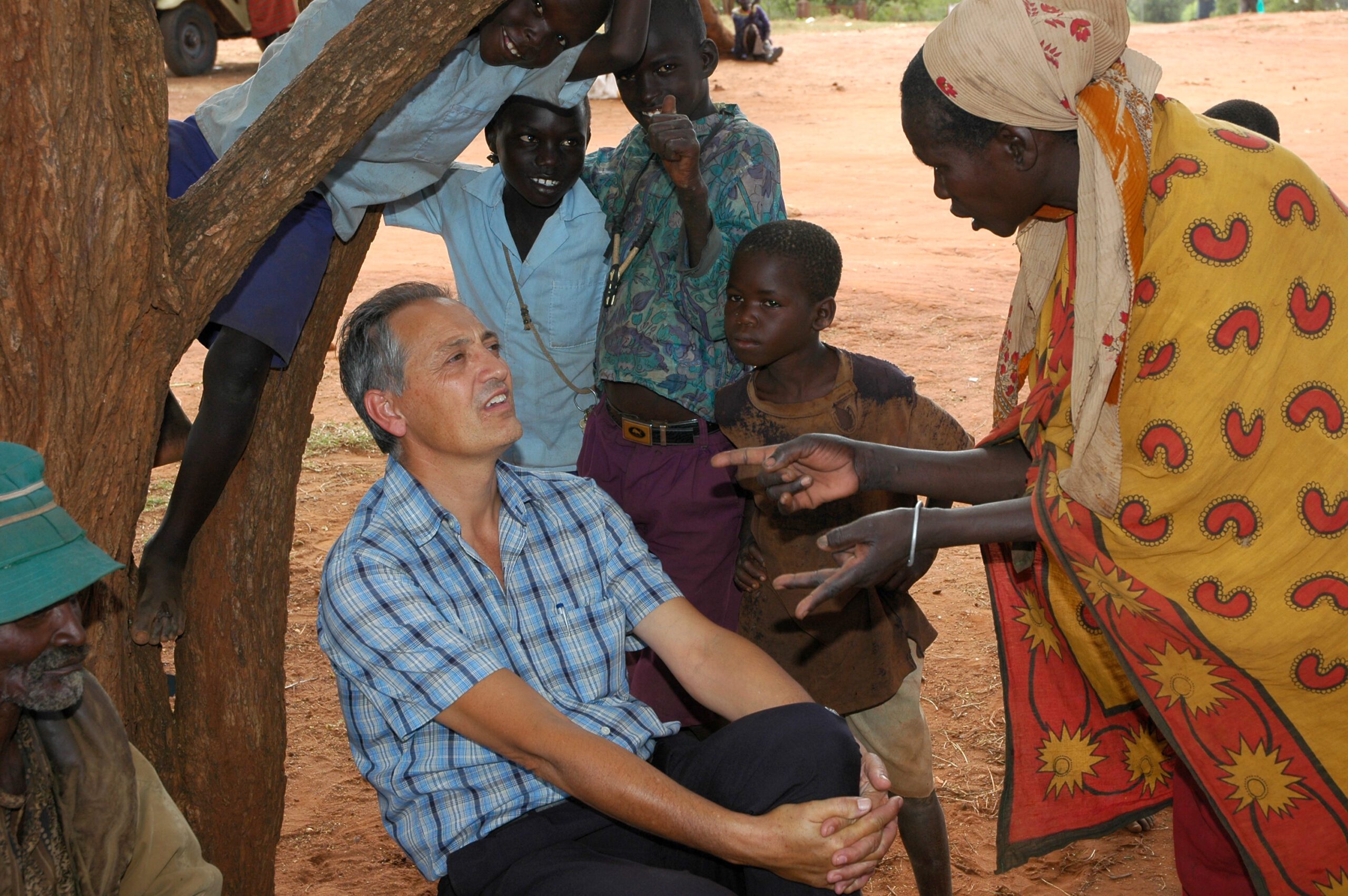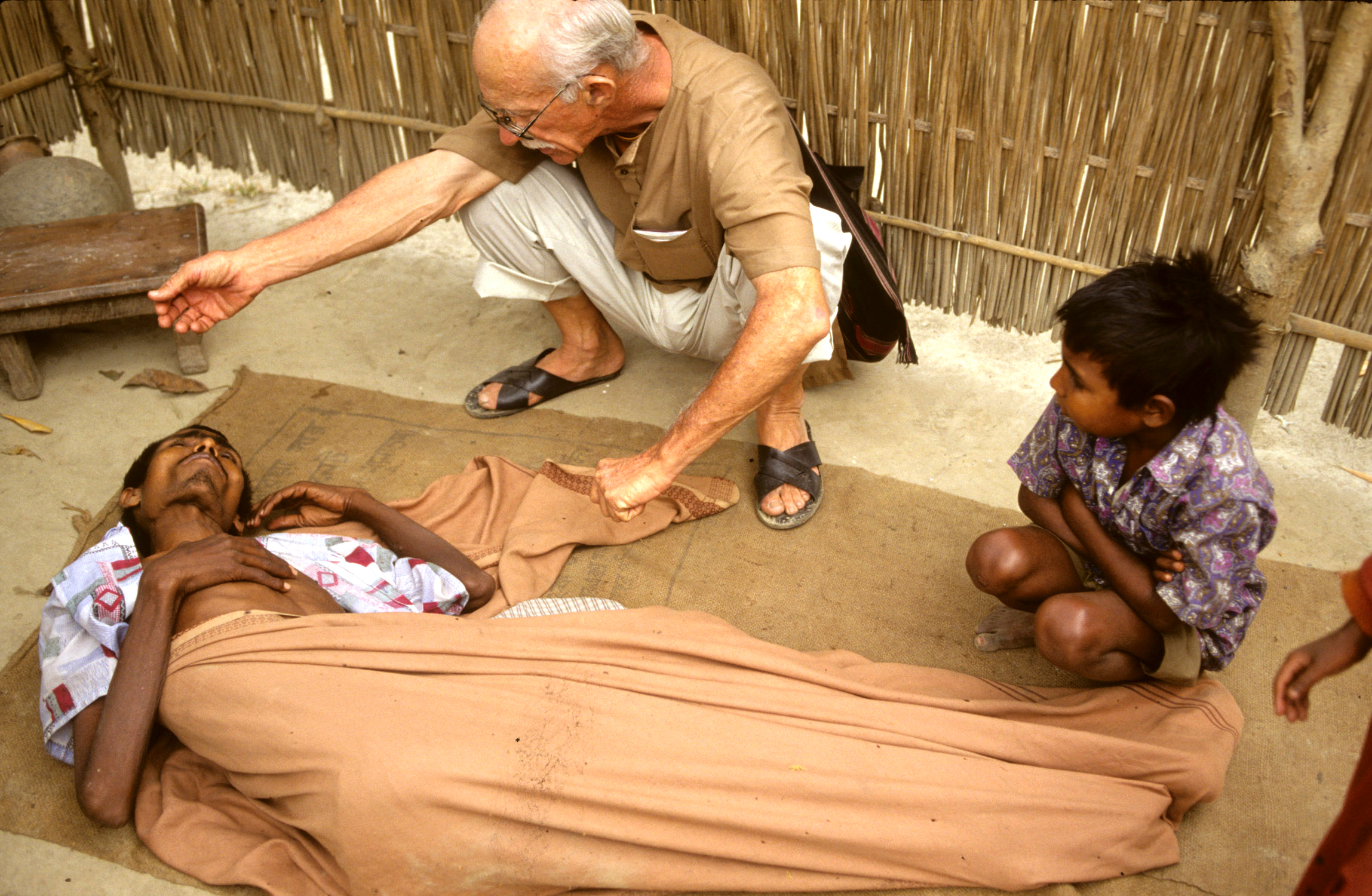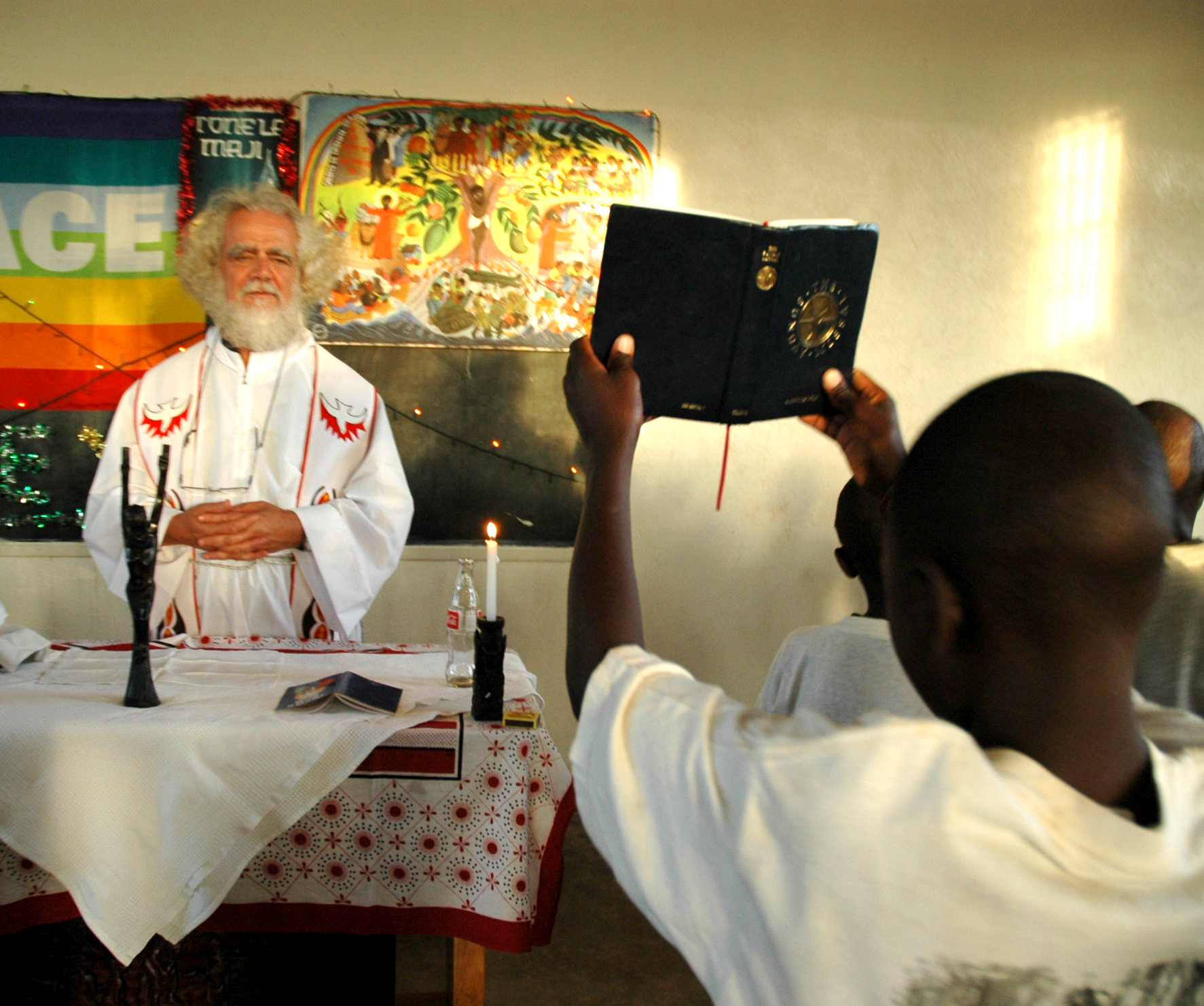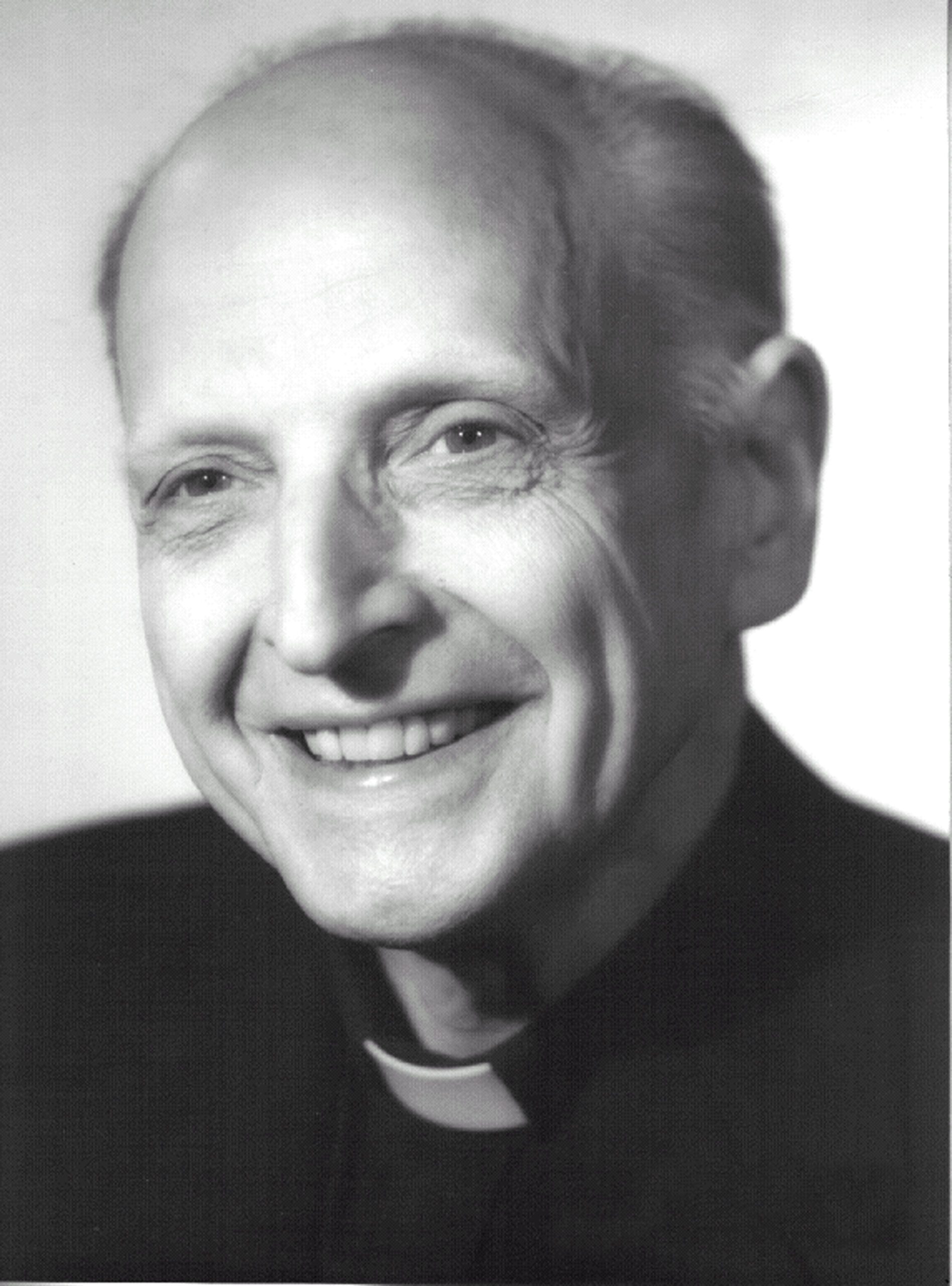
On May 22, 1965, Fr. Pedro Arrupe was elected the 28th Superior General of the Society of Jesus, the first Basque to occupy this position since the founder of the Jesuits, Ignatius of Loyola. In the eighteen years of his service as Superior General, Arrupe oversaw a renewal of the Jesuits so profound that made him to be revered by many as the “second founder.”
Specifically, Arrupe led the Jesuits through their landmark: the Thirty-Second Congregation, a meeting of representatives from all over the Jesuit world, held from December 1974 to March 1975, which defined the modern mission of the Jesuits in terms of “faith that does justice.” It was this gathering that presided over the demanding task of responding to the opportunities and challenges offered by the Second Vatican Council.
It is embodied in this statement: “Our faith in Jesus Christ and our mission to proclaim the Gospel demand of us a commitment to promote justice and enter into solidarity with the voiceless and the powerless.” Arrupe’s belief that the Gospel requires effective solidarity with a suffering world had roots in his early years as a young man and as a priest.
A WITNESS TO THE ATOMIC BOMB
Pedro Arrupe was born in November 1907, in Bilbao, Spain. He studied medicine at the University of Madrid but left to join the Jesuits in 1927. When the Spanish government dissolved the Jesuit order in Spain in 1932, he himself became a refugee. Along with other Jesuits, he was expelled from Spain. In all, they were 350 people who stayed in Marneffe, France, in a temporary shelter. He continued his studies elsewhere in Europe and in the United States. After his priestly ordination in Cleveland, Ohio, in 1936, he worked among Spanish and Puerto Rican immigrants in New York.
Since his novitiate years, he had felt a call to become a missionary to Japan, a nation of special interest to Jesuits from the time of Saint Francis Xavier who had admired the character of the Japanese and Fr. Alessandro Valignano, the great strategist of the conversion of Japan. It was not until 1938 that he had the opportunity to go there. Although he was tolerated as a citizen of neutral Spain, he was imprisoned for sometime on suspicion of spying. But then, he was able to serve as novice master and later became Provincial Superior of the Japanese Mission. He wrote eight religious works in Japanese. He was in Hiroshima on August 6, 1945 when the first atomic bomb fell on the city.
THE LESSONS OF HIROSHIMA
The memory of that day and the suffering survivors whom he tended in the following weeks was present to him in each Mass he celebrated for the rest of his life. The compassion evoked by this experience developed over time into a conviction that ministry to the oppressed and suffering peoples must not remain on a personal level alone. It was necessary also to promote structural changes in the world to alleviate the sources of oppression and violence.
But, first of all, the Jesuits had to minister to the Japanese people. Pedro Arrupe wondered how the Japanese people could recover from the cultural crisis of a total defeat that meant the death of their cultural order. He focused on how the Jesuits could be of service: “Japan has just gone through a very deep-seated crisis. The Emperor was God and, therefore, invincible. Then suddenly came the unconditional surrender and the Emperor said: I am not God. This was a complete material and spiritual rupture. As we Jesuits did not recognize the Emperor as God (from whence came imprisonment, persecutions, and continuous suspicions), we then defended the Emperor. “He is not God,” we used to say to the Japanese, “but he is the representative of God, he holds the authority: you ought to follow him.”
Moreover, his insights about Hiroshima flowed into his contribution as Jesuit General. In his discussion of the ways Jesuits should serve the contemporary world, he focused simultaneously on the very large question of where God is leading us and on the small mystery of each human face. He noted the living conditions of the city, and the state of the survivors…
He also saw in the wasteland that marked the center of Hiroshima the beginning of the modern environmental sensibility. It became possible to imagine realistically the capacity of humankind to devastate the world through the development of technology. Hiroshima suggested that even peaceful technologies could be destructive in the long term. An increasing number of people became interested in the environment. The movement has gathered force around the reality and threat of global warming.
Finally, in Pedro Arrupe’s description of the Mass that he celebrated the day after the bomb fell, we can see a tension in religious sensibility that remains with us. He leaves us with the question of how to bring together the different aspects of devotion: the presence of God in prayer and silence, and the presence of God in the world’s wounded. He did not solve this question but, characteristically, he modeled personally, under great pressure, how we might address it.
Later, it was the misery of the “boat people” fleeing from Laos, Vietnam and Cambodia that strongly influenced him. All these and many more similar incidents shook him and the Jesuit Refugee Service (JRS) was his response to the plight of the refugees. Fr. Pedro Arrupe was the brain and the heart behind the JRS (and its twin, the Loyola Computer Literacy Center) with its motto: Assistance–Accompaniment-Advocacy.
All these happened in the early 1980s and JRS has now completed its Silver Jubilee but the problem still continues and has increased manifold: Israel-Palestine, Cambodia, Laos, Chechnya, Bosnia-Herzegovina, many African countries, Afghanistan, Iraq… are reeling under feuds and wars leaving millions of people abandoned.
MEN FOR OTHERS
“Men for others” was the address of Fr. Pedro Arrupe to the Tenth International Congress of Jesuit Alumni in Europe, given in Valencia, Spain, on July 31, 1973. The address was published in French, Spanish and Italian. It caused a stir because it called with insistence for change. Continuing education for social justice poses no threat while it remains on the level of abstract theory. Fr. Arrupe brought the doctrine to bear on the personal lives of all who heard him.
His appeal was as radical as the contemporary teaching of Pope Paul VI in Populorum Progressio. Few years earlier, in 1971, the Synod of Bishops had pronounced the landmark principle: “Action on behalf of justice and participation in the transformation of the world appear to us as a constitutive dimension of the preaching of the Gospel.”
In his address, Arrupe describes, with bold brush strokes, our society where the educational task of the Jesuits is called to operate: “The downward spiral of ambition, competition and self-destruction twists and expands unceasingly, with the result that we are chained ever more securely to a progressive, and progressively frustrating, dehumanization: dehumanization of ourselves and dehumanization of others. For thus making egoism a way of life, we translate it, we objectify it, in social structures.”
“To be men for others is the paramount objective of Jesuit education. It is the extension into the modern world of our humanistic tradition as derived from the Spiritual Exercises of Saint Ignatius. Only by being a man for others does one become fully human, not only in the merely natural sense, but in the sense of being a person filled with the Spirit of Christ, the Son of God who, by becoming a human being, became a Man for Others.” Thus, Arrupe was a pioneer in urging the combination of pastoral concern, biblical reflection and social analysis.
“TAKE, LORD, AND RECEIVE”
Arrupe was aware that the Jesuits would suffer the consequences of this new understanding of their mission, and he urged them to be prepared for criticism and even persecution. His concern was prophetic. Within three years, five Jesuits had laid down their lives in the pursuit of justice, and criticism was quick to follow. Many others, some would say too many, deserted the society and their vows, in the wake of their social, humanistic, sometimes political, commitment. The Jesuits were accused of substituting politics for the Gospel, and Arrupe was personally charged with leading the Society astray. His passion was quickly coming.
In 1981, after Arrupe suffered a disabling stroke, Pope John Paul II appointed a personal delegate, in the person of an old Italian Jesuit, Paolo Dezza, to serve as ad interim Superior of the Society. Arrupe’s own choice of vicar general was passed over, a fact perceived by many in the Society as a criticism of their beloved Superior General.
Arrupe himself never expressed any resentment. Two years later, with the election of his successor, he tendered his official resignation. Unable to speak, he prepared a farewell statement that was read in the assembly.
Like what Saint Ignatius had described in the Third Week of The Spiritual Exercises, Arrupe joined his anguish to Christ’s anguish, his agony to Christ’s agony. He spent his final years entirely dependent on others for his daily care. Whereas he had once served God through bold and prophetic leadership, now it was through prayer and patient suffering. As always, he set an example of the Ignatian discipline of “finding God in all things.” He died on February 5, 1991.