For the past twenty years, particularly after the September 11, 2001 attacks in New York, history has, without doubt, shown that fundamentalism is an option made by many. Yes, all those who were wholeheartedly and violently against changes and transformation would be put under the banner of fundamentalism. Traits of fundamentalist attitudes tarnished all religions, Christianity included; however, the religious group most affected by this evil is the Muslim world. The examples are many in the Middle East, Africa, and Asia. Europe is not excluded, and has become a privileged target as we saw in France in January 2015, with the killing of 22 people working for the satirical and fiercely anti-religion magazine Charlie Hebdo.
Often, what these fundamentalists are against has nothing to do with real faith and religion. It has to do more with cultural habits, customs or greed for grabbing political power at all cost. In the face of the devastating effects of fundamentalism, we are in a far better position to understand the importance of Vatican II which prepared the Church and the Christian world to the changes which accelerated in the last 50 years. Could you imagine the tragedy that would befall us if the Christian world reacted to the fundamentalism of the Islamic world with another type of crusade – violence in response to violence?
We can appreciate the formal teachings of St. John XXIII through the encyclical Pacem in Terris (Peace on Earth), which appeals, with passionate language to all ideologies, religions, and nations, to mutual respect, tolerance, and coexistence. We can appreciate the spirit of Assisi, proclaimed by St. John Paul II in October 1986, to tap the potential for reconciliation and solidarity hidden in all religions and sheltering all religions from the poison of fundamentalism.
EVENTS OF TRANSFORMATION
The Christian message is deeply intertwined with transformative visions, attitudes and moods. A few teachings and pillars of the Christian faith show how much change is part of the message.
“Creation,” as it is presented in the book of Genesis, is a great event of transformation. The sacred writer uses the cosmologies of the Middle East. He is not interested in asserting Creation from nothing, a point that has become very strong in the Theology of Creation in the Western world. Creation in this biblical book is a powerful passage under the influence and action of God’s Word and Spirit from chaos and darkness to order and light. A gradual configuration of the cosmos from ugliness to beauty is another component in this immense transformation. This is what Creation is all about in the first books of the Bible. It is one way of identifying transformation in the sacred books.
Exodus is another major category in the Christian faith, a deep religious experience embedded in the social history of a community of people. Exodus is the passage or transformation from slavery to freedom; from human beings identified as a confused and disorganized mass, into a people, a society with its own management of leadership, organization in ethnic groups, and lands. God clearly states that He is against slavery, that He listens to the cries of the oppressed and downtrodden. He shows His providence by sending charismatic leaders such as Moses and Aaron.
“Conversion” is another important word in Christian history and experience. It is linked to all the sacraments which, in one way or another, are transformative with the goal of turning each of the faithful into Jesus’ disciples according to the different seasons of human life. A transformation, according to the language of the Letter to the Romans, from the status of being rebellious against God’s will and plan to the status of sons and daughters who forged a covenant with Him in the way of Jesus.
RESURRECTION AND RADICAL CHANGE
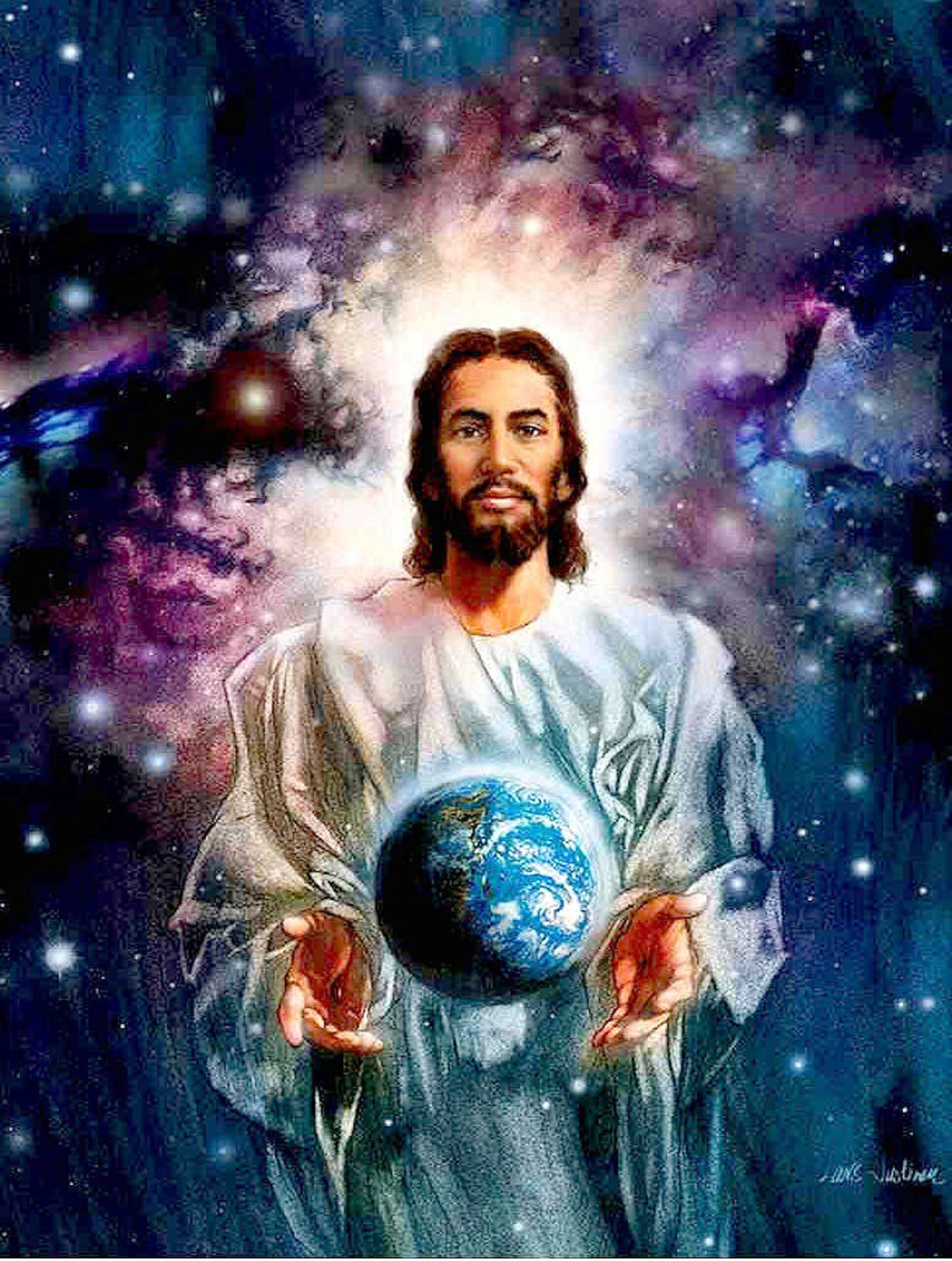
At the center of the Christian experience is the Paschal Mystery – the Passion, Death, and Resurrection of Jesus – a tremendous transformation in the life of Jesus Who became a unique Agent of personal and social transformation through His example, words and ministry. But before being deeply transformed through the Resurrection, Jesus was an incredible and unstoppable Transformer, at the level of religious, cultural and social life. As a matter of fact, He was killed because He went against the status quo of politics as represented by Pilate, religion as embodied by Caiaphas, and culture and tradition as represented by the Pharisees. All of them felt tremendously threatened by Jesus because He was bringing about a transformation which was touching upon these three levels of life.
To understand the profound changes brought about by Jesus, let us compare the perfection or holiness according to the Pharisaic tradition and the novelty brought about by Jesus. Holiness, in the Pharisaic tradition, meant the observance of the Sharia, the law. There were 613 commandments in the official Torah. The Pharisee in the temple, in the parable of the Pharisee and the publican, boasts of observing all of them. The more you identify wholeness and holiness with the Sharia, the more you become intolerant, spiteful of others, judgmental and violent. Jesus challenges them radically. The synthesis of His new stand can be summed up in two sentences: “I desire mercy, not sacrifice” and “The Sabbath is for human beings and not human beings for the Sabbath.” And Sabbath stands for the law.
Against the perfection configured in the model and praxis of the Pharisees, Jesus proposes another holiness, very well symbolized and expressed in the parable of the Good Samaritan, that is, holiness and wholeness in becoming neighbor to others in this ongoing and challenging approach to others and letting others approach you.
Jesus states that, in order to be nearer to God, I should become close to others. That means that I should daily strive to approach others and make myself approachable to them. Without flexibility towards and passion for others, no one can undergo that challenge, the challenge of becoming a neighbor to another. This is the ethical perfection of Jesus, not merely observance of the law but gradually coming closer to others despite their diversity. That is the reason why Jesus was a great Transformer. He also radically changed the understanding of religions, which identified God with an established and rigid order, forgetting the diversity of all human beings.
THE PASCHAL MYSTERY
What, then, is the Paschal Mystery? First and foremost, it is the violent rejection of this new religion which Jesus was presenting through His own example, teaching and proclamation. Good Friday is the violent rejection of Jesus by the political and religious establishments. They were not ready to accept the transformation and changes that Jesus was bringing about, both in the religious and social arenas. St. Luke adds that the Jewish leadership was hostile to Jesus for His option for the poor. For Jesus, the poor were the accursed and rejected – the lepers, the disabled and the public sinners, like Matthew who was at the service of the Romans collecting taxes. Jesus became the vehicle which enabled the ostracized to be readmitted into society, thereby challenging the Temple establishment.
The public and formal execution of Jesus, sanctioned by the supreme political and religious authorities, was a public and formal rejection of those novelties which Jesus was bringing about and of the transformations He spearheaded.
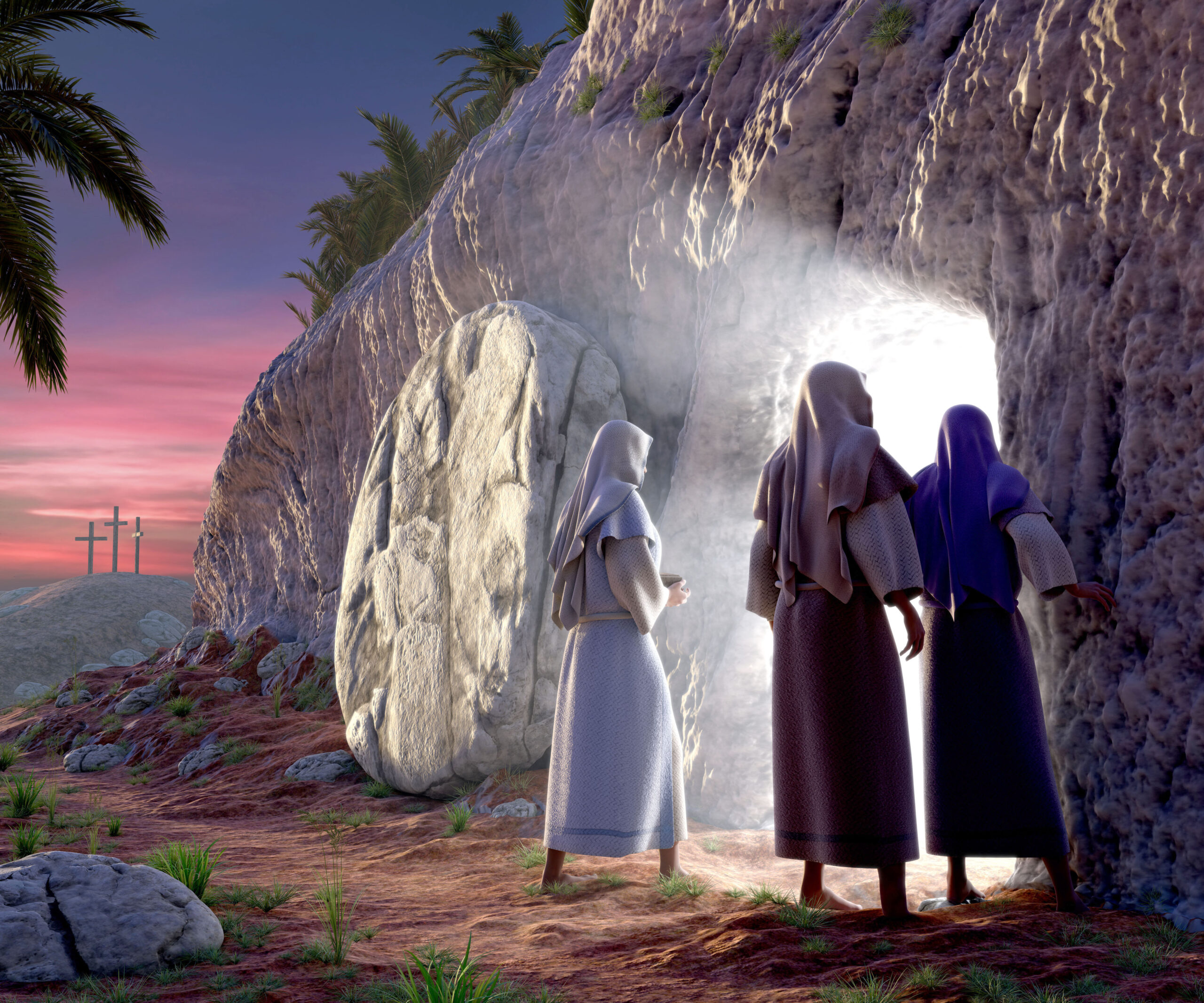
Meanwhile, Sunday, the day of the Resurrection, is the public stand of the Trinity on the side of Jesus. It is this public disagreement of God with the powerful of the world which killed Jesus and sealed the tomb to do away with Him forever. Whereas for God, Jesus, as the Psalm says, has become the cornerstone of the new order, of the new world, which Jesus Himself called the Kingdom of God. With the Resurrection, the Triune God sided with the changes that Jesus had lived in His own person, had ministered and engaged Himself to propagate, in the line of the prophets of the Old Testament, whose promises were made not to the rich but to the poor. If Jesus had to accomplish the Old Testament promises, He had to become poor Himself, and what happened to Him on Good Friday is the apex of His own poverty.
The Resurrection is also God’s seal, the stamp of authenticity that the Triune God was behind the changes and transformations proposed by Jesus. The Paschal Mystery is the summit of those transformations and is the beginning of the new historical era characterized by a more systematic approach to this transformation.
On the day of the Resurrection, Jesus appeared to the Apostles, transmitting to them the Holy Spirit. The transformation that the Resurrection implies is the fruit of the Holy Spirit, the great Transformer, the great renewal of the face of the earth. With the help of the Holy Spirit, Jesus commissioned the Apostles to preach to the world, so that the logic and the experience of the Paschal Mystery, most importantly the Resurrection, can be made accessible to all.
THE RESURRECTION: A PLURALISM OF MINISTRIES
During the last period of His public ministry, Jesus invested a lot of time in preparing the Apostles and His own disciples to continue His own mission of profound change and transformation. During the forty days before the Ascension, He helped them, according to Luke, to understand the real meaning of what had happened to Him.
The journey of Emmaus is very telling and clear. He had to undergo a profound and difficult change. All the changes imply a cross which is not, as the Pharisees were proclaiming, the external manifestation of the Father’s curse upon a person, but was the birth pangs towards a new life. Jesus shared this explanation, the real meaning of what was going to happen during His own Passion and Resurrection, with his Apostles at the Last Supper.
Jesus wanted His Resurrection to be shared by all humanity. His mission, as is presented during His reading of Isaiah 61 in the Synagogue at Nazareth, had to be continued because the promises of the Old Testament had to be implanted until the end of time. And the end of time would be marked by the full accomplishment of those promises. Hence, the Resurrection generated the mission and, within the mission, many ministries. All these ministries are at the service of liberation from these forms of slaveries, which have hounded man throughout history. In the service of change, Jesus empowered the Apostles to raise the dead, to open the eyes of the blind, to set captives free, to establish justice in all corners of the world.
The supreme act of justice is the Resurrection. The logic and the dynamics of the Resurrection are to be more and more disseminated in order to bring about a new world order which is identified as the Kingdom of God. The mission of the Church and all the ministers in the Church and in the world are at the service of the mystery of transformation which is embodied in this simple word: Resurrection.
And for sure, the Resurrection cannot penetrate the world without profound changes, both personal and social. Structural and systemic changes – this is what the community of Jesus, the Church, has been sent out to do – have to be initiated as a great leaven of transformation and as a great factor for transformation; in the words of Vatican II, ‘Sacrament of Salvation,’ ‘Sacrament of Reconciliation.’