Climate change is one of the most serious ethical issues facing humanity in the 21st century. The facts speak for themselves. The glaciers in the Himalayas provide the meltwaters for Asia’s great rivers − the Indus, the Ganges, Brahmaputra, Salween, Mekong, Yangtze and Huang. These are diminishing each year because of climate change. If they disappear, where will the two billion people who depend on their meltwaters get water during the dry season? The water supply for the cities of Lima in Peru and Santiago in Chile also depends on meltwaters from glaciers in the Andes.
A report from the International Panel on Climate Change (IPPC) in April 2007 predicts that a rise of one meter in the sea level would make it impossible for over 30 million Bangladeshis to live in the delta area. The IPCC report predicts that a rise in sea levels is virtually certain to cause greater coastal inundation, erosion and loss of wetlands. A significant rise in sealevels will inundate many of the cities of the world, including Manila, Cebu and Davao and create a torrent of environmental refugees. Already many communities on Pacific islands are falling victim to rising sea levels caused by thermal expansion of the ocean waters and melting glaciers and polar icecaps. People from the island of Tuvalu are trying to relocate to New Zealand.
HUGE COSTS
Many economists are now saying we must take urgent measures to stabilize the amount of carbon dioxide in the atmosphere which is one of the main causes of global warming. Sir Nicholas Stern, a former chief economist with the World Bank, has stated that global warming is the greatest failure ever of market economics. According to him, if we tackle it now, by lessening our dependence on fossil fuel, it will only cost about 1% of the global gross domestic product (GDP). If we leave it for another 10 or 15 years, it could cost in the region of 5% to 20% of the global GDP. Behind these figures lies not just the death of possibly hundreds of millions of people, but the fact that the earth will be a less hospitable place to live in for each succeeding generation of humans.
I was an observer at the UN Climate Change Conference at Nairobi in November 2006. I noticed that almost all the negotiations around climate change quoted scientific, political and economic data but seldom mentioned the core ethical values involved in any human activity, particularly a destructive one like emitting greenhouse gases.
This is a shame because many profound ethical questions can be obscured by scientific and economic arguments about various climate change proposals. Unless ethical arguments are addressed individual nations will continue to seek their short-term economic gain no matter how this affects the global common good, especially poorer countries.
THE EXCUSE OF GROWTH
One of the first ethical principles is identifying those who are responsible for the damages caused by climate change. This principle states that a nation cannot use the excuse of minimizing the cost to its own economy as an ethically acceptable excuse for failing to take actions on greenhouse gas emissions which affect the whole planet. This is the reason the Bush administration in the US and the Howard government in Australia gave for not signing up to the Kyoto Protocol even though they are two of the chief polluters on the earth.
If we reduce the issue to manageable proportions, the moral implications of climate change become more evident. For example, if I persisted in pouring a noxious substance into another person’s house which made it impossible for them to live there, I am sure that reasonable people would come to a number of conclusions very quickly. Firstly, that what I was doing was morally wrong. Secondly, they would brush aside my excuse that I had to keep pumping the noxious substance in order to increase my wealth. Thirdly, they would insist that I should stop polluting immediately. Fourthly, that I should pay compensation for the wrong I had done. Rich countries, which are mainly responsible for releasing greenhouse gases into the atmosphere over the past 200 years, are obliged to pay compensation for climate change damages that are unavoidable. The 13 million people living in Dhaka, the capital of Bangladesh, are on the climate front line. Even a one meter increase in sealevels will permanently flood many areas of the city and increased heat stress will make life very difficult for millions more.
THE MAGIC POTION
In a spirit of global solidarity, they are also morally bound to make resources and new technologies available to poor communities so that these countries can adapt and enjoy a decent standard of living without adopting the polluting Western model of development.
When it comes to Allocating Global Emissions among Nations − The polluter pays principle is consistent with the demands of distributive justice. This means that there is an ethical imperative on every nation to try to promote sustainable development policies. Faced with the disruption which climate change will bring, everyone, but especially industrialized countries, must assume their responsibility by cutting their carbon emissions and developing renewal forms of energy.
Some countries have used the excuse of scientific uncertainty with regard to climate change to avoid cutting their greenhouse gas emissions. Petrochemical corporations, especially, Exxon-Mobile, have played a very negative role in trying to pretend that climate change is not due to burning fossil fuel. Once again this excuse transgresses basic ethical norms. When there is a possibility that an activity, in this case burning fossil fuel, will cause great harm, then the precautionary principle dictates that nations take precautions not to harm other nations. At this point in time, scientific uncertainty around global warming is now minimal.
Listening to some of the delegates at the Nairobi conference, especially those from the US, Australia and Russia, one would think that new technologies will solve all our problems. Traditionally, we used to pray − our help is in the Name of the Lord. Now the mantra seems to be: our help is in technology which will save us. No adequate technology exists at present to capture carbon. The only way to proceed at the moment is to reduce our dependence on fossil fuel. The International Panel on Climate Change believes that we need to reduce our greenhouse gas emissions by 60%-80% by the year 2030.
CARE FOR GOD’S CREATION
On the theological level as Christians, we are called to care for God’s creation. Climate change is upsetting the natural cycles upon which God’s creation − animal, plants and humans − depends. Sometimes we forget that humans depend on the natural world for our food, drink, clothing, medicine and many of our industrial products. As Fr. Thomas Berry often says, you cannot have healthy people on a sick planet!
Our faith calls us to care for others, especially those most vulnerable. We know that climate change will have a terrible impact on the poor, the very people who did least to cause the problem in the first place.
In the Magnificat, Mary tells us that God’s mercy reaches from age to age for those who fear him (Lk. 1:50). Each generation is called to hand on to the next generation a world as fruitful and as beautiful as the one they inherit from their parents and grandparents. Unfortunately, the full impact of climate change will take decades and maybe centuries to become fully apparent. Future generations will not thank us for making their world a less hospitable place for each succeeding generation to live in.
CHURCH MUST TAKE THE LEAD
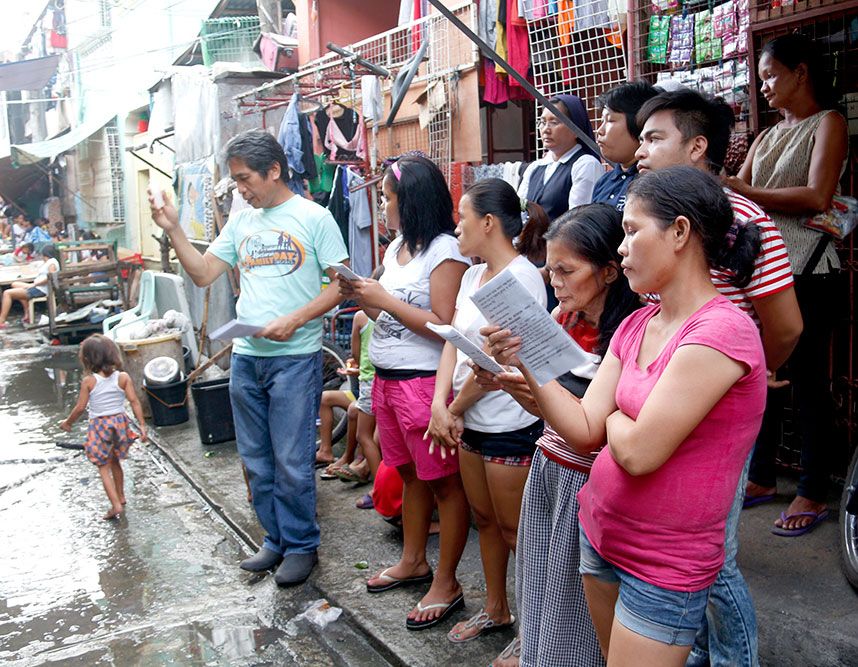
Unfortunately, the Catholic Church, either in its central offices in Rome, diocesan structures, religious communities or development agencies, has not given the lead in educating people about climate change and what actions must be taken to avoid it. The Australian Church seems to be an exception. The bishops’ Committee for Justice, Development, Ecology and Peace published an excellent document called Climate Change: Our Responsibility to Sustain God’s Earth in November 2005 (See page 29). In January 2008, the Philippine Church will mark the 20th anniversary of the ground breaking pastoral letter, What is Happening to our Beautiful Land? In September this year, the archdiocese of Manila ran a conference on climate change in the Holy Spirit College. More than 500 people in all attended the meeting.
Archbishop Migliore, the Holy See’s representative at the United Nations, believes that the Earth’s climate system has demonstrably changed on both a global and regional scale and that it is a moral issue. The Pope is expected to use his first address to the United Nations in April 2008 to deliver a powerful warning over climate change in a move to adopt protection of the environment as a “moral” cause for the Catholic Church.
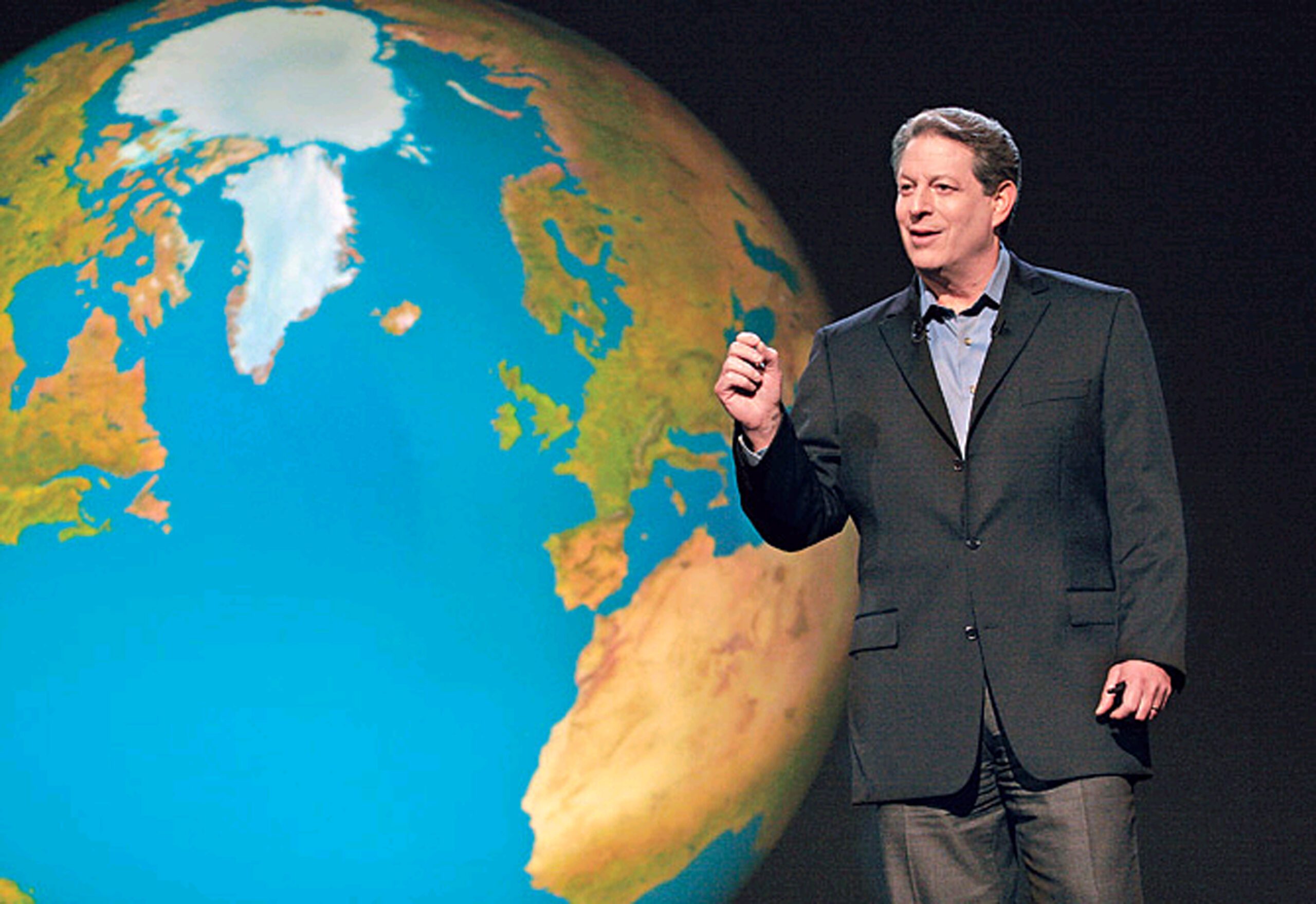
Action is needed now to stabilize the levels of CO2 in the atmosphere. If we continue with a business-as-usual approach to our use of fossil fuel, we could soon reach irreversible ‘tipping points’ like the melting of the Greenland ice sheet which will make the world a less hospitable place to live in for all succeeding generations.
TO FACE THE CHALLENGE
There is hope if we face up to the challenge. The final IPCC report in April is optimistic. It believes that we can reduce greenhouse gas emissions by 26 billion tones by 2030. It is absolutely clear that governments, industry, religions and individuals must work together if we are to succeed. It believes that we have the know-how and money to limit the average global temperature rise to between 2 and 3 degrees Celsius. What we still lack is the political will to make the changes. Religions ought to help their followers to make the necessary changes to protect the earth today and into the future.
Unfortunately, no decisions about how to regulate greenhouse gas emissions when the Kyoto Protocol runs out in 2012 were made at the UN conference in Nairobi in November 2006. Some participants argued that it was necessary to wait for the 4th assessment from the Intergovernmental Panel on Climate Change before taking action even though the dogs in the street knew what the scientists were saying. The 4th assessment appeared in three reports published in February, April and May 2007, and the message was sobering and grim. The human community has about a 15- year window-of-opportunity in which to tackle and reduce dramatically greenhouse gas emissions. All eyes now are on the current UN Conference on Climate Change which is meeting in Bali, Indonesia from December 3 to 14. The participants will have to make very serious decisions. Christians should pray and lobby politicians that the governments of the United States, China, India, Brazil and South Africa will stop blocking progress and sign up to a viable new protocol to regulate the period between 2012 and 2020. Literally, the future depends on a favorable outcome.