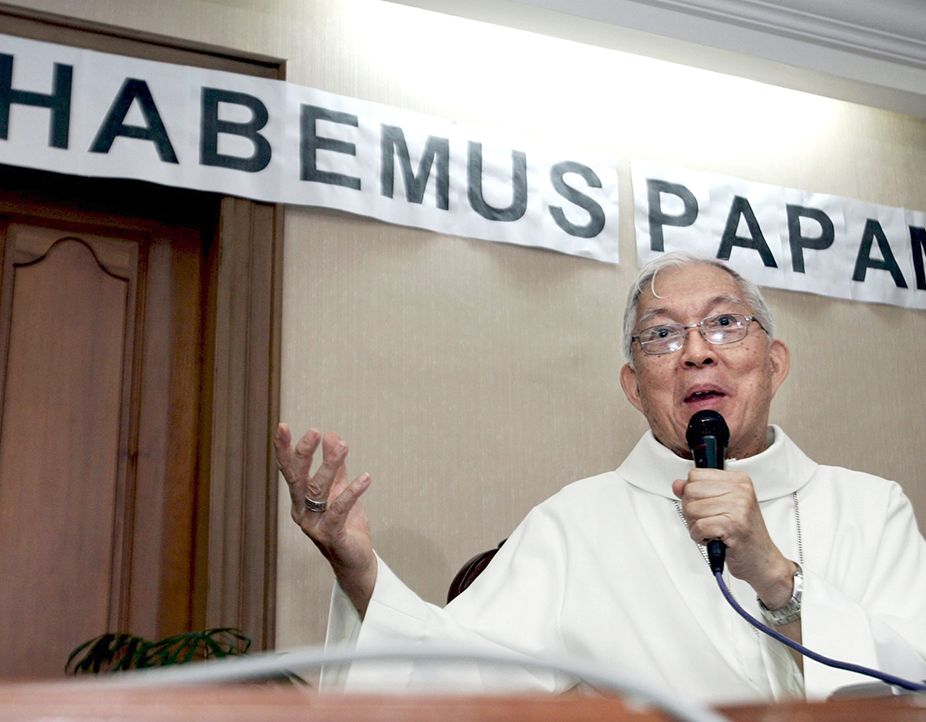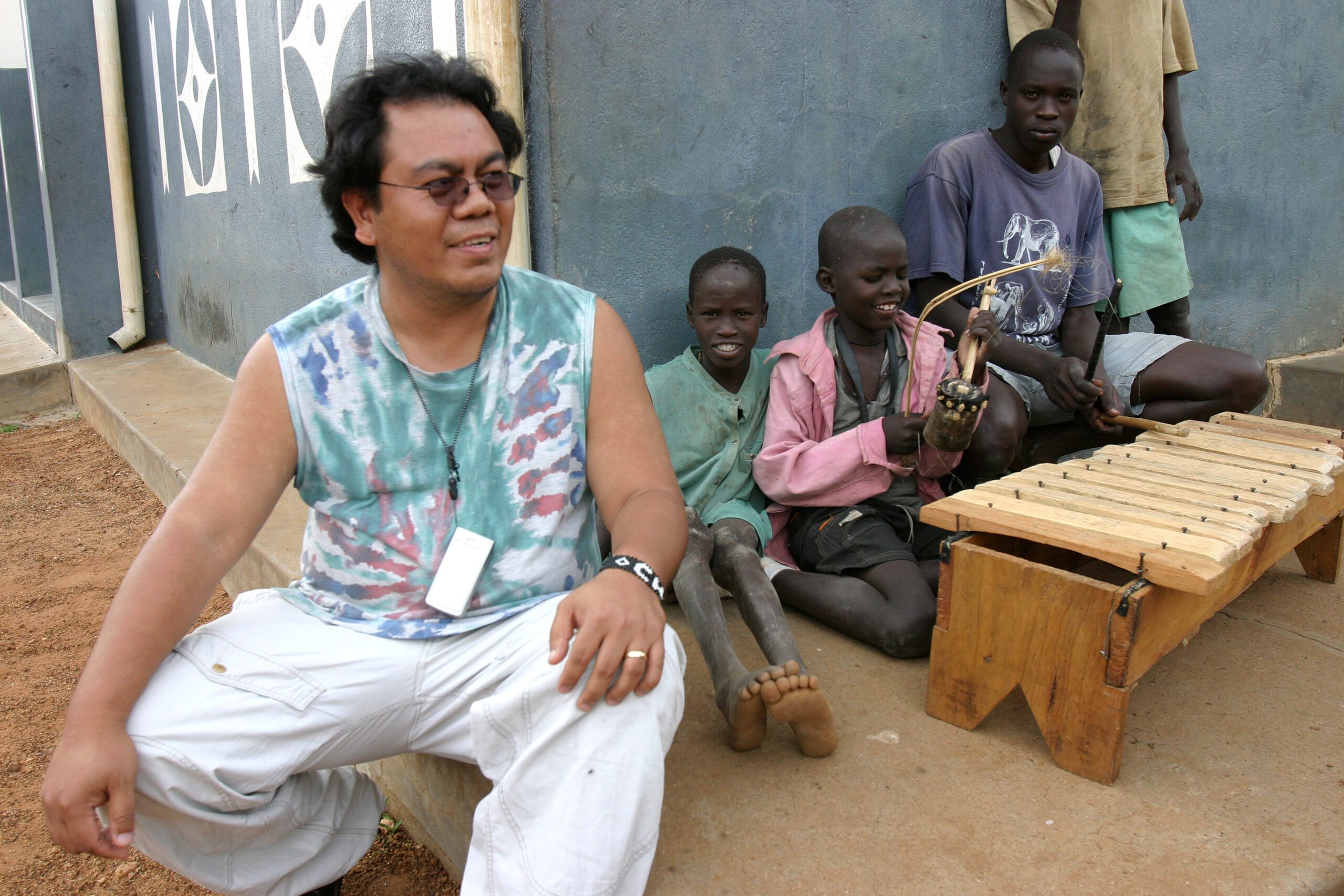

After nine years of work among the Karimojong in Uganda, in 1986 Fr. Antonio La Braca was assigned to Southern Sudan, a country in the grip of a terrible civil war, with the Arabs in control of the cities and the SPLA (Sudan People Liberation Army) ruling the rural areas. “I found myself in Wau,” he says, “and felt redundant among the missionaries assembled there for safety. I was told of a small village, with no priest, Lokololo, at the outskirts of the city. I made it my parish.”
News travels fast in the savannah. Some catechists approached Fr. Antonio with the request to visit their Christians as he was doing at Lokololo. He became an itinerant priest. In the rural areas, people set up house in the middle of the cultivated fields and far from the main roads. He started moving from a cluster of huts to another, always on foot, from dawn to dusk, grateful for the food and shelter offered by the families, who welcomed him as a blessing.
SUSPECTED AND MISTRUSTED
Not everyone was happy. The missionary was distrusted by the Arabs and mistrusted by the SPLA. Fr. Antonio illustrates the point with a true story: “Once, on my way back to Wau, I was approached by a car. The driver insisted on giving me a lift. After moments of silence, he said: ‘Do you see that beautiful cathedral? One day, it will be turned into a mosque and you are working to make it possible’. Astonished I answered: ‘We missionaries are here to preach the gospel to all, regardless of race, religion or political affiliation.’ Only later I came to know that it was Salva Kiir, one of the leaders of the SPLA, and now First Vice President of Sudan.”
At Mboro, the mission where Fr. Angelo Arpe had been killed on the first of November, 1946, an elderly lady stood up in church after Fr. Antonio’s homily and said: “Today, we must thank God for sending us a missionary priest. We killed Fr. Arpe and the Lord punished us leaving us without a priest for a long time. Today, the priest is back to tell us that we have been forgiven.”
The missionary worked as an itinerant priest till 1995, building communities, fostering solidarity, identity and pride. In one of the meetings at the presence of the bishop, an elder impressed him with a remark that had some political implications: “We Southerners are like a handful of maize and the hen. The hen does not eat it. First, it spreads it all over, then it starts pecking at one grain at a time and eats it all. The Arabs scatter and divide us. Then they eat us up one after the other.”
In 1995, Fr. La Braca had to go back to Italy and spent a whole year in and out of hospitals. He was advised not to return to Africa if he wanted to live longer than six months. In no time, he flew to Kenya. In Nairobi, he met Msgr. Paride Taban, bishop of Torit, who needed a priest for the Nuer. “Once again,” Fr. Antonio recalls, “I was to be an ‘itinerant priest’, but this time with Brother Hans Dieter and Sr. Giovannina Zucca as my companions. Leer became the base of our activities and when Leer was destroyed in 1999, we moved to Old Fangak.”
A CHURCH FOUNDED BY LAY PEOPLE
Among the Nuer, Presbyterians and Catholics lived side by side, but their relations were rather strained. The Catholics were relatively newcomers. They had been converted by self-appointed catechists who, while in Khartoum working with Comboni Bro. Sergi, had been baptized and fired with missionary zeal. On their return home, they became the evangelizers of their own people and founded numerous Catholic communities marked by a strong sense of vitality, organization and self-supporting style. The preeminence of lay leaders was their trademark. Fr. La Braca was the very first priest they met.
“The catechists,” the missionary says, “vied with each other for position, authority and prestige. The Presbyterians accused them of poaching among their best faithful. We had to tread carefully. Our prudence paid off. During a celebration, Pastor Peter Rith came in and addressed our community: ‘I had been your enemy. I was wrong. I ask for your pardon. You are good people. Please, go on with your gospel preaching.’ Now Peter Rith is the Moderator of the Nuer Presbyterian Church. We are good friends.”
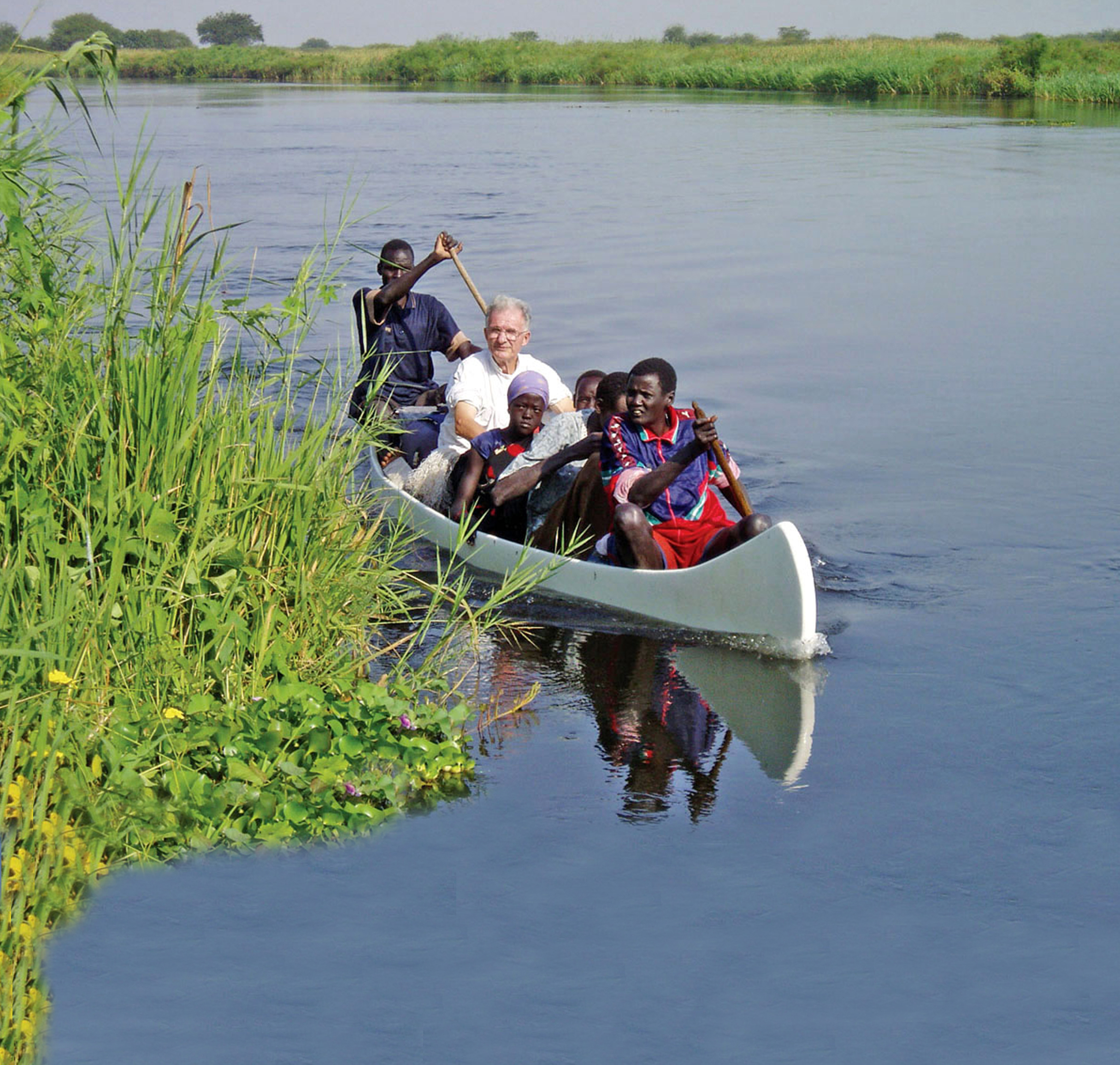
The Nuer are gregarious. Any decision must be unanimous. Short of that, the group splits. Wherever the missionaries went, they asked for acceptance of their presence, of their system of work and of their vision of the Christian community they aimed to build. “Our proposal to give priority to family visiting was enthusiastically accepted,” Fr. Antonio recalls. “My companions and I resumed our itinerant mission in a swampy region where walking was difficult and tiring and not always safe. Our major concern was the development of the structures of the community.”
The missionaries had to work with the catechists without demeaning their authority and prestige. To better the formation of these leaders became their top priority. Four of them were selected, trained and appointed to be the supervisors in their region (a parish in embryo). In each “parish” a committee of “judges” was established, wise elders who enjoyed respect and authority. They were advisers to the priest, settled controversies and punished the wrongdoers. The committee of all the men of the community cared for the material, economical and practical problems. They had to decide and supervise the works and projects of human development. The youths were encouraged to gain influence among their peers and convince them to become Christians. They were in charge of preparing celebrations, dances and songs.
“Lately,” Fr. La Braca says, “I have given some thought to the formation of a group of elderly, wise and caring women who should take care of the church and of its personnel, on the example of the women who followed Jesus and took care of him and his apostles (cf. Lk 8:3-5). I called them the ‘the women of St. Luke.’ It is still in the initial stage, but the seeds have been sown.”
THE “SHAME” OF POVERTY
After so many years of experience, Fr. Antonio is convinced that it is necessary to change the way mission is done: “My strong belief is that the missionary must go ‘on safari’ to a concrete area and start approaching the people slowly, visiting them, letting the people know the real reason for his presence. The missionary must go and camp among the poor, and tell them that he wants to be poor among the poor; he must also tell them: ‘I come here to bring you something that, I am sure, will make you happy: the message of Christ, the Christian vision of life.’ Of course, this approach is not easy. The missionary suffers putting himself in a situation of simplicity and poverty. At times, he will be looked upon as stupid. People start saying: ‘Look at this European, he travels on foot… Why does he not use a car? He has walked so many hours on the water in the swamps, why does he not buy a motor boat like all Europeans do?’ I have found that, in this situation, the missionary becomes a little ashamed. It has happened to me. Once, an important man said to my face: ‘We are doing everything possible to have among us a Catholic priest because, if he comes, we will soon have a school and a hospital.’ He was hinting that I was not a real Catholic priest…! I had to tell him: ‘Look, it is true that, in the past, the missionaries were asked to do these things; but now there are many NGOs, the government receives also millions for development projects…; you are now the ones who must promote human development. Why do you not want that we, missionaries, dedicate ourselves to our real mission: the announcement of the Christian message.’”
To conclude, Fr. Antonio La Braca shares with us what he sees as his immediate future: “Now I am old and tired; time to make room for younger missionaries. My wish is to spend at least a year, if not what remains of my life, as a hermit in one of the catacombs of Rome, as a remembrance of all the old and new Christians persecuted for their faith.”