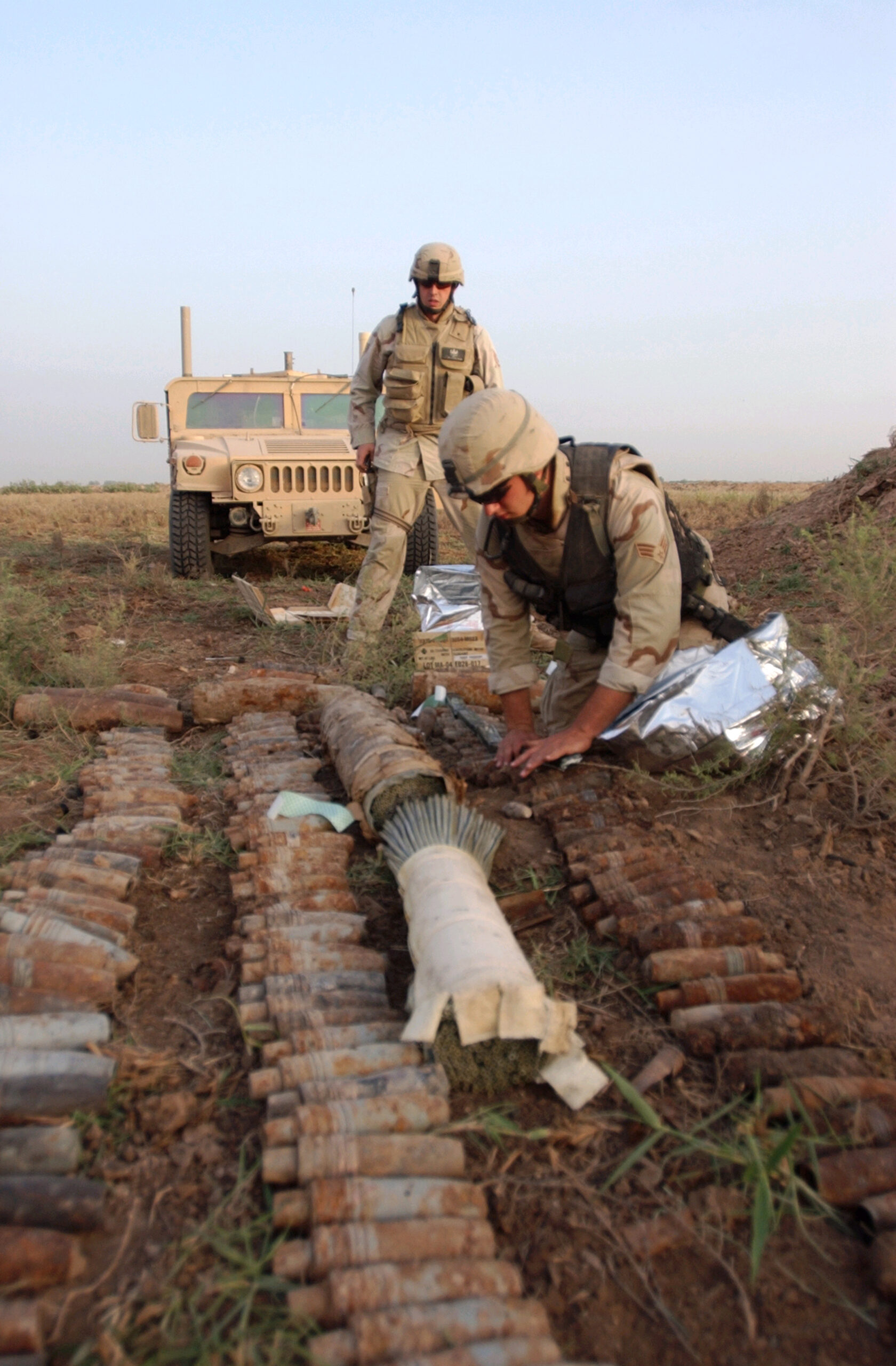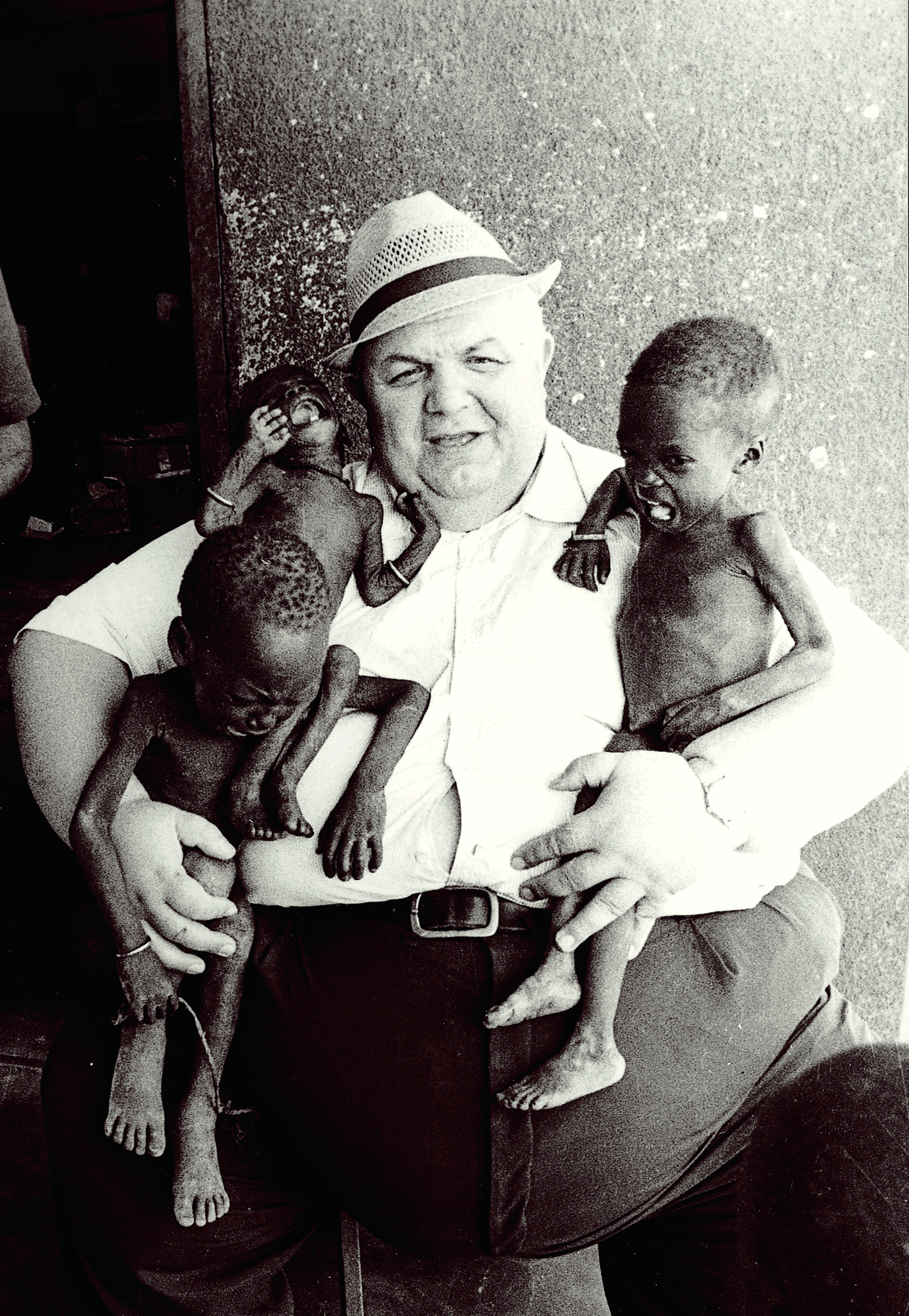

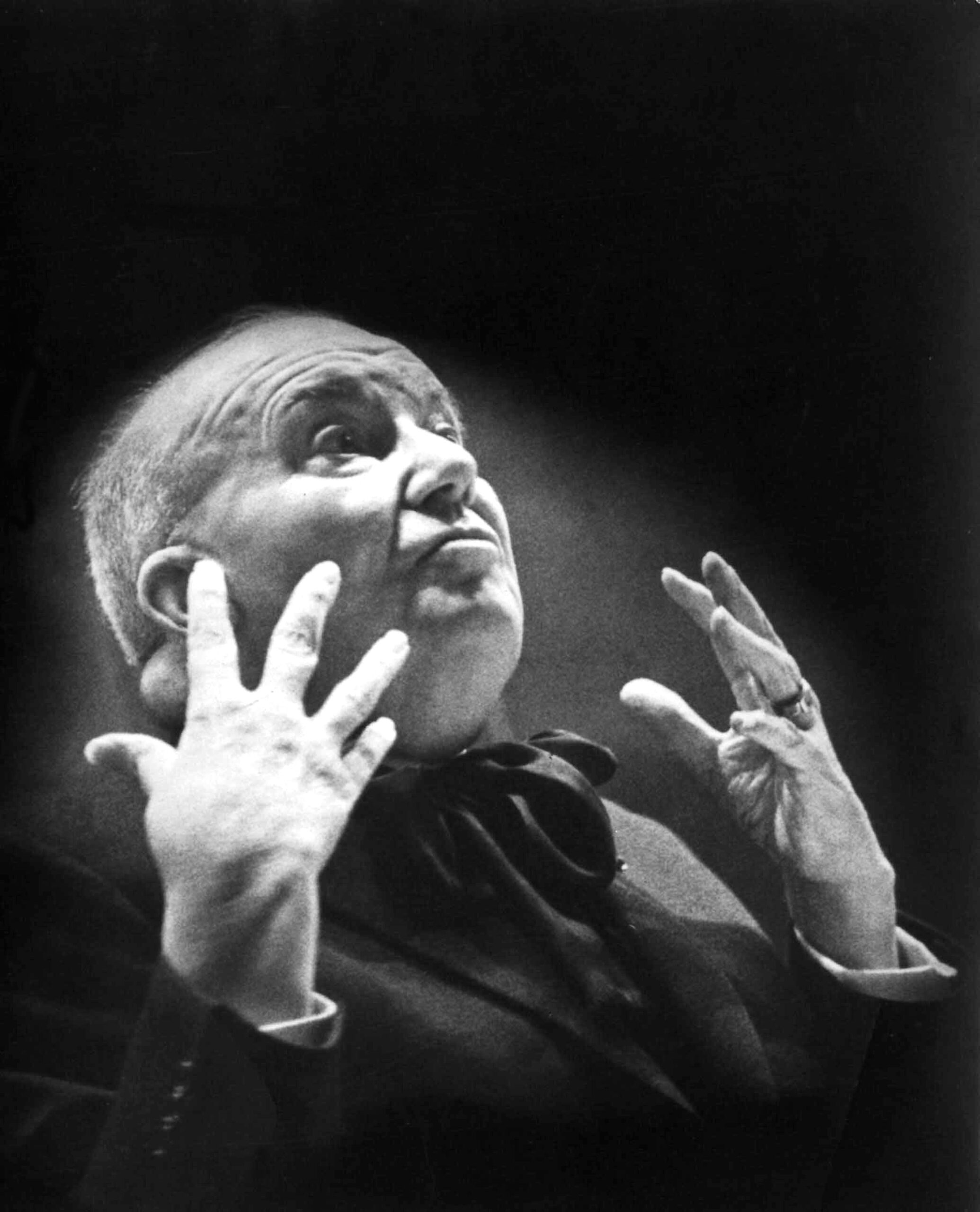
It was the arms race that dominated the preoccupation of the world in the fifties, given the polarization of the great world powers, USA and Russia. Billions of dollars and rubles were spent in building up the nuclear arsenals. In this context, on September 1, 1954, Raoul Follereau launched his open letter to General Eisenhower and President Molotov: “What I ask you is so little, almost nothing. Give me each a plane, one of your bombers, because I have calculated that with the price of two of your planes destined to spread death, I can cure all the lepers of the world.” The letter did not receive any answer.
Twenty years earlier, in 1935, while in Africa as the correspondent of an Argentinean newspaper, Follereau had two encounters which became decisive for his future: a spiritual one with Charles de Foucauld on the occasion of a reportage about the life and death of the saintly monk; and a shock encounter with the lepers in the tropical forest of Ivory Coast. This is how he describes the latter:
“Our car had hardly left that African village when we had to stop near a stream to fill the radiator. Before long, some frightened faces emerged from the bush, followed by skeletal bodies. I called to them to come nearer. Some did the reverse and ran away, while the braver ones stood rooted to the spot, gazing at me with sad staring eyes. I said to the guide: ‘Who are these men?’ ‘Lepers’ he answered. ‘Why are they here?’ ‘They are lepers.’ ‘Yes, so you said, but wouldn’t they be better off in the village? What have they done to be cast out?’ ‘They are lepers’ he repeated obstinately. ‘Does anyone look after them?’ My guide shrugged his shoulders and walked away.
And it was then that I realized that there existed an unforgivable crime, a crime deserving of any punishment, a crime without appeal or pardon: leprosy. And it was then that I made up my mind to plead one single cause for the rest of my life: that of the 12 to 15 million persons whom our ignorance, selfishness and cowardice have made lepers.”
THE CITY OF LOVE
Raoul Follereau was born at Nevers, France, on August 17, 1903 to a family of industrialists. Since his adolescence he showed to be an outstanding person. It was at 15 that two happenings marked his life: he met for the first time Madeleine Boudou, whom he will marry seven years later and he held his first public speaking commitment. In 1920, at 17, he published his first book: The Book of Love, where we find a sentence which will influence his whole life: “To be happy is to make happy.” Still very young, he attained a law degree at the famous Sorbonne University, but he renounced his career as a lawyer in order to dedicate himself to poetry and the theater.
Very soon, two of his comedies appeared in the bill of the ancient and prestigious theatrical group the Comédie Francaise. His output is impressive: all together 44 books − poems, novels, plays, travel books. His whole work is marked by a fervent Catholicism that aims at fighting against social injustice, destitution, fanaticism and the egoism of the rich and powerful. His most popular books are: The Hour of the Poor; The Battle of Leprosy; One War Day for Peace.
In one of his poems, Follereau identified Christianity with charity. “Christianity” he wrote “is the revolution by charity.” Now he had found his personal vocation, the cause for which God wanted him to show the truth of what he had intuited in poetry and believed in his religious experience. He was determined to prove that Christian charity could ‘revolutionize’ the way lepers were treated all around the world.
Whatever plans he had in mind in order to start his crusade against leprosy had to be put to a halt because World War II broke out in Europe. In 1940, Raoul Follereau was called to arms but before he could reach the frontline, the German army had already occupied Paris. He was obliged to go into hiding because of some articles he had written where he compared Hitler to the anti-Christ. In hiding, he continued to write against the occupying forces. Fleeing the Gestapo, he found refuge in a convent of the Sisters of Our Lady of the Apostles near Lyon. There, the call of the lepers caught up again with him.
The Sisters of Our Lady of the Apostles were working as missionaries in Ivory Coast. After many years spent in caring for the lepers, they had conceived an original plan: instead of leaving the lepers to fend for themselves in the forests and desert places, the sisters planned to build a village in Adzope, a healthy place where the lepers would live like normal human beings, while receiving medical attention. The project of the Sisters was a revolutionary one but they lacked the material means to make it a reality.
Here, Raoul Follereau found the field for his newly-discovered commitment. He volunteered to raise the money needed to build the village for the lepers in Ivory Coast. And thus, in 1942, he started his career as a beggar, “the vagabond of charity” as he was later called. Ten years of his life, thousand of kilometers by car, train and plane, more than 1,200 lectures and conferences went into the gigantic project but, by 1952, the village of the lepers named “City of Love” was a reality. Lepers were cured with proper medicines; they were living in freedom with their own families and some of them even cultivated their own garden.
THE WORLD LEPROSY DAY
After the success of this first enterprise, he was flooded by tens of requests for help by all the regions where leprosy was present. This made Raoul Follereau tour around the whole world several times to bring help and affection to the lepers everywhere and to assess and denounce the appalling conditions in which they were obliged to live. Eventually, he decided to divide the year into two parts: six months in order to travel to the distant places where the lepers were, to look for them, to embrace them and distribute what he had put together for them and six months to roam around the richest countries to beg by means of lectures, interviews and any other means, disturbing the conscience of all, mobilizing them for his cause.
In 1942, he launched the initiative of “One Hour for the Poor” by which he invited everybody to dedicate the profit of one working hour for the most unfortunate. In 1944, he wrote to the president of the USA, Franklin D. Roosevelt, inviting him to dedicate the expenditure of one war day for peaceful purposes. His request received no answer. At the end of 1952, Raoul Follereau was able to draw up a well-documented and precise petition to the United Nations on behalf of the lepers of the world. Article 13 of the UN Charter states that the General Assembly of the United Nations encourages international cooperation in the fields of public health, since health facilitates for everyone the enjoyment of human rights, and the basic freedoms. Based on that article, he asked the UN and its member states to proclaim that the lepers be subjected to the common laws and equally protected by them. He also demanded that “the lepers be given “the same facilities, the same advantages, the same privileges as all other citizens, without exceptions.”
Another landmark of his worldwide campaign against leprosy was the launching of the World Leprosy Day that took place in 1954. The objective was to dedicate a day a year to promoting the rights and dignity of the people affected by the sickness. Adopted by 120 countries, today it brings the lepers not only material aid, but also the recognition of their human dignity. Most of the mistreatment and neglect lepers were suffering were caused by the superstitious fear the sickness provoked in people’s minds everywhere.
To help overcome those fears and misconceptions, Follereau managed to organize an international congress of experts to discuss the sickness. It took place in Rome in September 1956 with the participation of 250 delegates from 51 nations. The congress concluded that leprosy is only a relatively contagious disease and it is capable of being effectively treated. Follereau‘s own experience corroborated the findings of the specialists on the matter: “I have traveled the world holding out my arms to lepers and kissing them. The proof that I believe leprosy to be minimally contagious is that I kiss lepers… and look at me, I haven’t caught leprosy.”
About thirty years after his first encounter with those persons affected by leprosy outside an African village, Raoul Follereau’s commitment brought about a revolution in the way people looked at the disease considered a curse since the beginning. Leprosy began to be considered as any other infectious disease; lepers were being cared for and their dignity restored to them. The fight against leprosy appeared to have been won. Follereau died in Paris in 1977 on December 6, but his work lives on through organizations all over the world that call themselves ‘Friends of Raoul Follerau.’
THE EPIDEMICS OF CHARITY
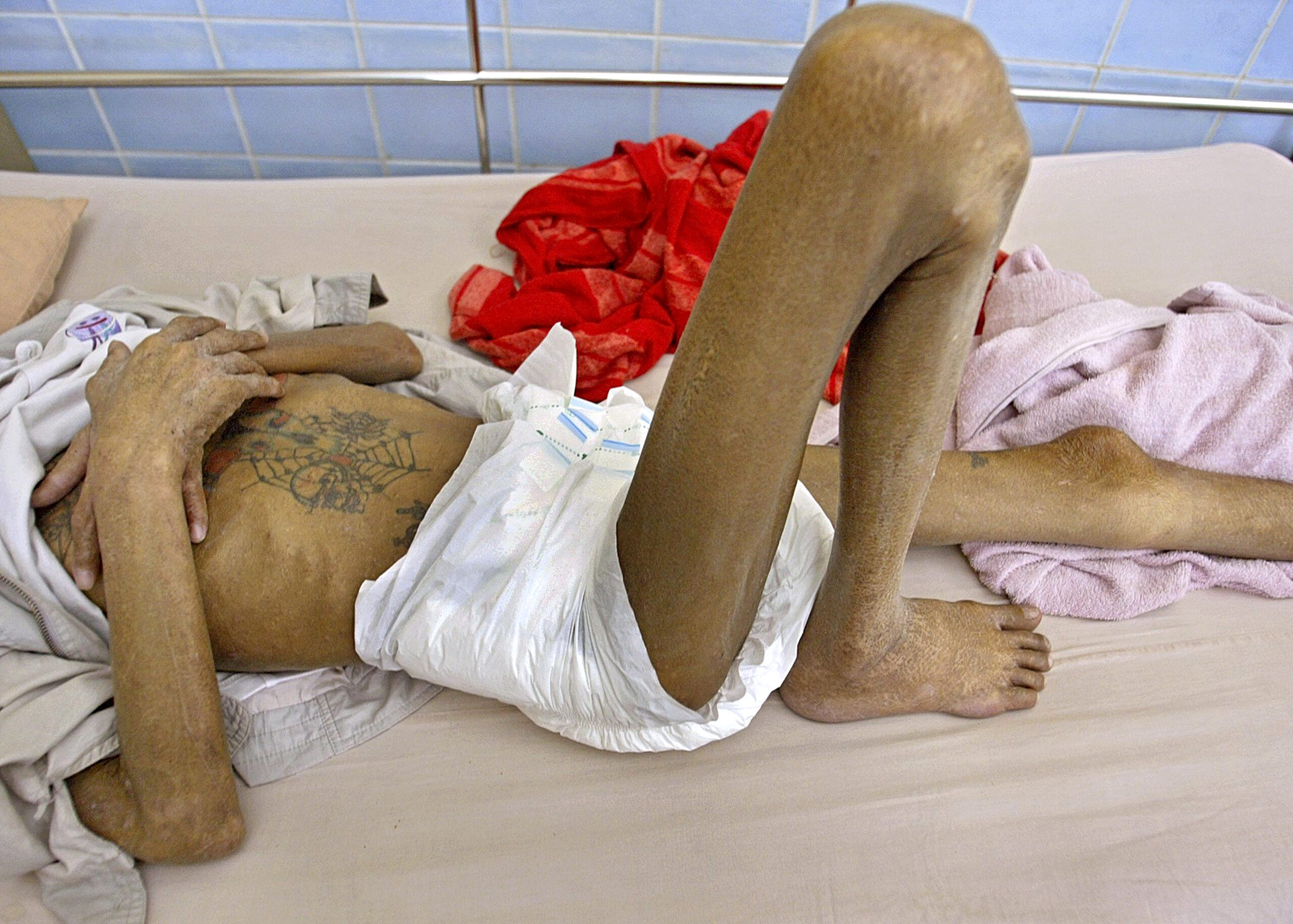
It was hoped that leprosy could disappear by the year 2000. Unfortunately, it is not so. After 50 World Leprosy Days, more than 700,000 new cases are still discovered every year. The bacillus of Hansen keeps its mysteries, with a contagious incubation that can last ten years. The first marks of leprosy on the skin still provoke fear; lepers are still hidden or killed; families still hide their children lepers. Even when cured, lepers still need help in order to be re-integrated into society.
It needs to be said that when Raoul Follereau started helping the lepers, nobody, apart from Catholic missionaries (and few Protestant missionaries), was taking an interest in them. Lepers were abandoned by all, even doctors, since there was no real treatment in existence. Things have changed for the better and yet, even today, it is the religious communities that are the most numerous in taking care of lepers. The legacy of the “vagabond of charity” must go on.
Raoul Follereau was a natural born public speaker inclined to action. Proudly a layman, he remained faithful to the faith he received from the priests of his childhood. He used to say: “After Easter, we know that death doesn’t kill anymore”. A poet and a literate by inclination and formation, he leaves a body of works deeply influenced by the Gospel message and even nowadays his works are put into songs. More than a charitable enterprise, it is an apostolate of the heart that he has left to his successors: “It matters little to hope, it matters nothing to live: what we ought to do is to love”. Quite a few of his statements have entered the DNA of the modern Christian: “Nobody has the right to be happy alone. You must make others happy to be happy. To give without love is an offence. A heart that is not roused by misery is indeed miserable. God is as contagious and more radiant than evil. Let us organize the epidemics of charity.”