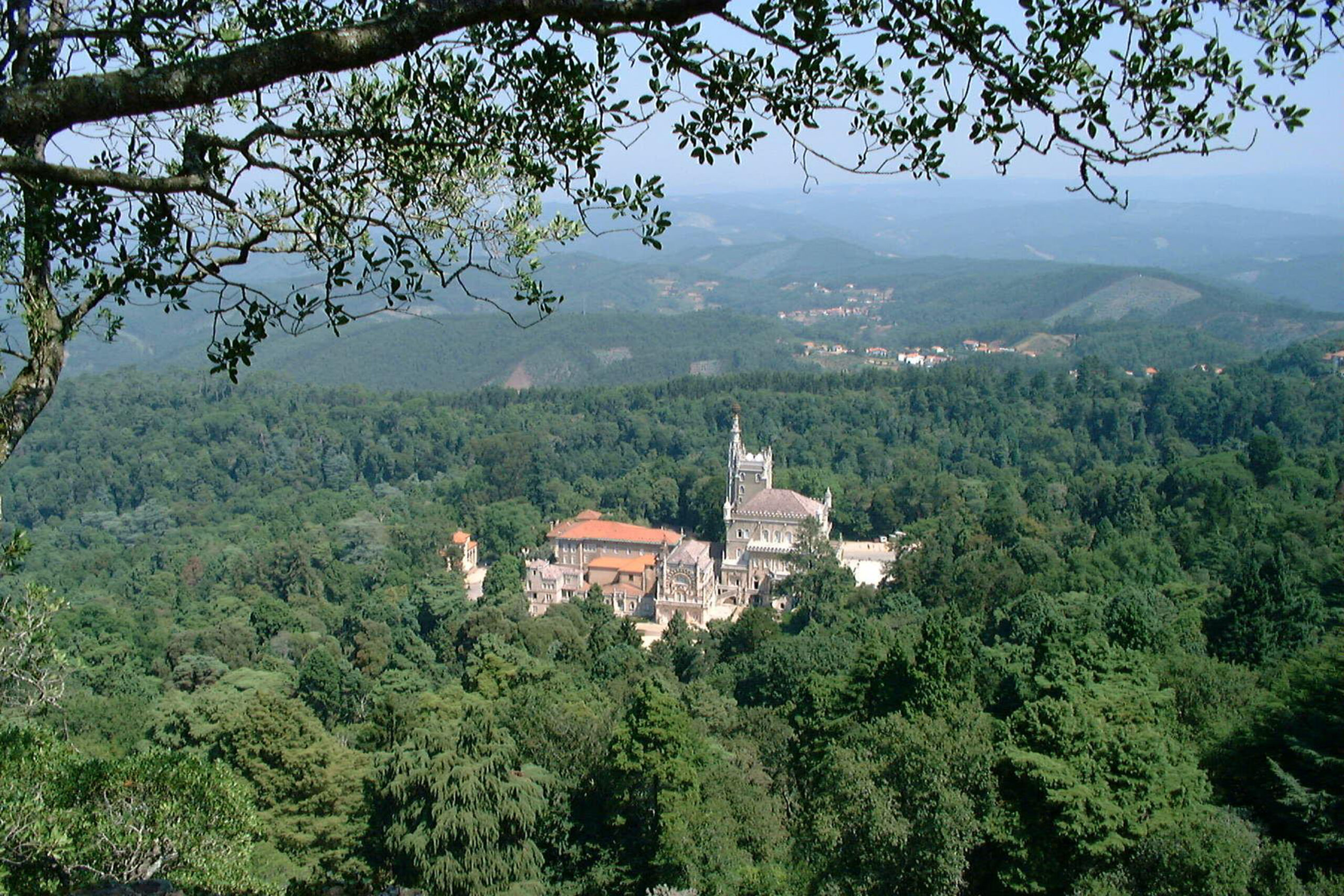
My favorite forest is Buçaco, the trees of which were planted centuries ago by the Carmelites. I love its freshness and silence, the light filtered by the multisecular branches, the “green desert” punctuated by the chapels of the Via Crucis and, when you climb hundreds of stone steps, covered with moss, you will be led to a simple wooden cross, that reigns over the surrounding fields up to the sea. There – where I have made my climbing hundreds of times – one feels always the delight of being exposed suddenly to an almost blinding light and to a mesmerizing blue sky. I never forget to thank the Fathers and Brothers who spent their lives creating this Eden because, for me, it is, indeed, a reflection of the stair to Paradise and a place for a spiritual experience.
Once, during a walk, I met a very young teenager whose name was Victor. He worked in a coffee shop during summer vacations at Luso, the little spa village that stands nearby. He was familiar to me already because he used to serve me my daily morning coffee. Naturally, I greeted him and we started talking. There were no tourists around; we sat at ease on a wooden bench, also covered with moss. Sometimes, it is very easy to start making confessions to a stranger. And he talked and talked – about his school choices, his dreams, his first and unhappy love affair that almost ended in a tragedy. At some point, faith became the topic of our conversation. I told him: “I’m a Catholic, do you know?” He answered promptly: “So am I and I want to be a priest.” “Why?” I asked. He answered: “Because I want to be a cardinal.”
The encounter was in the countryside, but in a quiet fertile area of Portugal, where no one had to suffer hunger. The kid had a conventional point of view, inherited from the olden time when seminars were filled with boys trying to climb the social ladder and to secure some form of education. It’s a pity that he was still being fed by the motivations of his poor grandfathers, rooted in a time when the Church was sometimes the only way out from harsh and underpaid manual work. But our dialogue took place when seminars were already closing down. I felt sorry for him, but I was also speechless. So, I said goodbye and took the next path, one that leads to one of my secret places: a small hermitage, hidden by foliage, where everything is still so intact that one can feel that the monk, who used to live there, is going to appear at any moment. I sat in the little garden, with a small well, to enjoy the view. Then, I regretted not to have given the boy an appropriate answer, like: “Faith is not a career, like the army. I would be much happier if you had told me that you wanted to be a priest to be poor, serve and love the poor.” But, again, my shyness took over me. As it often happens, it’s too late when it occurs to me to say the right thing.
THE EUROPEAN “MODEL”
Some years later, I met, in Ethiopia, a much older boy who would be ordained the next morning in an isolated Comboni mission, in the mountains. We spoke after dinner. He was obviously nervous. I asked why. He answered frankly: “It’s a big step.” I agreed. Then, he added: “Can I have your address in Portugal?”
I gave it without hesitation, thinking that he intended to write to me to continue sharing his thoughts and doubts. I believed his spiritual anguish was real, even if he was formed for priesthood by Father Ivo, a Portuguese Comboni missionary whose goodness, simplicity and deep faith I had come to admire and respect (he died, quite young, sometime ago). Days after I arrived in Lisbon, I received a letter from the newly-ordained priest, with the address of the remote region I had visited, with so much pleasure.
To my dismay, the only purpose of his letter was to ask for a digital camera like the one he had seen, for the first time, in the possession of a companion, during our visit. I didn’t answer. I thought: if this was the top priority of a missionary in an area where people have barely something to eat and are used to selling their children to work in the city as slaves or as child-prostitutes to get some money, he will not be a good one. Suddenly, I remembered that Fr. Ivo had been showing, before dinner, to the catechists, a video of the funeral of Pope John Paul II, at St. Peter’s Square. The Requiem Masses were impressive: full of pomp and grandeur that befit a special event. I remember Father Ivo had told me then that people, who are used to live in huts made of mud and straw, need to know the greatness of the Church.
THE BEAUTY OF COMBONI DANCERS
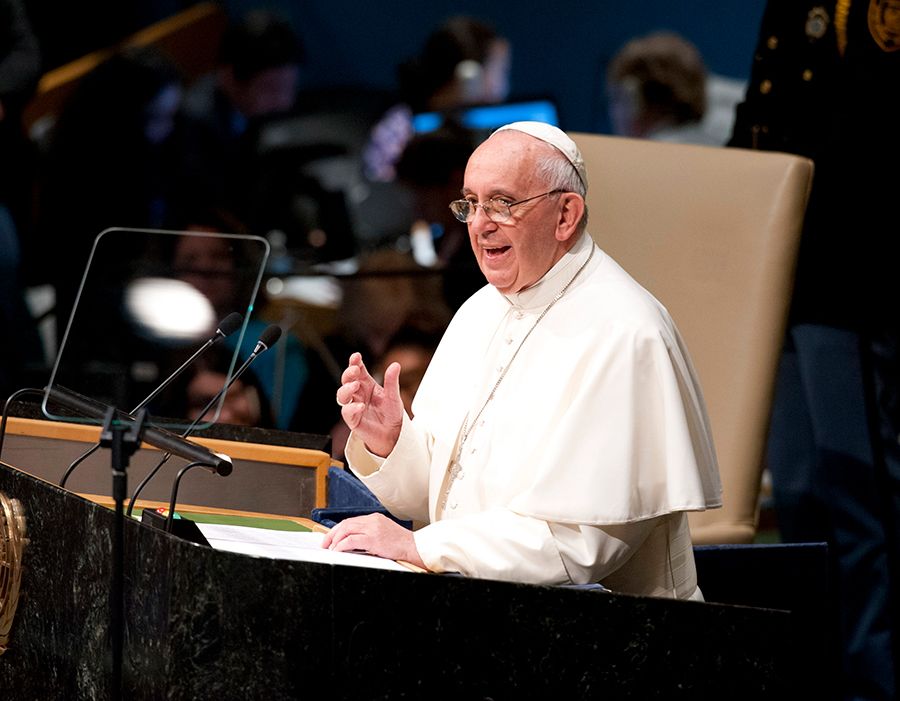
I can’t help but recall my first visit to the Vatican, to be present at the canonization of Daniel Comboni. I had big expectations because I had heard about the many beauties of the place and the faith-inspiring experiences people had there. To my great disappointment, I didn’t sense the beauty or felt inspired by such greatness – even though, I was amazed by the Sistine Chapel and could see the genius behind the architectural compound. However, I felt cold and unmoved.
I shared my feelings with a priest, who kept me company in my first tour around the then deserted St. Peter’s Basilica. A little bit ashamed, I told him that my only feeling was of being smashed. He promptly answered: “Of course! This is a manifestation of power.” With that, I felt a little bit reassured.
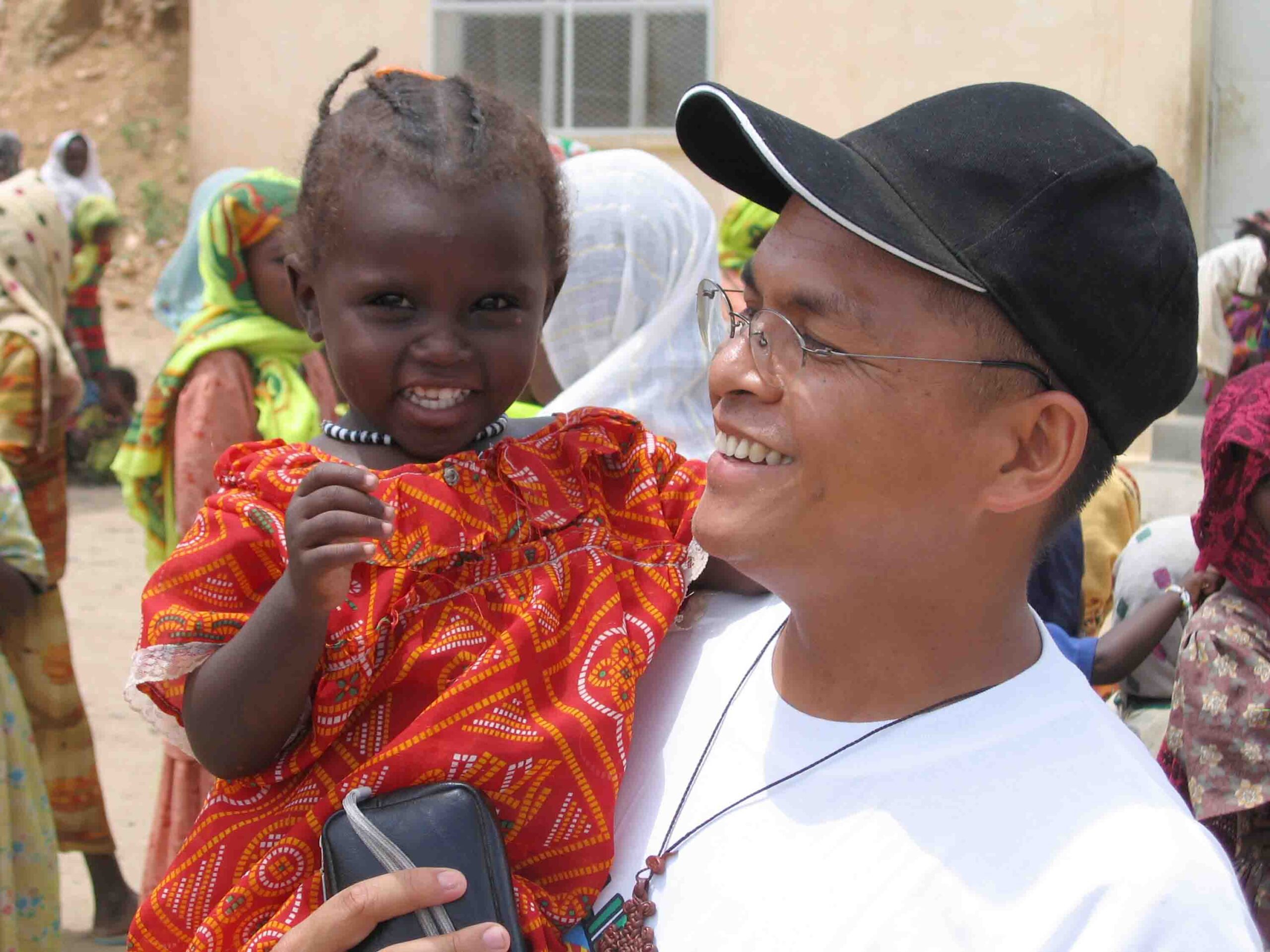
During Comboni’s canonization, the only things that filled my heart with joy were the colors and the perfect movements of the dancers who came from the Comboni missions in Sudan to perform in front of Pope John Paul II and to witness such a great moment. I thought: “Comboni would be happy to see the fruits of his many travails.” I have this image of beauty stored in my mind, together with the enchantment I felt when I had the privilege to take a tour around several Comboni missions in Ethiopia, South Africa and Mozambique. I’ll never forget the happiness of the little children who embraced me in a school as if I was an old friend; the worry stamped on the faces of an old German and young Japanese Sisters when they were trying, in a spotless but also almost bare small camp “hospital,” to save the life of a woman who was giving birth; the hospitality of an old Italian Brother who, as I was returning from a long and tiring trip, made my bed, cooked me a good meal and went to share the delicacies that Italian friends had sent him from home. I was enfolded with the warmth of the people and the ready smile of children, women and men who don’t even know if they would have something to eat during the day.
This is the famous African spell, but also the greatness and beauty of the Church in Africa. Now, I think I owe the young Ethiopian priest. I should have answered that letter requesting for a camera. And, perhaps, ask him to tell his mentor, the saintly Fr. Ivo, that one of my deepest spiritual experiences was the chance to participate in an inspiring Mass led by a Franciscan young priest near the small house of Peter, the Fisherman, by the Sea of Galilee. Indeed, beauty and greatness can be found in very simple surroundings and in a lot of small gestures lovingly performed by very common people.
AN UMBRELLA FOR RAINY DAYS
I keep a large repertory in my memory. The gentleness of an old maid who worked for sixty years for my father’s family; not knowing how to read and write, she had the wisdom not to want anything but to always give something. The bravery of the boy who took my side when a bunch of much older thugs were bullying me in school. The warmth of a Brother who, when I was in the first grade, used to take me to see the small farm and the animals because he felt I was lonely and sad. The mysterious smile of a Sister who, seeing me for the fist time, said: “You have pure eyes.” The loving dedication of maiden aunts who spent their apparently empty lives looking after others. The patience of my grandmother who, already dying from a terrible and painful disease, welcomed me in her bed every morning with a smile and a kiss. The eyes of my own mother who, losing the battle against pain, tried to look happy and well whenever I visited her at the Cancer Institute.
But there’s more, much more… The sight of a small sparrow on a cedar tree, then flying so high as if touching the sky; entering an empty cathedral where someone was rehearsing Bach on the organ, at the precise moment when the sun shone through the gothic stained glass, turning the dark stone walls into a rainbow of harmony; the laughter of a baby; the mourning or joyful sound of the waves… All these enlightening moments, I treasure in my heart and mind. They are, for me, an umbrella which I can use on gray and rainy days. They remind me that I can always trust in the God of small things – a great lesson I’ve learned during my missionary tours in Africa.