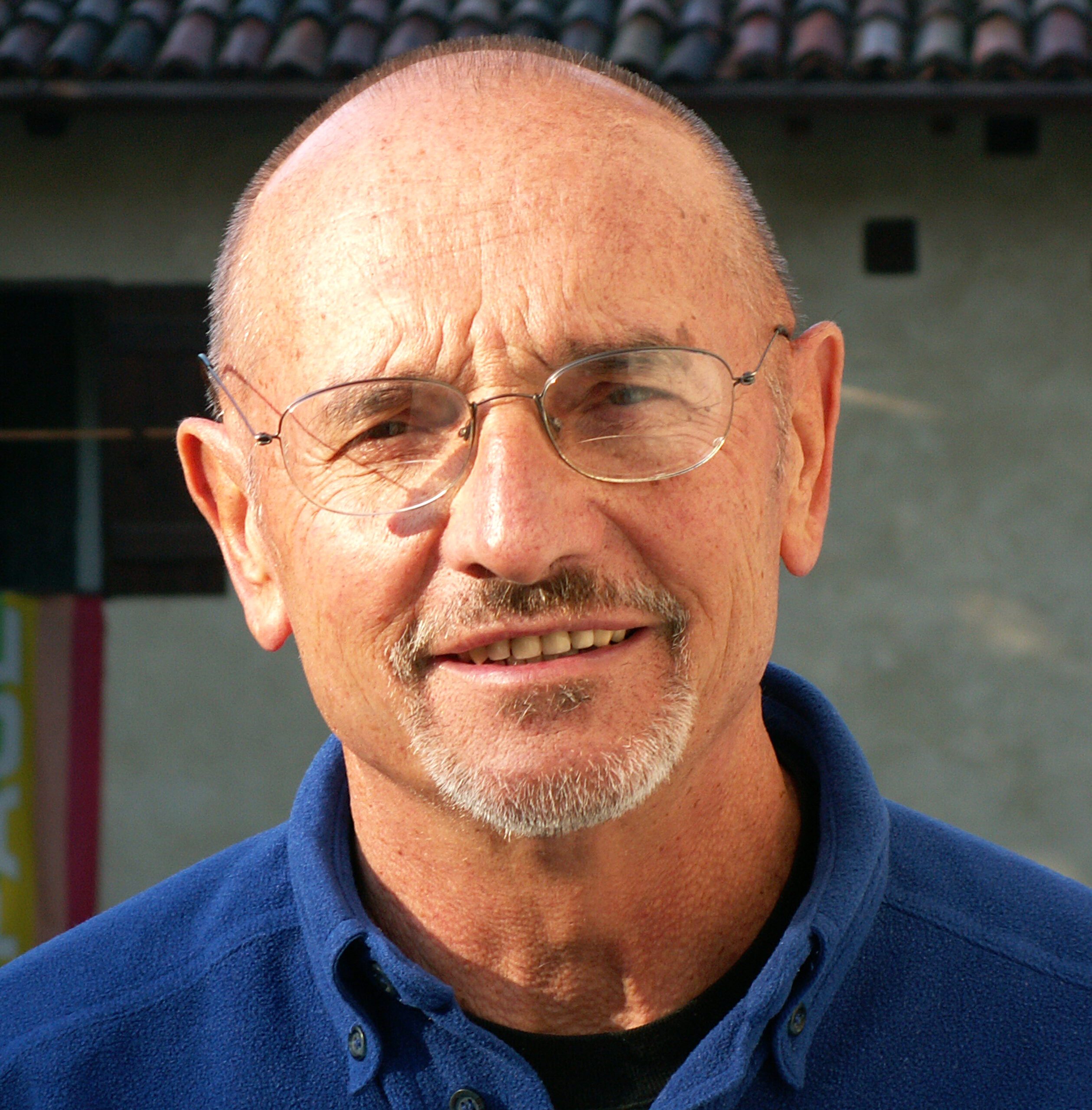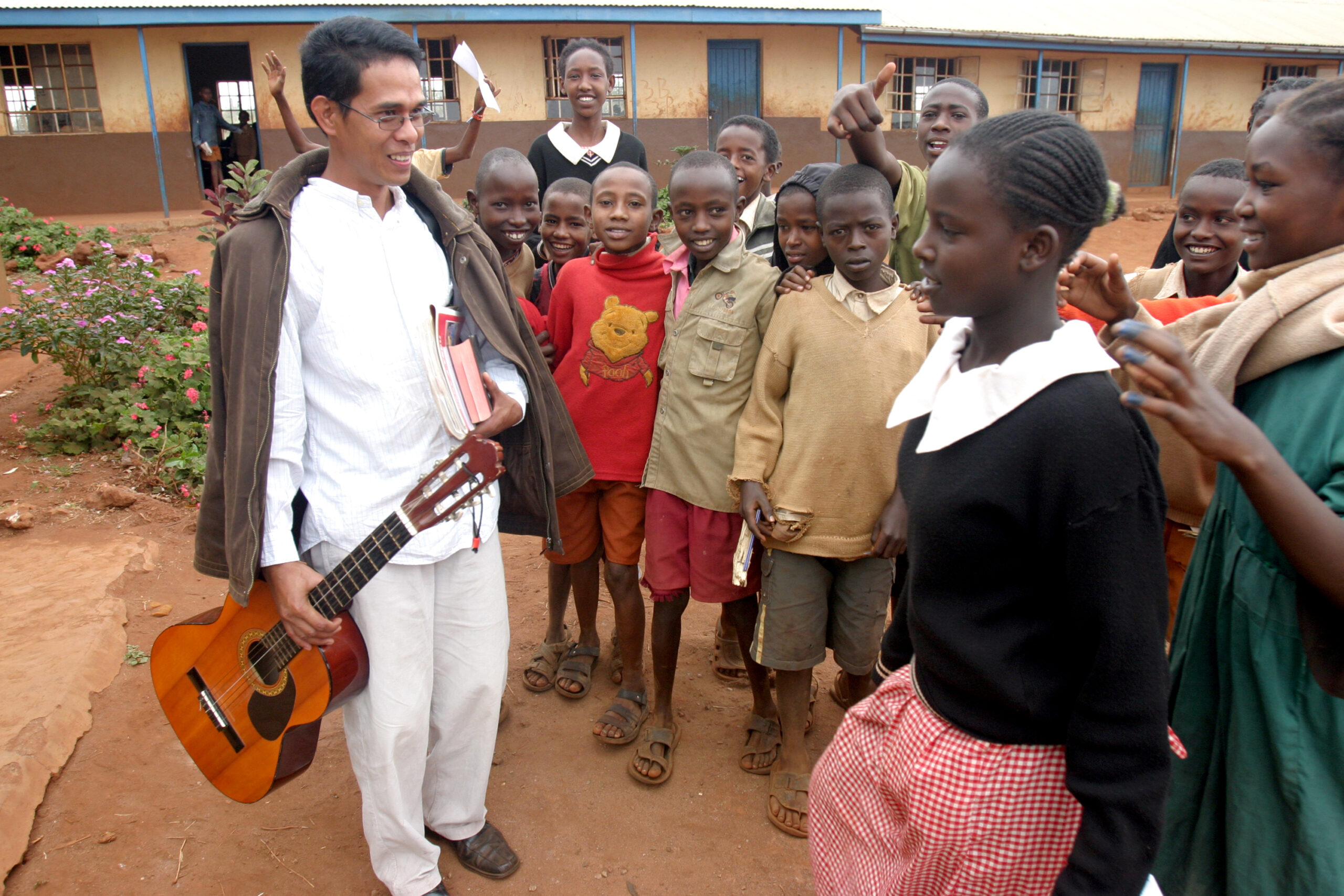
This is the fifth year of Filipino Brother Simplicio Buena Soliven, 36, in Kenya. Earlier, he studied in Nairobi for four years, specifically in Tangaza College which is constituent to the Catholic University of Eastern Africa. After completing his Bachelor of Arts Degree in Social Ministry in Mission, he was assigned to the country as a missionary.
The superiors, before taking the decision, generally ask for one’s preferences. Bro. Simplicio chose Kenya because he was “interested in getting to know better its people’s culture.” The other options were Egypt, seen “as a step to Sudan” (where St. Daniel Comboni worked and spent his life) and Brazil, a country that he also found attractive. Kenya was the ultimate choice. Bro. Simplicio was happy to go back. He confesses that he was “ready to go anywhere in Kenya – with joy.”
As usual, in the beginning, there’s the language problem. Kiswahili is the country’s lingua franca. Bro. Simplicio started learning it in Tanzania (Makoko Language Center) near Victoria Lake, specifically from August to December 2006. He arrived in Marsabit, where he had never been before, in December, 2006. He is not done yet with the language: “I am still practicing it. The challenge is to keep on studying and practicing it because the different ethnic groups speak their own different languages.”
There in Marsabit, the main groups are: Borana, Gabra and Rendille. As soon as Simplicio set foot in the place, he started working as a Brother and exercising his social ministry.
SOCIAL MINISTER
What is a social minister? Is it different from being a social worker? Yes, as Bro. Simplicio explains: “Social ministers work, out of vocation – as a service. It is not a job. They do not keep time. They promote justice and peace, health, education… They work in slums, prisons… and collaborate with NGOs (local and international)…. They focus on valuing life as a vocation, and their work is not paid.”
While studying, he was already practicing what he was learning: “I developed youth ministry and prison ministry. During the school years, I was working in Kamiti Prison, the biggest prison in Kenya. In the Young Correctional Training Center (YCTC), there were 275 youth, between 18 and 24 years of age.”
Now, he is working in Marsabit Prison as part of his apostolate. “I go there on Saturdays and Sundays. I give general counseling. I focus not only on faith but on the life of the person as a whole – awareness of self, family, HIV, tuberculosis, education in cooperation with the Informal Education Department of Marsabit District. Due to my advocacy, a teacher goes to the prison a few times per week. I made there a reading room, complete with religious and missionary magazines.”
There are around 50 inmates. The most common offense is stealing. (Bigger offenders, like murderers, are brought to Kamiti Prison in Nairobi.) The majority of prisoners are Muslims. Bro. Simplicio feels his presence is important: “I go there often because nobody visits them. I don’t feel I have to give them something material. We share, play, crack jokes… I commit with my presence. At Easter, we had a celebration, partly religious, with some talks, dramas, and songs. Refreshments were also served.”
Going there is also an opportunity to learn more about the people’s ways: “As a newcomer, I am trying to understand their culture. For instance, there are those who have cattle but they pretend to be poor.”
TRAINER AND TEACHER
Bro. Simplicio lives in the pastoral center of the diocese with the pastoral coordinator, Fr. John Ikundu, with whom he collaborates. For instance, this year, being for them the year of the laity, they go around conducting seminars and courses on leadership in secondary schools and technical schools.
He also gives a helping hand to Comboni Sister Gabriella, the enthusiastic and active zonal youth adviser. Every term, when the youth are on holidays, they organize seminars about different issues (for example, before the last presidential elections, they dealt on the leadership theme) and camps. In these camps, the youth come and stay. Mass, prayers, sports, talks, and counseling are some of the activities. For girls, they address some gender issues, like the female genital mutilation (FGM).
Bro. Simplicio exercises his teaching skills regularly. He collaborates with Catholic Action teaching about Catholic faith in secondary schools. He also teaches Pastoral Program Instruction (PPI) in Comboni Primary School and Fr. John Memorial Primary School every week.
Bro. Simplicio walks to the different places in town – from the pastoral center, where he lives, to the schools, the prison, the parish or the Tumaini’s Home for children at risk, run by the Missionaries of Charity – all a few kilometers away, always carrying along a guitar, one of his working instruments! On the way, he may drop by the Cyber Café to check on his mail.
SIMPLICITY OF LIFE
His name – Simple, as he is known among friends – is a life program. He clarifies: “I walk with people – I don’t use a car – to be closer to them. I’d like to be at the level of simple people, living in a simple way.” And adds, widening the perspective: “To be a missionary is to be with the poor, the most abandoned and the needy – not necessarily poor materially – to share with the children, youth and prisoners my faith, talents, and knowledge. I try to identify who are the poorest and the most abandoned and share with them what I am.”
Bro. Simplicio was robbed already three times. In 2003, when he was still in the Brothers’ Center, eight armed men broke in and took away all their possessions. In 2005, during a school outing in Ngong Hills, they were seized, beaten up with sticks and pangas (local machete) and robbed of everything they had on – camera, cellular, money, shoes, cap and clothes. The last time was in 2006, one week after coming from Tanzania. He was in the Provincial House in Nairobi. The thugs, clad in clerical attire, “cleaned” him of everything – money, cellphone, radio, portable DVD and the clothes he had just bought abroad.
It is interesting the way he accepts such setbacks: “The first time, I cursed them and I reacted in an unchristian way. But the last time, I accepted the situation as if it was normal. My work in prisons helped me to integrate and cope with these unpleasant situations.”
Some years ago, when a fellow Filipino Comboni, Fr. Aldrin Janito, was caught in the middle of a tribal clash and had his life in danger in that region where he worked, Bro. Simplicio, then a student, was scared. Not now. He is careful not to be caught off guard. During the recent tribal clashes, following the 2007 presidential election marred by irregularities, he refused to accompany his Kenyan community colleague, a Kikuyu, to travel down the country in order not to be caught in the clashes. Not wanting to be alone, he came to the parish expressly for safety reasons. He confesses: “I am not afraid, but I take my precautions.”
What he treasures most are the rich experiences, the wonderful people and places. “I value them all more than anything else. People are very hospitable and respectful. Besides, there are beautiful places around. For example, Masai Mara is the world’s seventh wonder. I am in love with this country.”