
Today, in a steady, light rain, I bicycled for the first time in Bhatpara and Noapara. It was only while listing the address of one of the three children who need surgical help that it dawned on me I had come to our neighboring district, Jessore. It just goes to show how new I am to Narail District; I don’t even realize when I have left it. While riding in the rain, I serenaded myself, humming, expecting sunny songs to overcome the gloom of the weather. However, I unconsciously kept slipping back into Swan Lake, no big cheerer-upper.
* * *
In Lohagora, the second largest bazaar in Narail District, I was searching for the muazzein (caller to prayer) of the central mosque, Mohammed Hafeez. Several persons were sent to look for him without results. So, an accommodating storekeeper entered the mosque, turned on the amplifying system which is normally used only by the muazzein for calling the faithful to prayer, and announced to the entire bazaar “Muazzein Hafeez, you are needed at the mosque.” Soon, the man himself appeared, surprise written all over his face.
* * *
While I was browsing for a decent variety of bread, a quartet of educated, middle-aged men called for me to come sit with them. Does being a Christian missionary mean I am in Narail to convert people? They wanted to know. My response: If, as I believe, love is the purpose of life, then we should be actively seeking others’ welfare. Then I pantomimed a devout man deeply in prayer and mumbling to the Creator before commenting: “It is not enough to pray. If the Creator is love, we need also to love those whom God loves − everyone, with a love that takes action, undertakes works for others’ sake.” The men agreed so heartily that one of them, Jamal Sheikh, upon hearing of my desire to get a small plot of land to build a hut on, offered me a place not far from where I now live.
* * *
THE ONE NEVER FORGETS
On the bus to Jessore, a Muslim gent seated beside me spoke about the service he has seen me offering to the sick-poor. “Why do you do it?” he asked. I replied: “Jesus lived this way.” His next comment was memorable. “Yes, but people remember Jesus. You, after awhile, they’ll forget.” I agreed and then offered a further explanation which he also accepted: “It’s all right for them to forget me. I do these works for Allah and that One never forgets.”
* * *
People in Bangladesh were charmed when they heard that former President Clinton, during a visit to Bangladesh, took a rickshaw with him back to America. They can believe he was so fascinated by the ubiquitous, three-wheeled, man-propelled vehicle that he would want to show it to fellow Americans. Today, in Narail, a fellow named Sattar, complimented my bicycle-riding ability by comparing my taste in transportation to that of the former president of the world’s most advanced nation.
* * *
At the Hindu hotel where I sometimes stop for a snack called muglai (egg, flour and potato), I received a jolt while unlocking my parked bicycle. Someone saw my reaction and confusion, for I saw no reason why my bike jolted me. He pointed out a small wire running down the wall of the hotel which touched the bicycle. “We call it a ‘short’,” he told me. I call it shocking.
* * *
THE SECOND GOVERNMENT
The land offered to me by bus dispatcher Jamal Sheikh lays across the brick-paved road from his house and is easily identified because a large chicken coop sits on it. Beside the coop live a couple of quite poor families − a boon to me for they can “watch my hut” whenever I’m away. The whole area is covered with gnarled, above-the-ground tree roots, lots of them, which will complicate my laying an earthen foundation. A tube well stands close by, but it is so near to the dirty pond that I shall only drink its water after I have learrned the well is quite deep. I met one of the families beside the chicken coop and they seem nice. Probably, they wonder why I am snooping around. They’ll learn soon enough.
* * *
In village Chalita Tola, I stopped to take tea. As I waited for the brew, the man across from me told me: “This is the best tea stall in the whole bazaar.” I did not tell him I had just gone through the bazaar and found no other tea stall than this one. Another topic, however, I did broach with him. “May I ask you a question?” I began. He consented. “How many cigarettes do you smoke daily?” There was a long one burning between his fingers, right hand. “Fifteen,” he admitted. I spoke of the fact doctors say that Bengali men who have reached forty years, have a pot belly and smoke, are at great risk of heart attacks. He listened attentively and told me what I was asking him to do is very difficult. As we parted, I shook his hand and wished him a life-saving decision.
An NGO quite well-known throughout Bangladesh is BRAC, the Bangladesh Rural Advancement Committee. At the local Narail BRAC office, I asked when I might find one of their field workers, Mahbub Alom, and was told to come any morning at 7 a.m. In other words, BRAC staff members begin their daily community service long before government officials (9:00 a.m.), bankers or storekeepers (10:00 a.m.). Probably, that is why BRAC is so well respected. Good that Bangladesh has such an agency. Some even refer to BRAC as “the second government.” In fact, it is known to be the largest NGO in the world with over 40,000 salaried staff.
* * *
No problem!
During my 3-1/2 months of living in Narail, I have yet to taste milk-tea. Everywhere, I see people drinking plain tea with sugar. Milk-tea, on the other hand, tastes so much like hot chocolate, I can hardly resist it. But where to look for it? My technique to uncover that answer will be to complain to people now and then: “Narail has no milk-tea!” Somebody will eventually set me on the path to such a tea stall, I’m sure. That is also the way I tried to discover if there are any dust bins for garbage in Narail. I complained there are none, but no one contradicted me or set me straight. Then, unexpectedly, I happened across two dust bins. It was pure chance; nobody helped me in that search, probably because so few people use the dust bins. But lots of Bengalis know where good tea can be found.
* * *
One of the standard phrases one hears in Bangladesh is “no problem,” KONO ASHUBIDHA NEI. It is said to assure others, but has the opposite effect on me. Oftentimes, I have heard people claim, “no problem!” for a tricky situation or relationship. My antenna immediately goes up then, for it seems to me one of the sure signals that a real problem exists is that someone is trying to convince me there’s “no problem.”
* * *
In village Nakoshi, I stopped at Sufian’s home to see his first child, a boy born last month on Eid Day. I had photographed him before at age 6 days and, as today marks his one month since birth, I shot another photo, this time while he rested in his paternal grandmother’s arms. I inquired whether they had yet named the tyke. The boy’s uncle replied: “Yes. Mostafa Kamal.” Immediately, the baby’s mother spoke up contradicting him: “His name is Rafiul Islam.” That settled the matter. She could not have surprised Uncle more than by piping up so confidentially. Elizabeth named John under similar circumstances.
* * *
No evangelizing task
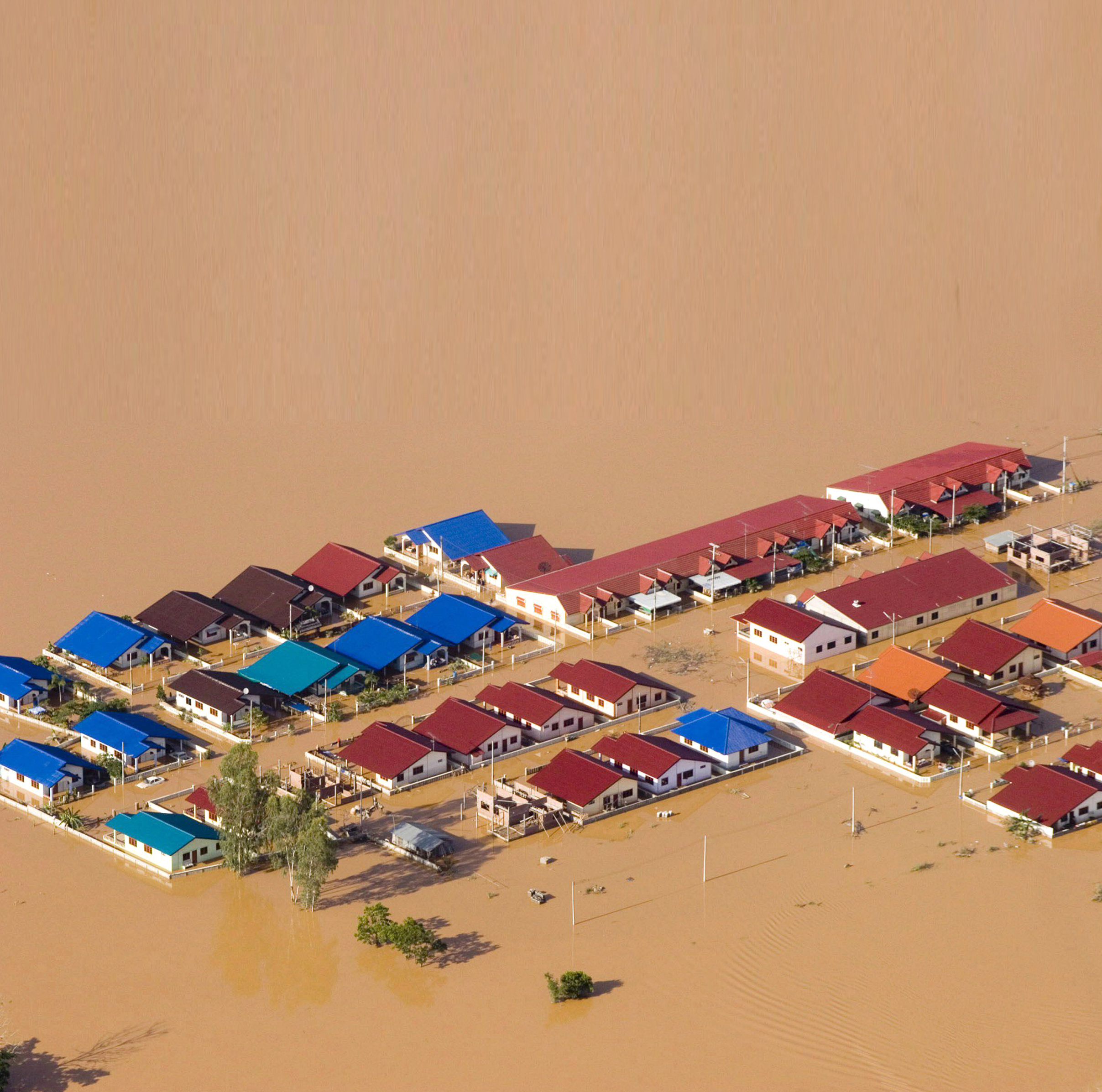
According to the weather bureau, the low-pressure area in the Sea of Bengal is moving westwardly towards the Indian coast. However, the sky made me wary because I detected no stars in the 5 a.m. darkness. When I prepared to depart at 6:20, I questioned my neighbor about what to expect. She shrugged noncommittally. I took the gesture to mean “weather as usual” but now I think she meant “Allah knows.” At 6:50 when I passed the municipal limit point, I queried two men seated at a checkpoint and was told by one: “Something will hit around noonday.” That gave me five hours of opportunity to ride the thirty miles-plus, back and forth from Kalia, so I plunged in. Problem is: at 9 a.m., the rain began just as I was loading my bike onto a river boat to cross the Modhumoti River. The rain continued and increased. By the time I reached town, I was soaked. The whole town seemed to have gathered under awnings, glumly contemplating rain and wind. Then I learned the government had announced signal number ten, i.e., danger, while I was making my daily excursion to a village. Within 24 hours, the media were announcing the deaths of over 700 persons in districts just south of us.
* * *
Catechists Simon and Louis came to see me in the afternoon. Louis lives on the other side of Narail town; Simon lives an hour away in Magura District. They both brought news of disabled persons for my attention. Louis spoke of a club-footed 3-year old boy; Simon has a polio-afflicted boy, aged 8. They were hoping to enlist me as the health arm of their efforts to assist the Bagdi and Oraon tribal people whom they are accompanying with a view to their conversion to Christianity. I encouraged both young men to start their own program to aid persons having serious health problems. Not only are my hands already full but, rather, because there can hardly be a better way for them to witness Christ’s love for the tribals than by concern for their children − as I have been inspired to do for over thirty years. They were a bit miffed I put them off. Sorry, but I do not wish to become the health outreach component of their evangelizing task.
* * *
On the main street of Narail town today, a firm hand arrested my progress. Upon looking to see who was holding me up, I met the familiar face of Baki, a bakery manager from Gaffargaon where I lived at the turn of the century. He had moved here with his wife, a policewoman of rank. Baki invited me to their house beside the police headquarters and insisted on knowing when I would do it. “Do you remember my name?” he teased. When I promptly replied “Baki of the Nirala Bakery,” he was highly pleased. Imagine meeting an old friend in Narail.
* * *
I serve Allah
That storm in the Bay of Bengal kept us awake all night. By morning, I noticed the quilt I’d curled up in was wet. A prefabricated tin wall, someone had leaned against my room’s wall had been blown away, allowing water and leaves to fly through cracks in my wall. As I walked around the neighborhood, I found lots of flimsy walls cluttering the ground and some uprooted trees − mostly betel nut trees and one large neem tree that split and fell on a tin house. I viewed the spot where I hope to build my hut, and it seemed all right.
* * *
It takes 191 pumps on my bicycle’s pedals to travel one kilometer. Whenever I need to know the distance between two places, I can easily measure it by counting the complete revolutions of my bike’s sprocket, i.e., how many times did I have to pump between here and there? Today, as I focused on counting the pumps I took between the main road and Sufian’s off-the-road house, someone called out a cheerful greeting to me. Not wanting to lose the count and equally loath to disregard the greeter, I simply said out loud the number currently on the tip of my tongue. “Forty-five!” I replied lustily before resuming my count in silence, i.e., 46, 47, 48…. Probably, Sufian, now imagines that “forty-five” is an acceptable way for an American to greet a friend. Odd as it sounds, we have all heard even weirder greetings.
* * *
While standing in a river boat, some of the other nine passengers were discussing me. I let them exhaust their knowledge before interrupting to correct the one who had told the others I “serve religion.” “No, brother,” I intervened. “I serve not religion; I serve Allah.” With one accord, he and the other Muslims on the boat voiced agreement. We all realize the beneficent role of religion in our lives, but our love, service, hope and faith are in the One.