Why mission? This perennial, persistent question admits of a variety of valid responses. Asking “why” is fundamentally a question of “mission motivation.” Why evangelize? Why be Jesus’ disciple? Why concern yourself? What ends does mission really serve?
The bishops of Asia have continually grappled with these same questions as they explore the evangelizing mission of the Church in this vast continent, where less than three percent of the burgeoning masses are Christian. Although these Church leaders elucidated several reasons for engaging in mission, what is striking is the “mission motive” they mentioned first during their Fifth FABC Plenary Assembly in 1990.
Collectively, they forcefully asserted: “We evangelize, first of all, from a deep sense of gratitude to God, the Father ‘who has blessed us in Christ with every spiritual blessing’ (Eph 1:3), and sent the Spirit into our hearts so that we may share in God’s own life. Mission is above all else an overflow of this life from grateful hearts transformed by the grace of God” (FABC V).
The Asian bishops vigorously affirm: “That is why it is so important for us Christians to have a deep faith-experience of the love of God in Christ Jesus (Rom 8:39), that love which has been poured forth in our hearts by the Holy Spirit who has been given to us (Rom 5:5). Without a personal experience of this love received as gift and mercy, no sense of mission can flourish” (FABC V).
GRATITUDE AS A MOTIVE
Note some of the key words and phrases employed as the FABC describes this first motive for mission: “gratitude to God,” “grateful hearts,” “spiritual blessing,” “given to us,” “love received as gift and mercy.” Indeed, mission is viewed as a gift, graciously given, gratefully received, and generously shared. Gratitude serves as a powerful, energizing motive for engaging in evangelization.
All cultures and peoples give gifts, particularly on special occasions and significant life events: birthdays, weddings, holidays, anniversaries. Gifts bond people together, they express gratitude and appreciation. Gifts are personally and carefully chosen, seeking to please the recipient. Often gifts are exchanged, further cementing family and interpersonal solidarity.
Asians have elevated “gift-giving” into an art. What would Chinese celebrations and the Lunar New Year be without generous gifts offered in red envelopes (angpao)? In Korea the ritual celebration of one’s sixtieth birthday (hwangap) is an occasion for lavish gifting. No Filipino feels comfortable without bringing some pasalubong − large or small − when returning home.
Probably, it is the experience of giving and receiving gifts − so deeply human − that prompted Asia’s bishops to see gratitude for abundant grace received as a fitting image and motive for mission. This “gift” image expresses Christian thankfulness for God’s unique, gratuitous gift − Jesus the Son. Each day in the Eucharist, a Greek word that means thanksgiving (eucharistein), we say: “we do well always and everywhere to give You thanks.” Frequently, in the Mass, the Prayer over the Gifts refers to the “holy exchange of gifts.”
A GIFT OF LOVE
To capture the depths found in imaging mission as gift, this reflection will now present three interrelated moments of what might be termed “gift missiology.” Three “R” words capture mission as gift: Recognize, Receive, and Reciprocate. Recognize by being profoundly aware of the uniqueness of God’s gift. Receive by personally appropriating God’s gift. Reciprocate by sharing God’s gift with others.
• Recognizing the Gift. The first moment in appreciating “gift missiology” is to become deeply conscious of the depths of God’s love, the love of the Trinity. The mission decree of the Second Vatican Council (Ad Gentes) noted: “The pilgrim Church is missionary by her very nature. For it is from the mission of the Son and the mission of the Holy Spirit that she takes her origin, in accordance with the decree of God the Father. This decree [divine plan] flows from that ‘fountain of love’ or charity within God…” (AG 2). Mission originates in the centrifugal love of the Trinity; our missionary God shares of His essence which is love. God the Father gifts us with His incarnate Son and the outpouring of the Holy Spirit. One can receive no greater gift! Prayer and contemplation facilitate a “depth-awareness” of this great gift.
The New Testament is replete with expressions of God’s magnanimous generosity. Paul reminds the Romans: “Adam prefigured the One to come, but the gift considerably outweighed the fall…. Divine grace, coming through the one man Jesus Christ, came to so many as an abundant free gift. The results of the gift also outweigh the results of one man’s sin…. Jesus Christ will cause everyone to reign in life who receives the free gift that he does not deserve” (Rom 5:15-17). As one contemplates God’s profound generosity, gratitude wells up in the heart, leading one to proclaim “Thanks be to God for His inexpressible gift” (II Cor 9:15).
Recognizing God’s gifts also means being profoundly aware that we do not earn or merit the gifts; they come from God’s generosity, as Paul explains to the Ephesians: “This was to show for all ages to come, through His goodness towards us in Christ Jesus, how infinitely rich He is in grace. Because it is by grace that you have been saved, through faith; not by anything of your own, but by a gift from God; not by anything that you have done, so that nobody can claim the credit. We are God’s work of art…” (Eph 2:7-10). Paul encourages the Romans to humbly receive God’s gifts: “I want to urge each one among you not to exaggerate his real importance…. Our gifts differ according to the grace given us” (Rom 12:3-8).
As Jesus prepares to leave his disciples, He promises them: “I shall ask the Father, and He will give you another Advocate to be with you forever, that Spirit of Truth…” (Jn 14: 16). Jesus’ promise is fulfilled at Pentecost: “They were all filled with the Holy Spirit…. The Spirit gave them the gift of speech… [to] proclaim the marvels of God” (Acts 2:1-12).
The early Christian community − and our Church today − are assured of God’s continuous generosity: “… you will not be without any of the gifts of the Spirit while you are waiting for our Lord Jesus Christ to be revealed” (I Cor 1:7). Paul notes that all gifts have one source: “There is a variety of gifts but always the same Spirit…. All these are the work of the one and the same Spirit, who distributes different gifts to different people just as He chooses” (I Cor 12:1-12).
God’s generous gifts are for all peoples, whatever their religious, ethnic, or cultural background; thus, “the Holy Spirit came down on all the listeners… all were astonished that the gift of the Holy Spirit should be poured out on the pagans too” (Acts 10:44-45). Peter proclaims God’s graciousness in Jaffa, saying: “I realized then that God was giving them the identical gift He gave to us when we believed in the Lord Jesus Christ, and who was I to stand in God’s way?” (Acts 11:17).
Mission originates in this profound consciousness of what the Father has graciously wrought in Christ Jesus and their Spirit, continually manifested in the Church. Saint Thérèse of Lisieux expressed her awareness of God’s gift when she concluded: “My vocation is Love! In the heart of the Church, my Mother, I shall be Love. Thus, I shall be everything….”
PRIVILEGED TO RECEIVE
• Receiving the Gift. A transformed consciousness that fully appreciates God’s graciousness will receive the gift of faith with a joyful heart. One need only recall how this precious gift has been given and received. One could ask: Why of the nearly four billion people in Asia have I been privileged to receive the gift of Christian faith? Who were God’s instruments in transmitting the gift to me? What price did my parents or the missionaries have to pay so that I would have this great treasure? Who have been the holy people sent into my life to help me appreciate God’s gifts? Reflecting on these key questions will facilitate a more personal reception of God’s gifts of grace.
When Jesus engages the Samaritan woman at the well, He challenges her to have a deeper appreciation of the gift being offered: “If you only knew the gift God is offering and who it is that is saying to you: Give me a drink, you would have been the one to ask, and He would have given you living water” (Jn 4:10).
Writing to the Corinthians, Paul invites them to a more profound awareness of the gift of being a Christian; he says: “People must think of us as Christ’s servants, stewards entrusted with the mysteries of God. What is expected of stewards is that each one should be found worthy of His trust…. What do you have that was not given to you? And if it was given, how can you boast as though it were not?” (I Cor 4:1-2, 7).
Both the Samaritan woman as well as the Corinthian community are to appreciate that, since they have been recipients of God’s gifts, they themselves have now become gifts with the potential of being gifts to others. Precisely because one is loved, has experienced God’s love, and has therefore become lovable, one can reach out to others with the gift of love. This is the transformed consciousness that God’s gifting creates in receptive individuals. One is reminded of what the Asian bishops have said: “Without a personal experience of this love received as gift and mercy, no sense of mission can flourish” (FABC V).
A depth reception of God’s Trinitarian gifting will result in a further gift: a personal vocation to ministry. This was the “conversion” experience of Saint Paul; the Lord affirmed: “This man is My chosen instrument to bring My name before pagans and pagan kings and before the people of Israel” (Acts 9:15). Paul personally owns this gift: “I have been made the servant of that gospel by a gift of grace from God who gave it to me by His own power” (Eph 3:7). Paul celebrates God’s choice, noting that: “God never takes back His gift or revokes His choice” (Rom 11:29).
Reception of God’s gift is a continuous, ongoing process. Paul reminds his beloved Timothy (and us) to continually grow in our “reception” (appreciation, personalization, appropriation) of God’s gift: “You have in you a spiritual gift which was given to you when the prophets spoke and the body of elders laid their hands on you; do not let it lie unused. Think hard about all this, and put it into practice” (I Tim 4:14-15).
SHARE IT WITH OTHERS
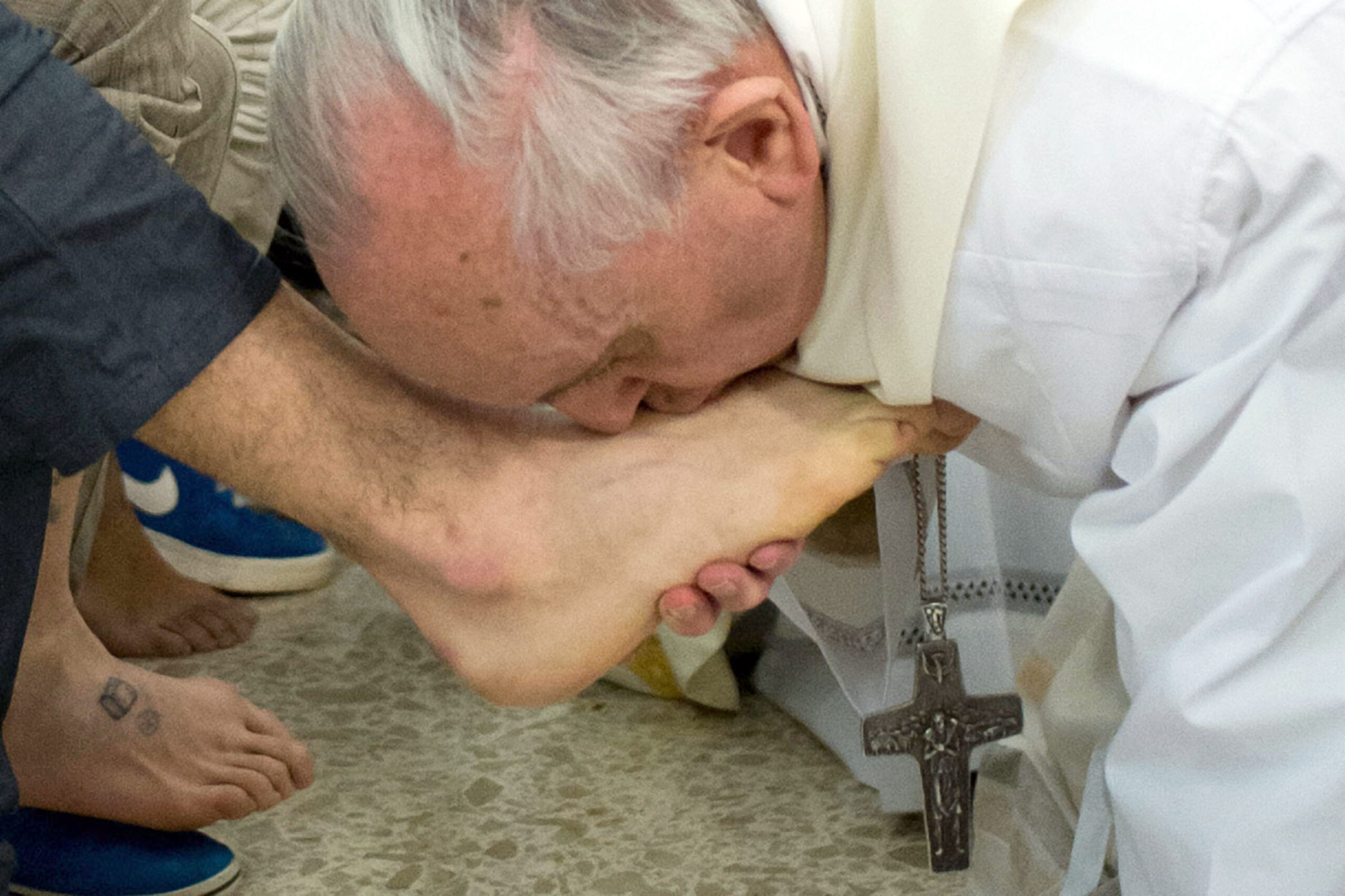
• Reciprocating God’s Gift. The key New Testament passage that best captures this third moment of “gift missiology” is: “What you have received as a gift, give as a gift” (Mt 10:8). The logic is simple: if one truly appreciates a gift, one wishes to share it with others. The desire to gift others is the best and clearest manifestation of authentic gratitude.
The New Testament letters of James and Peter add further insight: “Make no mistake about this, my dear brothers: every good gift, everything that is perfect, is given us from above; it comes down from the Father of all light” (Jam 1:16-17). “Each of you has received a special gift, so like good stewards responsible for all these different graces of God, put yourselves at the service of others … so that, in everything, God may receive the glory” (I Pt 4:10-11).
The 1999 apostolic exhortation of Pope John Paul II, Ecclesia in Asia (EA), provides several insightful perspectives on how the Church in Asia is to “reciprocate” (return, repay) the gifts it has received. “The Church’s faith in Jesus is a gift received and a gift to be shared; it is the greatest gift which the Church can offer to Asia” (EA 10b).
“Blessed with the gift of faith, the Church [is to become] a community aflame with missionary zeal to make Jesus known, loved and followed…. The great question now facing the Church in Asia is how to share with our Asian brothers and sisters what we treasure as the gift containing all gifts, namely, the Good News of Jesus Christ” (EA 19a, 19c).
“Only if the People of God recognize the gift that is theirs in Christ will they be able to communicate that gift to others through proclamation and dialogue” (EA 31f).
The perspective of “mission-as-gift” contains several pivotal insights on the approach or manner of mission in Asia, which is necessarily the mode of dialogue. Christians treasure the gift of their Trinitarian faith, offering it freely, even enthusiastically, to others. The gift is offered with a sincere heart; yet, they know that the other person is free to accept or reject the gift. The dialogue partner (e.g. Muslim, Buddhist) also has a gift to offer; thus, a wonderful “exchange of gifts” can result. All people having the gift of faith need to collaborate so that through their shared gifts they can enrich the poor and needy in their midst.
The Asian bishops were indeed most perceptive in their reflection on a renewed motivation for mission, listing gratitude first among several possible motives. Recall what they said: “We evangelize, first of all, from a deep sense of gratitude to God…. Mission is above all else an overflow of this life from grateful hearts transformed by the grace of God…. Without a personal experience of this life received as gift and mercy, no sense of mission can flourish” (FABC V).
Paul’s well-chosen advice to his co-evangelizer Timothy appears to be a fitting exhortation for concluding these reflections on the gift of mission; here Christians can find an anchor for their recognition, reception, and reciprocation of the gift of faith. Paul writes: “Fan into a flame the gift that God gave you when I laid my hands on you…. never be ashamed of witnessing to the Lord…. bear hardships for the sake of the Good News…. Accept the strength that comes from the grace of Christ Jesus…. Proclaim the message and, welcome or unwelcome, insist on it… do all with patience…. Make the preaching of the Good News your life’s work, in thoroughgoing service” (II Tim 1:6, 8-9a, 2:1, 4:1, 5).