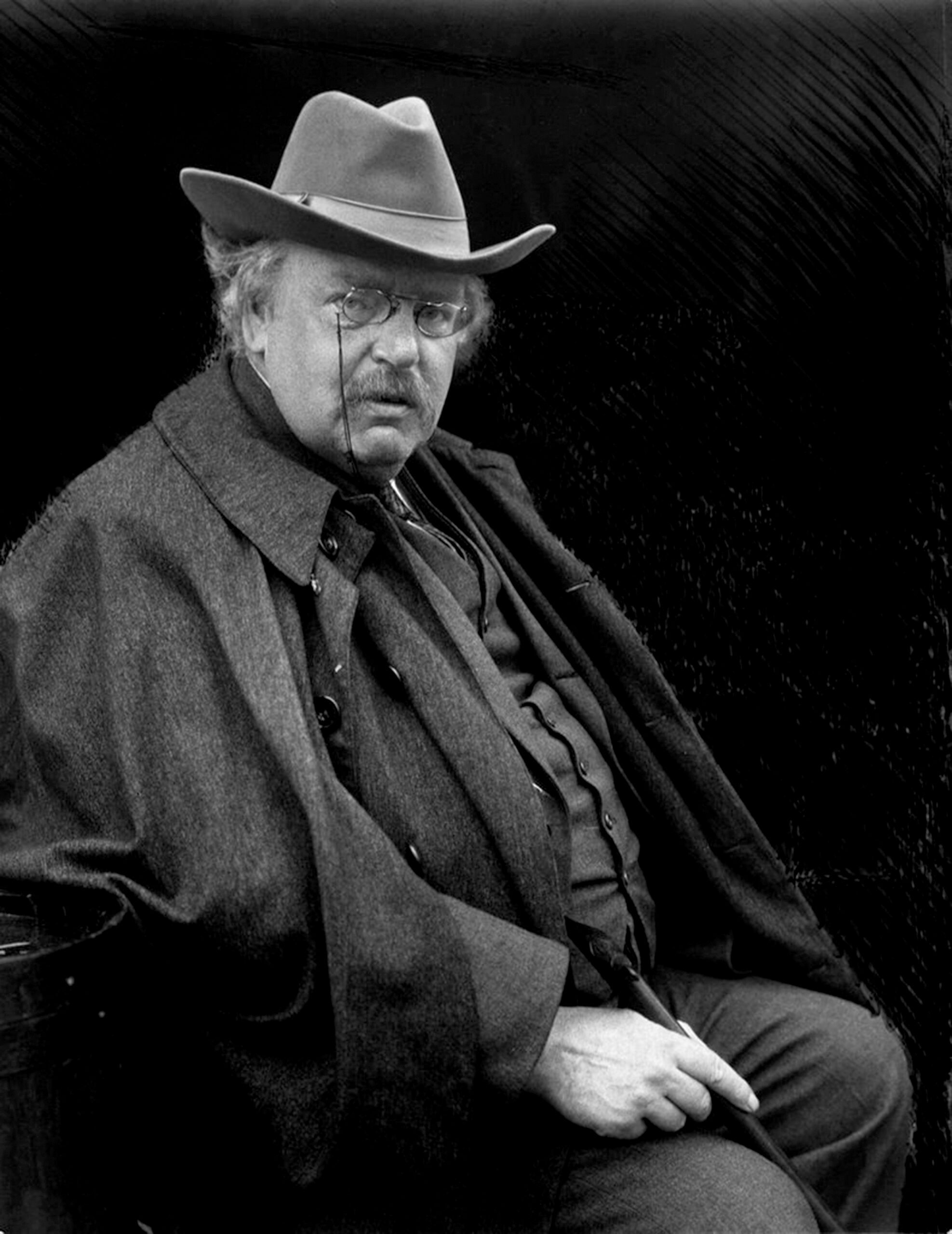

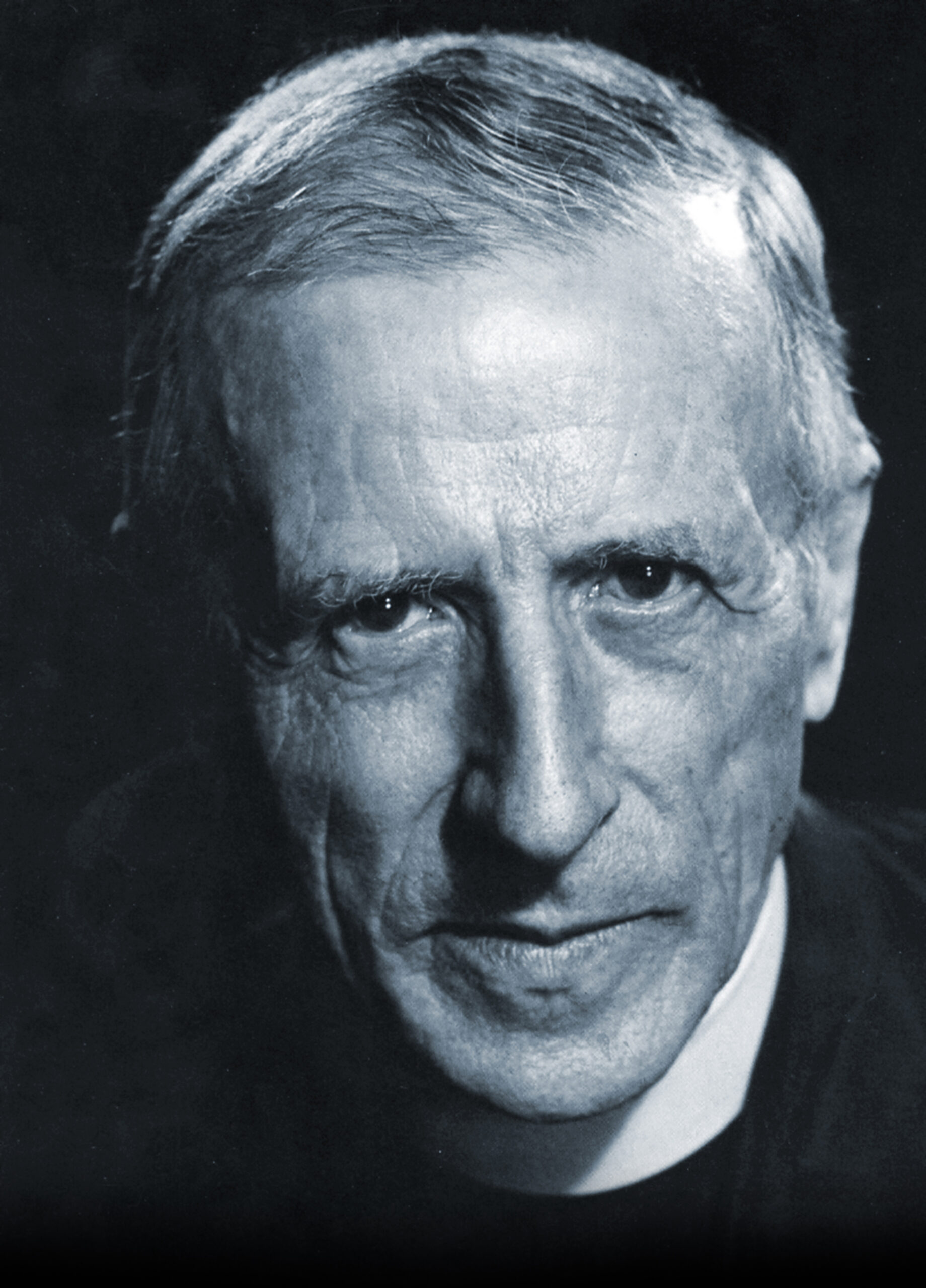
Mobilized in December 1914, Pierre Teilhard de Chardin served the whole length of World War I as a stretcher-bearer. He was a young priest since he had been ordained in 1911 and a promising scientist. The war, with its miles of muddy trenches and its bloody attacks involving tens of thousands of human beings, touched him deeply. For his valor, he received several citations including the Military Medal and the Legion of Honor.
With a mystic’s eye, he had perceived the face of the Divine in all of Creation. For Teilhard, as for the Jesuit poet Gerald Manley Hopkins, the world “was charged with the grandeur of God.” In a “Hymn to Matter,” Teilhard wrote: “Blessed be you, harsh matter, barren soil, stubborn rock: you who yield only to violence, you would force us to work if we would eat… Blessed be you, mortal matter! Without you, without your assaults, without your uprooting of us, we should remain ignorant of ourselves and of God.”
This vision was reinforced in the midst of death, as he confessed later: “The war was a meeting with the Absolute.” The powerful impact of the war on Teilhard is recorded in his letters to his cousin, Marguerite, now collected in the book The Making of a Mind. They give us an intimate picture of Teilhard’s initial enthusiasm as a “soldier-priest,” his humility in bearing a stretcher while others bore arms, his exhaustion after the brutal battles at Ypres and Verdun, and his unfolding mystical vision centered on seeing the world evolve even in the midst of war.
In these letters are many of the seminal ideas that Teilhard would develop in his later years. Like when, during a break in the fierce fighting at the battle of Verdun in 1916, Teilhard wrote: “I don’t know what sort of monument the country will later put up on Froideterre Hill to commemorate the great battle. There’s only one that would be appropriate: a great figure of Christ. Only the image of the Crucified can sum up, express and relieve all the horror, and beauty, all the hope and deep mystery in such an avalanche of conflict and sorrows.”
THE ENERGY OF GOD’S LOVE
Throughout his correspondence, he wrote that, despite this turmoil, he felt there was a purpose and a direction to life more hidden and mysterious than history generally reveals to us. This larger meaning, Teilhard discovered, was often revealed in the heat of battle. He described the experience that had occurred to him as he sat in a chapel near the battlefield of Verdun, meditating on the Consecrated Host.
It seemed as if the energy of God’s incarnate love expanded to fill the room and, ultimately, to encompass the battlefield and the entire universe. He was thrilled with the idea that, through work and suffering in the world, human beings were participating in the ongoing extension and consecration of God’s creation. This insight was especially nourished by his devotion to the Eucharist.
Years later, while doing field work in China, he was inspired to write a booklet, Mass on the World: “Since, Lord, I have neither bread nor wine nor altar, I will raise myself beyond these symbols, up to the pure majesty of the real itself; I, Your priest, will make the whole earth my altar and on it will offer You all the labors and the sufferings of the world.” As he adores the presence of the creative power of God in matter, the Eucharistic miracle of Transubstantiation is, in a certain sense, realized in nature by the energies of evolution: matter becomes Christ. In this sense, the world is an altar, an immense altar for the celebration of this Mass on the world.
Certainly, an echo of Teilhard’s vision can be perceived in this striking autobiographical passage of Pope John Paul II in Ecclesia de Eucharistia (2003, 8): “I have been able to celebrate Holy Mass in chapels built along mountain paths, on lakeshores or seacoasts; I have celebrated it on altars built in stadiums and in city squares… This varied scenario of celebration of the Eucharist has given me a powerful experience of its universal and, so to speak, cosmic character.
“Yes, cosmic! Because even when it is celebrated on the humble altar of a country church, the Eucharist is always, in some ways, celebrated on the altar of the world. It unites heaven and earth. It embraces and permeates all creation. The Son of God became man in order to restore all creation, in one supreme act of praise, to the One who made it from nothing.” Teilhard pronounced his solemn vows as a Jesuit in Sainte-Foy-lès-Lyon, on May 26, 1918, during a leave.
THE DISCOVERY OF FIRE
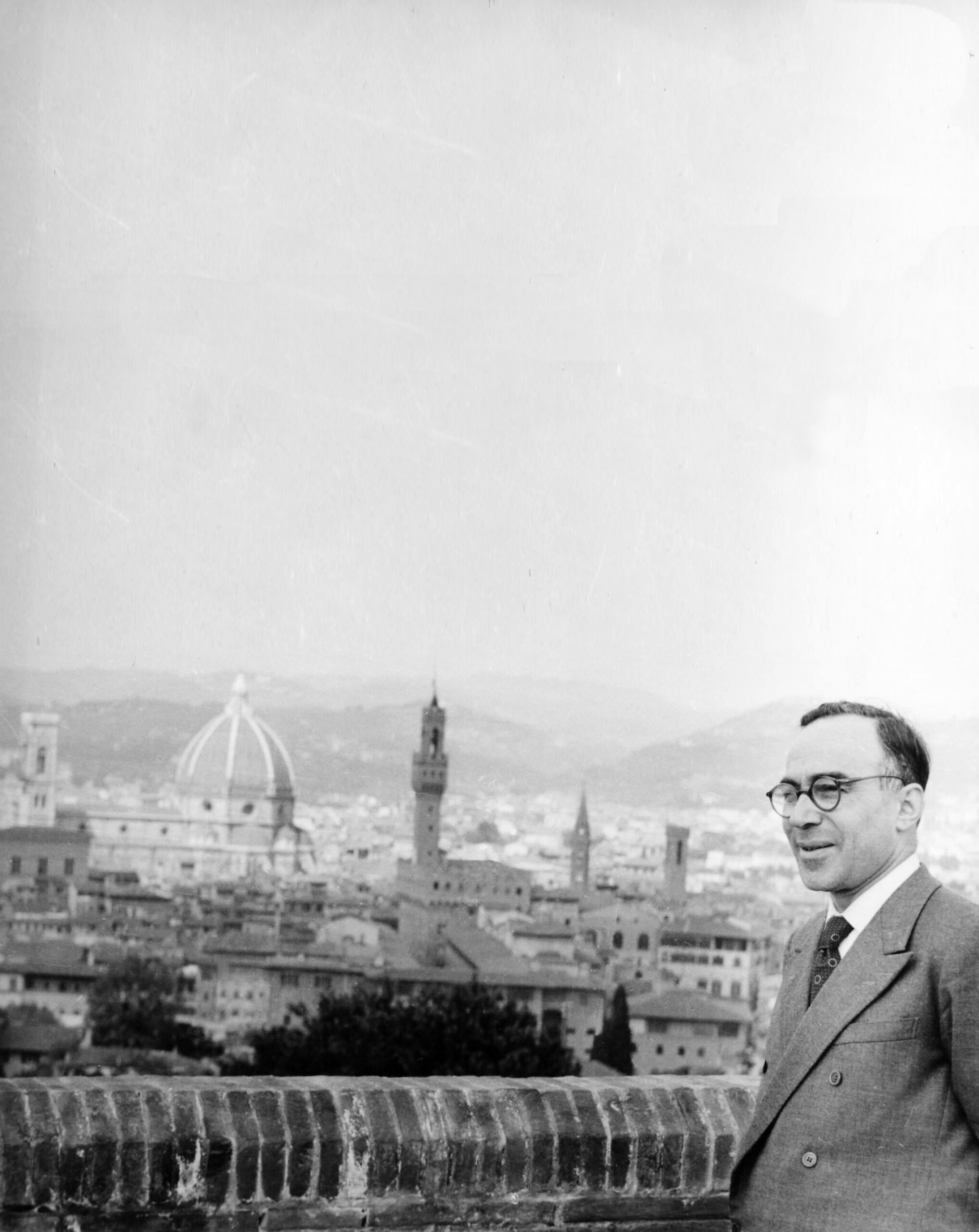
Pierre Teilhard de Chardin was born on May 1, 1881 and grew up in an eighteenth-century manor house located in Sarcenat, near the provincial capital, Auvergne, France. Coming from a family of eleven children, Teilhard was reared in an atmosphere of discipline and devotion. He learned from his father, Emmanuel, the love of nature and natural history which later became so important to his spiritual life as well as to his science. The countryside was rich in rocks and minerals, animal life, and flowers, and Teilhard spent many hours with his father exploring, climbing the mountains, riding, fishing, hunting, and collecting samples.
His mother, Berthe Adele, seemed to have had a more immediate influence upon the child’s religious life. Teilhard lovingly attributes to his mother, whom he referred to as my “dear saint maman,” all that was “best in his soul.” It was the influence of his mother which he looked upon to “rouse the fire into a blaze.” The fire of which he speaks here is that of a mystical illumination from within. “And the spark by which my own universe was to succeed in centering on its own fullness, undoubtedly, came through my mother.”
Teilhard’s life spins itself around these two poles of thought and feeling: his sense of fascination and wonder about the natural world and his sense of God’s presence welling up from within the world. As he told the story much later: “Throughout my whole life, during every moment I have lived, the world has gradually been taking on light and fire for me, until it has come to envelop me in one mass of luminosity, glowing from within.”
Drawn to the natural world, Teilhard developed his unusual powers of observation. Yet, among the earliest memories of his childhood was a striking realization of life’s frailty. He recollects: “A memory? My very first! I was five or six. My mother had snipped a few of my curls. I picked one up and held it close to the fire. The hair was burnt up in a fraction of a second. A terrible grief assailed me: I had learnt that I was perishable… At this discovery, I threw myself on the lawn and shed the bitterest tears of my existence!”
Teilhard joined the Jesuits as a university student, studied theology in England, science in France and specialized in paleanthropology. He spent the years 1923 to 1946 doing research and field work in China. The assignment was a kind of exile, the result of his superiors’ desire to keep him far from the theological limelight in Europe. But it was there that he worked out his most mature thought.
Teilhard went on to become a scientist of the first rank. He published over a hundred scholarly articles and took part in escavations in three continents. He was part of the team that discovered the remains of the “Peking Man,” at that time the oldest human ancestor on record. But, all the while, he was working out a profound theological synthesis, integrating the theory of evolution with his own cosmic vision of Christianity.
Teilhard’s last “exile” was in the Unites States: he spent his last years in New York. He once noted: “I should like to die on the day of the Resurrection.” So it came to pass. He was felled by a heart attack and died on April 10, 1955, Easter Sunday. Throughout Teilhard’s seventy-four years, his experience of the divine and his insight into the role of humans in the evolutionary process emerge as his dominant concerns. In dying, his vision was at last released to the world: “The day will come when, after harnessing the ether, the winds, the tides, and gravitation, we shall harness for God the energies of love. And, on that day, for the second time in the history of the world, man will have discovered fire.”
SILENCE THAT SPEAKS
The work of Pierre Teilhard de Chardin lies behind many of the most creative movements in contemporary theology and spirituality. He was also a man of profound faith who exemplified a spirituality of engagement in the world. Yet, little of this was publicly recognized during his lifetime. Throughout his career, he was denied permission by Rome and his religious superiors to publish any of his theological or philosophical writings, to lecture publicly, or even to accept any significant academic appointments.
Yet, he submitted in obedience, convinced that he served Christ best by faithfulness to his vocation. “The more the years pass, the more I begin to think that my function is probably simply that… of John the Baptist, that is, of one who presages what is to come.”
Teilhard’s suffering, however, was acute as he once despairingly confided: “In a kind of way, I no longer have confidence in the exterior manifestations of the Church… Some people feel happy in the visible Church; but, for my part, I think I shall be happy to die in order to be free of it and to find our Lord outside of it.” As it happened to other theologians, he maintained his own integrity and personal responsibility as he spoke to the Church. The responsibility expressed itself in accepted silence, obedience and loyalty. These values ensured the effective communication of truths and continue to deserve imitation. His silence still speaks admirably today.
Copies of Teilhard’s writings, however, were passed from hand to hand among a selected audience of friends and fellow Jesuits. His work might have disappeared altogether if Teilhard had not taken the precaution of naming a laywoman friend as his literary executor. To this initiative was due Teilhard’s posthumous fame and influence.
Yet, he was never formally condemned, even when the impressive volumes of the works were published and appeared in front of the public opinion. In 1962, there was a monitum (reprimand) of the Holy Office which denounced the “ambiguities and indeed even serious errors which offend the Catholic doctrine” and exhorted the bishops and the other leaders of Catholic institutions to “protect the minds of the youth from the dangers presented by the works of Fr. Teilhard de Chardin and of his followers.”
As time passed, it seemed that the works of Teilhard were gradually becoming viewed more favorably within the Church. For example, on June 10, 1981, Cardinal Agostino Casaroli wrote on the front page of the Vatican newspaper, L’Osservatore Romano: “What our contemporaries will undoubtedly remember, beyond the difficulties of conception and deficiencies of expression in this audacious attempt to reach a synthesis, is the testimony of the coherent life of a man possessed by Christ in the depths of his soul.
“He was concerned with honoring both faith and reason, and anticipated the response to John Paul II’s appeal: ‘Be not afraid, open, open wide to Christ the doors of the immense domains of culture, civilization, and progress.’” Some of Teilhard’s views became influential in the reform of the Second Vatican Council. Pope John Paul II indicated a positive attitude towards some of Teilhard’s ideas. In 2009, Pope Benedict XVI saluted Teilhard’s “great vision” and praised his concept of the universe as a “living host.”
NOT PROMETHEUS BUT JACOB
In nature, every being gives and receives energy. Teilhard de Chardin’s mystical view is the presence of God’s creative power in evolution: matter becomes energy, energy becomes consciousness, consciousness becomes holiness in Christ who is the Omega Point of the evolution/development of the universe. The great scholar paleoanthropologist is especially a great mystic according to the Ignatian spirituality: to see God in everything. It was in 1927, at the height of his career in paleontology/paleoanthropology, while he was studying bones and fossils in northern China, that Teilhard wrote a very influential book of spirituality, Le Milieu Divin: Jesus is the place, the ambience, the milieu where God accomplishes the most striking transformation which is to change our human consciousness into love.
Teilhard’s writing is graphic and unrestrained: “All around us, to right and left, in front and behind, above and below, we have only to go a little beyond the frontier of sensible appearances in order to see the divine welling up and showing through. By means of all created things, without exception, the Divine assails us, penetrates us and molds us. We imagined it as distant and inaccessible whereas, in fact, we live steeped in its burning layers. In eo vivimus. As Jacob said, awakening from his dream, the world, this palpable world, is, in truth, a holy place, and we did not know it. Venite, adoremus!”
If evolution itself points toward a form of conscious life which has personality, perhaps God is the goal toward which this universe is moving after all, since from God it came in the first place. Hence, the deep affinity which Teilhard felt existed between science and religion. “There is less difference than people think between research and adoration. (…) Religion and science are the two conjugated faces or phases of one and the same act of complete knowledge.”
In order to sustain and extend the huge, invincible and legitimate effort of research in which humanity is at present engaged, a faith, a mysticism is necessary. Humanity is no longer imaginable without science. But no more is science possible without religion to animate it. As Teilhard envisions the future, the greatest need is for a new type of seeker who devotes himself, ultimately through love, to the labors of discovery. No longer a worshipper of the world but of something greater than the world, through and beyond the world in progress.
Not the proud and cold Prometheus, but Jacob passionately wrestling with God. Jacob wrestled and even fought with God until he emerged the morning after with a clearer sense of his own destiny, a better understanding of the world, and a closer relationship to his Creator.
Thus, in the final analysis, Teilhard returns to the Bible and finds in the sacred Scriptures his own tradition of a God who is most compatible with a world in continual evolution. Not the static and unchanging God of the philosophers, the unmoved mover who stands over and is against Creation, but rather the same God who is so intimately related to the world as to enter into its deepest tragedies and struggles. The future may depend on whether enough of us have the courage to move with Teilhard from research towards adoration.