South-South Exploitation

INTRODUCTION

China is using the “partnership” with several African countries to exploit local workers, to export unemployed people and to sell cheap Chinese goods labeled in Cantonese.

WRITTEN BY

SHARE THE WORD

PUBLISHED ON

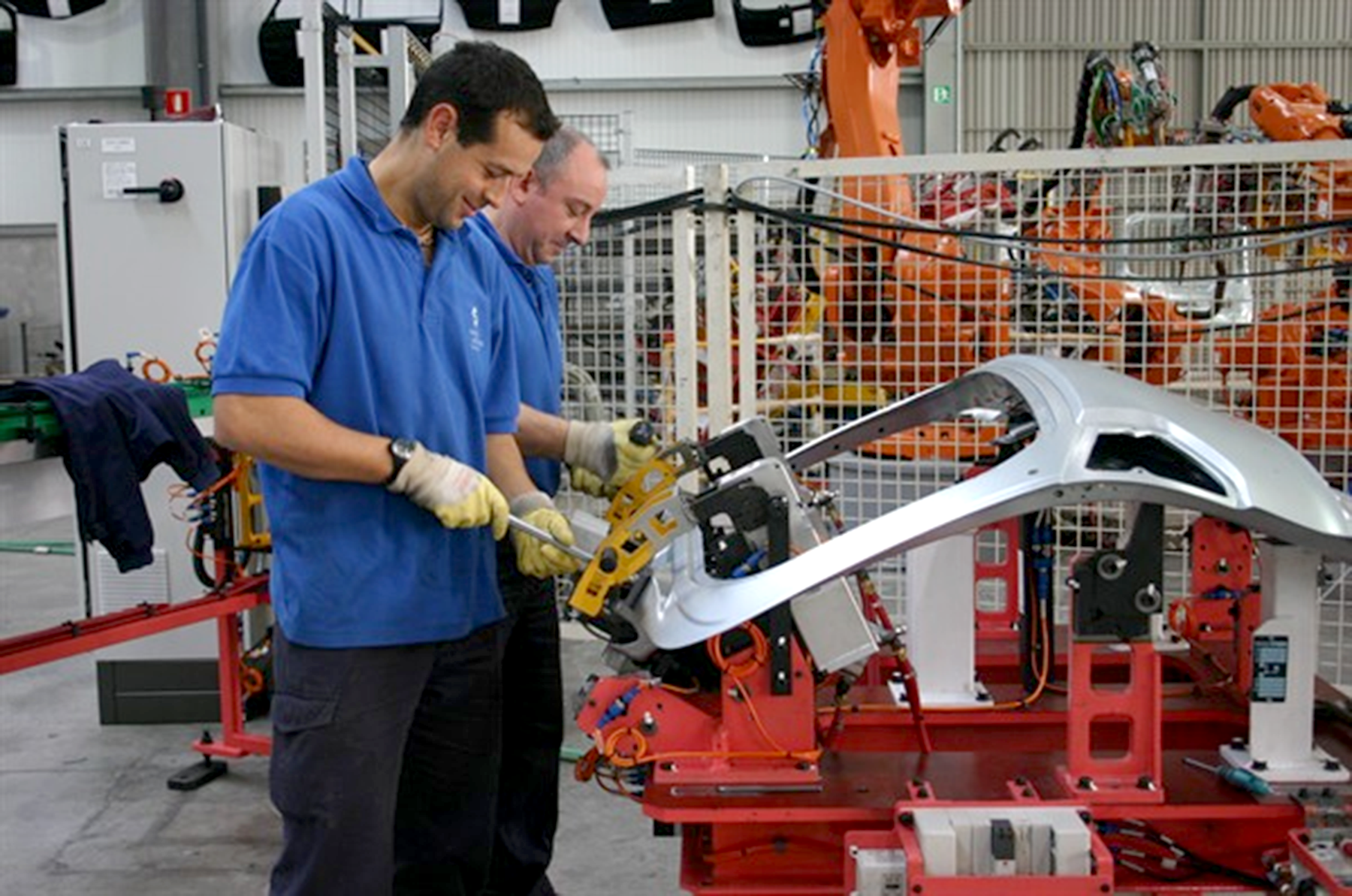
It is a Sunday, around five o’ clock in the afternoon, when carpenter Thomas Haimbodi knocks off work. He is waiting for the lorry that will take him and his colleagues from the building site – the office building for the new Ministry of Lands and Resettlement in Windhoek – to Katutura, the township on the outskirts of the Namibian capital. “I work nine hours a day, seven days a week,” says Haimbodi. “Not all of us do, but I need the overtime.” His Chinese bosses encourage the hellish hours. “He offers an informal agreement that’s a bit more than the normal wage.” “Normal,” in Haimbodi’s case, is about 10 dollars a day. Most earn much less than that, but Namibia’s staggering 40% unemployment makes it hard to say no to any kind of work.

Haimbodi’s employer, China Nanjing International, prides itself on delivering “Quality Construction for National Development,” according to a large billboard on the site. However, local Namibian construction companies have dragged Nanjing to court over the 8.7 million dollar government tender they feel was unjustly awarded – to no avail, however. “Chinese state-owned enterprises (SOEs) undercut local companies because they flout labor regulations,” says Herbert Jauch of the Namibian Labor Research and Resource Institute (LaRRI). He is co-editor of a soon-to-be-published study on Chinese investments in Africa and their impacts on labor conditions. The side effects of the “Look East” policy that many African countries have adopted are alarming, the study reveals.

LESS THAN HALF THE MINIMUM WAGES
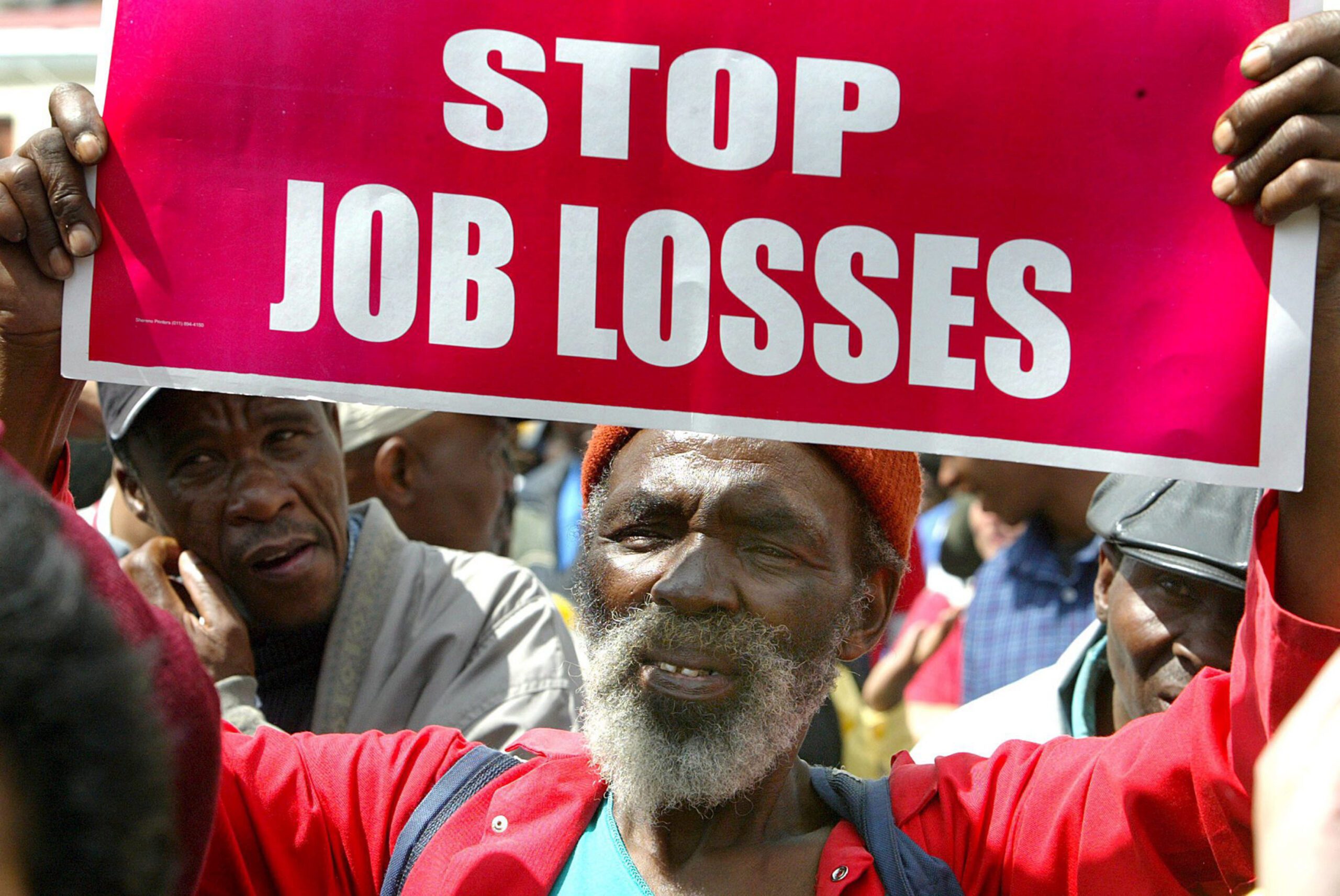
Ten Sub-Saharan countries participated in the study by the African Labor Research Network (ALRN). “In the Namibian case study, we found out that, in 2008, most Chinese construction firms paid about 35 dollar cents per hour for laborers while the national minimum wage for the industry stood at one dollar.” According to Jauch, up to 70% of large construction projects in the country are handled by Chinese firms. “They often don’t have the necessary paperwork, such as employment equity certificates, but still get awarded valuable tenders.” The African researchers lament the job losses that flow from the employment of large numbers of Chinese workers at construction projects on the continent, as well as the competition of cheap imports in “China shops” at the local level.

The researchers write that, “China attached importance to both political and economic benefits and portrayed itself as an attractive economic partner and political friend. For African governments, this presented an alternative to the ‘Washington Consensus’ and was termed the ‘Beijing Consensus,’ that is, support without interference in internal affairs.” Chinese investments in Africa are concentrated in the energy, mining, manufacturing, construction, retail and finance sectors, the study reveals. The main countries targeted are South Africa, Egypt, Nigeria and Ghana.

EXPORTING CHINESE WORKERS
China is the continent’s third largest trading partner, after the United States and France. Still Africa constitutes only 3% of Chinese foreign direct investment. On the ground, Chinese investments lead to problems. “There is pattern of unfair labor practices, non-compliance with local regulations, violation of international conventions, violation of banking practices and forex regulations, low wages and a complete absence of contracts and benefits,” Jauch tells IPS.

China offers governments attractive incentives to open their doors to investments. Namibia, for instance, has a trade volume of 400 million dollars with China but, on top of that, Chinese president Hu Jintao extended a 100 million dollar concessional loan to the country, as well as a 72 million dollar credit line. In return for such development aid, Jauch says, the Chinese government gets easy access to African markets – something it needs now more than ever. “The unemployment situation in China, exacerbated by the credit crunch, results in the government sending large numbers of their workers overseas,” explains Jauch. “These laborers often earn more than their African counterparts.”

WORKING WITHOUT CONTRACTS
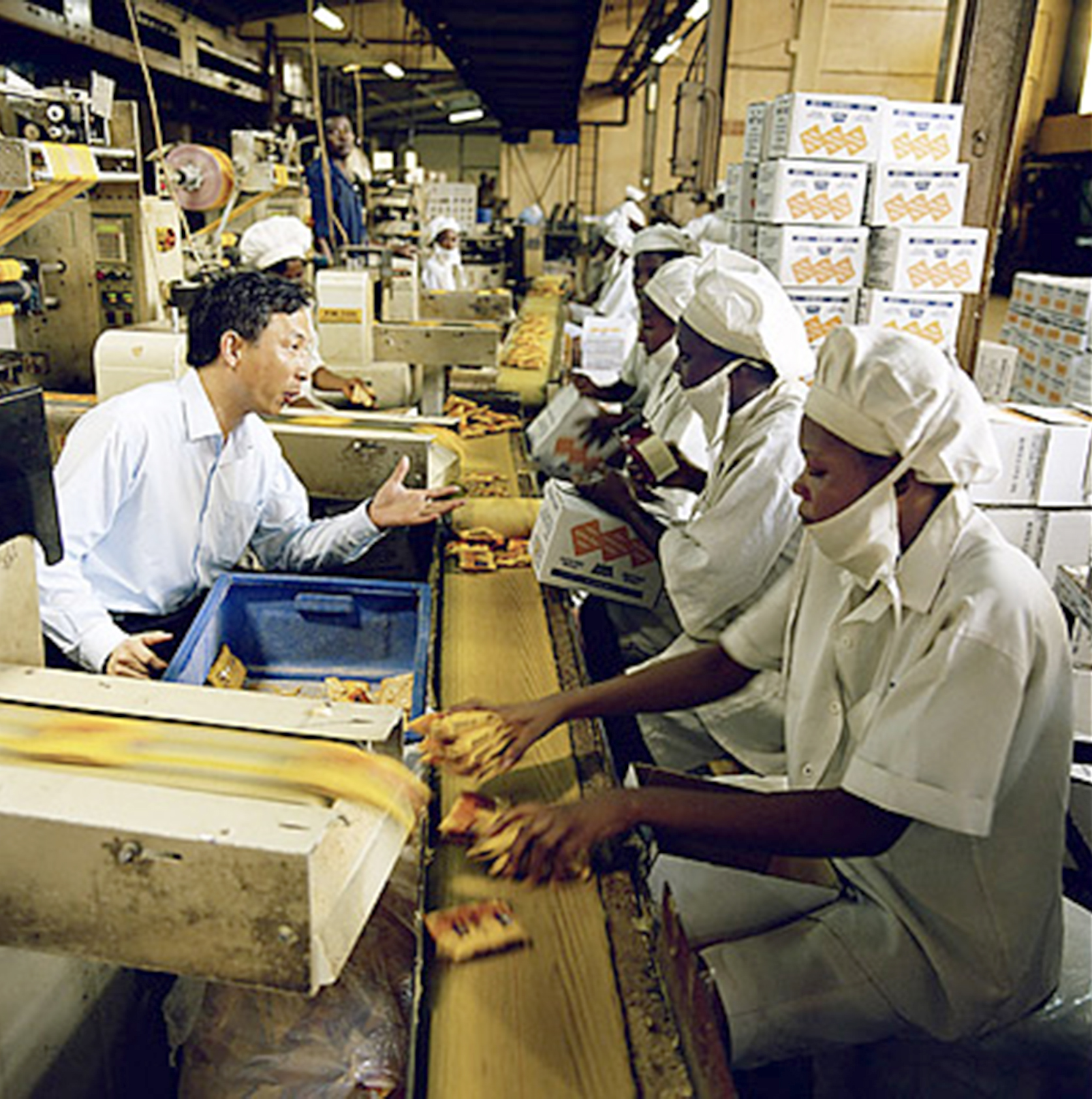
The Namibian case study mentions persistent rumors of Chinese prisoners being transferred to work on projects in Africa. One Oshiwambo-speaking owner of a construction company confirms this to IPS. “We have a hard time getting jobs from government, while the Chinese ship in container-loads of prisoners to work on public projects.” At Haimbodi’s construction site in Windhoek, there are 15 overseers, all Chinese. “Communication is a big problem,” he complains. “It’s a mixture of broken English and hand gestures. Of course when they insult us in their own language, we get the message.” Haimbodi and his colleagues complain about the low salaries, union busting, tense labor relations and lack of protective clothing. “Look at their feet.” Haimbodi points to his fellow workers: “They wear open sandals.”

Hou Xue Cheng owns a shop in Chinatown in Windhoek’s industrial area, where he sells vegetables from his farm outside Windhoek. According to him, his 20 or so Namibian workers earn about 50 dollars per month. “It’s not a problem, they are happy,” he insists. (Namibia does not have a legislated minimum wage.) Hou doesn’t give out contracts. “Workers often steal and that’s a big problem. I had to hire security guards. If people have contracts, they will start a case at the labor commissioner. I do not want that. If you steal, you’re out. It’s that simple.”

HIGHLY EXPLOITATIVE PRACTICES
Apart from vegetables, Hou’s shop sells everything from hair products to alcohol, all labeled in Cantonese and neatly stacked in rows of racks. The business owner also feels the Namibians are not very productive. “They leave early in the weekend, but we stay here, seven days a week till eight at night. It is necessary because people work during the week and want to shop in the weekend.” Jauch refutes this claim about productivity: “A 2007 World Bank Study shows Namibian workers score well in Sub-Saharan Africa.”

That Chinese products and services have virtual unlimited access to African markets, is “inconsistent” in the light of the troublesome negotiations for an economic partnership agreement (EPA) with the European Union, Jauch argues. “What is sold as South-South trade are, in fact, highly exploitative practices. The Chinese get a chance to play the game in their own favor.” www.ipsnews.net


Share Your Thoughts

All comments are moderated

From The Same Issue

The articles and content about this issue

From The Same Issue

The articles and content about this issue

Frontline

Delayed Peace

From This Topic

The articles and content about this topic

From This Topic

The articles and content about this topic

Explore Other Topics

Browse other coverage

Explore Other Topics

Browse other coverage

WM SPECIAL

Presents, discusses and draws readers to reflect on issues of outmost relevance to the world today.


FRONTIERS

Very often, mission is carried out in frontier situations around the world. Those who embrace these situations have much to share.


UNITY IN DIVERSITY

Writer Ilsa Reyes will be exploring the richness of Pope Francis’s latest encyclical Fratelli Tutti with a view of helping our readers to get a grasp of the this beautiful papal document.


FRONTLINE

Puts to the front committed and inspiring people around the world who embrace humanitarian and religious causes with altruism and passion.


IN FOCUS

Focus on a given theme of interest touching upon social, economic and religious issues.


FAITH@50

As the Philippines prepares to celebrate 500 years of the arrival of Christianity. Fr. James Kroeger leads us in this series into a discovery journey of the landmark events in the history of faith in the Philippine archipelago.


INSIGHT

Aims to nurture and inspire our hearts and minds while pondering upon timely themes.


FILIPINO FOCUS

The large archipelago of the Philippines, in its richness of peoples and cultures, offers varied and challenging situations for mission.


FOLLOW ME

Reflections and vocation stories that shape up the lives of young people.


MISSION IS FUN

As humor and goodness of heart are qualities of Christian and missionary life, the new column “Mission is fun” will be publishing some anecdotes and stories that have happened in a missionary context to lighten up the spirits and trigger a smile in our faces.


LIVING COMMUNION

To help readers of World Mission live this year dedicated to Ecumenism, Interreligious Dialogue and Indigenous Peoples, Tita Puangco, writer and lecturer, shares in this section insights on the spirituality of communion.


WINDS OF THE SPIRIT

A historic view of the Catholic movements that emerged from the grassroots as an inspiration by the Holy Spirit.


BRIDGE BUILDERS

On the Year of Ecumenism, Interreligious Dialogue and Indigenous Peoples, radio host and communicator Ilsa Reyes, in her monthly column, encourages Christians and people of good will to be one with their fellow people of other sects, religions and tribes.


INTERVIEW

Questions to a personality of the Church or secular world on matters of interest that touch upon the lives of people.


WORLD TOUCH

News from the Church, the missionary world and environment that inform and form the consciences.


CARE OF THE EARTH

A feature on environmental issues that are affecting the whole world with the view of raising awareness and prompting action.


EDITORIAL

The editor gives his personal take on a given topic related to the life of the Church, the society or the world.


YOUNG HEART

A monthly column on themes touching the lives of young people in the Year of the Youth in the Philippines by radio host and communicator I lsa Reyes.


SCROLL

A missionary living in the Chinese world shares his life-experiences made up of challenges and joyous encounters with common people.


EXTRAORDINARY PEOPLE

Life stories of people who deserve to be known for who they were, what they did and what they stood for in their journey on earth.


ONE BY ONE

Stories of people whom a missionary met in his life and who were touched by Jesus in mysterious ways.


INCREASE OUR FAITH

Critical reflection from a Christian perspective on current issues.


SPECIAL MOMENTS

Comboni missionary Fr. Lorenzo Carraro makes a journey through history pinpointing landmark events that changed the course of humanity.


PROFILE

A biographical sketch of a public person, known for his/her influence in the society and in the Church, showing an exemplary commitment to the service of others.


WM REPORTS

Gives fresh, truthful, and comprehensive information on issues that are of concern to all.


LIFE'S ESSENTIALS

A column aimed at helping the readers live their Christian mission by focusing on what is essential in life and what it entails.


ASIAN FOCUS

Peoples, events, religion, culture and the society of Asia in focus.


THE SEARCHER'S PATH

The human heart always searches for greatness in God’s eyes, treading the path to the fullness of life - no matter what it takes.


INDIAN FOCUS

The subcontinent of India with its richness and variety of cultures and religions is given center stage.


AFRICAN FOCUS

The African continent in focus where Christianity is growing the fastest in the world.


JOURNEY MOMENTS

Well-known writer and public speaker, Fr. Jerry Orbos, accompanies our journey of life and faith with moments of wit and inspiration based on the biblical and human wisdom.


IGNATIUS STEPS

On the year dedicated to St. Ignatius of Loyala, Fr. Lorenzo Carraro walks us through the main themes of the Ignatian spirituality.


THE SEVEN LAST WORDS OF JESUS

Fr. John Taneburgo helps us to meditate every month on each of the Seven Last Words that Jesus uttered from the cross.


INSIDE THE HOLY BOOK

In this section, Fr. Lorenzo delves into the secrets and depths of the Sacred Scriptures opening for us the treasures of the Sacred Book so that the reader may delight in the knowledge of the Word of God.


CONVERSATIONS

Reflections about the synodal journey on a conversational and informal style to trigger reflection and sharing about the synodal path the Church has embarked upon.


VATICAN II

This 'mini-course' series provides a comprehensive exploration of Vatican II, tracing its origins, key moments, and transformative impact on the Catholic Church.


COMBONIS IN ASIA

This series offers an in-depth look at the Comboni Missionaries in Asia, highlighting their communities, apostolates, and the unique priorities guiding their mission. The articles provide insights into the challenges, triumphs, and the enduring values that define the Comboni presence in Asia.


BEYOND THE SYNOD

Following the Synod on Synodality, this series examines how dioceses, parishes, and lay organizations in the Philippines are interpreting and applying the principles of the synod, the challenges encountered, and the diverse voices shaping the synodal journey toward a renewed Church.


A TASTE OF TRADITION

This series introduces the Fathers of the Church, featuring the most prominent figures from the early centuries of Christianity. Each article explores the lives, teachings, and enduring influence of these foundational thinkers, highlighting their contributions the spiritual heritage of the Church.


A YEAR OF PRAYER

In preparation for the 2025 Jubilee Year under the theme “Pilgrims of Hope,” 2024 has been designated a Year of Prayer. World Mission (courtesy of Aleteia) publishes every month a prayer by a saint to help our readers grow in the spirit of prayer in preparation for the Jubilee Year.


OUR WORLD

In Our World, the author explores the main trends shaping contemporary humanity from a critical and ethical perspective. Each article examines pressing issues such as technological advancement, environmental crises, social justice, and shifting cultural values, inviting readers to reflect on the moral implications and challenges of our rapidly changing world.


CATHOLIC SOCIAL DOCTRINE

This series unpacks the principles of Catholic Social Doctrine, offering a deep dive into the Church's teachings on social justice, human dignity, and the common good.


HOPEFUL LIVING

Hopeful Living’ is the new section for 2026, authored by Fr. James Kroeger, who dedicated most of his missionary life to the Philippines. In this monthly contribution, he will explore various aspects of the virtue of hope. His aim is to help readers align their Christian lives more closely with a hopeful outlook.


PHILIPPINE CROSSROADS

Filipino Catholic scholar Jose Bautista writes each month about how the Philippines is at a crossroads, considering the recent flood control issues and other corruption scandals that have engulfed the nation. He incorporates the Church’s response and its moral perspective regarding these social challenges.


BIBLE QUIZ

Test your knowledge and deepen your understanding with our Bible Quiz! Each quiz offers fun and challenging questions that explore key stories, themes, and figures from both the Old and New Testaments.


Shopping Cart