The Bells Of Nagasaki

INTRODUCTION

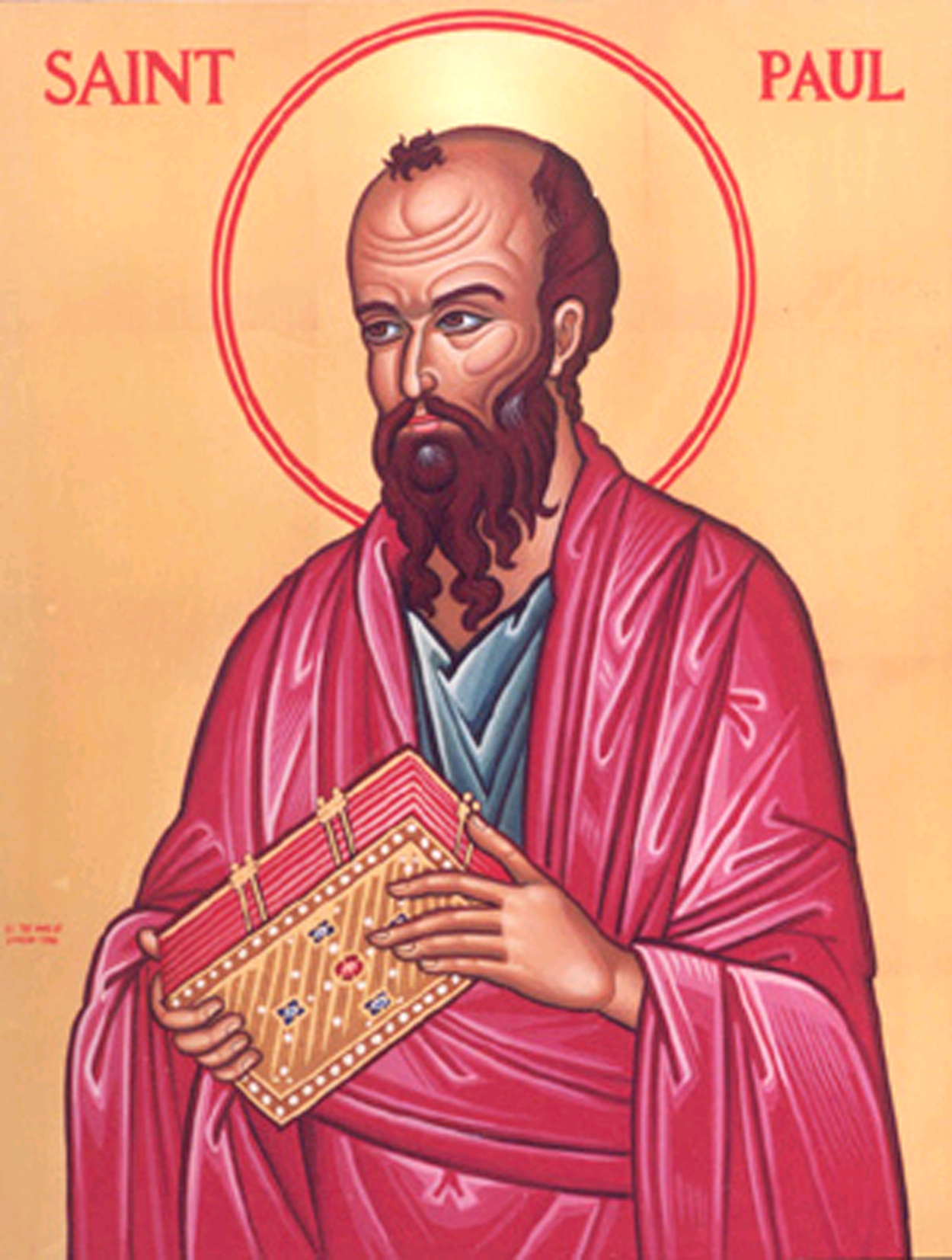
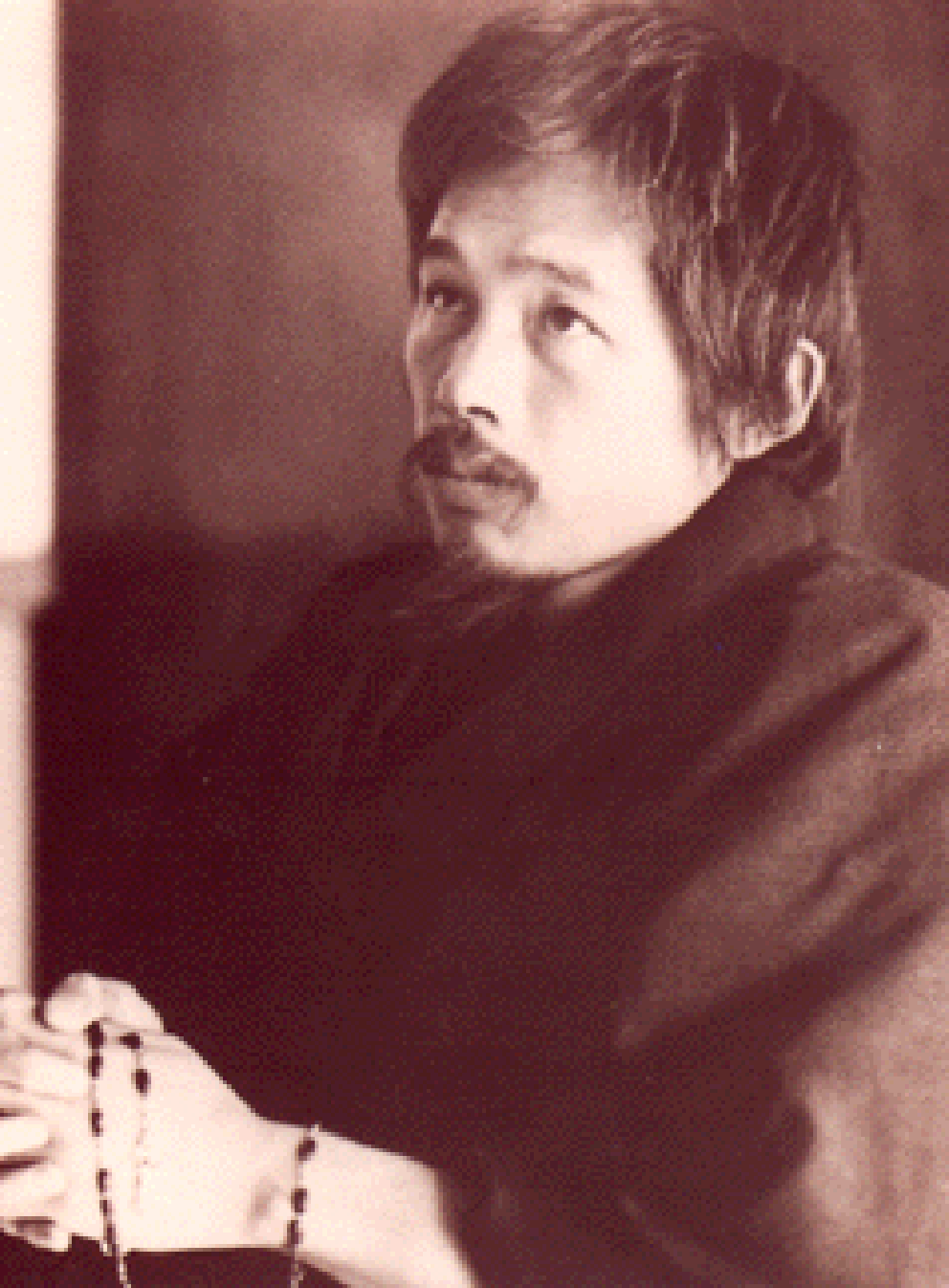
He was himself a victim of the atomic bomb and became its mystic. This is the heart-rending story of Dr. Paul Takashi Nagai, who gave his life to the mission of making Christian sense of one of the greatest war tragedies of modern history.

WRITTEN BY

SHARE THE WORD

PUBLISHED ON

“The first light of the morning makes the crickets chirp. Kayano stirs in my arms; instinctively his little hands search my chest. But when, still half asleep, he realizes that it is not the soft, sweet breast of his mother, he starts crying and, still in tears, he goes back to sleep. We are not the only ones hit by the terrible situation. In the immense desert of the atomic bomb, how many half-hidden sobs, in the silence of the night, shake the chest of so many other widows and widowers and orphans like us…”

This is how Dr. Takashi Nagai describes the awakening of his family in the aftermath of the atomic bombing in his bestseller book, The Bells of Nagasaki (1951). His children had survived, but he had gathered himself the small heap of ashes that was what remained of his wife Maria Midori Nagai, together with her rosary beads, surprisingly intact.

On the morning of August 9, 1945, Dr. Takashi Nagai was working in his office at the medical center in Nagasaki, Japan. At 11 am, he saw a flash of blinding light, followed by darkness and a crashing roar. In that moment, his world collapsed around him. It was the explosion of the second plutonium-fuelled atomic bomb five hundred yards over the Urakami Cathedral of Nagasaki. The first, a little time before, had fallen over the town of Hiroshima.

After escaping from the rubble and receiving treatment for a severed carotid artery, Nagai joined the rest of the hospital staff in treating the survivors. Given the force and heat of the blast, he imagined that such a big bomb must have killed hundreds of people. Only gradually did the extent of the destruction become clear. The bomb had killed nearly eighty thousand persons, and wounded many more.

THE CHOSEN VICTIM
As Robert Ellsberg writes in his profile The Mystic of Nagasaki: “Nagai witnessed scenes of horrifying suffering. The intense heat near the epicenter of the blast had vaporized humans, leaving only the outline of their shadows. Hordes of blackened survivors, the skin hanging from their arms, desperately wandered the streets crying for water.

Such circumstances might naturally prompt a range of reactions − madness, despair, or hunger for revenge. But in the days following the explosion, Nagai, a devout Catholic, instead, expressed a most unexpected attitude − namely, gratitude to God that his Catholic city had been chosen to atone for the sins of humanity.”

In arriving at this perspective, Nagai undoubtedly responded with the strong consciousness of Nagasaki’s Christian population. Since the time of the early Jesuit missions, the city had been the center of Japanese Catholicism, and consequently the scene of extensive martyrdom. Over time, Japanese Catholics had claimed a deep identification with the cross of Christ and a conviction that atonement must come only at the price of blood. Thus, it seemed natural for Nagai to pose the question: “Was not Nagasaki the chosen victim, the lamb without blemish, slain as a whole burned offering on an altar of sacrifice, atoning for the sins of all the nations during World War II?”

The same perspective inspired the scene of Jesus speaking to the imprisoned missionary, in the novel Silence (1966) of Sushaku Endo. Jesus appears not as the beautiful, haloed and serene Christ of the missionary’s devotions, but the Christ of the twisted and dented fumie (the images of the face of Jesus used by the persecutors to force the Christians to step on), the trampled upon, and suffering Christ. And what Christ says to the priest shocks him to the marrow: “Trample on me, trample…It was to be trampled upon by men that I was born into the world; it was to share men’s pain that I carried my cross.”

Nagai found remarkable that the bomb had been dropped that day on Nagasaki, as a result of heavy clouds obscuring the originally intended city. As a further result of clouds, the pilot had not fixed his target on the Mitsubishi iron works, as intended, but instead on the Catholic Cathedral of the Urakami district of the city, home to the majority of Nagasaki’s Catholics. He noted moreover that the end of the war came on August 15, feast of the Assumption of Mary, to whom the cathedral was dedicated. All this was deeply meaningful. “We must ask if this convergence of events − the ending of the war and the celebration of her feast − was merely coincidental or if there was here some mysterious providence of God.”

Nagai expressed these sentiments in an open-air requiem Mass just days after the bombing. While his views were controversial, he provided consolation to many of the city Catholic survivors, desperate to find some redemptive meaning in their terrible suffering: “We have disobeyed the law of love. Cheerfully we have hated one another and killed one another. And now, at last, we have brought this great and evil war to an end. But in order to restore peace to the world, it was not sufficient to repent. We had to obtain God’s pardon through the offering of a great sacrifice… Let us give thanks that Nagasaki was chosen for the sacrifice… May the souls of the faithful departed, through the mercy of God, rest in peace.”

A WITNESS OF PEACE
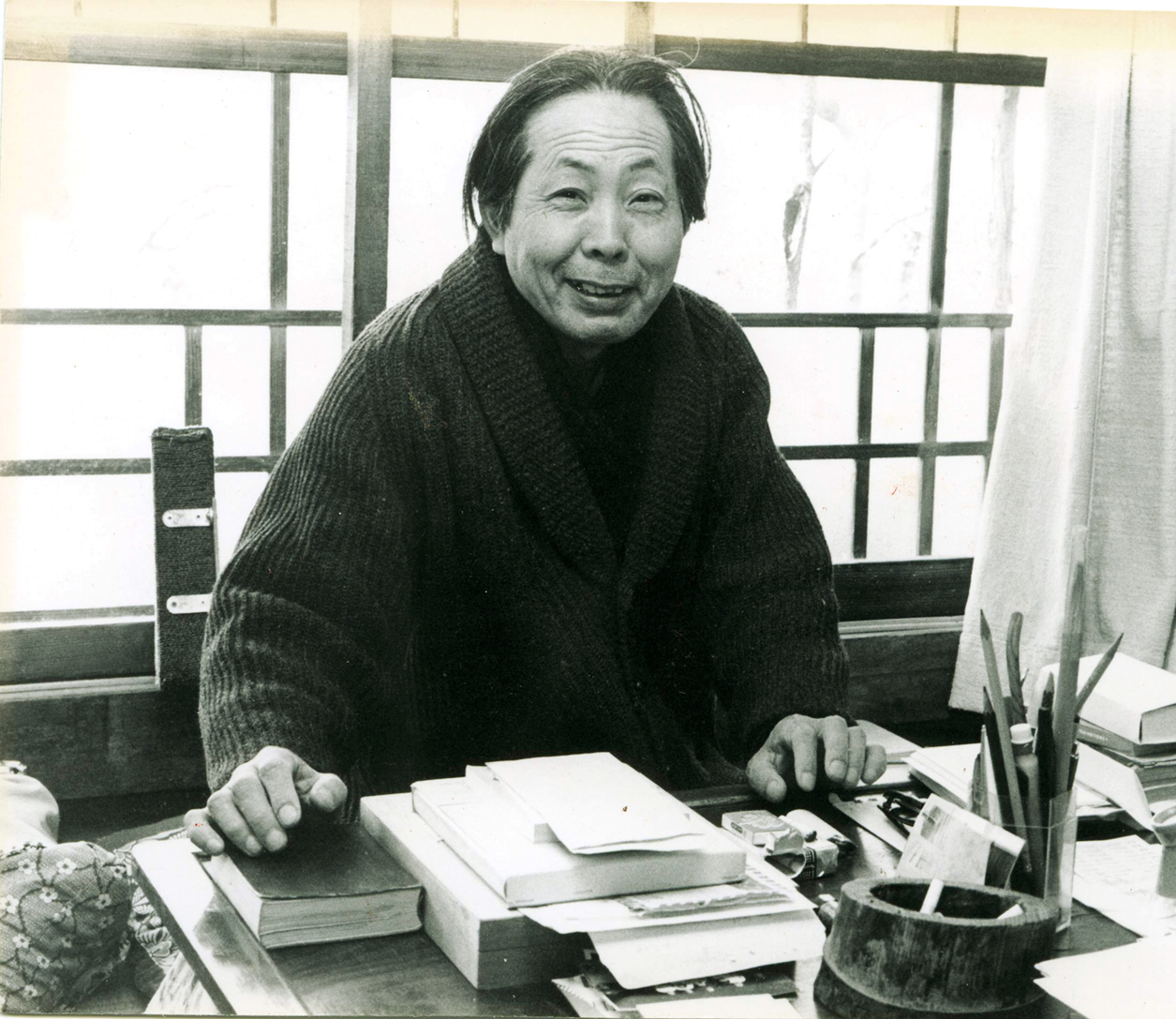
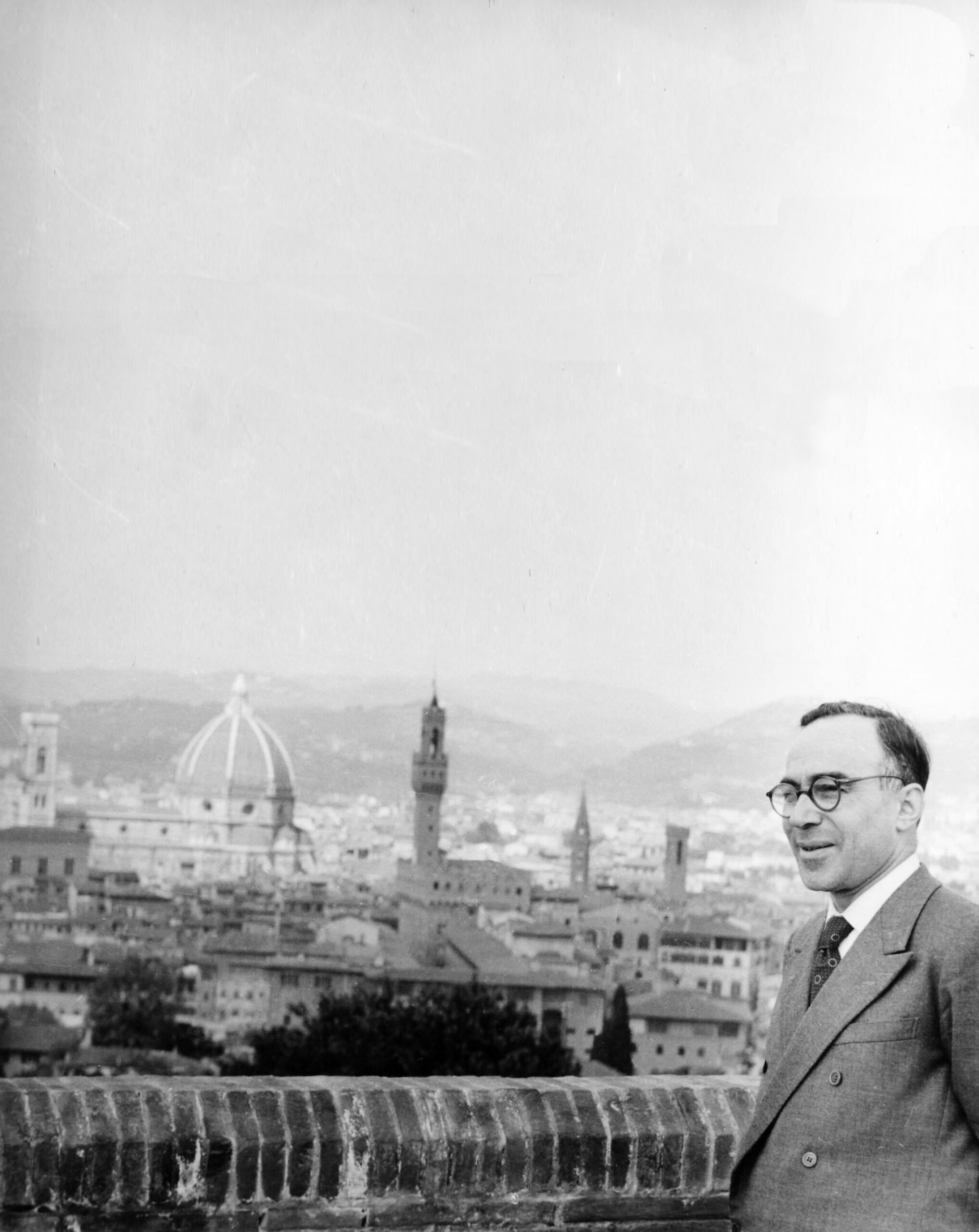
Nagai was himself a convert. Born on January 3, 1908, he became a Catholic in 1934. His conversion was prompted by several influences, especially the example of his fiancée, who belonged to an ancient Catholic family. Nagai pursued a career in medicine, ultimately entering the field of radiology. In 1941, he was found to be suffering from incurable leukemia, induced by his exposure to x-rays. Nevertheless, he was able to continue his work, and in 1945 he had become the head of radiology at the University of Nagasaki.

In the aftermath of the bombing on August 9, Nagai attended tirelessly to the medical needs of the survivors. “Each life was precious. For all these people, the body was a precious treasure.” The effects of radiation, combined with his previous illness, left Nagai an invalid, barely able to leave his bed. He lived as a contemplative in a small hut near the cathedral ruins in Urakami, writing books and receiving visitors. Increasingly he came to believe that Nagasaki had been chosen not only to atone for the sins of the war, but also to bear witness to the cause of international peace.

“Men and women of the world, never again plan war! From this atomic waste, the people of Nagasaki confront the world and cry out: No more war! Let us follow the commandment of love and work together. The people of Nagasaki prostrate themselves before God and pray: Grant that Nagasaki may be the last atomic wilderness in the history of the world.”
Dr. Nagai died on May 1, 1951, at the age of forty-three.

THE DOUBLE-EDGED SWORD
In the book: The Bells of Nagasaki, Dr. Nagai describes the innocent questions of his children to which he tries to give honest answers: “Does the atom serve only to make bombs?”
“No, there are infinite ways of utilizing that energy, if you don’t make it burst in only one go. If man controls it with his wisdom and makes it explode gradually, he can exploit it to run trains, to sail ships, to fly planes… Humanity has so far passed through the Stone Age, then the bronze, the iron, the coal, the oil and electricity age. And now, starting from this year, it has entered the atomic age. You, Seichi, and you too Kaynano, already belong to the atomic age. My children fell asleep whispering: “Atomic age…Atomic age…”

“Humanity has managed to discover, in the bosom of the earth, this precious sword that God Almighty had hidden and now, with this double-edged sword, what kind of dance will it dance?” Dr Nagai was thinking of the traditional Japanese sword dance.

Then the beautiful conclusion: “And behold the slow pealing of the bells rises from the cathedral over the vast, desert plain, the solemn sound of the morning Angelus. The bells had not broken, falling down in the midst of the ruins from the fifty-meter-high clock tower. Iwanaga and Ichitaro of the Catholic youth had found them still whole and strung them anew on the highest part of the ruined clock tower.

Their sound is spreading over us as a blessing. Seichi and Kayano have opened their eyes and are now praying, kneeling beside their poor beddings. May humanity not experience any other war that would be a suicide! This is what the inhabitants of Urakami are asking God, prostrated on the acidic dust of the atomic bomb. May their city be the last in the world to be made a desert by the atom. No more wars! Seichi and Kayano end now their prayer and sign themselves: In the name of the Father, the Son and the Holy Spirit. Amen.”

Share Your Thoughts

All comments are moderated

From The Same Issue

The articles and content about this issue

From The Same Issue

The articles and content about this issue

WM Special

Mission And The City

From This Topic

The articles and content about this topic

From This Topic

The articles and content about this topic

Missionary Vocation

True Nobility

Missionary Vocation

Noah’s Ark

Explore Other Topics

Browse other coverage

Explore Other Topics

Browse other coverage

WM SPECIAL

Presents, discusses and draws readers to reflect on issues of outmost relevance to the world today.


FRONTIERS

Very often, mission is carried out in frontier situations around the world. Those who embrace these situations have much to share.


UNITY IN DIVERSITY

Writer Ilsa Reyes will be exploring the richness of Pope Francis’s latest encyclical Fratelli Tutti with a view of helping our readers to get a grasp of the this beautiful papal document.


FRONTLINE

Puts to the front committed and inspiring people around the world who embrace humanitarian and religious causes with altruism and passion.


IN FOCUS

Focus on a given theme of interest touching upon social, economic and religious issues.


FAITH@50

As the Philippines prepares to celebrate 500 years of the arrival of Christianity. Fr. James Kroeger leads us in this series into a discovery journey of the landmark events in the history of faith in the Philippine archipelago.


INSIGHT

Aims to nurture and inspire our hearts and minds while pondering upon timely themes.


FILIPINO FOCUS

The large archipelago of the Philippines, in its richness of peoples and cultures, offers varied and challenging situations for mission.


FOLLOW ME

Reflections and vocation stories that shape up the lives of young people.


MISSION IS FUN

As humor and goodness of heart are qualities of Christian and missionary life, the new column “Mission is fun” will be publishing some anecdotes and stories that have happened in a missionary context to lighten up the spirits and trigger a smile in our faces.


LIVING COMMUNION

To help readers of World Mission live this year dedicated to Ecumenism, Interreligious Dialogue and Indigenous Peoples, Tita Puangco, writer and lecturer, shares in this section insights on the spirituality of communion.


WINDS OF THE SPIRIT

A historic view of the Catholic movements that emerged from the grassroots as an inspiration by the Holy Spirit.


BRIDGE BUILDERS

On the Year of Ecumenism, Interreligious Dialogue and Indigenous Peoples, radio host and communicator Ilsa Reyes, in her monthly column, encourages Christians and people of good will to be one with their fellow people of other sects, religions and tribes.


INTERVIEW

Questions to a personality of the Church or secular world on matters of interest that touch upon the lives of people.


WORLD TOUCH

News from the Church, the missionary world and environment that inform and form the consciences.


CARE OF THE EARTH

A feature on environmental issues that are affecting the whole world with the view of raising awareness and prompting action.


EDITORIAL

The editor gives his personal take on a given topic related to the life of the Church, the society or the world.


YOUNG HEART

A monthly column on themes touching the lives of young people in the Year of the Youth in the Philippines by radio host and communicator I lsa Reyes.


SCROLL

A missionary living in the Chinese world shares his life-experiences made up of challenges and joyous encounters with common people.


EXTRAORDINARY PEOPLE

Life stories of people who deserve to be known for who they were, what they did and what they stood for in their journey on earth.


ONE BY ONE

Stories of people whom a missionary met in his life and who were touched by Jesus in mysterious ways.


INCREASE OUR FAITH

Critical reflection from a Christian perspective on current issues.


SPECIAL MOMENTS

Comboni missionary Fr. Lorenzo Carraro makes a journey through history pinpointing landmark events that changed the course of humanity.


PROFILE

A biographical sketch of a public person, known for his/her influence in the society and in the Church, showing an exemplary commitment to the service of others.


WM REPORTS

Gives fresh, truthful, and comprehensive information on issues that are of concern to all.


LIFE'S ESSENTIALS

A column aimed at helping the readers live their Christian mission by focusing on what is essential in life and what it entails.


ASIAN FOCUS

Peoples, events, religion, culture and the society of Asia in focus.


THE SEARCHER'S PATH

The human heart always searches for greatness in God’s eyes, treading the path to the fullness of life - no matter what it takes.


INDIAN FOCUS

The subcontinent of India with its richness and variety of cultures and religions is given center stage.


AFRICAN FOCUS

The African continent in focus where Christianity is growing the fastest in the world.


JOURNEY MOMENTS

Well-known writer and public speaker, Fr. Jerry Orbos, accompanies our journey of life and faith with moments of wit and inspiration based on the biblical and human wisdom.


IGNATIUS STEPS

On the year dedicated to St. Ignatius of Loyala, Fr. Lorenzo Carraro walks us through the main themes of the Ignatian spirituality.


THE SEVEN LAST WORDS OF JESUS

Fr. John Taneburgo helps us to meditate every month on each of the Seven Last Words that Jesus uttered from the cross.


INSIDE THE HOLY BOOK

In this section, Fr. Lorenzo delves into the secrets and depths of the Sacred Scriptures opening for us the treasures of the Sacred Book so that the reader may delight in the knowledge of the Word of God.


CONVERSATIONS

Reflections about the synodal journey on a conversational and informal style to trigger reflection and sharing about the synodal path the Church has embarked upon.


VATICAN II

This 'mini-course' series provides a comprehensive exploration of Vatican II, tracing its origins, key moments, and transformative impact on the Catholic Church.


COMBONIS IN ASIA

This series offers an in-depth look at the Comboni Missionaries in Asia, highlighting their communities, apostolates, and the unique priorities guiding their mission. The articles provide insights into the challenges, triumphs, and the enduring values that define the Comboni presence in Asia.


BEYOND THE SYNOD

Following the Synod on Synodality, this series examines how dioceses, parishes, and lay organizations in the Philippines are interpreting and applying the principles of the synod, the challenges encountered, and the diverse voices shaping the synodal journey toward a renewed Church.


A TASTE OF TRADITION

This series introduces the Fathers of the Church, featuring the most prominent figures from the early centuries of Christianity. Each article explores the lives, teachings, and enduring influence of these foundational thinkers, highlighting their contributions the spiritual heritage of the Church.


A YEAR OF PRAYER

In preparation for the 2025 Jubilee Year under the theme “Pilgrims of Hope,” 2024 has been designated a Year of Prayer. World Mission (courtesy of Aleteia) publishes every month a prayer by a saint to help our readers grow in the spirit of prayer in preparation for the Jubilee Year.


OUR WORLD

In Our World, the author explores the main trends shaping contemporary humanity from a critical and ethical perspective. Each article examines pressing issues such as technological advancement, environmental crises, social justice, and shifting cultural values, inviting readers to reflect on the moral implications and challenges of our rapidly changing world.


CATHOLIC SOCIAL DOCTRINE

This series unpacks the principles of Catholic Social Doctrine, offering a deep dive into the Church's teachings on social justice, human dignity, and the common good.


HOPEFUL LIVING

Hopeful Living’ is the new section for 2026, authored by Fr. James Kroeger, who dedicated most of his missionary life to the Philippines. In this monthly contribution, he will explore various aspects of the virtue of hope. His aim is to help readers align their Christian lives more closely with a hopeful outlook.


PHILIPPINE CROSSROADS

Filipino Catholic scholar Jose Bautista writes each month about how the Philippines is at a crossroads, considering the recent flood control issues and other corruption scandals that have engulfed the nation. He incorporates the Church’s response and its moral perspective regarding these social challenges.


BIBLE QUIZ

Test your knowledge and deepen your understanding with our Bible Quiz! Each quiz offers fun and challenging questions that explore key stories, themes, and figures from both the Old and New Testaments.


Shopping Cart