
Throughout history and in every corner of the globe where the church is present, people in need have turned to church communities for assistance. Religious, clergy and laypeople have often responded with great generosity and in an incredible variety of ways. That is still the case today. This article will be limited to the church’s presence to refugees and displaced persons, giving a few examples of assistance to them. The sad caveat to keep in mind is that no one has been able to give adequate assistance to the tens of millions of refugees and displaced persons in the world. I will begin with assistance to refugees in South Africa, since that is the situation best known to the author.
Since the end of apartheid, the Republic of South Africa (RSA) has received wave upon wave of refugees from other African countries. The government grants no financial assistance, but it has established procedures to, eventually, grant them legal recognition. There are no refugee camps in South Africa; refugees must provide for themselves and many need assistance. The churches and many civil society groups have tried to assist in whatever way they can.
Diana Beamish, a teacher and a lay member of the Schoenstatt Movement, responded to the first wave of Rwandan refugees that reached RSA after the 1994 massacres. She began arranging emergency shelter for some of them and, eventually, established the Mercy House in Johannesburg. Using her own savings, “Teacher Diana” purchased an ordinary house and, with some assistance from Comboni Missionaries and others, made modifications so that twenty-five people can stay there. Over the nearly two decades of the Mercy House ministry, people of many nationalities have had a chance to begin to rebuild their lives. Diana makes a consistent effort to foster a strong community among the residents so that their loving support for each other can begin to heal the emotional wounds and trauma caused by what they have suffered. Diana and her supporters have been able to help many refugees obtain a decent education and to find work.
TEMPORARY SHELTER
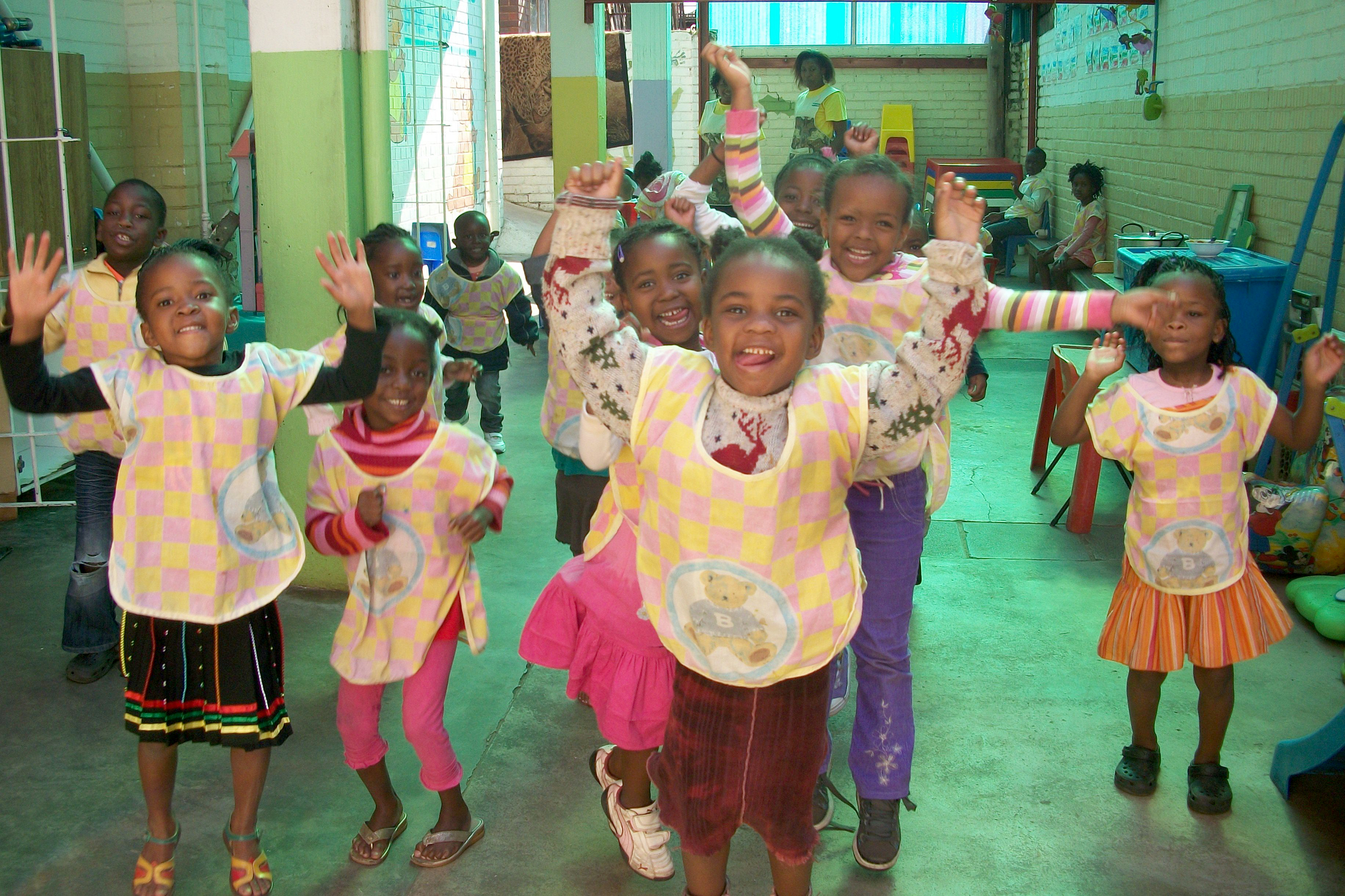
Bienvenu Shelter gives a somewhat different response to the same concerns. It offers temporary shelter to newly-arrived women and children for whom the mean streets of Johannesburg are especially dangerous. The refugees normally remain at Bienvenu for three to six months while learning English and developing job skills. It has a crèche to care for the children while their mothers are studying or looking for jobs. Bienvenu can house 35 to 45 people. It was founded in 2001 by the Scalabrinian Missionary Sisters in partnership with the Jesuit Refugee Services. Like the Mercy House, Bienvenu helps refugees to obtain needed medical care, apply for legal documents, etc.
The Jesuit Refugee Services (JRS), founded by the Society of Jesus in 1980 but now partly autonomous, is at the service of refugees in many countries. JRS offices were established in Johannesburg and Pretoria in 1998 to accompany, serve and advocate for the rights of refugees and other forcibly displaced persons. JRS in RSA is “an implementing partner of the United Nations High Commissioner for Refugees (UNHCR).” That means it gets some of its funding from the UNHCR, and JRS is able to channel part of that funding to help assist the refugees staying at the Mercy House and Bienvenu, for example, with transport to schools or medical facilities. However, the services offered by JRS are broader than that. JRS also advocates for the legal rights of individual refugees, as well as collectively. JRS can grant a limited number of small business loans to help refugees make a living. In conjunction with the UNHCR, JRS is sometimes able to reunite separated families.
The Justice and Peace Department of the Southern African Catholic Bishops Conference (SACBC), established in 1967, addresses a wide range of social justice issues, including some that directly affect the refugees, such as extensive xenophobia in RSA. Although the 2008 riots against foreign Africans have not recurred, extensive criminal violence against refugees continues. The J & P Department fosters diocesan efforts to overcome xenophobia.
A COMMON CAUSE
Christian churches of other denominations have not been left behind. After Zimbabwe exploded into violence and collapsed economically in the first decade of this century, hundreds of thousands of Zimbabweans fled to South Africa. Bishop Paul Verryn of the Central Methodist Church in downtown Johannesburg converted his church into a shelter for 1,500 Zimbabwean refugees. Needless to say, this action inconvenienced many people and led to considerable tension, both within the church membership and with local businesses. Bishop Verryn persisted and his church became a rallying point for Zimbabwean refugees. The South African Council of Churches has also given active assistance to refugees.
Of course, the church’s assistance to refugees is not limited to South Africa. Fr. David Baltz is a Comboni Missionary serving in the West Nile area of Uganda. The period following the collapse of the ruthless dictatorship of Idi Amin Dada was chaotic and sometimes violent. In June 1981, approximately 60 people who had sought refuge in the Mission of Ombaci near Arua were massacred. Survivors fled West into the Democratic Republic of Congo. Fr Baltz helped to evacuate staff and patients from the mission hospital of Maracha. Fr. Baltz and Fr. Renzo Salvano then went to live with the refugees in simple mud huts near Bakara where the UNHCR had established refugee camps. Later, they were joined by a Belgian Jesuit, some religious women from France, another Comboni missionary, and three Comboni Missionary Sisters. Fr. Baltz describes this period of living in solidarity with refugees and serving them as the peak experience of his priestly life and ministry. Later, back in Arua Diocese, he also ministered to refugees from Sudan who had come to Uganda.
Fr. Mike Barton, a Comboni Missionary serving in South Sudan, has served refugees and internally displaced persons at three different missions. Fr. Barton was at Kworijik Luri in Central Equatorial State from 1978 to 1987 when Christian and Muslim refugees, mainly Ma’di and Logbara, fled from Uganda and settled in camps near Wundurba. During the drought and famine of 1980, the mission also offered considerable material assistance.
UNSUNG HEROES
From 1993 to 2002, Fr. Barton was at Mapourdit in Lakes State where Comboni Missionaries and Religious of Our Lady of the Sacred Heart collaborated with Jesuit Refugee Services to care for people, mainly Dinka and Atuot, displaced by the Sudanese civil war. To serve the people, the Comboni Missionaries established and directed a large primary school, a secondary school and an adult education program under very primitive conditions. Fr. Barton states: “Displaced people always made me feel very inadequate as they had so many needs and I had so few means. Yet my greatest joy was the investment in their children’s education which was the key to their long-term future. Their generosity to me and to each other also inspired me greatly.”
From 2002 to 2013, Fr. Barton was in Northern Bahr el Gazhal State when Southern Sudanese refugees and internally displaced persons were returning to South Sudan from Darfur, Kordofan and Khartoum in Sudan, as well as from Kenya and Uganda. Most of the returnees were without assets and it was difficult to obtain outside assistance for them.
Today at Karak, in one of the poorest areas of Jordan, 150 km from Amman, at a small hospital that was established in 1939, Sr. Alessandra Fumagalli and other Comboni Missionary Sisters are serving both the local population and the Syrian refugees who come mainly from Homs. In collaboration with Caritas of Jordan and the UN High Commissioner for Refugees, the Sisters have established a program of healthcare for the refugees. However, there are already more than half a million Syrian refugees in Jordan and the needs far outstrip the limited capacity of those attempting to assist them.
These are but a few examples of what church people are doing to assist refugees. It goes without saying that, in collaboration with a multitude of both faith-based and secular organizations, countless dedicated lay Christians are also giving years of their lives to assist refugees. For the most part, these are unsung heroes, known only to their own families and to those they serve. They give precious witness to the compassion of God for all suffering people.