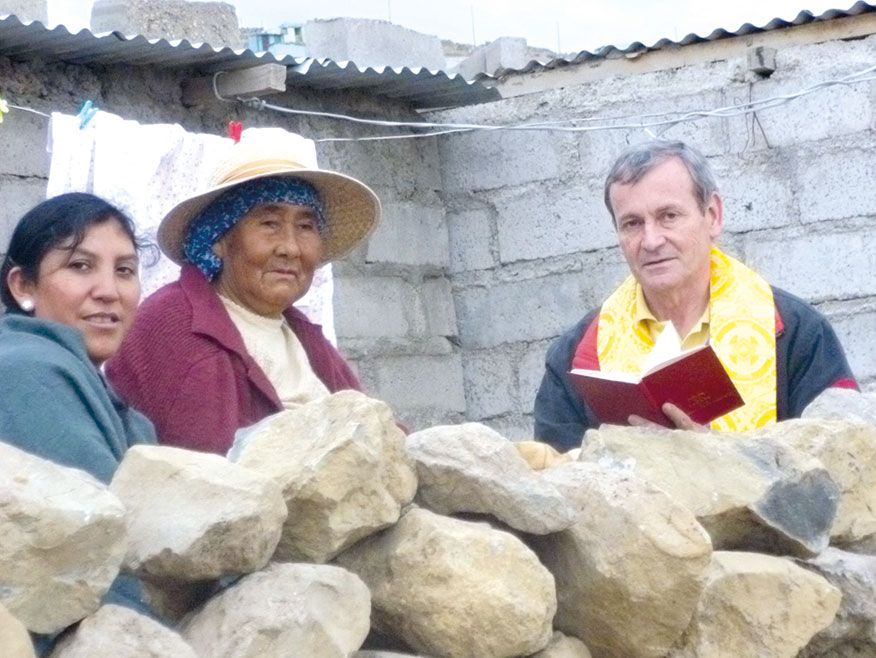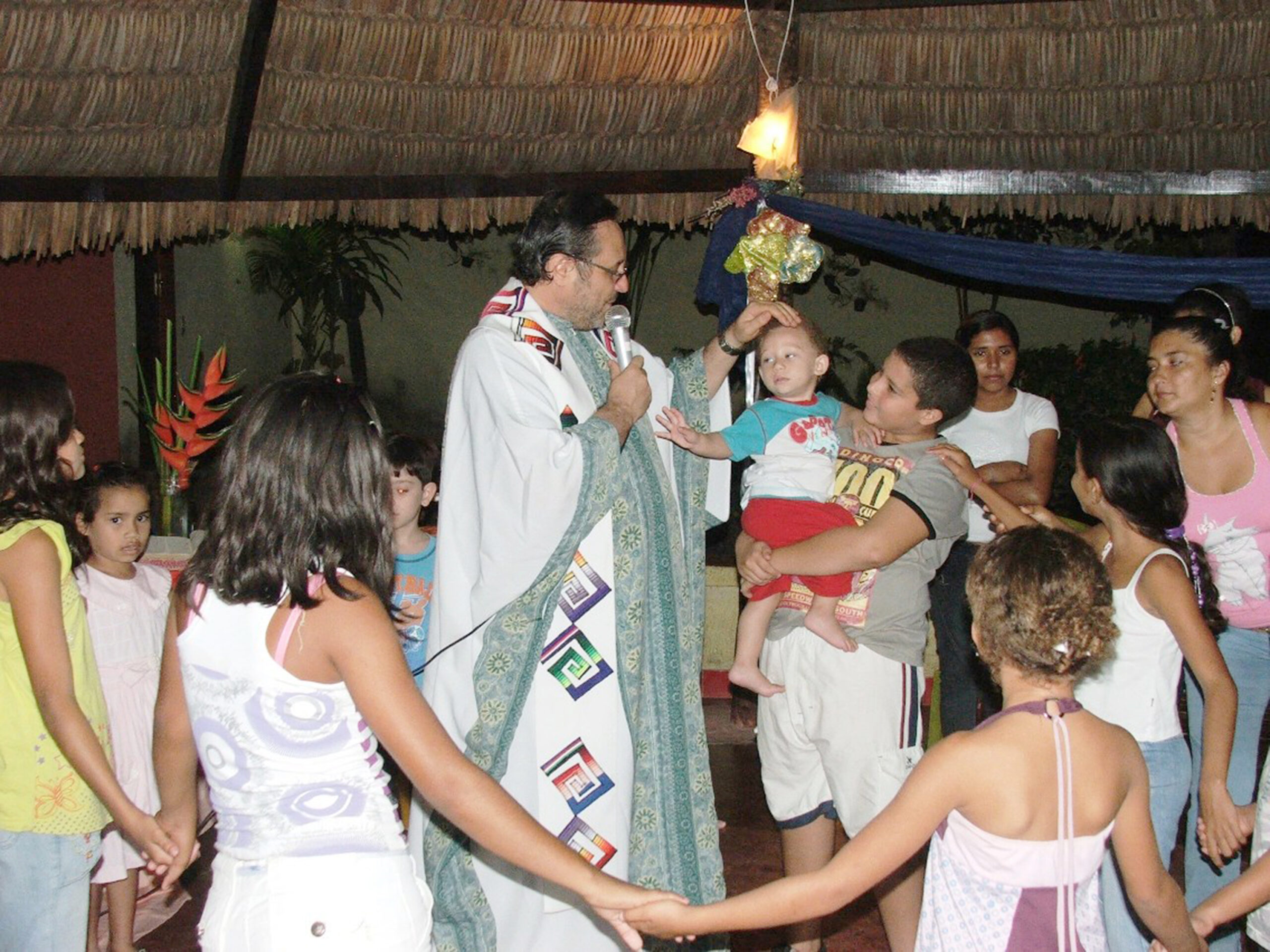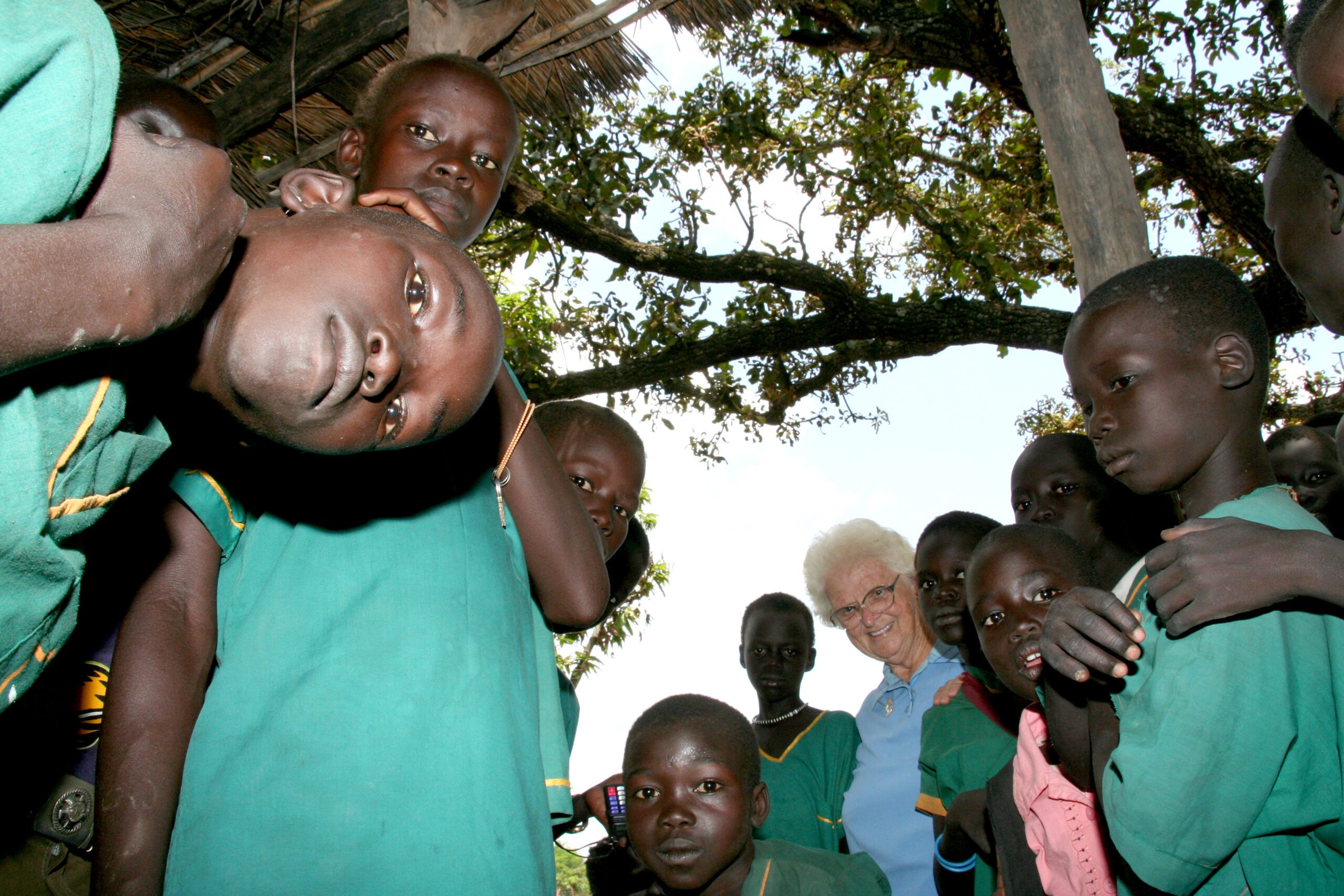

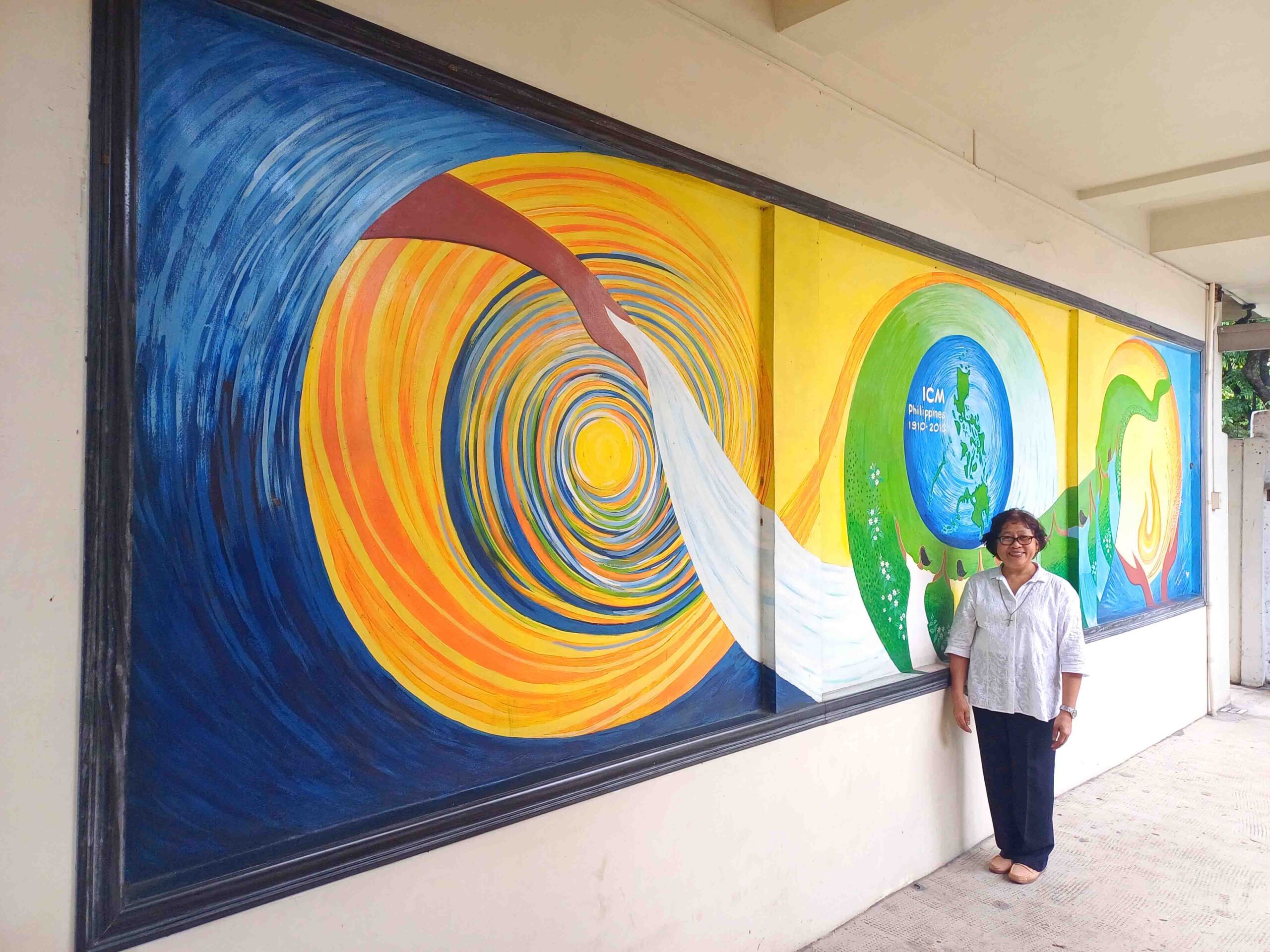
Earlier in Brazil, her first ministry focused on children–accompanying mothers and working in parishes where she also guided youth. This was her life’s work for 24 years, from 1991 to 2015.
An artist as well, she paints and draws; her art–mostly sacred–flourished during her years in Brazil. After completing her mission years in Brazil, she returned to the Philippines. Back home, she now dedicates herself to nurturing the identity, spirituality, and mission of the schools her congregation administers, while also lovingly caring for her mother.
Do you still notice people whose views are being shaped by disinformation speaking out on social media now?
Yes, I still notice it. Disinformation remains widespread on social media, particularly in the realm of politics. Many people don’t take the time to look deeper or verify what they read; they simply accept and repeat misleading claims. Much of this disinformation comes not only from politicians themselves but also from their supporters, who amplify and defend these falsehoods.
What’s more alarming is that political fanatics often reverse the narrative–branding others as “fanatics,” while spreading propaganda themselves. This phenomenon isn’t unique to the Philippines; it is also evident in the United States, in Brazil, and in many other parts of the world. It has become a global trend in today’s geopolitical landscape.
The effect on people is troubling. Many no longer analyze or question what they hear; they absorb it. What they hear first becomes “the truth,” while anything that challenges it is dismissed as false.
Many Filipinos have demonized Church leaders and members who speak out against politicians–and yet, continue to go to church. How do you view this paradox?
I am grateful that our Church leaders are unafraid to denounce the falsehoods that spread around us. I deeply admire leaders like Cardinal Pablo Virgilio David, as well as the priests who courageously spoke out against the killings during the war on drugs.
Powerful politicians may try to twist the truth, but they cannot sustain it. Take the case of Leila de Lima: after nearly seven years in detention, the truth has finally unfolded. She was unjustly imprisoned because of lies–and throughout it all, the Church stood by her.
Many people believed the lies against her. Yet we cannot stop them from going to church. We cannot descend to the level of those who spread falsehoods, nor can we exclude them. The Church is a space for all–both the good and the sinful. For God, it’s not a God of exclusion, but of mercy and truth.
Despite former President Rodrigo Duterte’s deadly war on drugs– why do you think many people of faith continue to support him?
When it comes to the country’s debt, many people don’t see it. They cannot even make the connection between rising prices, inflation, and the policies of the previous administration. What stand out to them instead are the stories of drug addicts who raped, robbed, or killed.
Of course, it is painful to be robbed, to be raped, or to lose a loved one to violence. I still remember taxi drivers telling me that under Duterte, there were no crimes, but now that he’s gone, crime has returned. To them, Duterte was a savior, a hero.
But the sacredness of life cannot be diminished–not even for someone who has committed a crime. Every person deserves due process. Yet some believe that criminals have no chance for redemption, that they should simply be erased.
This mindset reflects a failure to internalize the depth of baptism and Christian faith. Many Filipinos believed drug addicts had no chance to change, no possibility for a second life. But the Christian churches, especially the Catholic Church, have consistently taught otherwise: killing is not the way to address drug addiction.
I have seen people transformed–not by bullets, but by rehabilitation, by being given the right environment to heal. Drug addiction is, at its core, a health issue. These people may have fallen into depression, trauma, or despair. Killing them cannot end addiction.
This is not the value proclaimed by the Church, the community of Jesus’ followers. What did Jesus say? “I came that they may have life, and have it abundantly.” Life in its fullness–not life denied, not life destroyed.
Do you think Filipinos whose political views were shaped by false news and disinformation have developed an emotional attachment to the politicians who benefited from it?
The impact is enormous. Disinformation has created large groups of followers who form emotional attachments to certain politicians. During recent elections, these followers discredited good candidates, and as a result, many were not elected. In the last senatorial election, several worthy candidates lost due to disinformation.
Thank God, at least two good candidates won–thanks in large part to the youth who supported them. Still, two are not enough. What we truly need are leaders of wisdom, leaders who care for the common good and for the environment, leaders who are genuinely committed to community-building and nation-building. We must continue to pray and work for such leaders.
Do you think it will take years–or even decades–before people realize they have been misled?
Some people remain blind, and dealing with them can drain our energy. That is why we need hope. I find that hope in the youth. They are a sector that thinks critically. In the last elections, they refused to be swayed by surveys; instead, they followed their convictions and held on to their idealism.
It may take decades, and the task before us is not easy. Yet I believe in this new energy rising from our young people. At graduations, when I listen to students speak, I hear not only their personal dreams but also a genuine concern for the nation. That gives me hope.
Of course, there were painful surprises in the recent elections–but there were also moments of beauty and light. We are grateful to have good models to look up to. It fills me with energy and optimism to see leaders like Mayor Vico Sotto, a young public servant who shows Filipinos that good governance is possible. He once said it is not enough to be competent; one must also be a good person.
For me, this is a sign that God does not stop sending prophets to our chaotic world, to our troubled nation. And as members of the Church, we must stand with this new energy that our youth embody. They need our support. They need our encouragement. And they need to know that we believe in them.
Do you think some people realize, deep down, that their views have been influenced by disinformation but won’t admit it for the sake of their pride?
There are those who can clearly see what is wrong, and yet they continue to defend it. Perhaps it is a matter of ego. It reminds me of how some people idolize celebrities–clinging to them no matter what. In politics, too, there are those who remain loyal to leaders even when corruption is evident, standing by them to the very end. This is part of the culture we still need to confront.
But let us not dwell too much on them; let us give them more power. Let us focus on proclaiming the marvelous works of God and raising our voices against anything that destroys His creation–like the abuse of our environment. Their voices are rising, and they will be heard. As members of the Church, we must stand with them. They need our support, our encouragement, and our affirmation.
What do you think the Church should do on its part?
The Church must never cease sowing the seeds of truth. We are called to strengthen our Christian communities, to deepen our catechism, and to live out the values of the Gospel–the goodness, compassion, and integrity we see in Jesus Christ Himself. Our mission is not only to nurture faith within the walls of the Church but also to help our people live that faith in the midst of an ever-changing world, attentive to the signs of the times.
Yet I sometimes ask myself: where does the energy of the Church go? Too often, it seems to be absorbed only by devotions. While these are important, I believe we are challenged to balance our energies–nurturing both our interior faith and our active participation in the life of society. As Pope Francis reminds us, politics, at its best, is an expression of care for the common good.
Our people must come to a deeper understanding of what politics truly is. To care for life, to safeguard creation, and to ensure justice, we cannot remain on the sidelines. We must engage, we must raise our voices, and we must elect leaders who are not only competent but also genuinely good. Unfortunately, what we often see today is that leadership is granted not on integrity, but on wealth and power. This is why I insist: the Church must not be silent. God continues to send prophets into our troubled world and our wounded nation.