
As I was writing this text about the Asian Saints, I remembered my excitement fifty years ago, when Pope Paul VI canonized the Ugandan Martyrs (1964). It was during Vatican II and Christian Africa had made its first official appearance in the scene of the Catholic world with the presence of more than 250 African bishops in the hall of the Council, St. Peter Basilica. Paul VI would also be the first pope to visit Africa five years later, and to pray at Namugongo in Uganda, in the place where the Ugandan Martyrs accomplished their supreme sacrifice. That was a prophetic gesture which pointed out the role of the African Church in the future of Catholicism.
Now I experience the same excitement in recognizing the fact that martyrdom is the overwhelming feature of the Asian Saints of the modern and contemporary eras. Out of more than 600 individuals officially proclaimed Saints or Blesseds by the Catholic Church, almost 95% are martyrs. They are a confirmation of what appears to be a general law: that in every new place, the faith in Jesus has to start with the shedding of blood by His first followers. It was true of the apostolic era, when all the apostles, but one, paid the tribute of their blood.
It was true of the ancient era, in a very special way, during the time of the Roman Empire in Europe and North Africa when Christianity was persecuted for almost three hundred years before acquiring the right to exist and be free at the cost of tens of thousands of martyrs. The mind cannot fail to embrace the tragic reality of the masses of victims in Japan in the 16th and 17th centuries, in Korea and Vietnam in the 19th century, and in China in the 20th century.
THE MARTYRS OF JAPAN
Christianity was brought to Japan by St. Francis Xavier who stepped ashore at Kagoshima in the year 1549 with two Jesuit companions and a Japanese interpreter. Within a few months of his arrival, he had fallen in love with the Japanese whom he called “the joy of his heart.” The real architect of the Japanese mission was Fr. Alessandro Valignano. When he arrived for the first time in Japan, there were already 150,000 Christians (1579) and Valignano, anxious to entrust the infant Church to a local clergy, set about founding seminaries, colleges and a novitiate.
In the meantime, Japan, which had been always divided into different fiefdoms, was brought together by the Shogun Hideyoshi who started becoming suspicious about the links of the missionaries with their European countries. In February 1597, the first martyrs, Paul Miki and Companions (26 Japanese and European) were crucified on a cold winter morning.
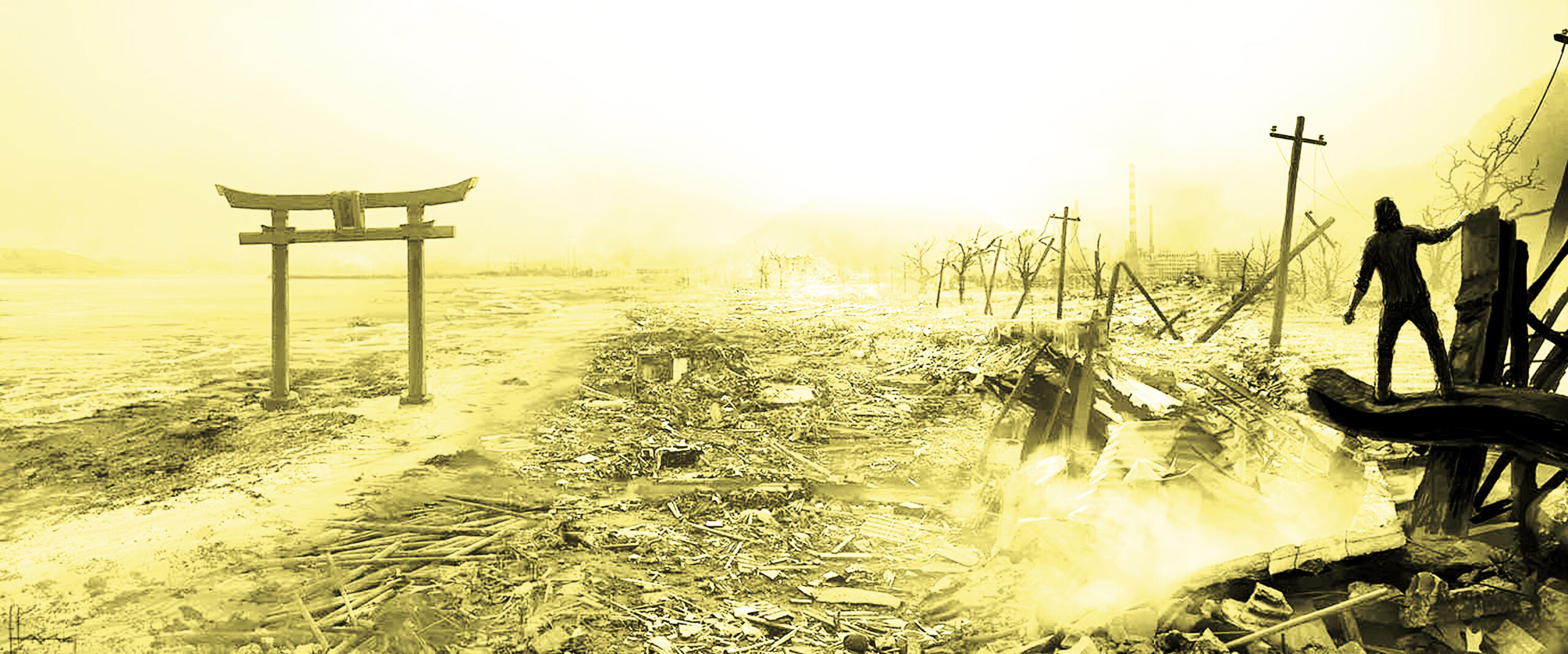
Today, not far from Nagasaki station, there stands a monument to commemorate the spot where they died. The persecution became systematic from 1614 onwards, with the appearance of the English and Dutch Protestants who became influential councilors at the court of the Shogun Ieyasu, Hideyoshi’s successor. From then on, the martyrs increased to the thousands. The most striking episode is the rebellion of the Christian peasants at the Shimabara Castle (Nagasaki) in 1637 that was suppressed at the cost of an estimated 35,000 lives.
The most noble reason for the rebellion, according to a documented statement from the rebels, was that the new Christian faith had awaken in the peasantry the courage to fight for their dignity, crushed by the rigid feudal system. Also in the letter was the decision to die and not to deny the faith: “For the love of our people, we have resorted to this castle… Now, we consider the hope of life eternal the most important thing. There will be no escape. Since we will not deny our religion, we will face death.”
Many were the forms of torment, but the most famous was the “hanging in the pit” by which the victim was hanged head downwards from the gallows into a pit which contained excreta and other filth. But not all Christians became martyrs; many renounced their faith to save their lives. The most common form of apostasy consisted of trampling on the image of Christ. Today, at Ueno Museum in Tokyo, we can still see those fumie (images), rubbed flat and shining by the hundreds of feet that ached with pain while they trampled on someone whom their hearts loved.
Yet, Christianity’s root had gone too deep for the faith to be completely eradicated. Besides the martyrs (estimated at some five or six thousand for the period 1614-40 alone), thousands of Christians kept their faith and they expected the return of the missionaries. In 1865, when the first European missionaries entered Japan, they found the descendants of the first Christians who had kept their faith. But the mass conversion never happened … Like a sudden frost, burning the buds on the trees, the long persecution congealed the expansion of Christianity which, therefore, remained, up to the present time, the faith of a very small minority of the Japanese.
THE MARTYRS OF KOREA
During the early 17th century, Christian literature obtained from the Jesuits in China was imported to Korea and had the educated class interested about and attracted by Christianity. A home Church began. When a Chinese priest managed to secretly enter, a dozen years later, he found 4,000 Catholics, none of whom had ever seen a priest. The dynamic Catholic communities were led almost entirely by educated lay people of the aristocratic classes. The Christian community sent a delegation on foot to Beijing, 750 miles away, to ask the Bishop of Beijing to send them bishops and priests.
Bishop Laurent Imbert and ten other French missionaries were the first Paris Foreign Mission Society priests to enter Korea. During the daytime, they kept in hiding, but at night they travelled about on foot attending to the spiritual needs of the faithful and administering the sacraments. The first Korean priest, Andrew Kim Taegon, succeeded in entering Korea as a missionary. However, thirteen months after his ordination, he was put to death by the sword in 1846 at the age of 26.
Even though the scholars were the first to introduce the Gospel to Korea, it was the ordinary people who flocked to the new religion. The new believers called themselves “Friends of the Teaching of God of Heaven.” The term “friends” was the only term in the Confucian understanding of relationships which implied equality.
The Catholics gathering in one place with no distinction on the basis of class, were perceived to undermine ‘hierarchical Confucianism,’ the ideology which held the State together. The new learning was seen to be subversive of the establishment and this gave rise to systematic suppression and persecution. There were four major persecutions – the last one in 1866, at which time there were only 20,000 Catholics in Korea; 10,000 had died. Those figures give a sense of the enormous sacrifice of the early Korean Catholics. We can say that the history of the martyrs of Vietnam and China have similar features.
MARTYRDOM:
A PRESENT-DAY CHALLENGE
The 20th century is already accepted, without argument, as a century of martyrs, from the intuition of Saint John Paul II on the occasion of the Great Jubilee of the Year 2000. Christians have born the impact of the violence that has touched the masses of humanity involved in the changes of the time.
The Boxer Rebellion in China, at the beginning of the century, made thirty thousand victims among the followers of Christ. In the same country, the Cultural Revolution has cancelled the patrimony of generations – with countless victims in all spheres of society. The same happened at different times and in different proportions in other Asian countries like the Pol Pot genocide attempt in Cambodia between 1973 and1979, which reduced the presence of Catholics in that country to almost zero. The same happened to the small Catholic community of North Korea, when the Communists took hold of power.
The last years have brought to the fore the present-day reality of persecution and martyrdom for Christians in an unexpected and even shocking way: it is the new fulfillment of the sentence of Scripture, “Because of you, Christ, we are massacred daily and considered as sheep for slaughter” (Rom 8:36). Only in the peak of the most rabid persecutions Christians have been set apart and killed – as it is happening in Iraq or Kenya because of the ISIS fundamentalism.
THEOLOGICAL DEPTH
The teaching of a great theologian of the 20th century, Hans Urs Von Balthasar, helps us to penetrate a bit deeper into the theological depth of the idea of martyrdom and its connection with our condition as followers of Jesus.
A Christian is one who commits his life for the brethren since he himself owes his life to the Crucified Lord. The disposition to martyrdom, as radical witness of a love which goes beyond death, is proper of the Christian as a new creature, full of the fruits of the Spirit. “Try, then, to imitate God, as children of His that He loves, and follow Christ by loving as He loved you, giving Himself up in our place as a fragrant offering and a sacrifice to God” (Eph 5:2).
The mandate of the Christian is to testify, even with death, if necessary, that love is superior to death, and life is eternal. The faithful live always according to death and resurrection because the whole Christian existence is the attempt, the effort to answer in faith and thanksgiving to Jesus who loved us and offered Himself for us. We have the example of Saint Paul who writes: “I have been crucified with Christ, and I live now not with my own life but with the life of Christ who lives in me. The life I now live in this body I live in faith: faith in the Son of God who loved me and who sacrificed Himself for my sake” (Gal 2:19-20).
“TAKE, LORD, AND RECEIVE”
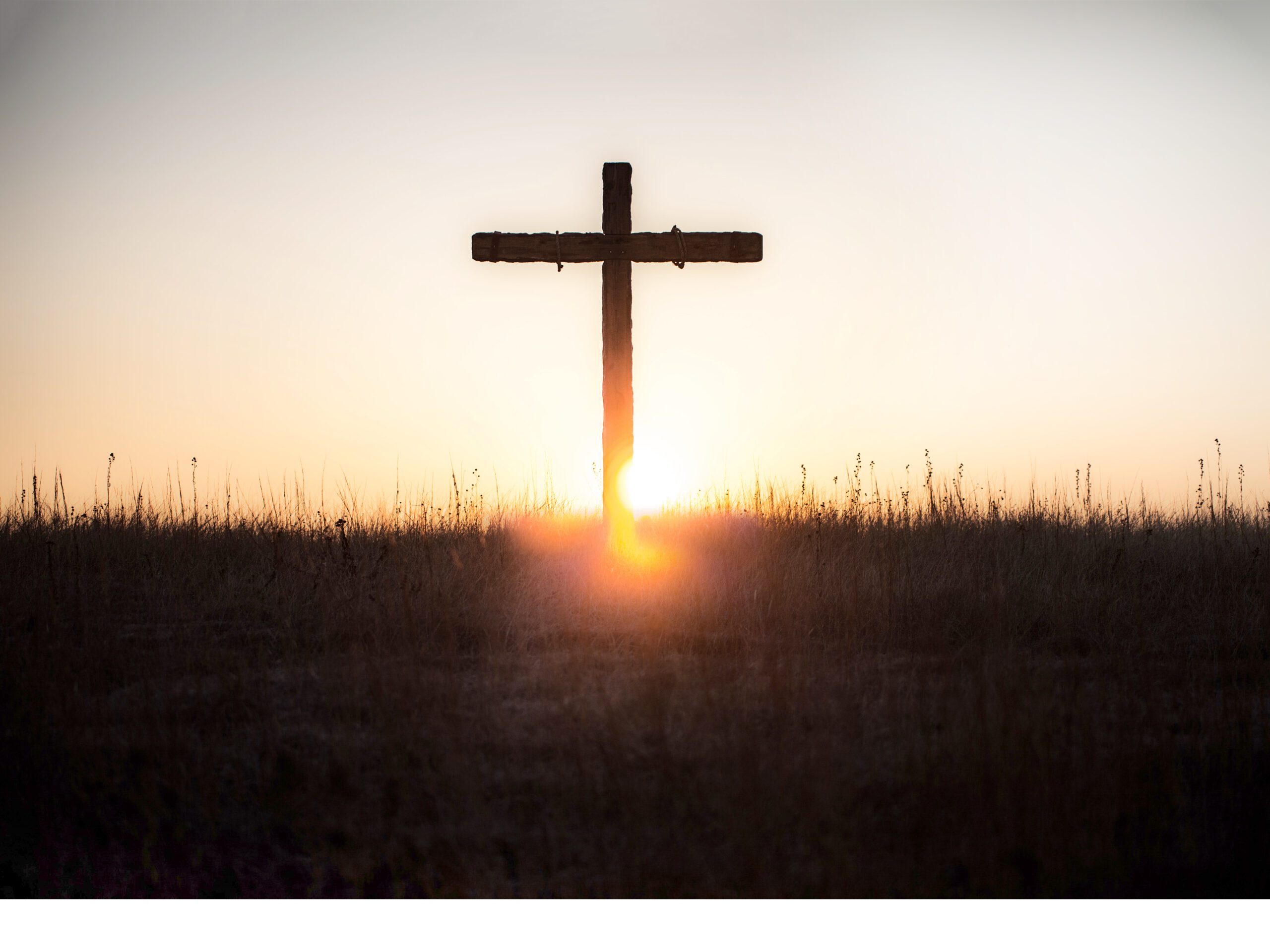
St. Ignatius of Loyola, at the end of his Spiritual Exercises, teaches us to offer our life to God and the brethren daily in answer to Jesus, the Crucified Love: “Take, Lord, and receive…” This is the permanent LIFE-FORM for all those who want to follow Jesus. The one who likes Jesus, chooses the Cross as the “place” where dying is not a possibility but an absolute certainty. This is what we must conclude from the biblical data: martyrdom is the natural horizon of Christian life.
We can reflect on the difference between the martyrdom of the Maccabees brothers and their mother in the Old Testament and that of Christ’s followers in the New Testament. For the Maccabees, their death is the last human possibility of manifesting their faith in Yahweh. For the Christian, instead, it is the condition of the new life that flows from Christ, not a point of arrival, but a point of departure.
“The love of Christ overwhelms us when we reflect that if One Man has died for all, then all men should be dead (are dead); and the reason He died for all was so that living men should live no longer for themselves, but for Him who died and was raised to life for them” (1 Cor 5:14-15). Christ’s death for us is shown as a priori of Christian behavior; this is completely shaped by it.
“HIDE ME IN YOUR WOUNDS”
Faith (and life of faith), therefore, means to thank, with our whole life, Jesus who gave His whole existence for our sake. This thanksgiving cannot be expressed but with the whole of our existence. This is the logic of Christianity: we cannot say thanks to God in an adequate way but with our own complete existence.
The truth which constitutes the measure of faith is the death of God for the love of the world, for humankind and for each member of it, in the night of Jesus’ cross. All the fountains of grace spring from this night: faith, hope and charity. All that I am, if I am more than a perishable and hopeless being whose illusions are destroyed by death, I am, because of that death which opens to me the access to God.
I blossom on the tomb of the God who died for me, put down my roots in the soil which is His flesh and blood. Life of faith, therefore, means existence in death out of love: an anticipation of the offering of my life in every single situation of my Christian existence. Christian faith is an anticipation of the offering of my life to Christ, an anticipation of one’s death as an answer to Christ’s death. It is the way of making sure, in a serious way, of our faith.
“Hide me in your wounds,” we used to pray in an ancient formula. But in which place would we be more exposed? In which other place would we be sure of receiving more blows? And, yet, that is the safest place; there, we would be totally safe because it is the final place: the complete openness to death out of love. For the world, there is no other symbol or prototype than this and it was set by God.