
Most of the devotees attest to the miracles they have received through the Black Nazarene. And out of thanksgiving, they make a promise (panata) to continue their devotion. An old man standing by the Quiapo bridge during the procession was asked about his devotion to Hesus Nazareno. He told about his only daughter who had breast cancer. He said that the Black Nazarene appeared to him in a dream, accompanied him into his daughter’s bedroom and spent some moments with her. He kept some portion of the rope, used for the procession, in the previous year. He claimed that the rope he kept aided his prayer for his daughter. His daughter’s cancer was cured after some weeks. These experiences changed his life and helped him to stay away from gambling.
BLACKENED BY FIRE
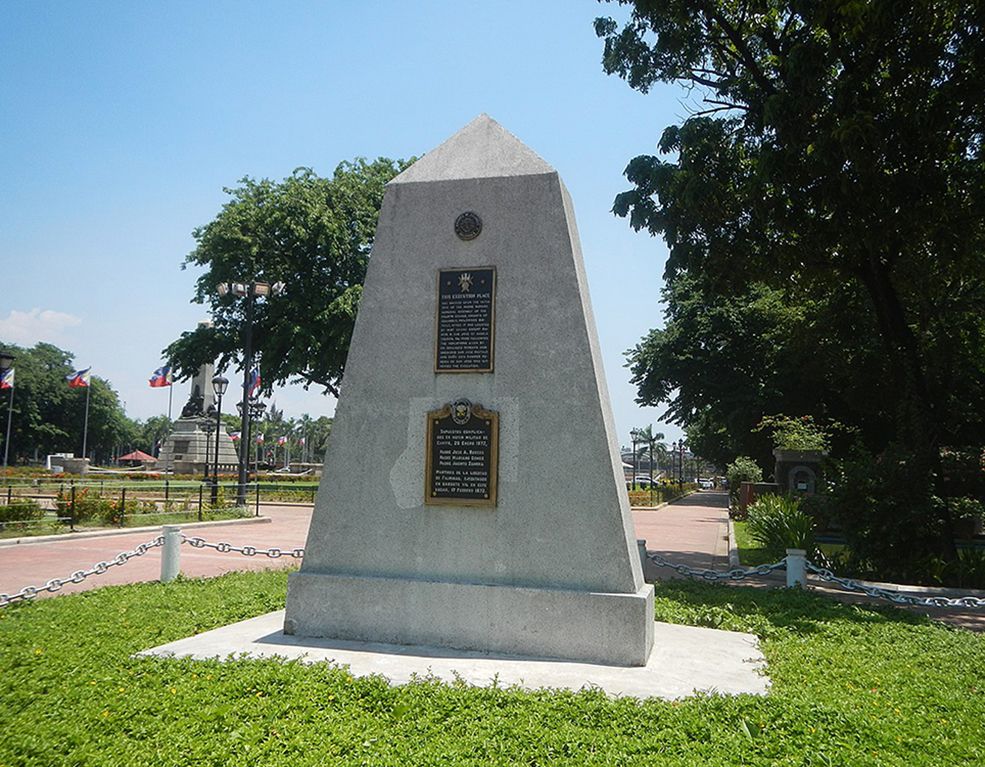
In 1606, in a galleon, the Spanish Augustinian Recollect friars brought the statue to Manila from Mexico, then also a Spanish colony. That the ship caught fire explains why the image is black. It was put in the Recollect’s church in Bagumbayan, which is now a part of Rizal Park. In 1787, the archbishop of Manila ordered the image to be transferred to the church in Quiapo. This happened more than a century after Pope Innocent X canonically established the Cofradia de Jesus Nazareno. In the nineteenth century, Pope Pius VII granted indulgence to those who piously pray before the image.
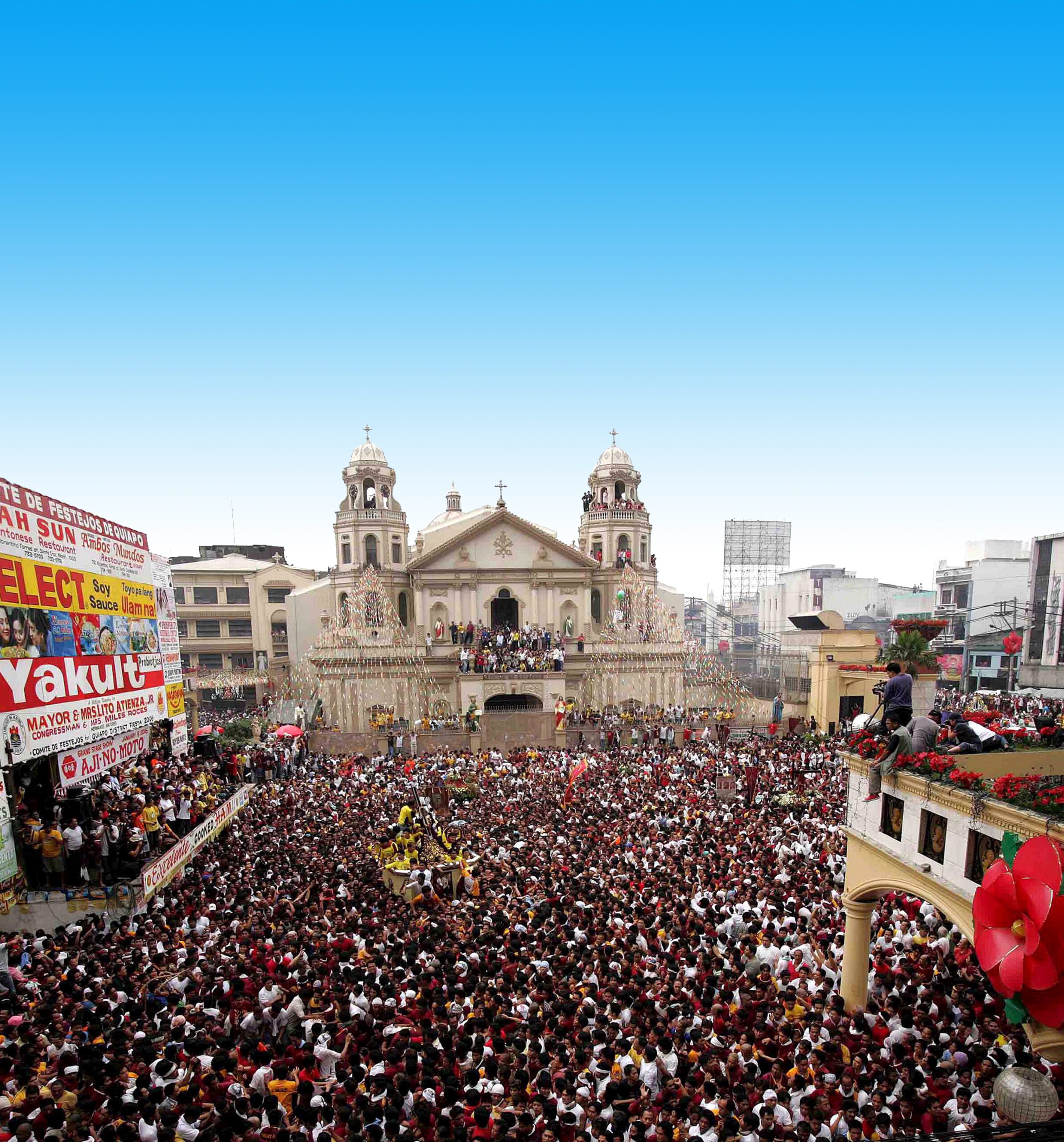
Plaza Miranda, a place often dedicated to political rallies, is in front of the church: Quiapo is the heart of Manila. But during the 400th anniversary of the arrival of the Nazarene, the statue stayed overnight at the Quirino Grandstand at Rizal Park where the people held an overnight vigil. The following day, January 9, 2007, the procession started from Rizal Park to Quiapo. In the procession, Pinky Webb, TV anchor woman, braved the crowd and managed − with the help of some men − to touch the Nazarene. One seminarian, who came as an observer, had to remove his shoes and joined the men in pulling the rope used in the procession.
A “MACHO” DEVOTION
The devotees can identify with the statue in its half-kneeling position − carrying the cross with one hand free − on the road to His crucifixion. Men find it “macho” and the devotion has a huge male following. The devotees wear maroon T-shirts, which is also the color of the Nazarene’s robe.
Every Friday is dedicated to the Nazarene where the devotees flock for the Holy Mass and novena. But the greatest events are when the statue is brought out of the church for a procession: on January 9, which is the feast of the parish, and every Good Friday. In the procession, devotees also carry their own statues of the Nazarene. Various chapters display their standards.
AN ORGANIZED CHAOS
To outsiders the procession looks like an organized chaos where men shout and vie for the privilege of holding the two long ropes that pull the carroza that carries the statue and of having their towels wiped on the statue. Because hands or necks can get entangled in the rope, somebody riding on the carriage tries to foresee possible dangers. When he sees one, he shouts, “Eight!” That means the procession has to stop to check the rope that is getting looped and needing to be pulled taut before anybody gets hurt. During such stops, some women in pants and T-shirts do manage to worm into the crowd and are able to touch the statue.
Devotees go barefoot as a sign of humility, love and respect for the Lord. But there is another reason; besides removing their shoes, participants remove watches, rings and other sharp objects that may hurt the next devotee in this body-to-body procession.
THE EXAMPLE OF ST. PAUL
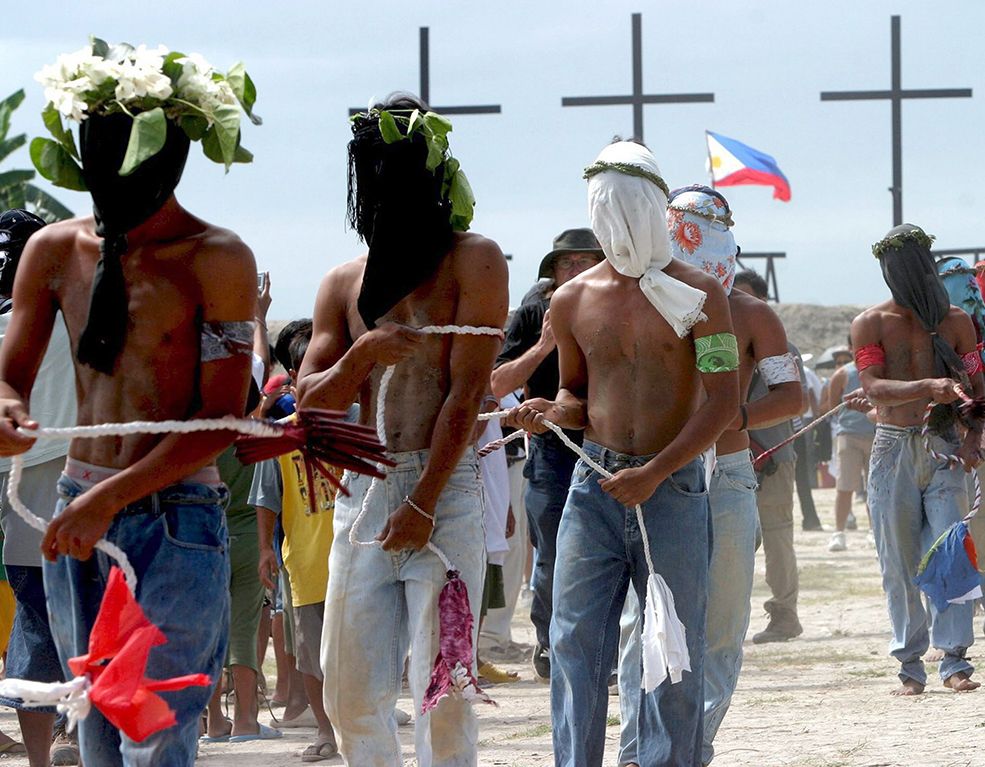
While Church authorities have not been able to stem practices of the procession, the people have been able to impose their practices and beliefs − this is analogous to the Church authorities’ negative stand against the live crucifixions in Pampanga, a practice that continues. After every Black Nazarene procession, devotees mention their sense of release, that having passed the “struggle” gives them a sense of pleasure.
One aspect of the devotion is to have their towels touch the statue. This is based on the belief that divine power lies immanent in the statue. Like the woman who was cured of hemorrhage in the Gospel (Lk. 8:43-48) by touching the hem of Christ’s robe, devotees attribute cures to touching the icon with bare hands or with a towel. The same can be said of St. Paul: “God was performing unusual miracles through Paul. Even handkerchiefs and aprons he had used were taken to the sick and their diseases were driven away, and evil spirits would go out of them” (Acts 19:11-12).
A SOURCE OF FAITH
If Christ is the truth (Jn. 14:6), He did not primarily mean truth as propositions. He embodies the truth. For many saints like St. Thomas Aquinas, the best textbook is the crucifix. Likewise for the Filipino, meditating on the icon, feeling the Nazarene speaking to the devotees, arouse their faith and commitment.
As the procession winds through the narrow streets, thousands of devotees wait eagerly for its arrival. When the statue appears, the crowd roars and wave their handkerchiefs and towels in greeting. They speak of the Nazarene as alive; they say “dumating na ba Siya?” (meaning, “has He arrived?”). If there is transubstantiation in the Eucharist, perhaps this is the counterpart: the wooden image “becomes” a live person through the eyes of faith.
WITHOUT DISTINCTIONS
The followers come from all walks of life. Philippine Vice-President Noli de Castro, also a devotee, never misses to attend the yearly procession. The devotees come from a wide range of occupations, ages, educational backgrounds. They are street-sweepers or highly paid surgeons, school teachers or office workers, city people or people from the barrios. The devotion erases all social distinctions.
While devotees may have temporary commitments, there are more permanent communities in the circle of the confraternity (cofradia) members. Among them are the Hijos del Nazareno and Mga Devoto ng Nazareno. The members are presumed to have made their individual panata (vows) of serving the Nazareno. Applicants fill out a form and pay a small registration fee and monthly fee which guarantees them a health and death insurance. After giving sixty hours of service, which include running church-related activities, they become full-fledged members.
THE PEACEMAKER
In addition to observing the Ten Commandments and what the Church requires of them, members of confraternities pledge to wear their uniforms. They must not quarrel with each other. Differences between them are settled before their meetings end.
Drinking alcohol is also forbidden. But should they be constrained to drink with a group, they must first remove their uniform in order not to sully its reputation. Their duties include establishing order during masses inside the church, and more specially during the two annual processions. They attend their regular monthly meetings. They also have their regular formation, handled by the parish priest or his assistants.
When a seven-year-old boy was asked why he wore the maroon-colored T-shirt of the Black Nazarene, he said that when his mother got sick, he prayed to the Nazarene. His prayers were answered. Out of thanksgiving, he promised that he will always visit the Quiapo Church and continue his devotion to the Black Nazarene. And such popular piety will continue among Filipinos.