Most people, on February 14, hope to receive a little sign of affection, love, appreciation, empathy or even… a ring. Valentine’s Day, February 14, is a day all of us are looking forward to – coming so near after the Christmas season when God manifested His great love for us in coming down to earth and becoming human like us. We, in turn, show our love for our fellow humans on Valentine’s Day by showering them with flowers, candy, cards, and red hearts.
February is also believed to be the time when birds begin to mate. Given the importance this date and the figure of St. Valentine have acquired, let us try to understand who he was and why the task of protecting those who are in love has been entrusted to him.
KNOWN ONLY TO GOD
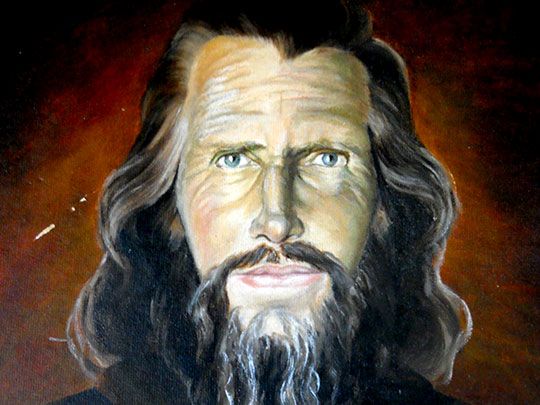
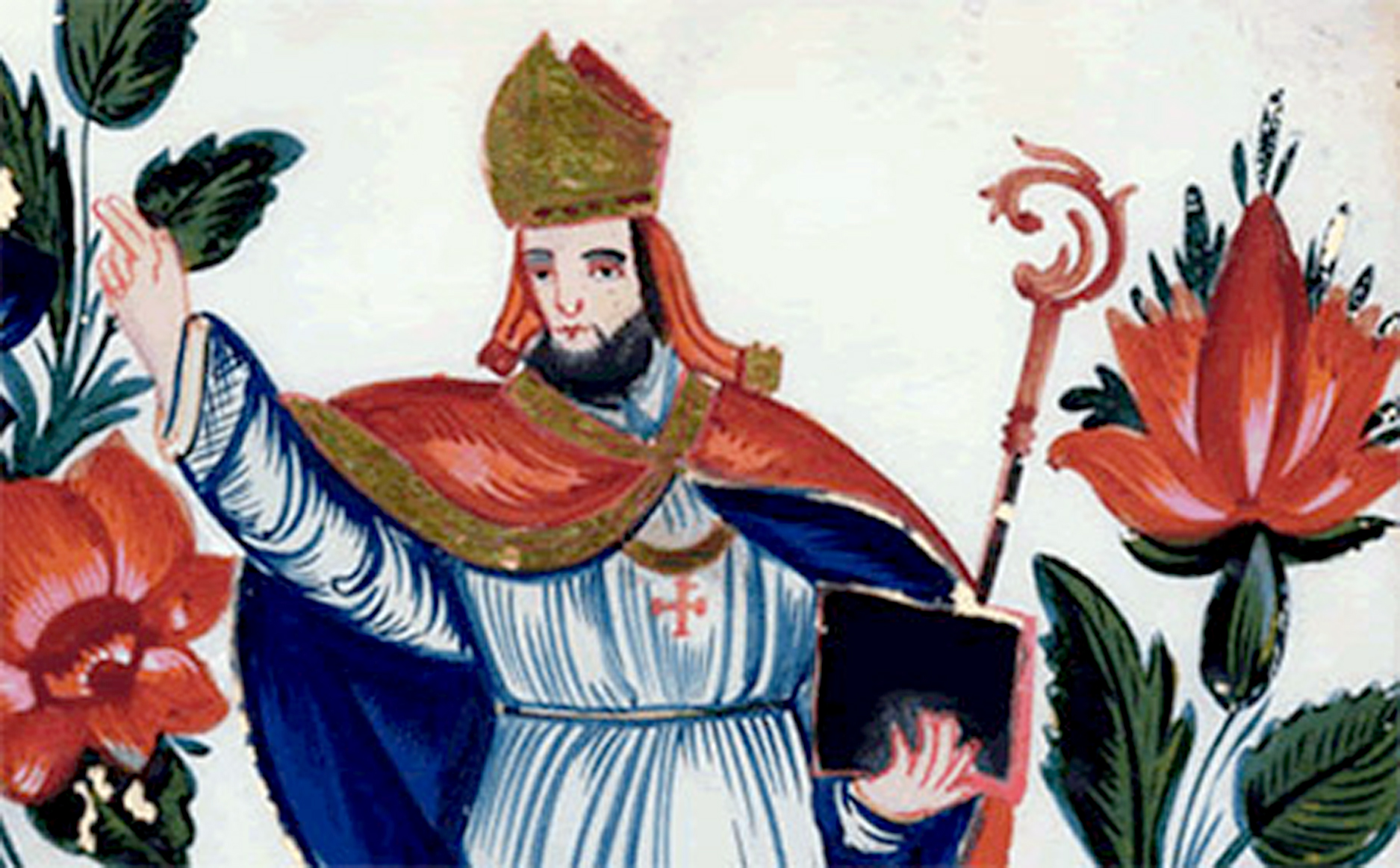
We know very little about Saint Valentine: he was ordained a priest the year 197 and, eventually, he became a bishop. He dedicated his life to the preaching of the Christian message. We must not forget that his time was a trying one, even dangerous: Christianity had many enemies and persecution was almost the order of the day.
Bishop Valentine was soon noticed in Rome especially because he was dedicated to the celebration of mixed marriages between pagans and Christians. The outcome usually was that the pagan party would eventually ask for baptism.
Emperor Claudius, nicknamed the Gothic, forbade Bishop Valentine that activity, but Valentine refused to obey the Emperor and even made efforts to convert him to Christianity. Since he had become a threat to the empire because of his popularity, Emperor Aurelianus, who had succeeded Claudius the Gothic, sent soldiers to capture Bishop Valentine. They caught up with him and dragged him outside the walls of Rome, along the Via Flaminia and beheaded him.
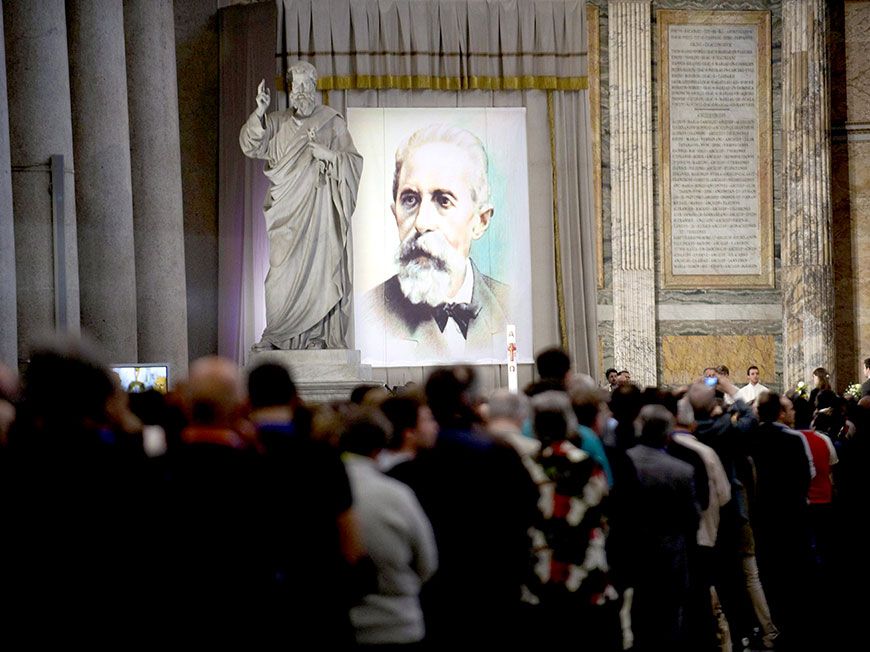
His remains were taken to his birthplace, Terni, in the middle of Italy. There, in the 4th century, a basilica was built over his relics which are venerated in that place to the present time. Bishop Valentine is commemorated in the Roman Book of Martyrs. The feast of St. Valentine on February 14 was first established in 496 by Pope Gelasius I, who included Valentine among all those “… whose names are justly reverenced among men, but whose acts are known only to God.”
A WEALTH OF STORIES
As Gelasius implies, very little was then known about Valentine’s life. What we remember of him is a mosaic of legendary details. Very many are the stories about him that are legends and also legendary are the miracles attributed to St. Valentine. The most famous of which is that he cured the blindness of the daughter of his jailer, Asterius. Bishop Valentine remained linked by affection to this young woman he likened to a daughter and before being decapitated, he wrote to her a farewell note which ended with these words: “… your Valentine.”
Another legend has it that, one day, Bishop Valentine saw two young people, a boy and a girl, quarrel. To make them stop, Valentine came to meet them holding a red rose and invited them both to hold the rose. As they did so, their animosity disappeared, only love remained. Another legend says that he called couples of pigeons to fly around them so that seeing the love of the kind birds, they cooled down and reconciled.
As stated above, Valentine was a Roman priest at the time when Emperor Claudius II the Gothic was persecuting the Church. The Emperor published an edict that prohibited the marriage of young people. This was based on the assumption that unmarried soldiers fought better than married ones because married soldiers were afraid of what might happen to their wives and children if they died.
During that time, the custom of having several partners prevailed, but the converts of Christianity seemed to like the idea of monogamous marriage better, and so the Catholic Church had a problem because of the edict. Bishop Valentine solved it by secretly blessing the marriage of the new converts. After a while, he was caught violating the Emperor’s law and that was his end.
THE COURTLY AND VICTORIAN TWIST
St. Valentine’s becoming the patron of people in love originated in the 14th century Anglo-Saxon world. The first literary attestation is in “The Canterbury Tales” by Geoffrey Chaucer and in his poem, “The Parliament of the Birds.” In it, February 14, the liturgical feast of St. Valentine, is remembered as the day in which every bird of whatsoever species comes to choose a partner.
The reference to the birds becomes the clue that explains how humans in love eventually put themselves under the protection of St. Valentine. St. Valentine’s Day then became the Lovers’ Day and, in the English world, the love messages came to be called “valentines;” they were usually expressed in poetry.
Their golden age was the Victorian Age. During this time, between the end of the 19th and the beginning of the 20th centuries, the “valentines” assumed the form of love cards, usually decorated by hand, where the reference to the birds, the couple of doves, the nest, etc. is linked to the love among humans, with nuances that go from affection and friendship to marriage proposal and passion. The fashion from the English world has now spread everywhere because of the globalizing influence of the mass media.
THE CONTEMPORARY SCENARIO
How has Valentine become the patron of lovers? Valentine was one of the Catholic Church’s propagators of the sanctity of the Sacrament of Marriage, especially during those times when the union of one man with more than one woman was generally accepted or a woman with several husbands was not frowned upon. But if you are entering a Christian marriage, your union with your spouse is for life, especially in this modern world where sexual rules are very lax and not taken seriously and sex is thought to be primarily for personal pleasure.
Sir Jonathan Sacks, biblical scholar and England’s chief rabbi wrote recently: “Marriage and the family are where faith finds its home and where the Divine Presence lives in the love between husband and wife, parent and child. What then has changed? Here’s one way of putting it. I wrote a book a few years ago about religion and science and I summarized the difference between them in two sentences. “Science takes things apart to see how they work. Religion puts things together to see what they mean.”
“And that’s a way of thinking about culture also. Does it put things together or does it take things apart? What made the traditional family remarkable, a work of high religious art, is what it brought together: sexual drive, physical desire, friendship, companionship, emotional kinship and love, the begetting of children and their protection and care, their early education and induction into an identity and a history. Seldom has any institution woven together so many different drives and desires, roles and responsibilities. It made sense of the world and gave it a human face, the face of love.”
“For a whole variety of reasons, some to do with medical developments like birth control, in vitro fertilization and other genetic interventions, some to do with moral change like the idea that we are free to do whatever we like so long as it does not harm others, some to do with a transfer of responsibilities from the individual to the state, and other more profound changes in the culture of the West, almost everything that marriage once brought together has now been split apart. Sex has been divorced from love, love from commitment, marriage from having children, and having children from responsibility for their care.”
DISASTROUS RESULTS
Sir Jonathan Sacks continues: “The result is that, in Britain in 2012, 47.5 percent of children were born outside of marriage. This is expected to become a majority in 2016. Fewer people are marrying, those who are, are marrying later, and 42 percent of marriages end in divorce. Nor is cohabitation a substitute for marriage. The average length of cohabitation in Britain and the United States is less than two years. The result is a sharp increase, among young people, of eating disorders, drug and alcohol abuse, stress related syndromes, depression and actual and attempted suicides.”
“The collapse of marriage has created a new form of poverty concentrated among single parent families and, of these, the main burden is borne by women who, in 2011, headed 92 percent of single parent households. In Britain today, more than a million children will grow up with no contact whatsoever with their fathers.”
If Valentine were alive today, he would be the first to say to married couples that love is not all fun; that there is also a great deal of suffering. The original outbursts of emotions and romance you have for your partner mature into a less emotional but more responsible type of love. Are you ready for that type of development in your life? Love – human love and sexuality – is wonderful and blessed by God but it is also touched by the shadow of the cross.
THE STAGES OF LOVE
What is love? Any type of love: the love of young people who plan to marry, the love of parents for their children, the love of friends? A simple definition can be: the capacity to see the beauty and goodness of another person or an ideal. Sometimes people give importance to the saying that states that love is blind because it doesn’t make us see the defects of the person we love. In reality, it is love that opens our eyes to see the goodness and the beauty of the person we love.
But there is a deeper definition of love that says it is love that makes the beauty and goodness of the beloved. This is remarkably expressed by St. Augustine, speaking of the love of God: “Thinking of me, God creates me; loving me, He makes me lovable.” As in all things in this life of ours, love is a growing reality; it does not fall from the sky already perfect, but is the fruit of development and growth.
The following appear to be the most elementary stages of this development and, therefore, the stages of love. In the beginning, there is love as attraction. It is the sentimental, emotional, romantic stage that makes two people come together because of mutual liking. It is a very powerful feeling that makes our life beautiful and interesting. It is sung by all love songs and poems, depicted by novels and movies. It is providential and according to the will of the Creator.
It is, however, transient. The original infatuation will wear out or mature into something serious, and we are into the second phase: commitment. Both in the marriage vows or in religious profession, it is the turn of the free determination of the will which binds the person to another person or to God in an exclusive way. Thus, the third stage of love is the Cross of Jesus. Jesus is the model of mature love when He embraces His cross.
If we love sincerely and deeply, sooner or later, more or less, we will come up against suffering. Mother Teresa’s beautiful exhortation then becomes relevant: “Love until it hurts.” It will hurt, but we should not stop loving because of the suffering, but we should continue loving, embracing our cross as Jesus did. Eventually, when we are well acquainted with the need of bearing what hurts us, we will be ready for the statement: “Love until it hurts no more.” The last stage of love is time, faithfulness until the end, perseverance.
So, St. Valentine, bishop and martyr of the Early Church, may well be a model of heroic love and faithfulness. This is the feeling of the unknown young man who posted in the web the following prayer: “In my heart, O Lord, love has been enkindled for a person whom You know and love. Help me not to waste this richness You have put in my heart. Teach me that love is a gift and cannot be mixed up with any egoism. I pray to You, Lord, for the one who waits for me and thinks of me: make us worthy, one of the other, of mutual help and model. And by the intercession of St. Valentine, help us to prepare for our marriage, for its greatness and responsibility. Amen.”