Mama Muna Hassen Jalal is a 40-year-old widow raising seven children on her own in Juba, South Sudan. Although she is a Muslim, her radio is always tuned to Bakhita Radio 91FM, a Catholic station that started testing its signal on December 24, 2006 and went on regular emissions on February 8, 2007. “I like to listen to Bakhita Radio because, through it, you know what people think and what affects us,” Mama Muna explained.
She is an active listener and her voice is always over the air, as she calls in to add a note of wisdom to the topic of the day. “I like to give my views, to tell the truth,” she adds with a radiant face. “Bakhita is different from the other stations: it puts everything on the table and the listeners can express whatever they feel without fear.”
A FORUM FOR ALL
The Comboni Missionary Sisters and the Comboni Missionaries marked the canonization of their founder, with the establishment of a radio network of eight stations in Southern Sudan and Nuba Mountains. Bakhita Radio is the first station of the Sudan Catholic Radio Network.
Bishop Daniel Comboni (Italy, 1831-Sudan, 1881) was canonized on October 5, 2003. He lived and died for Sudan. The institutes he founded marked the event by setting up the radio network which they offered to the Sudan Catholic Bishops Conference.
Bakhita Radio called after Josephine Bakhita (1869-1947), the first Sudanese saint, canonized on October 1, 2000 − broadcasts in Juba and for Juba. Its mission statement expresses the slogan of the station: “It provides a forum for the citizens of Juba and the surrounding areas to express themselves as people and as Church.” Bakhita does it through a variety of programs geared to young people, women and children to bring about reconciliation and healing. Southern Sudan has been at war on and off since the 50’s, even before its independence.
Janet is a young shop assistant who welcomes clients at one of Juba’s petrol station. One day, while paying my account, I noticed she was tuned to Bakhita Radio. I asked why she did. “It is different!,” was her prompt reply. “It has nice music and very good presenters.”
VOICE OF THE VOICELESS
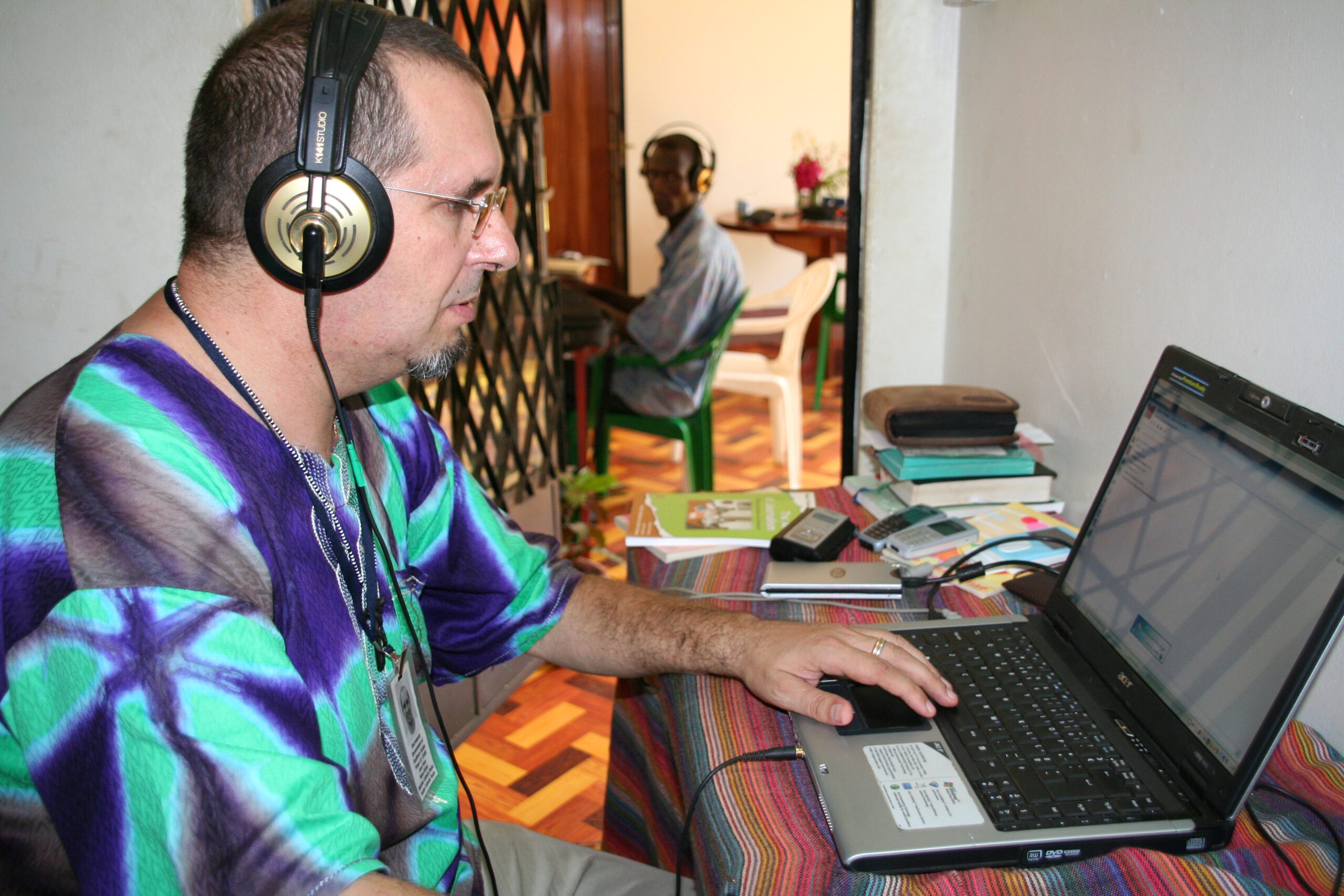
Bakhita’s presenters are young people who have been through in-training courses since May 2006. Most were computer illiterate. Now they are masters of the trade: they prepare their programs, then go live or record and edit them.
Milania Hito co-presents Juba Sunrise. The program goes on air live from seven to ten, Monday to Friday. Milania and Stephen usually choose a hot issue for every emission.
“We select topics concerning our community: development, reconciliation, implementation of the Comprehensive Peace Agreement,” Milania explains. “The topics we discuss are interesting because listeners phone to us giving different views. Some of them are people holding high positions in the society and government.”
The Comprehensive Peace Agreement was signed between the Government of Sudan and the Sudan People’s Liberation Army/Movement on January 9, 2005. It put an end to the second civil war that started in 1984 and left two million dead and four million displaced. “We say we are the voice of the Church. But through our radio, the listeners can voice their opinions and also express their views. Of course, this is not only the voice of the Church. It is also the voice for the voiceless,” Milania concludes.
MUSIC AND THOUGHT
Patrick O.C. is the main DJ of the station. He has two programs: “Music and Rhythms of Africa” and “Echoes of the Night – soft music with inspirational thoughts.” Patrick says he enjoys the interaction with the listeners and his guests. He is a musician and an actor, too. When he presents African musicians, he also profiles their own countries. In “Echoes of the Night” he plays especially Gospel music mingled with short reflections on a given topic. “The ideas and music I share with people remain part of me,” O.C. says.
DJ Julia, a tall and bright young woman, with a cracking voice, presents two programs on youth: “Youth and Life” about youngsters’ much-asked questions and “The Joy of Living” on human formation and values for the youth. She says “Bakhita Radio passes vital messages to listeners through relevant short stories.” Therefore, she is the first in keeping up the spirit of hard work in the station and passing good messages to the people.
TO BUILD THE CHURCH
Wani, a Bakhita Radio regular listener, says he likes the station because of its programs. The youth programs “which talk about youth life and how they are supposed to be,” are at the top of his preference. He enjoys also what he calls the prayer programs “which bring in those who do not attend church.”
Bakhita Radio, the Voice of the Church, broadcasts some religious programs, particularly on Sundays. Bakhita Radio’s daily emission − from 7am to 1pm and from 4pm to 10.30pm − starts with a prayer and is closed with a blessing. “God’s Word for You Today” presents the readings of the daily liturgy and a short reflection done by priests, Sisters and an evangelical pastor. “Know Your Faith” aims at building the Church God wants us to be. It deals with a wide array of themes from catechetics to morals and the Church’s social teaching.
On Sundays, the station broadcasts live part of the Arabic Mass from the cathedral. When there is no electricity in the cathedral, the stations air the Liturgy of the Word. In the afternoon, it presents some reflections on the Sunday readings collected in different parishes in town and from the African Service of the Vatican Radio. Three days a week, the emission ends with a prayer of the Rosary.
A GREAT ACHIEVEMENT
Apollonia Matia is The Juba Post’s senior editor, the only newspaper made in the capital of Southern Sudan. She listens to Bakhita Radio, especially in the evening, after her day’s work at her office in the Juba weekly. “Apart from the spiritual aspects of the Radio, I enjoy the enlightenment it gives regarding the social norms of people and how it helps them change from the past experience,” Mrs. Matia says. And she adds: “The interaction with different people by radio through mobile phones or land line is a great achievement and helps people learn to reform in their respective status and get a different view of things.”
As one of the best professional journalists in town, she is very keen on information. “Another great achievement of Radio Bakhita is that it has improved greatly in news items. Formerly, the news bulletins focused on foreign news. But now, three quarter of the news bulletins are local news with good quality.”
Bakhita Radio broadcasts daily the news services prepared by the Sudan Catholic Radio Network news desk in English and Juba Arabic and by the Vatican Radio.
A SENSITIVE SITUATION
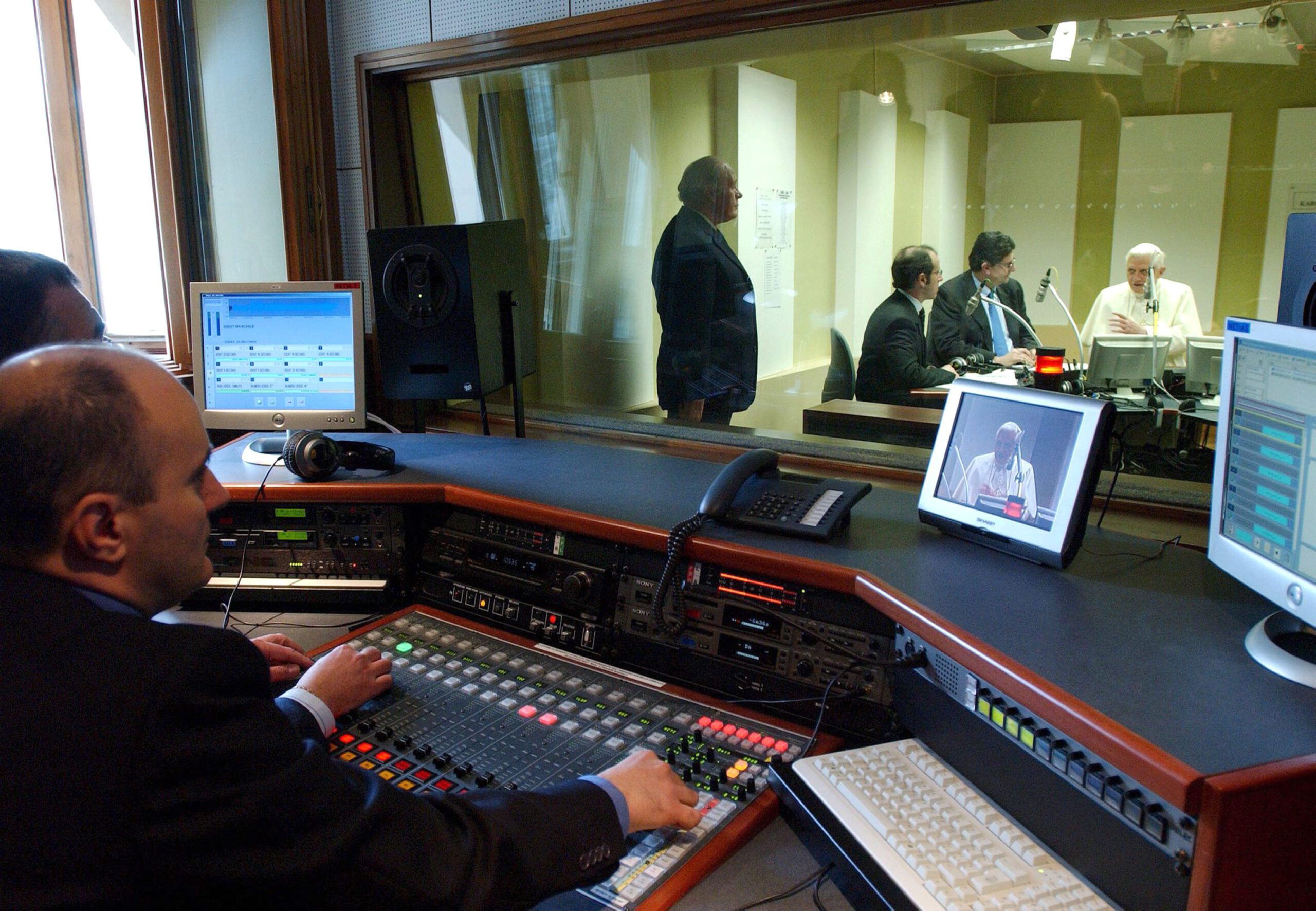
Cecilia Sierra Salcido is the directress of Bakhita Radio. This 41 year-old Comboni Sister from Mexico has spent her last eight years both in the North and in South Sudan. Sr. Cecilia had earned a degree in communication and journalism in the United States and she has managed the communication offices in the Archdiocese of Khartoum and in the Diocese of Wau.
She has thrown herself with enthusiasm and dedication into Bakhita Radio. First, she was involved in the training program for potential staff. Now, she runs the station making sure it is up to the challenges it faces.
“Southern Sudan is in a transition stage and the situation is heavily sensitive,” Sr. Cecilia explains. And she adds: “As directress of this station in the capital of the Southern territory, one of the tasks I carry out diligently is to supervise and monitor the topics and content of our programs. I know that assertiveness and wisdom are essential elements in delivering a message in the daunting situation of the region.”
Sr. Cecilia acknowledges that the challenges to run Bakhita Radio are many. “Our station has been on air for about 20 months and our staff and trainees strive daily to develop their potential amid the upheavals of inconsistency. Unstable electrical power supply, insecurity and lack of proper structures in a city and country in the making are other hurdles,” she adds.
“Our audience and prominence in town increases everyday and, in the various political and social crisis the town of Juba has been involved in, I feel the responsibility and the power that lays in processing and loading an emission, in pushing the button and let it go out there,” she confesses with her usual broad shining smile.
The challenges are many and the way ahead is daunting. But Bakhita Radio has proven, in just 20 months on air, that it can actually enhance the process of reconciliation, development and peace building in a country that is at every moment under the threat of another conflict.
CATHOLIC NETWORK
Though Bakhita Radio is the only established station of the Sudan Catholic Radio Network on air, it will soon have some company. The stations of Yei and Torit are expected to open at the end of the year. The radio station in the Nuba Mountains is also about to emerge. Yambio, Wau, Malakal and Rumbek are still lagging behind but the network should be fully operational before the referendum for Southern Sudan’s self-determination in 2011.
The network has also been establishing a training centre in Juba to prepare presenters and journalists for the stations. The one-year course is acknowledged by Tangaza University, in Nairobi-Kenya. In difficult areas, radio communication can indeed be a very effective way of promoting peace and spreading the Word.