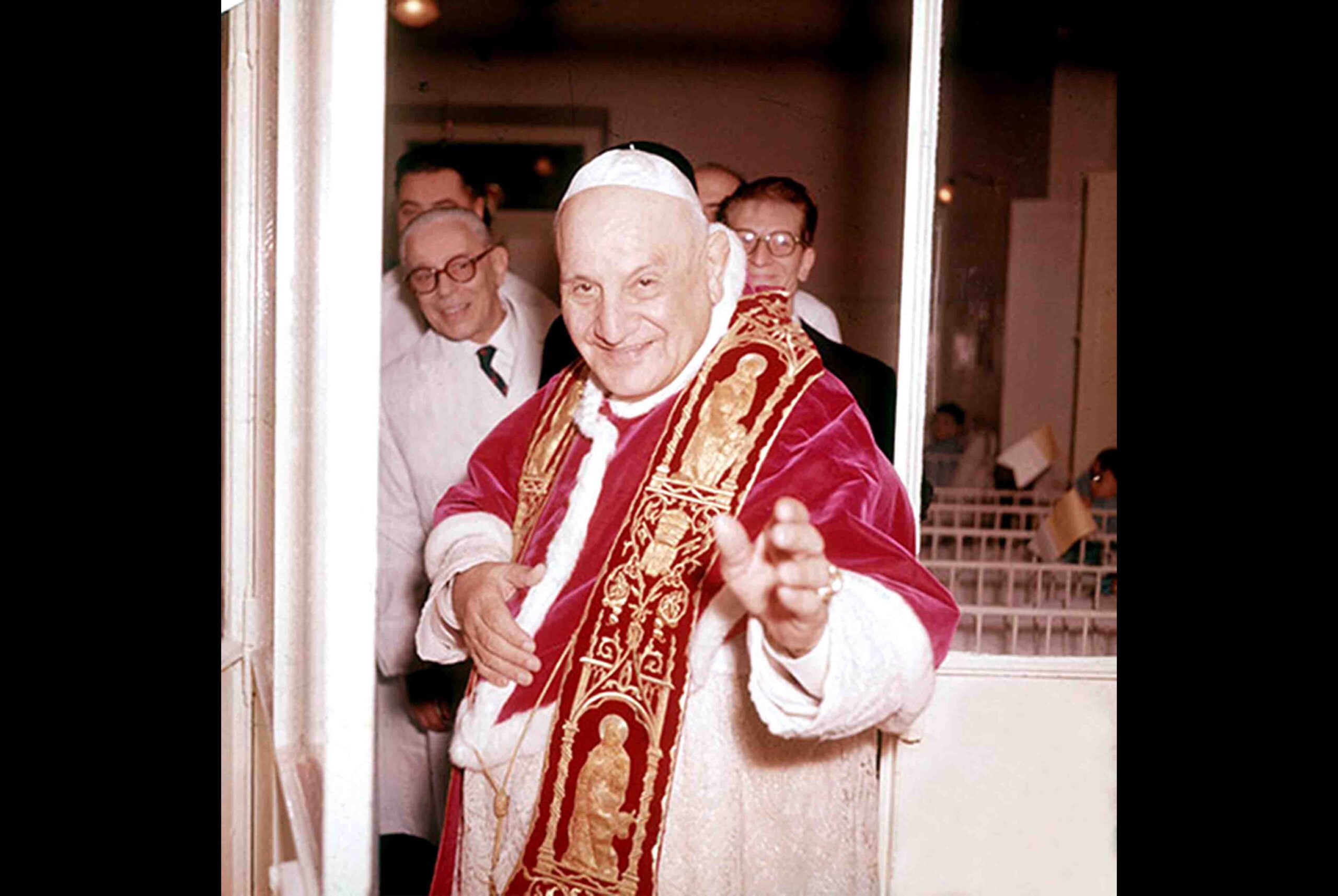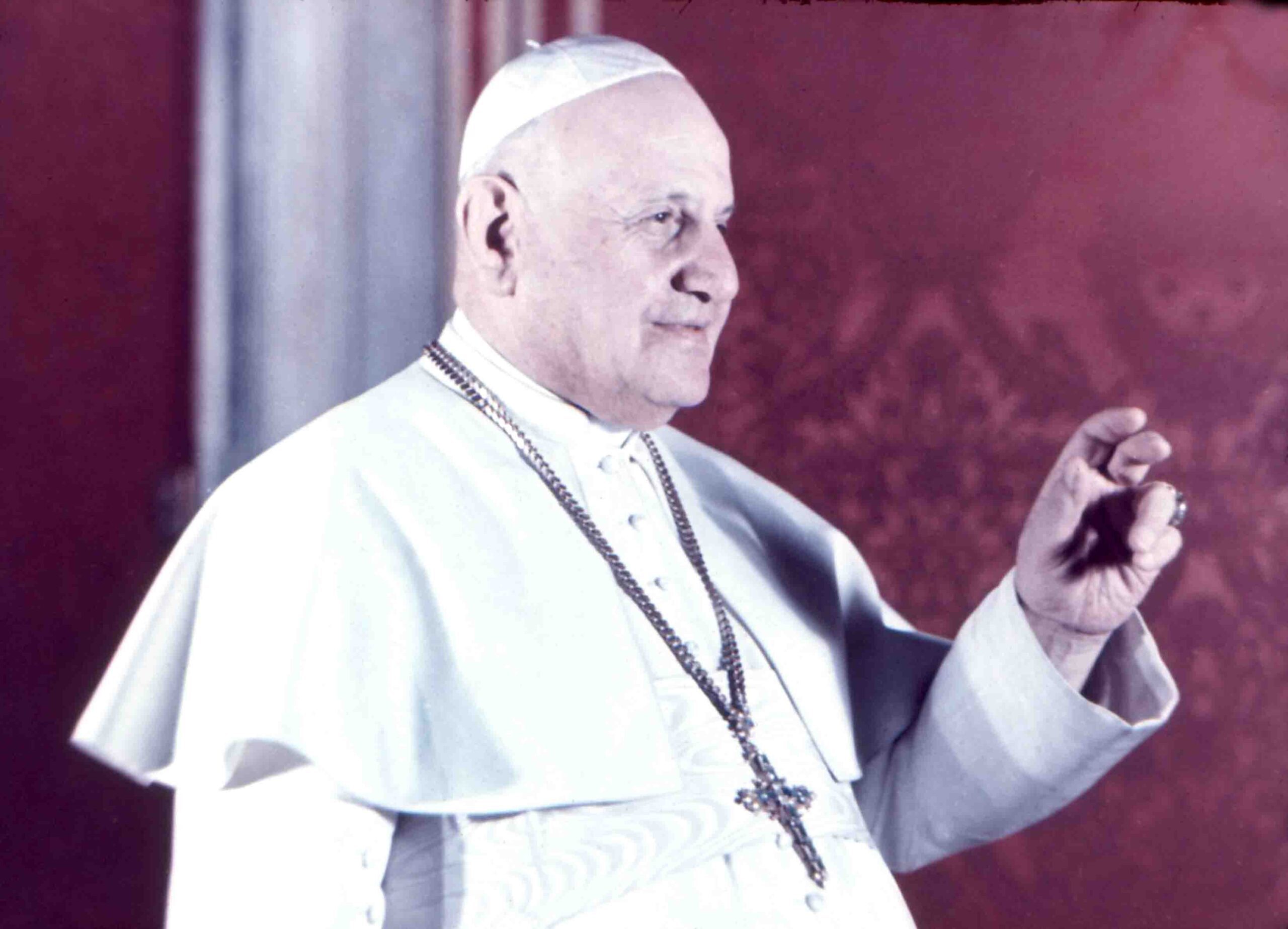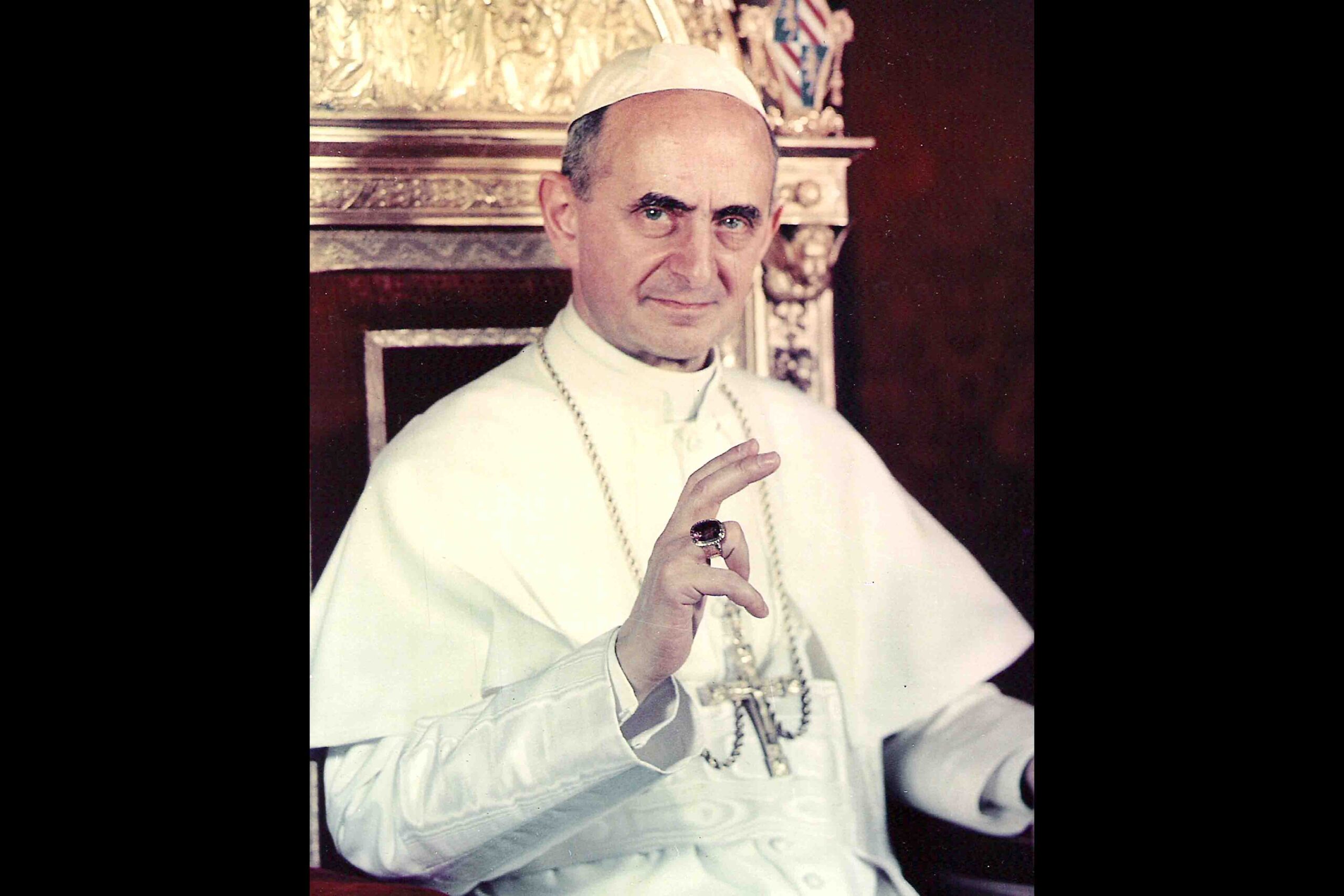

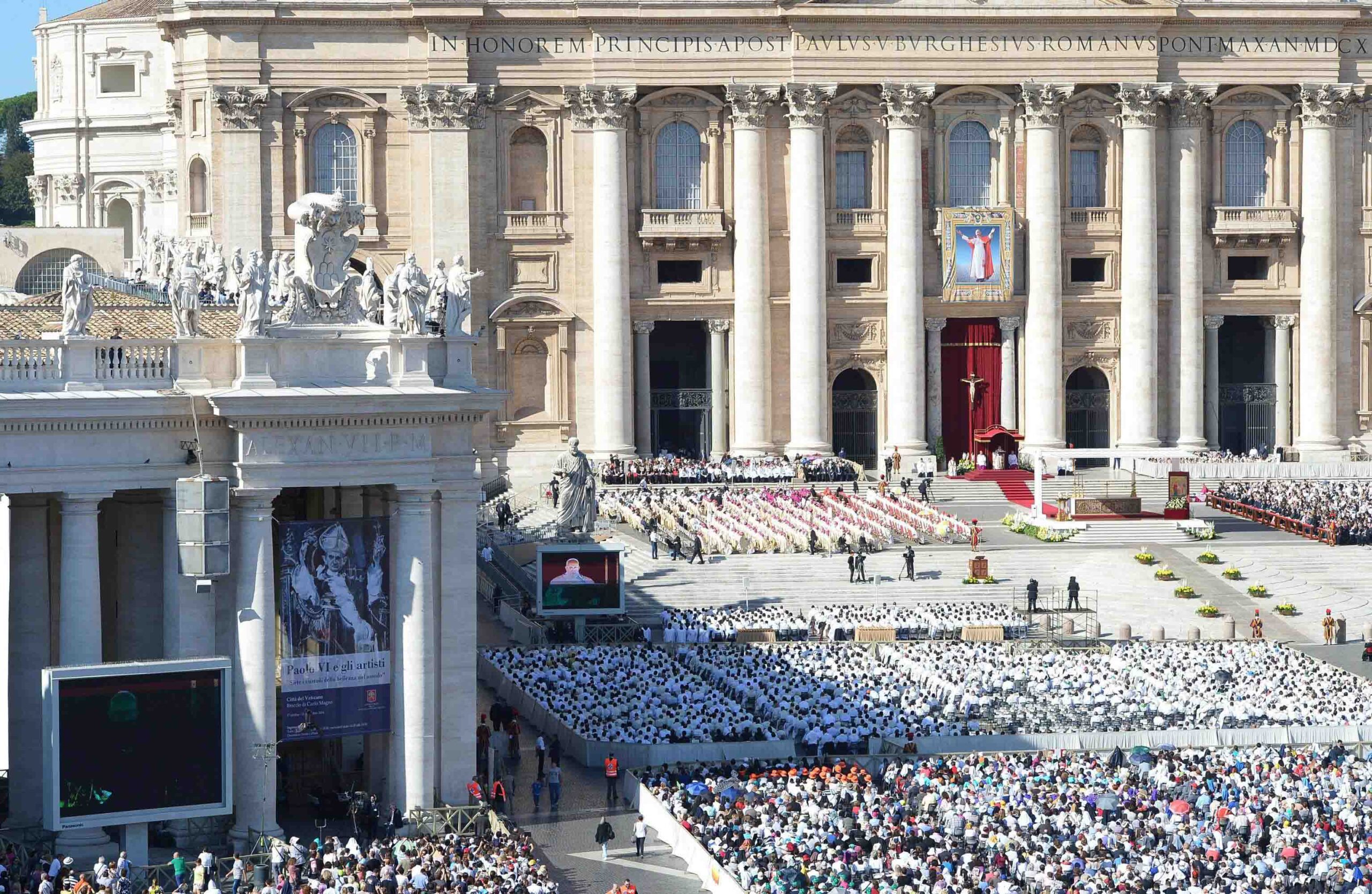
Saint Pope Paul VI (1963-1978) wisely presided over the final three sessions of the Second Vatican Council (1963-1965) and its worldwide implementation. Undoubtedly, he will always be remembered as a truly “Vatican II missionary pope,” making missionary journeys to all continents.
Paul VI authored Evangelii Nuntiandi [EN] (Evangelization in the Modern World) [December 8, 1975], which became the magna carta for Catholic evangelization in the last quarter of the second millennium of Christianity–and beyond. On this golden anniversary of EN (1975-2025), one can validly assert that for missionary evangelizers, it is probably the most crucial ecclesial document of the post-Vatican II era.
Evangelii Nuntiandi is the most quoted document in Pope Francis’ 2013 famous apostolic exhortation Evangelii Gaudium [EG] (The Joy of the Gospel); it is quoted on thirteen different occasions. In 2013 Francis said that EN includes words that “are as timely as if they had been written yesterday” (May 17). Francis appreciates Paul VI because he affirms that the testimony of Paul VI “feeds us the flame of love for Christ, love for the Church, and gives us the momentum to announce the Gospel to the people of today, with mercy, patience, courage, and joy” (June 22).
SYNOD OF BISHOPS
The establishment of the International Synod of Bishops was announced by Paul VI in 1965 during Vatican II. The 1974 Synod focused on Evangelization (Paul VI explicitly refers to this Synod over 30 times in EN); it brought together over 200 bishops from all parts of the world, along with some priests, religious, and laity in a consultative capacity. After the Synod, during a year-long gestation period, Pope Paul VI labored to produce from the rich experience and insights of the Synod a document that is clearly the work of discernment and synthesis.
EN is at once synodal and papal and therefore deeply collegial. EN is structured into seven thematic chapters and is framed by an introduction and a conclusion. Chapter titles clearly indicate specific content (e.g., “What is Evangelization?”, “The Methods of Evangelization”).
Various leitmotifs of EN can be mentioned: the papal commitment to evangelization, the role of meditation, and the centrality of evangelization in the life of the Church. One pivotal theme focuses on fidelity, a double fidelity–to God’s message and to people (cf. 4, 39, 63). This fidelity is “the central axis of evangelization” (4).
In numerous places throughout EN, Paul VI carefully defines, nuances, and balances diverse elements within the evangelization process (e.g., local and universal Church, culture and faith, liberation and evangelization). Paul VI has gifted the Church with an inspirational and pastoral handbook.
DESCRIBING EVANGELIZATION
The understanding of the term “evangelization” found in EN reflects a comprehensive and inclusive view; its use may be described as an “umbrella concept.” This broad and holistic view respects the fullness and complexity of the evangelizing process, aiming to achieve effective evangelization.
Sections 17 and 24 of EN list the various elements comprising the evangelizing action of the Church (e.g., witness of life, social involvement, prayer, dialogue, preaching). EN firmly insists upon integrating and balancing all facets of evangelization. “Any partial and fragmentary definition which attempts to render the reality of evangelization in all its richness, complexity and dynamism does so only at the risk of impoverishing it and even distorting it” (17). “Evangelization, as we have said, is a complex process made up of varied elements; … they are complementary and mutually enriching” (24).
EN contains several beautiful descriptions of the Church as an evangelizing community. “Evangelization is in fact the grace and vocation proper to the Church, her deepest identity. She exists to evangelize; “evangelizing all people constitutes the essential mission of the Church” (14). “The Church is an evangelizer, but she begins by being evangelized herself” (15).
This brief piece has attempted to present a panoramic overview of missionary evangelization emerging from Vatican II and especially from EN. When many words have been uttered, Catholic Christians must step back and radically affirm that: All mission and evangelization is God’s project. The Holy Spirit is always the principal agent of evangelization.
For evangelizers, missionaries, catechists, religious, and laity alike, mission necessarily means trying to find out what God wills and what he is doing. Then, the authentic evangelizer bends his/her will to God’s will, joyfully surrenders to God’s loving plan, and expends all efforts and energy to become a worthy instrument that enables God’s design to unfold. Evangelization, at heart and center, is an issue of faith. For all “Vatican II Christians,” to live is to evangelize, to truly become “a community of missionary disciples” (EG, 24)!
James H. Kroeger served mission in Asia for over five decades; recently he authored Walking with Pope Francis; The Official Documents in Everyday Language (Paulines, Manila) and A Joyful Journey with Pope Francis (Claretians, Manila).