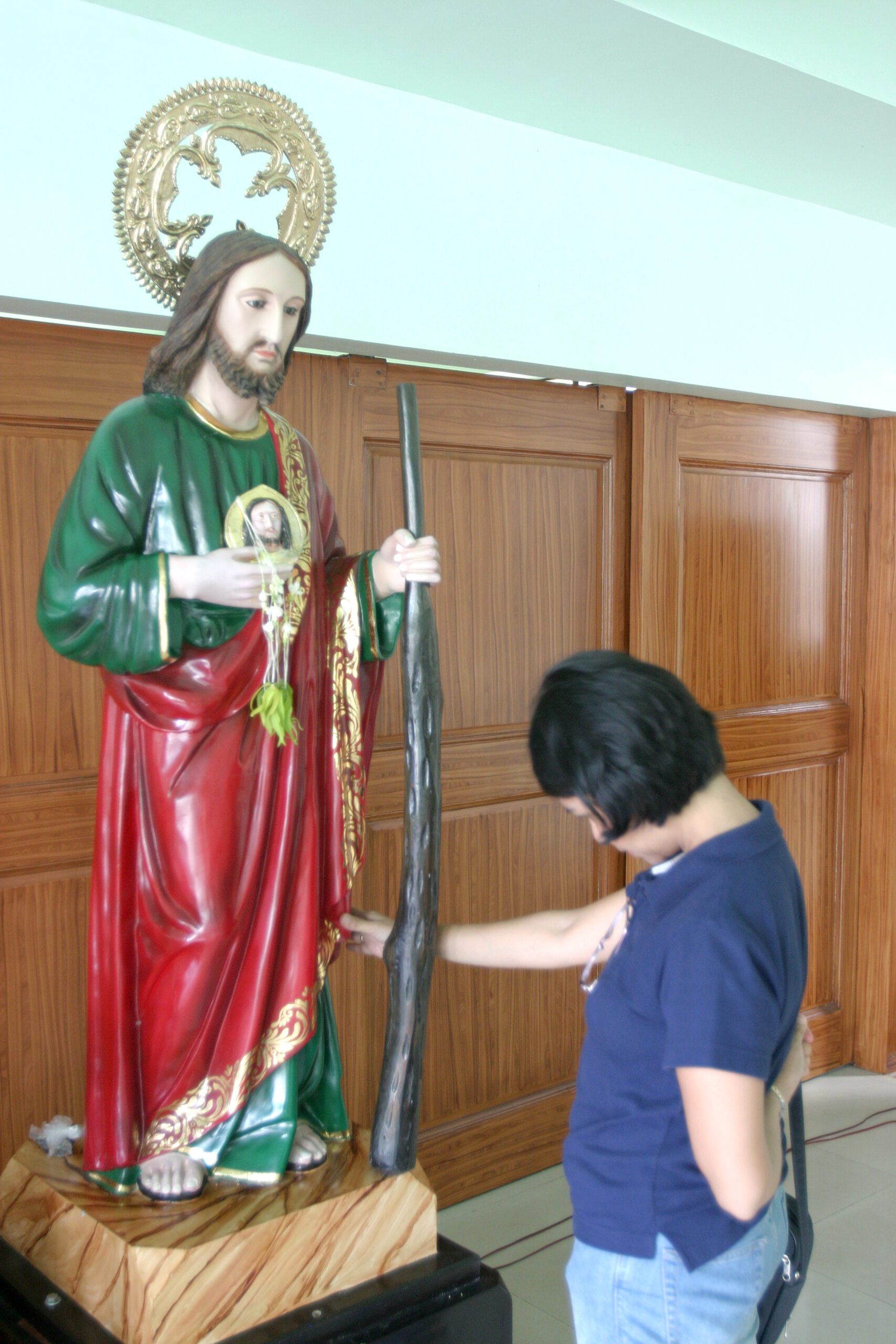
St. Bernard of Clairvaux, France, was a devotee of St. Jude Thaddeus in the Middle Ages. So was St. Bridget of Sweden. Devotion to St. Jude resumed in earnest in the 1800’s; starting in Italy, Spain, then spreading to South America and then to the United States in the 1920’s. The novena to St. Jude helped the newly-arrived immigrants from Europe to deal with the Great Depression, the Second World War, problems of the workplace and the family.
In the Philippines, the center of the devotion is the Archdiocesan Shrine of St. Jude, which is next door to the presidential Malacañang Palace.
Binondo was the traditional site of the Chinese apostolate in Manila. In 1954, Archbishop Rufino J. Santos obtained from the Roman Consistorial Congregation the faculty to erect three more parishes for the Chinese. One of them was the Espiritu Santo Chinese parish under the care of the Divine Word Missionaries (SVDs). All the Chinese residing within its territorial boundaries belong to the said personal parish.
Provincial Hermann Kondring, SVD, appointed an ex-China missionary, Fr. Henry Windges, SVD, as the first parish priest. In January 1955, the new staff set up its first rectory by renting a part of the premises of a former hospital (which is the site of the present St. Jude Catholic School). Although devotion to St. Jude Thaddeus is worldwide, the devotion in the Philippines started on September 21, 1954. In January of 1955, Archbishop Rufino J. Santos, made St. Jude Thaddeus the patron saint of the parish.
In addition to being a personal Chinese parish, it also became a territorial parish on June 20, 1986, comprising of four barangays (villages).
A DEVOTION FROM AMERICA
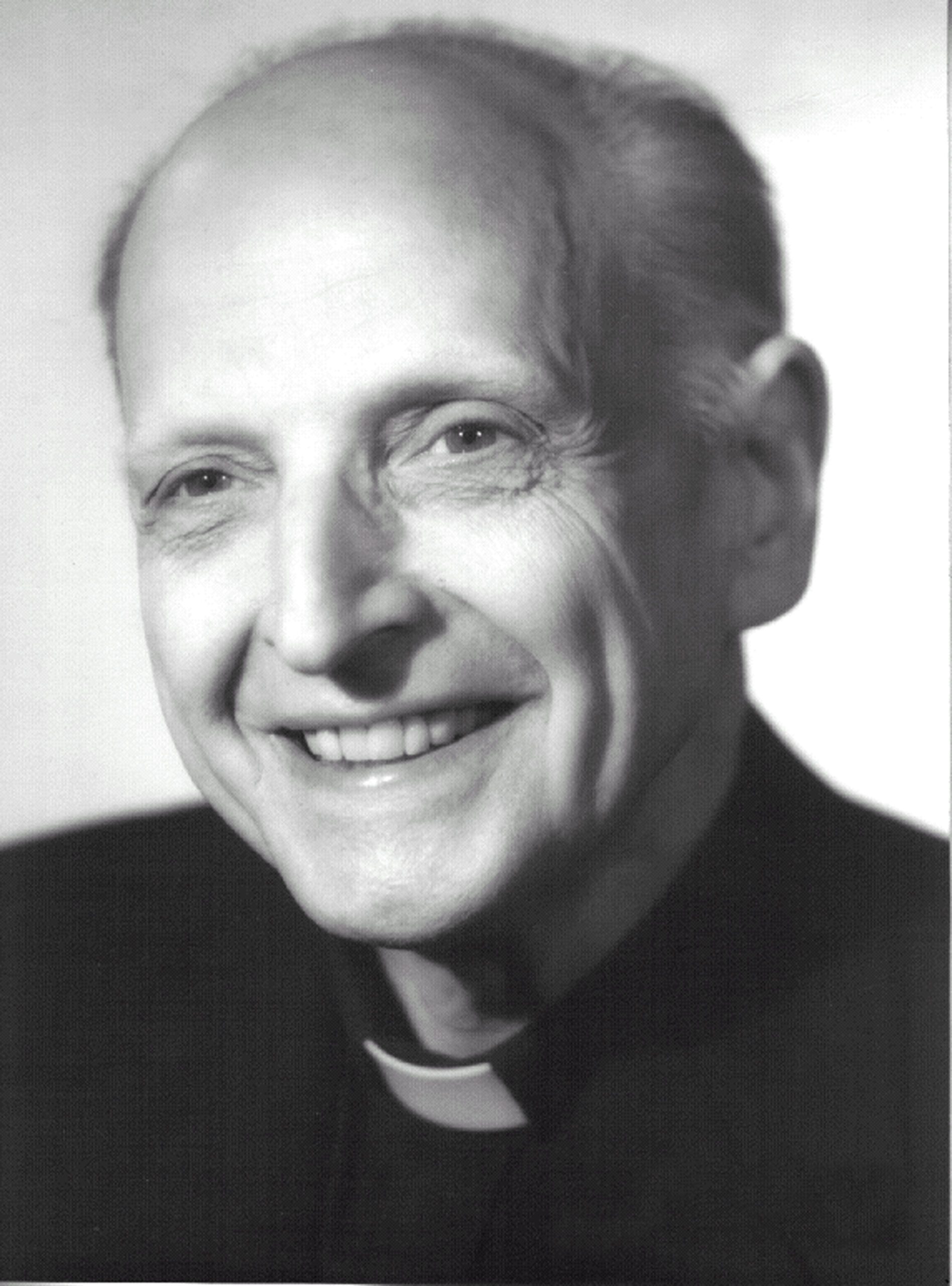
Why the choice of St. Jude as the patron? Perhaps we can trace it to the devotion of Fr. Joseph Freinademetz, the first SVD missionary to China (later canonized as a saint in 2003). The future saint converted and baptized the father of Peter Tsao to whom he gave the name Jude. Msgr. Tsao was among the pioneers of the parish. And since devotion to St. Jude was also popular in the United States, American SVDs perhaps may have a hand in its propagation. Among them was the late Fr. Bernard Doyle, SVD, who was assigned to China but could not enter because of the Chinese takeover. Although this devotion came from the United States, it was adapted for Filipino use.
The popularity of the devotion has then spread throughout the country. There is a St. Jude Thaddeus Diocesan Shrine in Bacolod City, western Visayas and other chaplaincies in Metro Manila. But the most popular is the St. Jude Archdiocesan Shrine of Manila.
A “BROTHER” OF JESUS
The New Testament (Lk. 6:16; Acts 1:13) lists Jude (or Judas) Thaddeus as one of the twelve disciples of Jesus. The author of the Letter of St. Jude, identifies himself as “servant of Jesus Christ, and brother of James” (Jude 1). By James, it meant James the Less, bishop of Jerusalem. Detractors of Jesus said: “Isn’t Mary his mother? Aren’t James, Joseph, Simon, and Judas his brothers?” (Mt. 13:56). “Brothers” or “brethren” in Hebrew indicates a blood relationship, not necessarily as siblings.
Jude (also known with his other name Thaddeus) and James the Less were sons of Cleophas, probably a brother of St. Joseph. The other Mary was possibly a cousin of the Blessed Virgin. The two Mary’s stood by the cross of Jesus. This blood relationship suggests that Jude and his brothers must have been close companions of Jesus. Since he belonged to the tribe of Judah, which was devoted to farming, Jude may have been a farmer, too.
Around the year 60 AD, St. Jude sent his letter to recent Christian eastern churches converts who were being persecuted. He told them: “But you, my friends, keep on building yourselves up on your most sacred faith” (Jude 20). Like other disciples (except John), Judas Thaddeus was married. As late as 95 AD, there were references about his grandchildren.
Traditions say that Jude preached around 37 AD in Judea, Samaria, Mesopotamia and even as far as Libya. Another tradition says that he died in Beirut, while another tradition says that he and St. Simon suffered martyrdom around 65 AD at Suanis, a city of Persia where they had gone as missionaries. He is credited with helping the creation of the Armenian Church. Why his feast is together with St. Simon on Oct. 28 is probably because both preached and died together.
IMAGES AND SYMBOLS
The name “Jude” means giver of joy while “Thaddeus”, his other name, means generous and kind. Jude is depicted with a club (the instrument that killed him; after death he was beheaded with an ax, that is why the ax is also depicted with him. His remains are presently buried in a crypt beneath St. Peter’s Basilica in Rome.
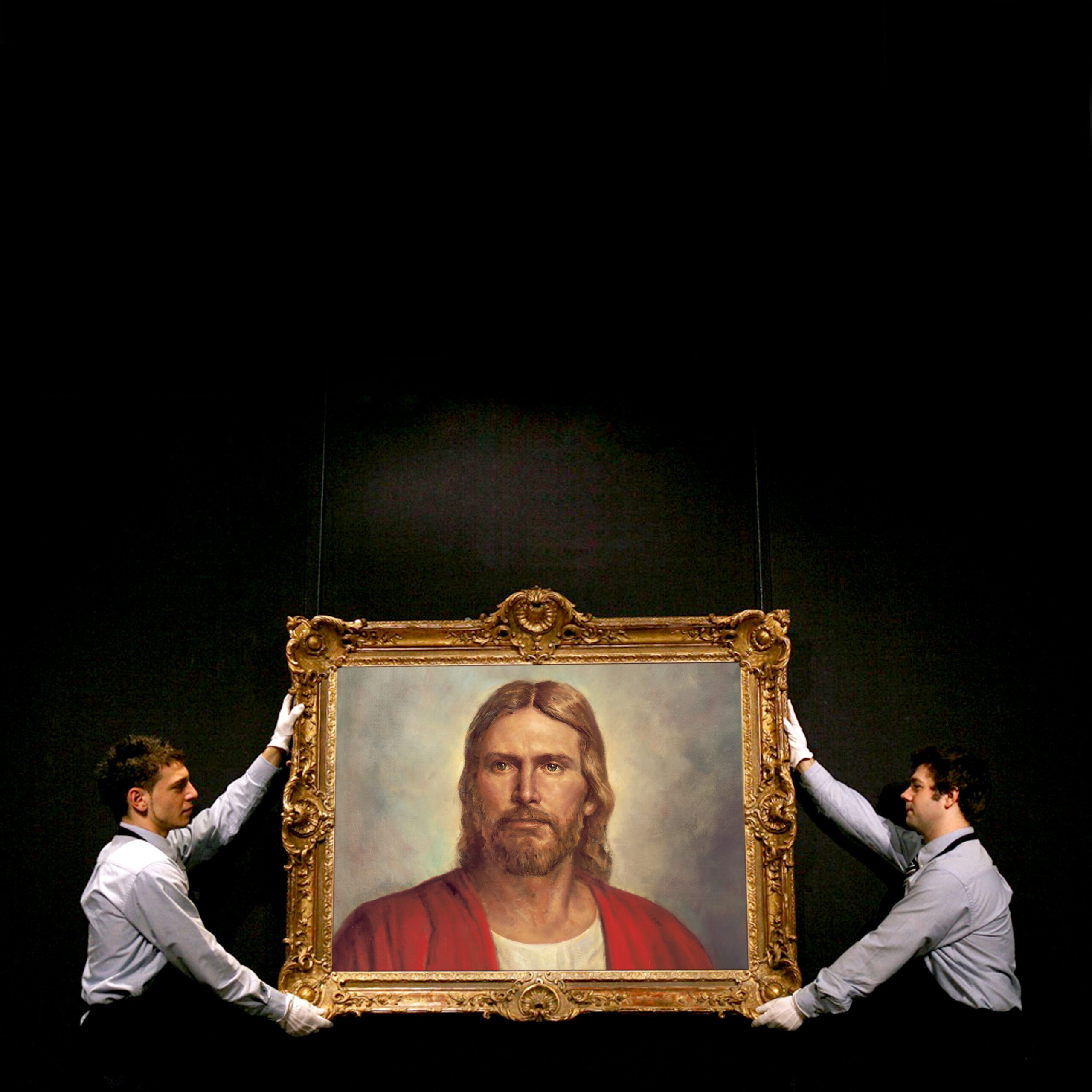
Another image shows St. Jude wearing on his breast a medallion with a profile of Jesus. This idea comes from a legend in which King Abgar of Edessa, a city located now in southeast Turkey, asked Jesus to cure him of leprosy. The king sent an artist to bring him a drawing of Jesus. Impressed with the king’s faith, Jesus reportedly pressed his face on a cloth. The artist presented the image to the king, who received it with great joy. When St. Jude went to Edessa after the Lord’s ascension, he healed Abgar, converted the king and his household and many of his subjects.
A third image of St. Jude is with a flame around his head. The flame represents his presence in Pentecost when the Holy Spirit descended upon him and the other disciples. He often carries a pen or sits at a writing table to refer to his canonical epistle.
FORGOTTEN AND POWERFUL
If the Blessed Virgin Mary is very powerful because she is the mother of Jesus, St. Jude is also powerful because he is a cousin of Jesus. He has been forgotten since his name is associated with Judas Iscariot, the betrayer of Jesus. Because St. Jude is a forgotten saint, when all the other saints do not answer, he is the last resort. People regard St. Jude as a powerful intercessor.
Although the power of faith is equal, devotees of St. Jude report of his power. For example, to get a visa for the United States is not at all easy. Many applications are denied everyday. But those who persisted and asked for the intercession of St. Jude reported that they got positive results!
THE PRESIDENT’S SAINT
Since its inception in 1954, the devotees come from all over the country. Around ten thousand devotees visit the Shrine every week. In demographic terms, the devotees range from class A to class E − from the President of the Philippines and rich Chinese to beggars. Because the parish is located at the university belt of Manila, sixty percent of the devotees are students and those who are taking the board exams.
The Shrine is also popular with the youth. Pairs of young men and women come to light up candles and to seal their commitment to each other. Many also choose the shrine as the venue of their wedding since they claim that the saint blessed their relationship. A typical comment: “I discovered my partner because of St Jude.”
THE MIGRANTS’ PETITIONS
Balikbayans or Filipinos from overseas who come home for a vacation usually visit St. Jude and other churches like the Marian Shrine in Baclaran. Devotees from the United States, Europe, Middle East, and Asian countries send their petitions and their envelopes with money there. Answering those letters keeps the parish busy.
A walk-in devotee said: “There is power in this church. It must be St. Jude because a lot of things are going on.” Many devotees testify to their answered prayers. A lot of things concern those taking the bar examination or board exams, boy friends and girl friends, and many others who see their case as desperate. For instance, on May 10, the Thursday before the May 14 election of 2007, several candidates for elected positions came with their papers from the Commission on Election to have them blessed.
A YOUNG DEVOTION
The devotion is mainly done through attending the perpetual novena held every Thursday at the Shrine. The novena builds itself on the Letter of St. Jude. The other form is a novena for nine days in preparation for the feast of St. Jude on October 28.
If compared to other popular devotions in the Philippines that arose in colonial times, the novena in St. Jude’s parish in Manila, which started only in 1959, is quite young. Likewise the traditional practices of the devotees are also young.
The practices are based on some do’s and don’t’s. In terms of obligations, devotees must complete the nine consecutive Thursdays of the novena to St. Jude. They must attend the feast of St. Jude on October 28. Although not officially encouraged by church authorities, the devotees practice wiping (punas-punas) the statue of St. Jude with a handkerchief or with bare hands. This practice, which is based on the belief that the holy is immanent, is also done in other churches. Devotees should not misuse the blessed articles, such as to touch the image with a pen used in placing gambling bets. They should not also recite the novena with the intention of harming someone.
THE STUDENT’S MATERIAL
Although lighting candles is also another form of popular devotion, a recent development is the symbolism of colors. The practice, although not original at St. Jude’s, is also found in Quiapo with its Black Nazarene devotion. It is said that it began when a Chinese, who traded in candles, manufactured them in different colors for commercial purposes. But the official liturgy does not indulge in colors, because the devotion at St. Jude’s is in prayers and in the Eucharist. The parish priest discourages deviations. One example is the practice of chain letters, such as making 3,000 copies of the letter connected to St. Jude.
Those taking their board examinations have developed their own extra way of devotion. Before taking the examinations, they have their materials blessed in the church, such as their handkerchiefs, the bubble gum that they will be chewing, their pencils, ball pens, calculators, test papers, review materials, hairpins, eye glasses, cellphones. After the exams, they come back to St. Jude. They would break the pencils and ball pens used in taking their exams so that there will be no retake. They believe that doing so is an assurance of passing the exams.
As a proposed national shrine, St. Jude becomes the mother of all St. Jude shrines in the Philippines. The only drawback is the lack of space. On Thursdays, the devotees overflow to J.P. Laurel Street. People sacrifice and stand under the burning sun or under the rain. Even if they cannot enter the church, they just want to be around to participate in the novena. Other national shrine directors acknowledge that St. Jude is in an equal footing with the older shrines.