
Carolina Samson-Marzano, 56, has long shunned the superstitious belief on ghosts. Having been born in Pasay City Cemetery and, eventually, raising a family sharing a roof with the dead, the mother-of-five has proven for herself that ghosts do not exist.
“I’m not afraid of ghosts because I have never seen or felt one during my entire stay at the cemetery,” she said.
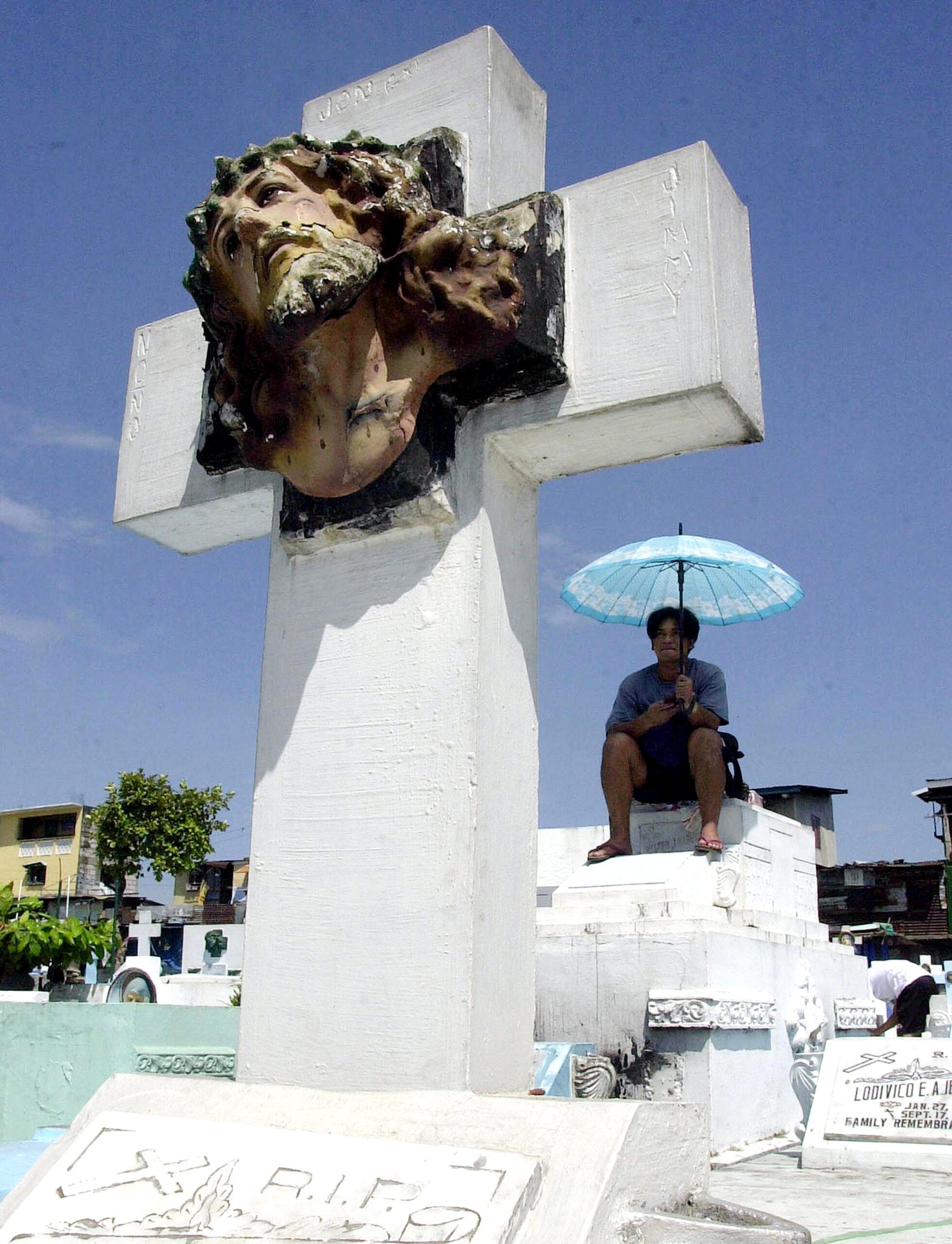
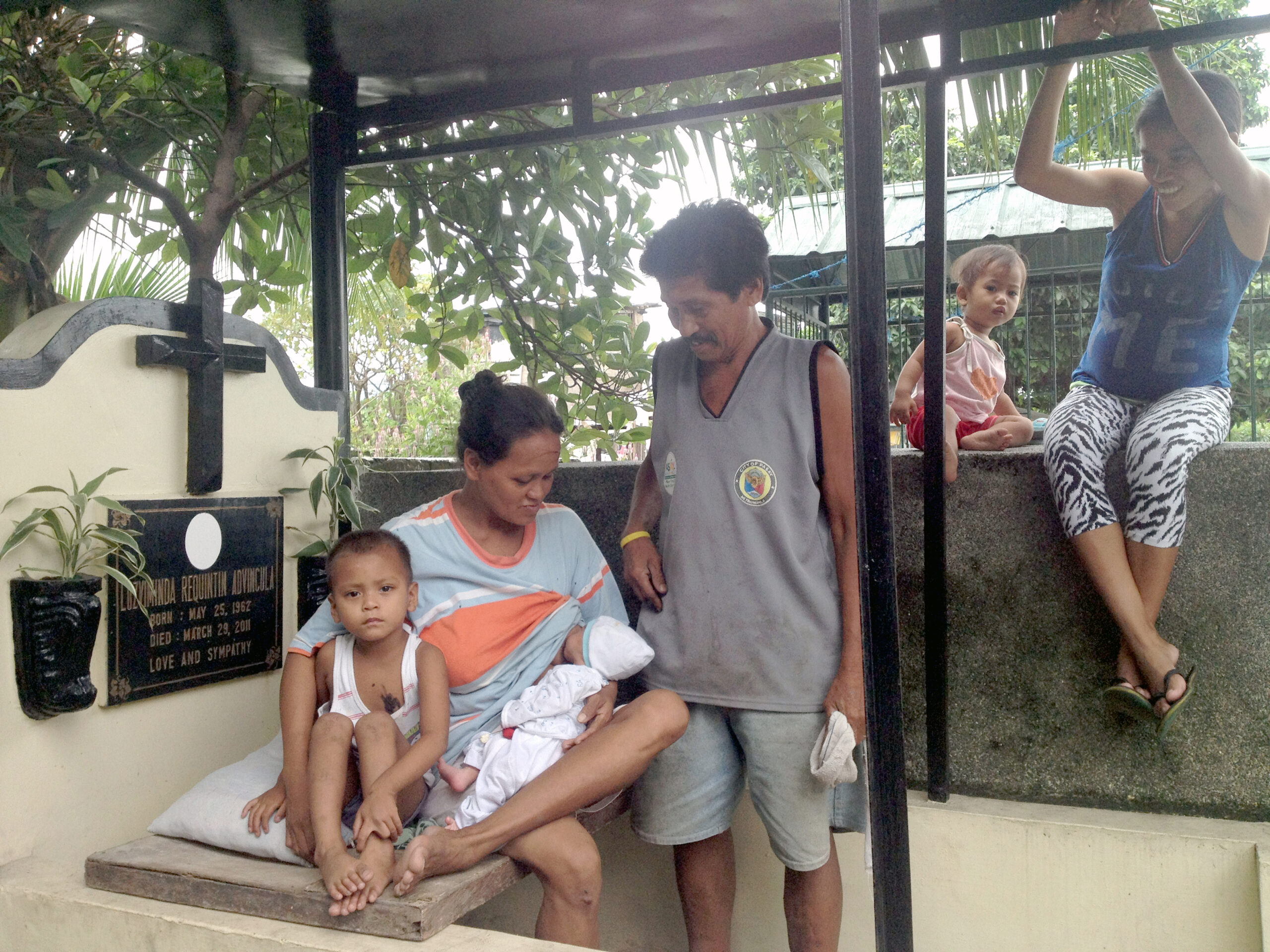
Proof of her disbelief is the fact that their matrimonial bed had been a stone tomb for the longest time, just like her children’s who have also married and gave her six grandchildren. The Marzanos are among the 1,000 families living among the dead buried at the 3.5-hectare public cemetery in Pasay City.
Being a sepulcher keeper has been Marzano’s source of livelihood since time immemorial. But before even getting married, Marzano entertained the idea of looking for a different job. After finding no better-paying job in the province, Marzano returned to the graveyard and continued cleaning graves in exchange for an average of P3,000 or $75 a month.
“If I only have a choice, I want to live somewhere else. But what can I do? I wasn’t able to finish school and cannot find a job other than this,” she said.
RENT-FREE
Unlike Marzano, who is staying at the cemetery because of the job, Leonesa Origen, 51, said her family is residing in mausoleums only because they cannot afford to rent a more decent place.
Aside from living within roofed and concrete crypts for free, Origen and her neighbors also consume electricity without paying a centavo for theirs are connections illegally tapped from electric power lines. Water is the only utility they pay for but those who still cannot afford to buy water can extract some from a well also built inside the cemetery.
“We have no jobs so we have no money to rent a place where we can live. Here, we do not pay for rent because the owners of the mausoleums allowed us to crash in. We also get our electricity free courtesy of jumpers,” she said, referring to the device used to divert electricity from the main to illegal lines.
But Origen admitted that flood is the bane to all cemetery residents. Since the Pasay City Cemetery lies next to a river, heavy rains or typhoons would cause the river to overflow and drown the cemetery with floodwater. The absence of drainage system within the graveyard worsens the problem.
“Whenever there is flood, we always need to relocate to higher gravesites. This persistent problem is the reason why we would be willing to be relocated by government elsewhere there is decent housing,” she added.
Origen’s daughter, Aurora Torres, however, made a step forward and took advantage of the government’s “cash-for-work” project that employs homeless individuals as streetsweepers and compensates them enough to rent a decent place to live.
“I preferred to move away from the cemetery because I don’t want my son to live in the kind of environment where criminals, prostitutes, and vicious people abound,” said the 26-year-old single mother.
But she admitted that once her employment with government ceases and she cannot find another means of livelihood, she will have no choice but to forego renting and go back to the mausoleums to live.
SOCIAL ILLS
Unemployment and lack of affordable housing are the major reasons why illegal settlers are thriving in the cemetery, according to Captain Benjamin Tumajar of Barangay 148, which covers the Pasay City Cemetery.
“Most of them do not have place to live in the city and cannot afford to rent so they just manage to live in the cemetery where it is free to squat,” he said.
The local government of Pasay City has offered relocation to cemetery residents in Tanay, Rizal but Tumajar said beneficiaries eventually go back because of the relocation’s remoteness to their place of employment.
“They complain because the relocation site is very far from their workplace. Most of them have returned already since it is more convenient for them to be living in Pasay than in Rizal,” he said.
Most of those living at the Pasay City Cemetery are employed, ordinarily as sepulcher keepers, while the rest are robbers, prostitutes or pimps, the barangay leader admitted. Tumajar also noticed that most of the unemployed men at the cemetery are addicted to all sorts of vice while women are usually pregnant. Worst, children are malnourished and uneducated.
“Most of the men are inflicted with colon cancer due to incessant drinking of alcoholic beverages while the children are mostly malnourished and sickly,” he said, although stressing that basic social services have been given to cemetery residents.
These are the reasons why Marzano would still prefer her grandchildren to grow outside of the cemetery.
“I personally do not like my grandchildren to stay here. There are drug users, snatchers, and lawbreakers living among us in the cemetery. I want them to stay away from those kind of people to avoid getting into vice,” she said.
Torres also said teenage girls in the cemetery start to get pregnant at the early age of 14 and usually bear children with different men.
“This is the normal fate of girls who live in the cemetery. They get married and become mothers very early. They are also prone to corruption and this is the kind of environment that no mother would want her children to grow up in,” she pointed out.
‘QUIET NEIGHBORHOOD’
But for Ricardo Medina Sr., 65, the “quietness of the neighborhood” has been one of the other reasons families like his have stayed on.
“It’s quiet here. Our neighbors never make noise,” he joked, referring to the dead people who have been his neighbors for the last 30 years.
Of Medina’s 18 children, almost 10 have stayed with him and resided in the cemetery. In fact, Medina’s third wife gave birth to Baby Ricardo IV just last September 17.
“We are not moving out of the cemetery anymore,” the 65-year-old patriarch said. “This is where we already built homes as well as our families. I do not mind dying here, at least there is a place for me here – whether I am dead or alive.”