
One way of highlighting the importance of trees is to examine what the Bible has to say about them. The psalmist in the first Psalm likens the person who does not follow the advice of the wicked nor loiter with sinners but finds his pleasure in the Law of God, to a tree planted by a stream. This tree yields its fruit in due season and its leaves never fade. What follows is some reflection on specific trees that appear in the Bible.
– VINES (Vitis vinifera). In Jotham’s fable in the Book of Judges, the vine speaks, in response to the request that it would become the king of trees: “Must I forget my wine / which cheers the hearts of gods and men, / to stand swaying above the trees?” (Judges 9:13). In the Book of Isaiah, we find a poem by the young prophet which casts the relationship of the people of Israel and God in terms of a vineyard and the person who looks after it. God does everything to tend His vineyard, yet instead of producing grapes, it yields sour grapes. As a result, Israel is rejected. (Is. 5:1-7).
In the New Testament, in Chapter 15 of his Gospel, John presents Jesus as the True Vine: “I Am the True Vine, and My Father is the Vine Grower” (Jn. 15:1). The believers are the branches, but they cannot bear fruits unless they are joined to and sustained by the Vine Tree. “Just as the branch cannot bear fruit by itself unless it abides in the vine, neither can you unless you abide in Me. I Am the Vine, you are the branches” (Jn. 15:1-5). “Those who abide in Me and I in them bear much fruit because, apart from Me, you can do nothing” (Jn. 15: 5). Being cut off from the Vine has serious consequences for the believer: “Whoever does not abide in Me is thrown away, like the branch that withers; such branches are gathered, thrown into the fire and burned” (Jn. 15:6).
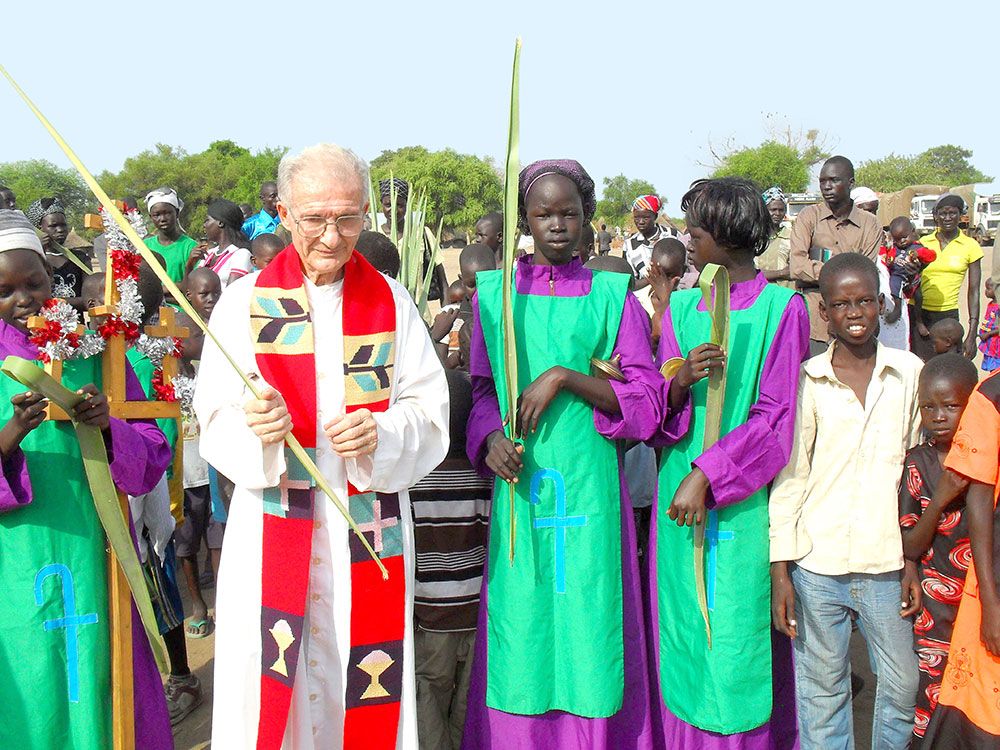
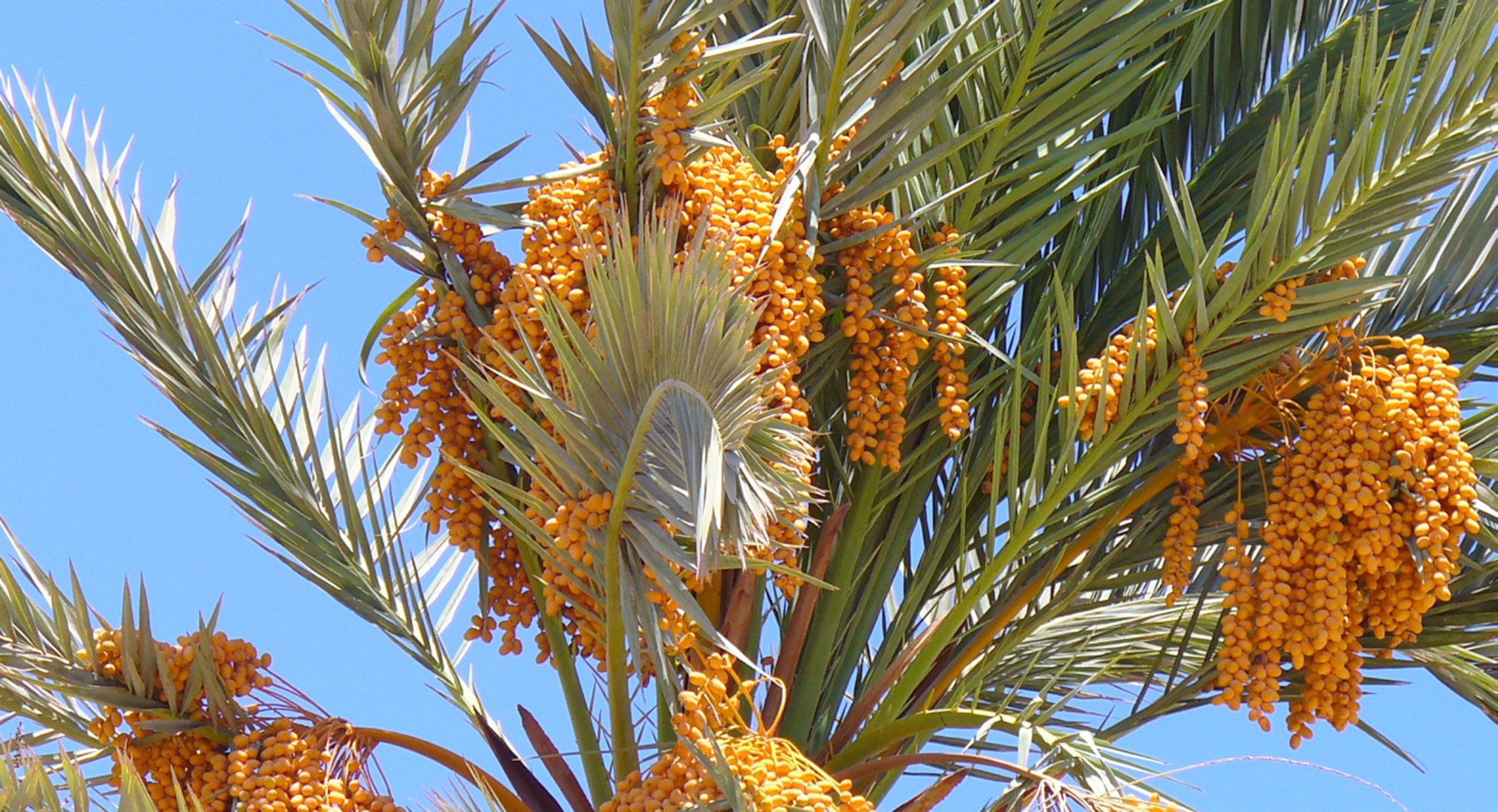
– THE PALM TREE (Phoenix dactylifera). The date palm tree is one of the most useful and beautiful trees in the Bible. Its deep tap root system means that it can grow where there is very little water. Not alone did it produce dates, it also produced sugar, oil, wine, thread, tannin and dyes. The seeds could be fed to animals, especially cattle, and leaves were used as roofing material. The popular belief that the fruit became sweeter as the tree aged, is reflected in Psalm 92. Mats and bags were also made out of the fiber of the palm trees. The inhabitants of Jerusalem waved palms and placed them on the road when Jesus rode into Jerusalem on an ass’s colt. (John 12:13; Matthew 21:8). In the book of Revelation, the great multitude of the redeemed will greet the Resurrected Lord Jesus. They will be “clothed with white robes, and palms in their hands”; crying, “Salvation belongs to our God, who is seated on the throne, and to the Lamb” (Rev. 7: 9-10).
– TREES USED AS SATIRE. The author of the Book of Judges uses the contrast between useful trees such as the olive, the fig and the vine, and ‘problem’ trees such as brambles to ridicule the ambition of Abimelech to become king. The sarcasm in the final verse is pointed out: “And the thorn bush answered the trees / If in all good faith you anoint me king to reign over you, / then come and shelter in my shade. / If not, fire will come from the thorn bush/ and devour the cedars of Lebanon” (Judges 9:7-15).
– THE JUDGMENT OF DANIEL. Daniel saved the life of Susanna who, when she refused to have sex with two elders, was herself accused by the elders of having sex with a young man, who supposedly escaped before he could be apprehended. The following day, an assembly sentenced Susanna to death on the word of the two elders. They were about to carry out the sentence when Daniel intervened and pointed out to the assembly the need for a serious investigation, first. Daniel ordered that the judges be separated. Then asked each of them, what tree did they see Susanna and her supposed lover lying under. One said, a mastic tree (Pistacia lentiscus), the other, a holm oak (Quercus ilex). Both were seen to be lying, so Susanna’s life was saved and the wicked judges put to death. The Chapter ends with the sentence: “From that day onwards, Daniel’s reputation stood high with the people” (Dan. 13:1-64).
– PARABLE OF THE MUSTARD SEED (Brassica nigra). Jesus uses the mustard tree to illustrate one of His shorter parables. The parable appears in three of the Gospels: Matthew (13:31-32), Mark (4:30-32) and Luke (13:18-19). The differences between the texts are minor, so it is possible that the three parables may be derived from the same source. At the most obvious level, the parable suggests the growth of the kingdom of God from tiny beginnings to worldwide Church.
Matthew’s version: “He set another parable before them, saying, ‘The Kingdom of Heaven is like a grain of mustard seed, which a man took, and sowed in his field; which, indeed, is smaller than all seeds. But when it is grown, it is greater than the herbs, and becomes a tree, so that the birds of the air come and lodge on its branches.’” The plant referred to here is generally considered to be black mustard, a large annual plant up to 9 feet tall, but growing from a proverbially small seed (this smallness is also used to refer to faith in Matthew (17:20).
The nesting birds may refer to Old Testament texts which emphasize the universal reach of God’s Kingdom. However, a real mustard plant is unlikely to attract nesting birds, so that Jesus seems deliberate in emphasizing the notion of astonishing extravagance in His analogy. In the natural world, trees do support an enormous amount of biodiversity. Both species of the oak tree (Querus petrea and Quercus robur) support 284 species of insects. Some commentators claim that, there is a “subversive and scandalous” element to this parable, in that the fast-growing nature of the mustard plant makes it a “malignant weed” with “dangerous takeover properties.” The drama of redemption is played out between two trees at the beginning and at the end of the Bible.
– THE TREE OF LIFE. Finally, the drama of human history is framed between two very significant trees. In Genesis, the first book of the Bible, we find that God planted, “the tree of life and the knowledge of good and evil in the middle of the Garden of Eden” (Gen. 2:9). In Chapter 3, Adam and Eve were admonished “not to eat of the fruit of the tree in the middle of the garden. You must not eat it or touch it under the pain of death” (Gen. 3:3). The serpent then told Eve: “No, you will not die! God knows, in fact, that on the day you eat it, your eyes will be opened and you will be like gods.” (Gen. 3:4-5). Eve and Adam disobeyed God’s command when they ate the fruit from the forbidden tree. As a result, they were expelled from Paradise and found themselves in need of salvation and redemption. Their disobedience also affected their relationship with Nature. “Accursed be the soil because of you. With suffering shall you get your food from it every day of your life. It shall yield you brambles and thistles and you shall eat wild plants. With sweat on your brow, you shall eat your bread, until you return to the soil, as you were taken from it. For dust you are, and to dust you shall return” (Gen. 4:17-19). In the last book of the Bible, the Book of Revelation, we find that one of the signs that salvation has been achieved by the Death and Resurrection of Christ is the reappearance of the “tree of life” planted, in the new Jerusalem, along the banks of the river and bearing leaves which bring healing and comfort” (Rev. 22:1).