
When Jane Morallos was just 16 in 2006, her parents sent her to Manila to study. She had just lost her high school scholarship in Cebu due to poor health and the kilometric distance between her family’s residence and the nearest school in their town. She convinced her parents that going to the capital to study is the best move for her.
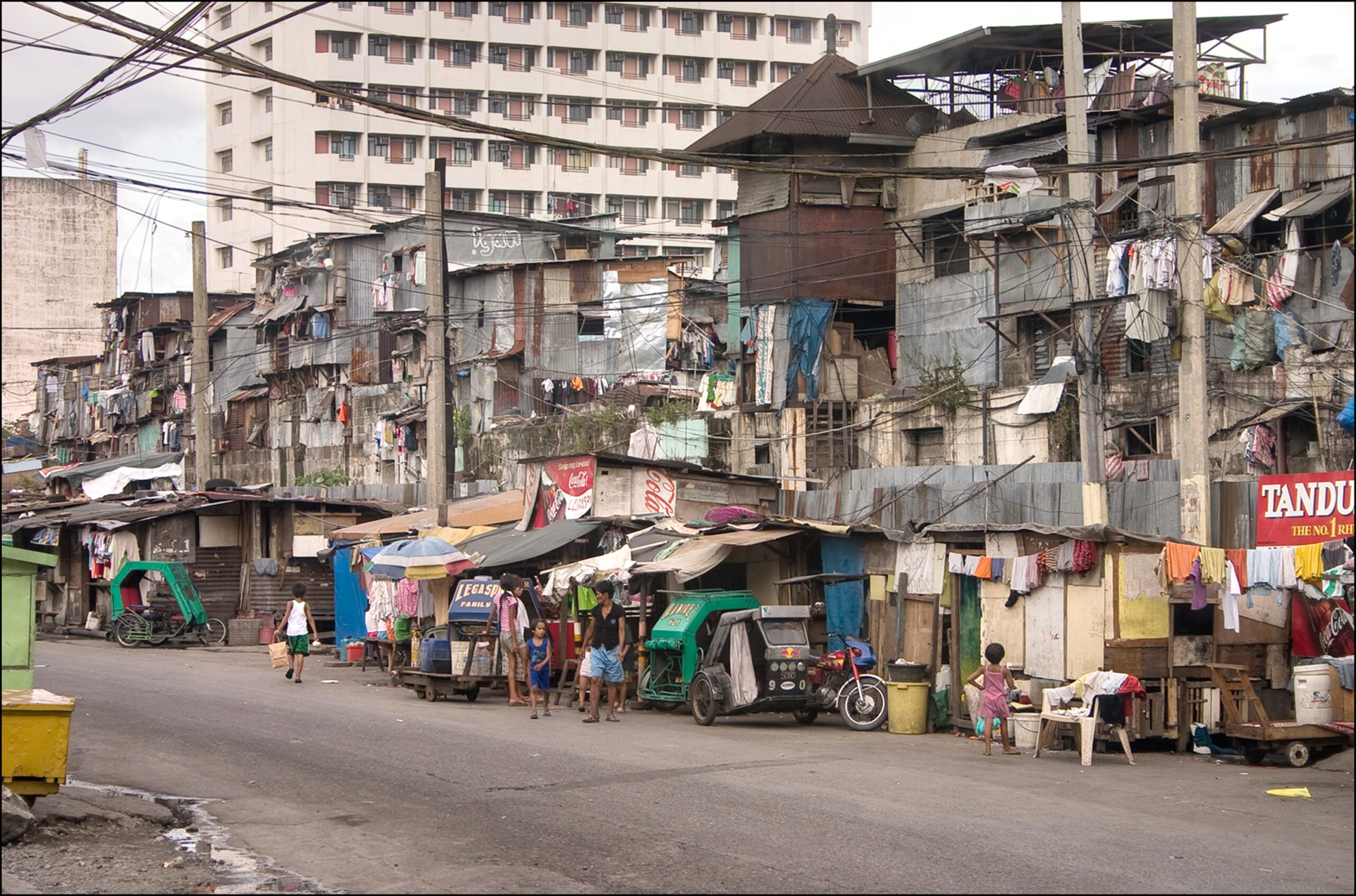
Filled with optimism in pursuing her studies in Manila, Jane went to live with her father, Samuel, in Sitio Damayan of Brgy. 105 in Tondo. Despite being sick with genetic asthma, the young lass endured living in a community near the portside garbage dumpsite touted as Smokey Mountain II. Jane’s sacrifice paid off when her father was able to send her to finish high school from operating a junk shop. But when Samuel’s income was no longer enough to pay off his debts, he soon closed his shop and Jane was forced to forget about going to college.
The young lass tried earning a living as a scavenger like her father but her poor health got in the way. Without school to attend and no work to keep her busy, Jane shortly became pregnant and, eventually, turned out to be a single parent to Catherine Jade Angela. The poor child obtained Jane’s asthma genes and even developed tuberculosis for living in an unsanitary community. But, despite their unpleasant living condition at the dumpsite, Jane and her family remain in their informal settlement, which they occupy for free despite government efforts to relocate them to a safer and more sanitary environment. Jane admitted she was once enticed to be relocated, especially for her daughter’s sake. But when she visited a relocation site in Rodriguez, Rizal, Jane found out that relocated families are selling out their housing units, one by one, and are going back to the squatters’ area to live near their workplace.
Jane said off–site relocation of informal settlers proved to be disadvantageous to beneficiaries. Even if they are obliged to pay for their housing units, relocated families have to tolerate the defects of their ill–constructed units.
Beneficiaries also abhor the relocation site’s remoteness to schools, health centers, commercial centers, where access to public transportation and livelihood are present. “The reason why I came to Manila is to live close to school and work. How can I be convinced to be relocated if I will be settled to a community that has no access to schools, hospitals and livelihood? That is no different from the situation that made me leave our hometown,” she said.
GARBAGE OR HUNGER
Jane is a member of a faction of the divided community in Sitio Damayan that is aggressively demanding for an on–site relocation for soon–to–be–evicted informal settlers in the area. The National Housing Authority (NHA) has already informed Sitio Damayan residents that they have to vacate their dwelling soon to give way to the planned development and expansion of Manila’s port area. The government agency has a standing offer to relocate families but it did not commit an on–site relocation as Jane’s group demands. “We will just die at the relocation site, without means to earn a living and without food to feed our families. It is better for us to stay here at the dumpsite, where we can scavenge for garbage we can sell or leftover food that we can eat than have no work or nothing to eat at all,” Jane said.
But despite the on–site relocation’s promise of access to livelihood and basic social services, some beneficiaries of on–site resettlement have also gone back to squatting. And the government is not clueless why. The Department of Social Welfare and Development (DSWD) confirms that the need for day–to–day job and a stable source of income are what drives most people to migrate from the countryside to the urban areas and to return to squatting even after being relocated outside of blighted areas. And the proximity to their workplace is another major reason why most of them maintain informal residence in depressed and dangerous areas in the cities. “For those who cannot afford to travel from their house to their workplace or rent a place nearby, they would rather squat because it is free,” said Vincent Andrew Leyson, director of the National Household Targeting Office (NHTO) of the DSWD.
The NHTO generates the government’s official poverty statistics, which serves as basis for the implementation of various social protection programs. Through household interviews conducted nationwide, the NHTO is able to determine the intended beneficiaries of government’s social services programs and prevent leakage or redundancy in the delivery of the services. The NHTO identifies informal settlers as poor households that either own their houses yet occupy the lot without the landowner’s consent or occupy both house and lot without consent of the owner. According to the latest data gathered by the NHTO as of July 1, 2011, Manila tops the ten cities with most poor dwellers, with 16% of the poor population own their houses yet occupy the lot without the landowner’s consent and another 7 % occupy both house and lot without consent of the owner. Both types of poor households don’t have security of tenure and are prone to dislocation due to government or private–led eviction or demolition of informal settler communities.
These poor households are the ones that figure in violent confrontation with authorities during demolitions. Although the Urban Development and Housing Act (UDHA) of 1992 demands proper consultation be made with informal settlers prior to their eviction and protects them from inhumane treatment; these poor families are injured while some are even killed in the process of demanding for an opportunity to be heard and in resisting off–site relocation. It is the Presidential Commission for the Urban Poor (PCUP) that makes sure that the provisions of UDHA on the treatment of informal settlers are followed by either government agencies or private entities implementing the eviction. “We interfere to make sure that informal settler communities are not yet demolished until relocation for the evicted families is ensured,” said PCUP chairman Hernani Panganiban. But the presence of PCUP and the existing moratorium imposed by the President on demolition of informal settler communities are not enough to rid Jane and her neighbors of the fear to wake up one day to find their shanties razed by fire or their family members arrested for resisting eviction. Jane is more worried for her daughter KatKat. The child’s frail health would be aggravated if caught in the middle of the demolition.
TOO SMALL AND EXPENSIVE
Considering herself a veteran informal settler, Marilou Valle was formerly residing at the Smokey Mountain 1 dumpsite with her family. The Valles were among the beneficiaries of the government’s on–site relocation but they also gave up in paying for their monthly amortization, sold their entitlement, and returned to being informal settlers; this time they moved to Smokey Mountain II. Valle, 43, together with her husband, 10 children and 12 grandchildren, moved to Smokey Mountain II, where they earned their living from scavenging recyclable garbage and supplying water to their fellow informal settlers. She claims that her present residence in Smokey Mountain II is enough to accommodate her family, compared with the limited space in Smokey Mountain 1, that they paid for P448 a month since 2003. Valle claims to “have been there and done that” in terms of haggling with the government to relocate informal settlers on–site than off–site. She said her experience in Smokey Mountain 1 gives her confidence that the government can compromise with the community by giving Smokey Mountain II residents on–site relocation.
But when asked why she abandoned her on–site relocation in Smokey Mountain 1, Valle said her family couldn’t afford to pay the monthly amortization for their housing unit. Valle said they decided to move to Smokey Mountain 2 so that they will not have to rent a place to house their growing family. “The government should consider our capacity to pay for the housing unit in determining our monthly amortization cost. Since we cannot afford to pay that much for a limited space that cannot accommodate our family, we opted to sell it and squat again,” she said. Valle also said her family gave up on their claim for permanent housing at Smokey Mountain 1 especially because of the area’s poor construction and ill–equipped facilities on electricity, water and sanitation.
“If we are to pay for a housing unit, we should be given a decent one that is worth paying for. The problem with the government is it sees constructing housing units for informal settlers as a business more than a social obligation,” Valle added.
The government claims awareness on the usual complaints of relocated informal settlers and their reasons for giving up on their entitlements for socialized housing units. The Housing and Urban Development Coordinating Council (HUDCC), the mother agency of all shelter agencies in the country, admits that previously constructed relocation sites have been ill planned. “We are aware that the beneficiaries sell their socialized housing units and return to squatting because of the substandard quality and design of the houses that is why we are now coming up with a standard in designing and executing future housing projects,” HUDCC deputy secretary general, Atty.
Felix Fuentebella, said. But Fuentebella said the HUDCC is targeting to finalize soon its National Slum Upgrading Strategy. The Strategy sets the standards that all new housing projects must comply with, most especially in terms of measurable access to water, power, food, clothing, shelter, medical services, education, sports and recreation, livelihood, mobility or transportation, ecological balance, information technology, and peace and order. “We are also integrating disaster risk reduction and climate change adaptation in the Strategy so that the new housing units will be constructed on flood–prone areas or near fault lines,” he added.
With the increased housing demand recorded by the HUDCC from a total of 3.6 million units between 2004 to 2010 to 5.7 million units from 2011 to 2016, Fuentebella said they are also fixing the alpha listing of target beneficiaries to prevent leakage in the program and make sure that only those that are legitimate homeless people are able to benefit from the housing made affordable for the poor.
SUPPORT AND SPIRITUAL AID
The government’s obligation to evicted informal settlers doesn’t end at “humanely” relocating them away from blighted areas and dangerous places that are not suitable for residences. Aside from making sure that informal settlers have access to social services like transportation, health care, and education, among others, in their new communities, the government also has to help these poor families reestablish themselves so that they will not be lured to return to squatting and contribute to the vicious cycle of informal settling. The post–relocation shortcomings of the government are the reason why the Church got into the picture. It is the Church’s concern for their parishioners, their pre–eviction plight and their post-relocation anxiety, that compelled it to meddle in the housing issue, which is technically out of her turf.
The Archdiocese of Manila is, by far, the busiest of the local Churches, in the advocacy for legal eviction and humane relocation of informal settlers, for handling most of the cities in Metropolitan Manila area, which is host to thousands of informal settler communities. The continuous demolition of informal settler communities in Manila and nearby cities within the Archdiocese has prompted Caritas Manila to institute a Housing Advocacy Program to assist relocated poor families towards physical, emotional and spiritual recovery in their newfound homes. Vincentian Father Atilano Fajardo, C.M., of the Caritas Manila Housing Advocacy Program said the government may have done its best to give informal settlers a new place to live in but it has been remissed in giving them a new life to lead. “Poverty is a mindset that these informal settler families should learn how to get rid of. Only by getting out of this ‘mindset’ can they rediscover their worth and reestablish their dignity as human persons,” he said.
Fajardo said the Caritas Manila Housing Advocacy Program primarily ensures the lawful eviction and humane relocation of poor families from their informal settler communities. But the Program has been stretched to include values formation and skills training of the relocated families. Even if their parishioners in Manila have been relocated to different towns and provinces that are away from Caritas Manila’s jurisdiction, Fajardo’s team still reaches them to teach them financial and mental discipline, and to train them to save and make a living from community–based livelihood opportunities. “After values formation and skills training, we teach these poor families to organize themselves as a community that knows how to communicate and engage with the government in a non–violent manner,” Fajardo said. The need to train leaders of these poor communities led Fajardo to establish an informal “leadership school for the poor.”
With professional and technical help from Adamson University, Fajardo established the AdU’s School of Good Governance for Social Development, which is able to educate leaders of poor communities on the basic knowledge and skills they need to manage their organizations and to dialogue with government leaders to advance their rights. Despite giving free education, the School has, for its professors, the high–caliber deans of Adamson University and Manila Auxiliary Bishop Broderick Pabillo who all teach students about values formation and personal, community, national and international engagement. Students, regardless of their educational attainment or age, are given crash courses on written and oral English, computer literacy, Philippine Constitution and History, and training on right manners and etiquette. Graduates of the School are given a Certificate in Good Government for Social Development after finishing their yearlong training. Fajardo said his School aims to produce leaders that will be capable to represent their poor communities in government institutions like the Congress. He said the lack of genuine representation of the poor in government institutions is one of the reasons why the government continues to fail, despite doing its best, to nip the problem from the bud.
THE ROOTS OF THE PROBLEM
And speaking of nipping the problem in the bud, the government should be reminded that the worsening problem of informal settlers in the urban areas is a mere consequence of its failure to address the root problems in the countryside. The government should not only relocate informal settlers to better communities and give them affordable housing units. It also has to attend to the concerns of the rural poor households, who will most likely constitute the next batches of informal settlers in the cities if scarcity of jobs, prevalence of armed conflict, and remoteness to educational and health facilities continue to prevail in their hometowns. If it really wants to curb the trending migration of poor families from the rural to the urban areas, the government should sincerely implement the long overdue comprehensive agrarian reform program. Only then will farmers have their own lands to till and make money from to feed their families. With a sense of land security and a stable source of income from their crops, these farmer families will no longer entertain the idea of seeking greener pastures in the otherwise polluted and crowded cities.
The government should also make sure that its anti–insurgency efforts are not affecting the lives of civilian families that reside in conflict–laden areas. The harassment that civilians experience from both the government forces and insurgents are driving them away from their countryside residence and source of living, forcing them to seek refuge in urban areas where military and rebel presence are lesser even if job opportunities are also scarce. Schools should also be constructed as near and as accessible to the people as much as possible. Non–government organizations’ efforts to give students pair of slippers to use for their kilometric walk or private donors’ initiative to sponsor motorized bancas to transport students from their isolated barrios to the town where schools are situated are mere band–aid solution to the problem, hence, not the end of it. Their remoteness from the educational institutions, later on, discourages students to continue schooling. Some of them may be persistent enough to be able to finish high school but their determination will eventually die down if universities are nowhere in their immediate sight.
If only educational centers and livelihood opportunities are made available and accessible in the countryside, people will not flock to the city. They will prefer to stay in their decent residence at the countryside than in informal settlement under the bridge, on stilts built above creeks or near garbage dumpsites. The concentration of the government’s power, resources and presence in Manila has contributed to the problem more than to the solution. The poorest districts of regions may have representatives in Congress lobbying for their interest and pushing for their district’s share in the government’s budgetary allocation but the constituents turn out to be victims more than beneficiaries, especially if the funds are channeled to corruption and not to their needs.
Perhaps, it’s about time to decentralize power and resources from the capital city to the regions. A shift to a federal form of government will make regions financially and politically capable to solve its local problems including employment generation and schools’ construction, and help in the national effort to stop migration from rural to urban areas.
Poor districts should also be given more importance in national budgetary allocations compared to the highly urbanized ones. Under the existing laws, cities are accorded bigger share in the internal revenue allotment than municipalities. The logic that a city with big population needs more allocation than a town of smaller population may be sound enough. But isn’t it logical, too, to expect that government of highly urbanized cities can already fund its operation from proceeds of local taxes than towns that are dependent merely on natural means of income?
RELOCATION IS NOT A BUSINESS
The government may be doing the best it can to simultaneously solve these problems, but as Fr. Fajardo describes it: “Best effort is not enough.” Sincerity has not been ingrained into the government’s duty to help the poor and the underprivileged sector of the society. For, if the government really aims to give the Filipinos decent shelter, it won’t see it as a business to profit from. It is normal for the government to demand payment for the housing units that it has constructed for relocated families to occupy. But, while amortization for the constructed housing units ensures continuity of financing for the government’s housing projects, it should consider the beneficiaries’ capacity to pay. Atty. Fuentebella says it himself: “There is no one rule that fits all.” The amortization rate due a family that has members with a stable source of income should not apply to a household without employed members or a family with more than two school children dependent on their parents for sustenance. While all these families deserve the same quality relocation site, complete with access to basic social services, they do not necessarily have to pay the same amortization rate given their varying conditions in life. In weighing what is more important between the return of its investment and the service it gives the poor, the government should revisit the very reason for its institution: for public service, not to make business out of the public.
It is also open knowledge that, apart from the government’s concern for the return of its investment on housing projects, officials and personnel of government housing agencies have developed vested interest in the program. Some of them are bribed to award projects to developers without undergoing the mandated process. Some look out for commissions from construction companies that produce housing units from substandard materials.
Adding insult to injury is the fact that the long and arduous process of qualifying for the government’s housing program is nursing red tape and leakage, apart from corruption. Perhaps the government should consider establishing a department designated to focus on housing similar to the established ones on transportation, tourism and health, among others. This proposed department on housing should reduce, if not eliminate, the redundant and unnecessary processes in securing government’s housing aid. It should also streamline the interagency cooperation on housing to make it responsive to the times than be left obsolete, to be effective than faulty.
The improvement of the lives of slum dwellers is part of the United Nations’ Millennium Development Goals (MDGs). Recently, the UN reported that the important targets on slum improvement have been met three years ahead of 2015, with the betterment of the lives of at least 200 million slum dwellers ahead of the deadline. The UN recently reported that the share of informal settlers in the urban areas of developing countries living in slums declined from 39% in 2000 to 33% in 2012. “More than 200 million gained access to either improved water sources, improved sanitation facilities, or durable or less crowded housing. This achievement exceeds the target of significantly improving the lives of at least 100 million slum dwellers well ahead of the deadline,” the UN said in its MDG Report 2012.
The statistics may well be a representation of the “improvement” but lest the UN forget, the underlying circumstances leading to this so–called achievements are equally important to highlight. Is the UN more concerned of the “improving” statistics than the “degrading” way of life of slum dwellers after being forced to vacate their urban informal settlement because of piecemeal relocation? If the government is only concerned about the numbers of informal settlers it has relocated, then the global community is certainly far from genuinely achieving its goal of improving the lives of slum dwellers. Without holistically and sincerely attending to the slum dwellers’ multi–faceted problems, the government is not solving the crisis but it is even contributing to the vicious cycle.