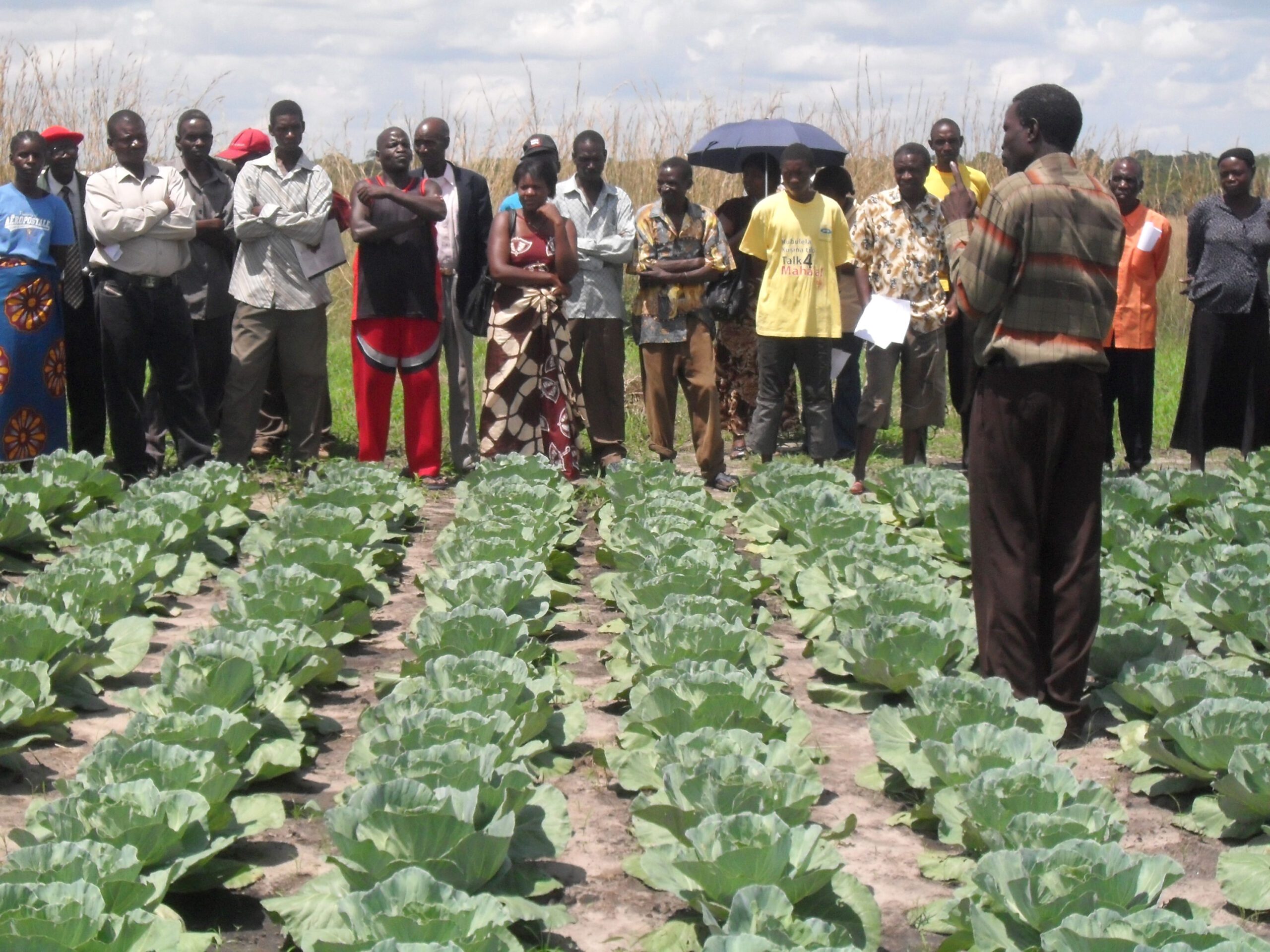
Some species were unknown to the local population, like parsley and arugula, which they cook rather than eat in salads. “It’s very bitter,” said Soba, a 45–year–old mother of five, who is one of the leaders of the agriculture program for small farmers. She and her group grow cabbage, peppers, tomatoes, kale and other vegetables on low–lying land that is too wet to be suitable for sugar cane. Fifty–four percent of the families in the 10 villages involved were living in extreme poverty, with incomes of less than 34 cents of a dollar a day, according to a study carried out in 2009, said Kimputu Ngiaba, an agronomist with the program who is responsible for production.
Now, some women are making over $500 a month when there is a good harvest, according to his records. They have also changed their eating habits, resulting in better nutrition. A decisive factor is guaranteed sales.
The Nosso Super supermarket chain, which has 29 outlets around the country and is controlled by Odebrecht, the same Brazilian group that runs Kulonga pala Kukula, buys a large proportion of the produce. Other purchasers include canteens that feed thousands of workers in the other PAC projects, such as the Companhia de Bioenergia de Angola (BIOCOM), a biofuel concern which currently employs some 800 people planting sugar cane and building industrial plants for the production of sugar, ethanol and electricity, beginning in 2013 if all goes well.
Initially, there was little enthusiasm for the project, because the 27–year civil war had broken down bonds of trust and undermined good working habits. But, after the first payment from the sale of vegetables, “the number of participants doubled,” said Ngiaba. Now, 1,020 families are involved and selection mechanisms have been put in place, he said. For many of the 38 families in the village of Luxilo, the money serves to support their children who are studying in Luanda.
“Angolans are keen to learn,” said Felismina Lageslau, in charge of promotion of the Kulonga program. Last year, there was no malaria in the villages, and this year there was only one case, she said, referring to the success of the preventive health actions. The program is also trying to improve the production chain for cassava, a traditional crop in the region, by increasing production and commercialization of cassava flour, a staple food in Angola. Fruit production – pineapples, pawpaws, bananas and watermelons – is also being introduced in the vegetable gardens. Reviving family farming, which was a traditional way of life in colonial–era Angola but took a nosedive after independence, will be a great legacy to the nation, said Felipe Cruz, head of investment in PAC, who is responsible for Odebrecht’s support for the agro– industrial sector.
Kulonga is a pilot plan set to expand in a rural area that is home to 70,000 people, stimulating production, improving health and strengthening the sense of citizenship. This plan will demand “technical insistence,” as Cruz calls steady outside support to bring small farmers out of the subsistence culture and into the world of commercial marketing. The priority in Angola is “to generate jobs for young people on a mass scale, but agribusiness does not do this, and it requires a great deal of scientific and technical knowledge, much of which has been lost since the 1970s,” Pacheco said. Up to 1973, Angola produced most of the food that it consumed, and exported coffee, maize and cotton. In contrast, its harvests are now meagre and food imports have soared, according to a report published this year by the Catholic University’s Centre for Scientific Studies and Research.
This transformation was due to the war, “which destroyed production capacity and mobility,” and “also to political mistakes over many years,” such as a lack of investment in infrastructure, an overvalued local currency, and the rural exodus, the study says. www.ipsnews.net/ Mario Osava