
The Naughty Nun

INTRODUCTION

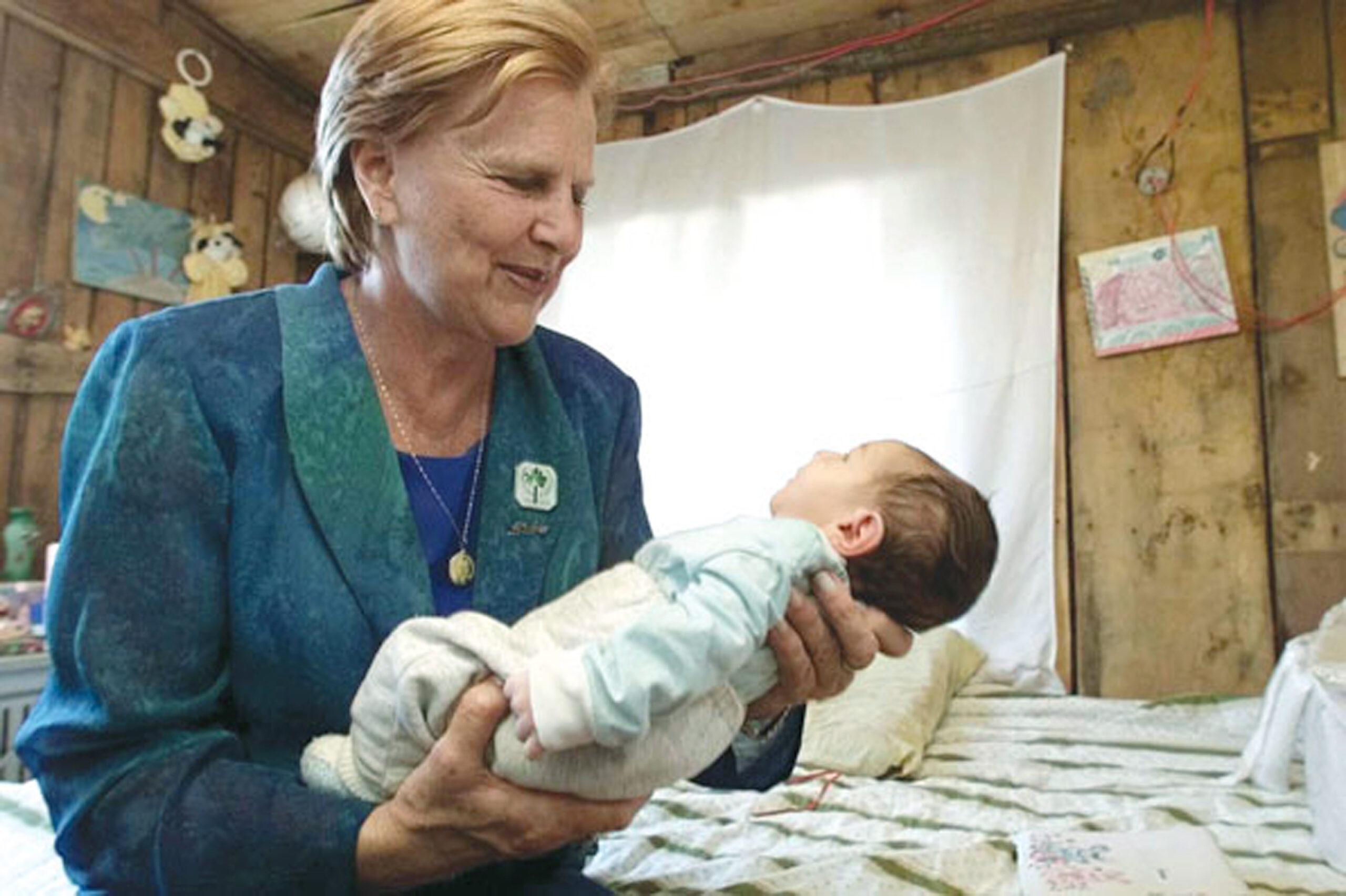
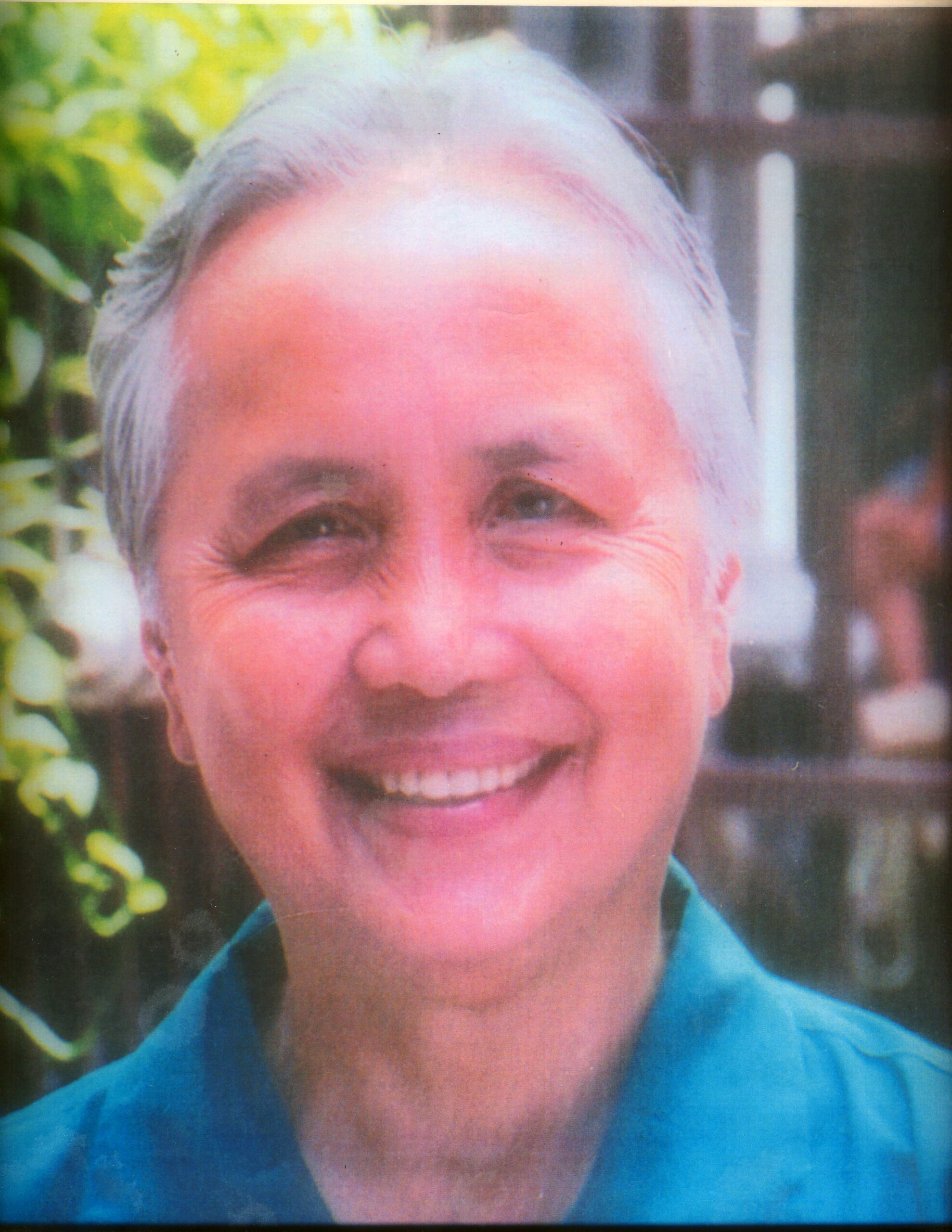
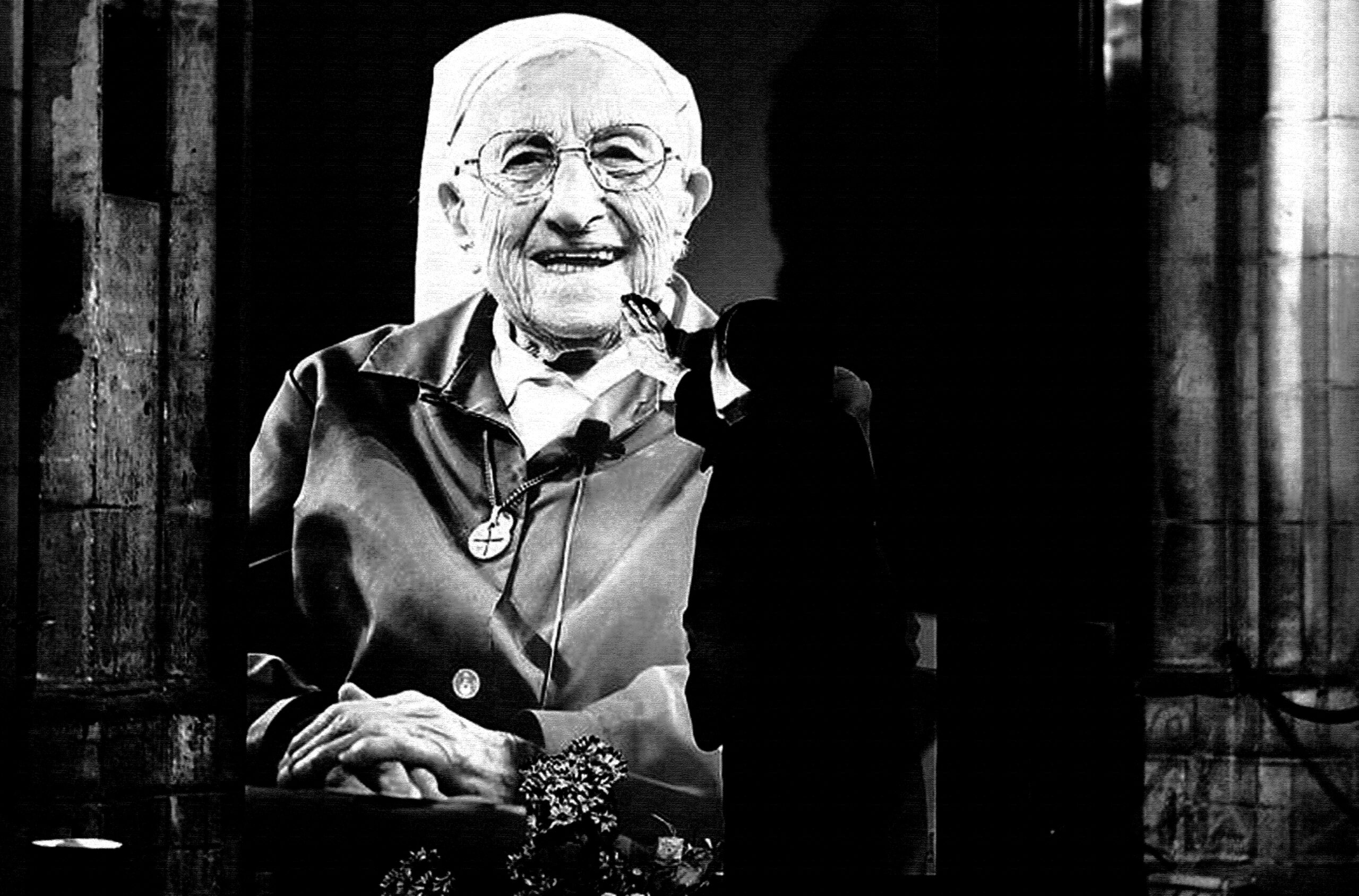
Nicknamed “The Naughty Nun” by the French press, she was also called "The French Mother Teresa." These two names describe the two sides of the rich and generous personality of Sister Emmanuelle who lived twenty years with the young rubbish collectors of Cairo. When at 85, she at last retired, she became an outspoken and courageous television celebrity, fighting on behalf of the poor and Christianity. Sister Emmanuelle ((1908–2008) was awarded Egyptian citizenship in 1991 and the “Légion d'honneur” by Jacques Chirac. She is an example of bravery, open–mindedness, energy and faith not only in God but in human beings.

WRITTEN BY

SHARE THE WORD

PUBLISHED ON

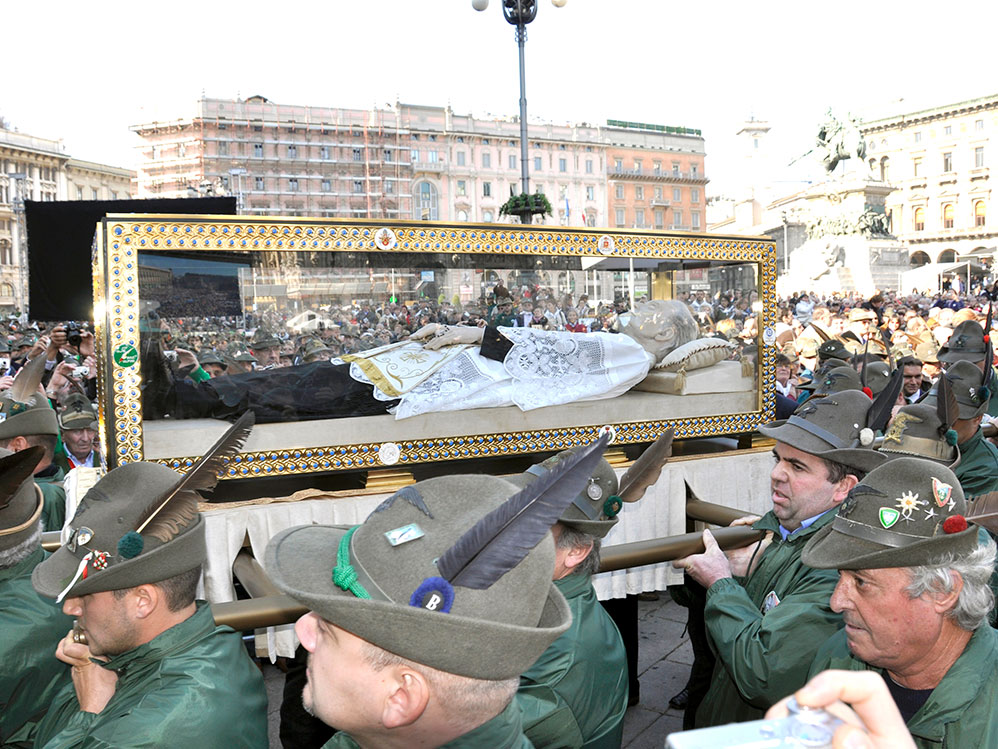
On October 20, 2008, at Callian, in southeastern France, in a retirement home, Sister Emmanuelle, possibly the most famous woman in the country, died at the age of 99, less than four weeks from celebrating her 100th birthday. She died serene in her sleep, only with the regret of not having died among her beloved zabaleen (rubbish collectors) she had helped in Cairo. Her death came soon after that of Abbé Pierre, the well known saintly priest of the homeless. Their two deaths plunged France into mourning. Homage was paid to them all over France and worldwide.

Of Sister Emmanuelle, President Nicolas Sarkozy said: “She was a sister to us all… She was a woman of high convictions, but also one of action.” Sarkozy added in his statement: “We miss her already.” French Foreign Minister Bernard Kouchner, who helped found the charity, Doctors Without Borders, said that the Sister’s faith could move mountains. He said it had been a joy to work with her. Jewish and Muslim leaders in France also issued emotional statements about her passing.

As President Nicolas Sarkozy took part, together with some of France’s best known figures, in the Requiem Mass in Notre Dame Cathedral, Sister Emmanuelle’s publisher released a tape she herself had prepared to promote her posthumous memoirs. It went: “When you hear this message, I will no longer be there. In telling about my life – of my whole life – I wanted to bear witness that love is more powerful than death. I have confessed everything, the good and the less good. Where I am now, life does not end for those who know how to love.”

In addition to the tape recording entrusted to her publishers, Sister Emmanuelle also left a funeral address that was read out to the dignitaries who attended the service in Paris: “Today, when you have once more taken the trouble for me, my soul and my heart are close to your soul and your heart. I want this dear meeting to go forward in joy. I have chosen light–hearted hymns. Sing them joyously and with full voice. I want to give you thanks, full of recognition for what you have done and what, I know, you will do again for thousands of children around the world…Yalla! Let’s go,” she declared in conclusion, using the Arabic term she had learned in Cairo.

WITH THE RUBBISH PICKERS
Sister Emmanuelle was born Madeleine Cinquin in Brussels, Belgium, on November 16, 1908, of a Belgian mother and a French father who was a manufacturer of lingerie. When she was six, her father drowned at sea, and she witnessed the event from the beach. Later in life she would say that it was this tragedy that determined her future: “That Sunday morning, the little girl understood that you cannot hang on to appearances, like the foam of the waves. Unconsciously, my vocation dates back from that. I sought the absolute, not the transient.”

At the age of twelve, Madeleine wanted to be a nun. She was inspired by Father Damien, a Catholic priest who helped lepers in Hawaii, now a saint. As a young woman, however, she did not shun from enjoying the pleasures of being bright and young during the Roaring Twenties, or from taking up smoking as a typical act of rebellion, or from being attracted to handsome young men. But in 1929, after studying religion and philosophy at the Sorbonne, she joined the Order of Notre Dame de Sion, taking the name Sister Emmanuelle.

These nuns ran several renowned French schools around the Mediterranean. She was assigned to teach Literature in Turkey, where she came into contact with Jewish and Muslim intellectuals. She taught in schools for well–off Turkish children but made a point of showing them the hardships of life by taking her classes to carry out sociological studies in poor areas. She later continued her teaching career in Tunisia and then in Alexandria, Egypt. After forty years of teaching, in 1971, when she was 62 years old, Sister Emmanuelle finally got permission from her congregation to start working with the poor. A real vocation within a vocation as It was the case of Mother Teresa of Calcutta.

In fact, it was retirement that enabled Sister Emmanuelle to fulfill her dream. With the blessing of her superiors, she settled in Cairo, hoping to dedicate herself to the lepers. When this proved impossible, the Pope’s representative in Egypt suggested she help the thousands of refuse collectors known as the zabaleen. The zabaleen, which means filth or rubbish, lived on the outskirts of Cairo at a rubbish dump called Ezbet El Nakhl.

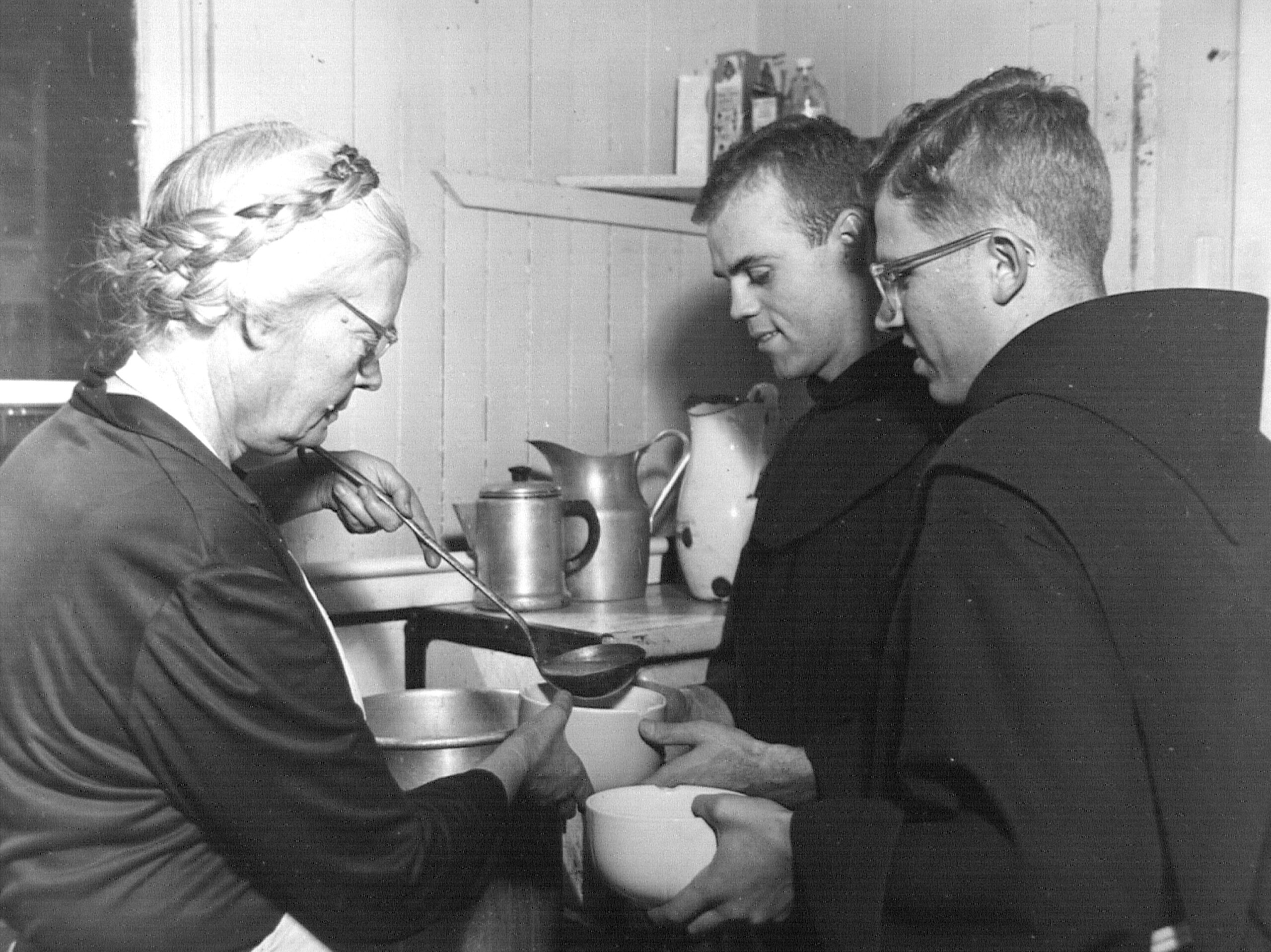
Ezbet El Nakhl was a squalid, brutal world of rats, lice and poverty, of cheap alcohol and of violence between children and against women, a dirty and unhygienic place where the rubbish of the metropolis was stored and sorted mostly by young people. The children were uneducated and had no way of entertaining themselves so they used to get into trouble. Sister Emmanuelle moved into Ezbet El Nakhl and lived in a small single room hut with very few possessions. She traveled into the city everyday at 5 o’clock in the morning for Mass at the city convent. Sister Emmanuelle lived with very little food and had to put up with the many problems that the zabaleen lived with, like white worms in food supplies and housing, fleas and disease.

“She was living right among them, the garbage collectors, the pigs, the whole mess. I had never seen anything like this in my life,” said Dr. Mounir Neamatalla, a leading Egyptian expert in environmental science and poverty reduction who worked closely with her throughout the 1980s. “You could see one of the worst qualities of life on the planet, but in this inferno was an enterprising population that worked like ants,” he said.

THE “SALAM” CENTER
Sister Emmanuelle had not been at Ezbet El Nakhl long when she decided to open a school in her spare room. She accepted any child of any religion who was willing to learn. She often took her small class on field trips to the pyramids and other famous places around Cairo. She started teaching children and men basic Arabic. Her classes were very successful, and many passed Arabic reading and writing exams – including herself.

Sister Emmanuelle was desperate for a youth club and center to help the zabaleen. She set about collecting funds from local charities and around Europe. She finally achieved this two years later. A kitchen, club, pool, football field and lounge were set up for the youth of the Ezbet El Nakhl. She called it the ‘Salam Center,’ which is Arabic for peace. It was opened on March 29 1979 and the center also provided social, medical, cultural and educational help.

When Sister Emmanuelle was satisfied with her work at Ezbet El Nakhl, she moved on to Mokkatam; a refuse collector’s dump which was in worse situation than Ezbet El Nakhl. There were thousands of families living on a gravesite and their conditions were terrible. Sister Emmanuelle started the work of collecting money from charities to build a factory for composting material, which she finally achieved. Sister Emmanuelle’s work in the rubbish slums contributed greatly to the progress of the living conditions in the refuse collectors’ lives.

She reluctantly left Egypt in 1993, at the age of 85. Two years after her departure, a young Comboni missionary, Fr. Luciano Verdoshia, who was lecturing in Dar Comboni, the Institute of Arabic and Islamic Studies of Cairo, took up Sister Emmanuelle’s legacy and started working with the zabaleen. He is still there, carrying on with his charitable work.

A MEDIA PERSONALITY
Upon her return to France, Sister Emmanuelle continued to speak out for the needy, regularly appearing on French television, her white hair swept up into a gray scarf and her eyes sparkling behind large glasses. She made her first appearance on French television in 1990, and her mixture of infectious enthusiasm, humor, and the unquenched moral indignation – with which she hit the bourgeois complacency and political corruption – soon made her a firm favorite.

She aged to be almost a centenarian, always active and full of joy of living and when her strong body started to show signs of deterioration, she expressed her feeling in one of her books: “Old age is the greatest self–emptying.

I had the naivety of thinking that old age would not concern me. I could not imagine this exhaustion that invades my body from head to foot. We have to accept, moment by moment, this powerlessness that becomes bigger every day. It is very hard, but at the same time, it is very good for our spiritual life: it frees us from our “ego.” I was intoxicated by the joy of relentless activity. Today, my poverty is inaction. It is possibly the greatest grace of my life because I am now in the naked truth”.

Share Your Thoughts

All comments are moderated

From The Same Issue

The articles and content about this issue

From The Same Issue

The articles and content about this issue

From This Topic

The articles and content about this topic

From This Topic

The articles and content about this topic

Explore Other Topics

Browse other coverage

Explore Other Topics

Browse other coverage

WM SPECIAL

Presents, discusses and draws readers to reflect on issues of outmost relevance to the world today.


FRONTIERS

Very often, mission is carried out in frontier situations around the world. Those who embrace these situations have much to share.


UNITY IN DIVERSITY

Writer Ilsa Reyes will be exploring the richness of Pope Francis’s latest encyclical Fratelli Tutti with a view of helping our readers to get a grasp of the this beautiful papal document.


FRONTLINE

Puts to the front committed and inspiring people around the world who embrace humanitarian and religious causes with altruism and passion.


IN FOCUS

Focus on a given theme of interest touching upon social, economic and religious issues.


FAITH@50

As the Philippines prepares to celebrate 500 years of the arrival of Christianity. Fr. James Kroeger leads us in this series into a discovery journey of the landmark events in the history of faith in the Philippine archipelago.


INSIGHT

Aims to nurture and inspire our hearts and minds while pondering upon timely themes.


FILIPINO FOCUS

The large archipelago of the Philippines, in its richness of peoples and cultures, offers varied and challenging situations for mission.


FOLLOW ME

Reflections and vocation stories that shape up the lives of young people.


MISSION IS FUN

As humor and goodness of heart are qualities of Christian and missionary life, the new column “Mission is fun” will be publishing some anecdotes and stories that have happened in a missionary context to lighten up the spirits and trigger a smile in our faces.


LIVING COMMUNION

To help readers of World Mission live this year dedicated to Ecumenism, Interreligious Dialogue and Indigenous Peoples, Tita Puangco, writer and lecturer, shares in this section insights on the spirituality of communion.


WINDS OF THE SPIRIT

A historic view of the Catholic movements that emerged from the grassroots as an inspiration by the Holy Spirit.


BRIDGE BUILDERS

On the Year of Ecumenism, Interreligious Dialogue and Indigenous Peoples, radio host and communicator Ilsa Reyes, in her monthly column, encourages Christians and people of good will to be one with their fellow people of other sects, religions and tribes.


INTERVIEW

Questions to a personality of the Church or secular world on matters of interest that touch upon the lives of people.


WORLD TOUCH

News from the Church, the missionary world and environment that inform and form the consciences.


CARE OF THE EARTH

A feature on environmental issues that are affecting the whole world with the view of raising awareness and prompting action.


EDITORIAL

The editor gives his personal take on a given topic related to the life of the Church, the society or the world.


YOUNG HEART

A monthly column on themes touching the lives of young people in the Year of the Youth in the Philippines by radio host and communicator I lsa Reyes.


SCROLL

A missionary living in the Chinese world shares his life-experiences made up of challenges and joyous encounters with common people.


EXTRAORDINARY PEOPLE

Life stories of people who deserve to be known for who they were, what they did and what they stood for in their journey on earth.


ONE BY ONE

Stories of people whom a missionary met in his life and who were touched by Jesus in mysterious ways.


INCREASE OUR FAITH

Critical reflection from a Christian perspective on current issues.


SPECIAL MOMENTS

Comboni missionary Fr. Lorenzo Carraro makes a journey through history pinpointing landmark events that changed the course of humanity.


PROFILE

A biographical sketch of a public person, known for his/her influence in the society and in the Church, showing an exemplary commitment to the service of others.


WM REPORTS

Gives fresh, truthful, and comprehensive information on issues that are of concern to all.


LIFE'S ESSENTIALS

A column aimed at helping the readers live their Christian mission by focusing on what is essential in life and what it entails.


ASIAN FOCUS

Peoples, events, religion, culture and the society of Asia in focus.


THE SEARCHER'S PATH

The human heart always searches for greatness in God’s eyes, treading the path to the fullness of life - no matter what it takes.


INDIAN FOCUS

The subcontinent of India with its richness and variety of cultures and religions is given center stage.


AFRICAN FOCUS

The African continent in focus where Christianity is growing the fastest in the world.


JOURNEY MOMENTS

Well-known writer and public speaker, Fr. Jerry Orbos, accompanies our journey of life and faith with moments of wit and inspiration based on the biblical and human wisdom.


IGNATIUS STEPS

On the year dedicated to St. Ignatius of Loyala, Fr. Lorenzo Carraro walks us through the main themes of the Ignatian spirituality.


THE SEVEN LAST WORDS OF JESUS

Fr. John Taneburgo helps us to meditate every month on each of the Seven Last Words that Jesus uttered from the cross.


INSIDE THE HOLY BOOK

In this section, Fr. Lorenzo delves into the secrets and depths of the Sacred Scriptures opening for us the treasures of the Sacred Book so that the reader may delight in the knowledge of the Word of God.


CONVERSATIONS

Reflections about the synodal journey on a conversational and informal style to trigger reflection and sharing about the synodal path the Church has embarked upon.


VATICAN II

This 'mini-course' series provides a comprehensive exploration of Vatican II, tracing its origins, key moments, and transformative impact on the Catholic Church.


COMBONIS IN ASIA

This series offers an in-depth look at the Comboni Missionaries in Asia, highlighting their communities, apostolates, and the unique priorities guiding their mission. The articles provide insights into the challenges, triumphs, and the enduring values that define the Comboni presence in Asia.


BEYOND THE SYNOD

Following the Synod on Synodality, this series examines how dioceses, parishes, and lay organizations in the Philippines are interpreting and applying the principles of the synod, the challenges encountered, and the diverse voices shaping the synodal journey toward a renewed Church.


A TASTE OF TRADITION

This series introduces the Fathers of the Church, featuring the most prominent figures from the early centuries of Christianity. Each article explores the lives, teachings, and enduring influence of these foundational thinkers, highlighting their contributions the spiritual heritage of the Church.


A YEAR OF PRAYER

In preparation for the 2025 Jubilee Year under the theme “Pilgrims of Hope,” 2024 has been designated a Year of Prayer. World Mission (courtesy of Aleteia) publishes every month a prayer by a saint to help our readers grow in the spirit of prayer in preparation for the Jubilee Year.


OUR WORLD

In Our World, the author explores the main trends shaping contemporary humanity from a critical and ethical perspective. Each article examines pressing issues such as technological advancement, environmental crises, social justice, and shifting cultural values, inviting readers to reflect on the moral implications and challenges of our rapidly changing world.


CATHOLIC SOCIAL DOCTRINE

This series unpacks the principles of Catholic Social Doctrine, offering a deep dive into the Church's teachings on social justice, human dignity, and the common good.


HOPEFUL LIVING

Hopeful Living’ is the new section for 2026, authored by Fr. James Kroeger, who dedicated most of his missionary life to the Philippines. In this monthly contribution, he will explore various aspects of the virtue of hope. His aim is to help readers align their Christian lives more closely with a hopeful outlook.


PHILIPPINE CROSSROADS

Filipino Catholic scholar Jose Bautista writes each month about how the Philippines is at a crossroads, considering the recent flood control issues and other corruption scandals that have engulfed the nation. He incorporates the Church’s response and its moral perspective regarding these social challenges.


BIBLE QUIZ

Test your knowledge and deepen your understanding with our Bible Quiz! Each quiz offers fun and challenging questions that explore key stories, themes, and figures from both the Old and New Testaments.


Shopping Cart