
Non-Filipinos, Westerners especially, are always surprised, even shocked, with the way we deal with death. In particular, they are shocked with our wakes, which are prolonged and festive, with much eating, drinking, conversations, joking, card-playing and singing. Through the years, wakes seem to have become even noisier, the guitar playing now substituted by loud karaoke. In many wakes too, you’ll often find a commotion around the coffin as if they were conversing with the deceased, “Oh Ma, here’s Junior’s son. . .”, “Oh Pa, you’re looking good” and then you realize they have a video camera (sometimes on a cellphone or a tablet) zooming in on the deceased so the images can be sent through a web camera into the Internet, and allow relatives overseas to pay their respects.
On November 1, when our cemeteries come alive, we see the same fanfare, as thousands of people come in for a combined fiesta and picnic, a replay of the wakes. The drinking in cemeteries became so problematic that many cities now ban that because of the rowdy behavior that comes after alcohol intake.
Shouldn’t wakes be more solemn?, my foreign friends ask. And where’s the mourning? I explain there is, in fact, a lot of mourning. At the wake, the closest relatives are obliged to tell and re-tell the circumstances around the death, often accompanied by weeping. There will be periodic outbursts of grief, especially if the death was unexpected, through an accident, for example, a stroke or heart attack or. . .a murder, which becomes even noisier because of the non-stop chirping of chicks that have been placed on the coffin, the purpose being to bother the conscience of the murderer.
Richer families, especially of Chinese descent, will hire professional mourners – made famous in the movie “Crying Ladies” – who will suddenly show up wailing and crying and extolling the virtues of the deceased.
GRIEF AND OVERACTING
And wait till the funeral comes along, I tell my overseas friends. That’s where you see an outpouring of grief, to the point of o.a. (overacting) with almost mandatory hysterical fainting. The expressions of grief build up until the coffin is about to be entombed, with family members, usually the women, shouting out, “Isama mo na ako, isama mo na ako!” (“Take me along!”). And just as a foreigner is now convinced that there is indeed grief, there will be someone among the mourners who will quip, “Itulak mo na, itulak mo na!”, (“Push her in, push her in!”).
Culture involves performance, complete with scripts, some of which are strictly followed while others are improvised on the spot. Among the rituals, the ones around the dead are the ones that involve the most performance, and this happens for many reasons.
Death is extremely disruptive to the social fabric, forcing people to wonder about many existential questions: why do we die? Why are we born in the first place? Why did this good person have to die so young? Theologians talk about theodicy, questions about evil on earth, and death always brings up those issues as well. For example, why does a merciful God allow people to suffer so long before dying? Why does He allow children to die?
Cultures have evolved many different responses to death, affected by environment, religion, and, ultimately, life circumstances, the ones that make us raise philosophical questions. In other words, the cultures around death deal much more with the living than the dead.
Our long wakes have many purposes. First and foremost is the need to bring the family together. This is not easy, considering that we have extended families recognizing paternal and maternal sides. (Many societies only recognize one side, usually the paternal.) This is made more complicated by the extent of Filpino migration, both domestic and international, which means long travel times to get home for a funeral. The wake functions then as a family reunion and woe on those who do not have an acceptable excuse for not showing up: that person would be subject to much gossip in the years to come as being uncaring, sometimes with added comments like, “Oh, that’s because he’s lived in America so long.”
Extended wakes, with all the fanfare, also reflect our sociality. The Filipino fears being alone, and when someone dies, we extend that fear not only to the bereaved relatives, who we think needs company to be consoled, but also to the dead. In western countries, funeral homes will often have visiting hours, and will close down in the evening to re-open the next morning. Some upper-class Filipinos are shifting to this practice, informing friends that visiting hours are limited, much to the shock of other Filipinos who will gossip about how the family is so uncaring (or again, “western”), leaving the dead on their own at night.
THE ROLE OF SOCIAL STATUS
Another reason why we have prolonged wakes is that we think this is good for the health of the bereaved relatives. We think that the relatives will need a multitude of friends and relatives to console them, together with the eating and singing and other social activities. Again, the idea is not to leave the closest bereaved relatives alone, lest they become overwhelmed by grief.
To some extent, it does help to have company, and there’s probably some psychotherapeutic value for the closest relatives to be talking about the deceased but we forget this can be tiring even after a day or two.
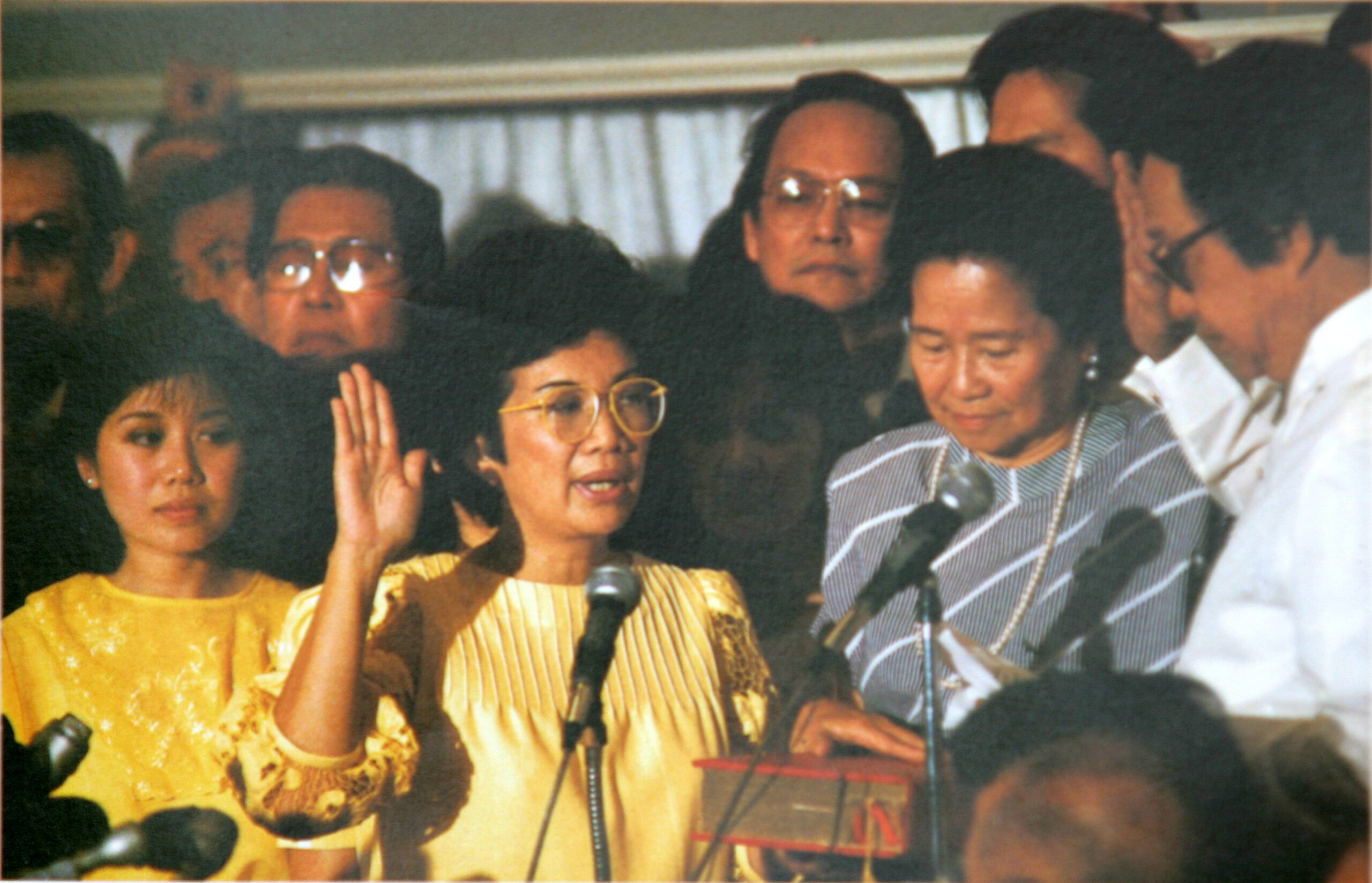
Despite the stress of prolonged wakes, many families still opt for these long wakes because they have still another added function, that of social status. Upper-class families, especially those of politicians, have prolonged wakes because of the number of people who will want to visit. Notice how this extends into the funeral. The day-long funeral procession of the late President Corazon Aquino showed this important aspect of our death rituals, the wake and the funeral becoming paalam, a way of saying goodbye, as well as pahatid, sending off an important visitor to their destination.
The paradox is that lower-class families are also forced into prolonged wakes but for a different reason: economic need. First, relatives intending to go home to the wake have limited finances for travel, sometimes even having to go into debt to get home, and having to take the cheapest modes of transportation. You see this all the time with household helpers. Second, the relatives also need time to raise money for the wake and the funeral, and sometimes a long wake does bring in more contributions to defray expenses.
A TIME TO MOVE ON
Many other customs are based on religious beliefs, and these beliefs may be a mix of pre-colonial and Christian elements. For example, we have the pang-siyam or prayers on the 9th day, and then another one on the 40th day. On the surface, these seem to be Christian in nature, but I suspect there are pre-Christian influences as well, mainly around the idea that the soul of the deceased needs time to move on to the next world.
There may be another psychotherapeutic function with the 9th and 40th day prayers, and this is to allow the living to accept the separation, to bring the mourning to a closure. Even with the 9th and 40th day observances, there may not be enough closure and the first November 1 visit to the cemetery, after a death, is usually more solemn, a time to remember the recently deceased.
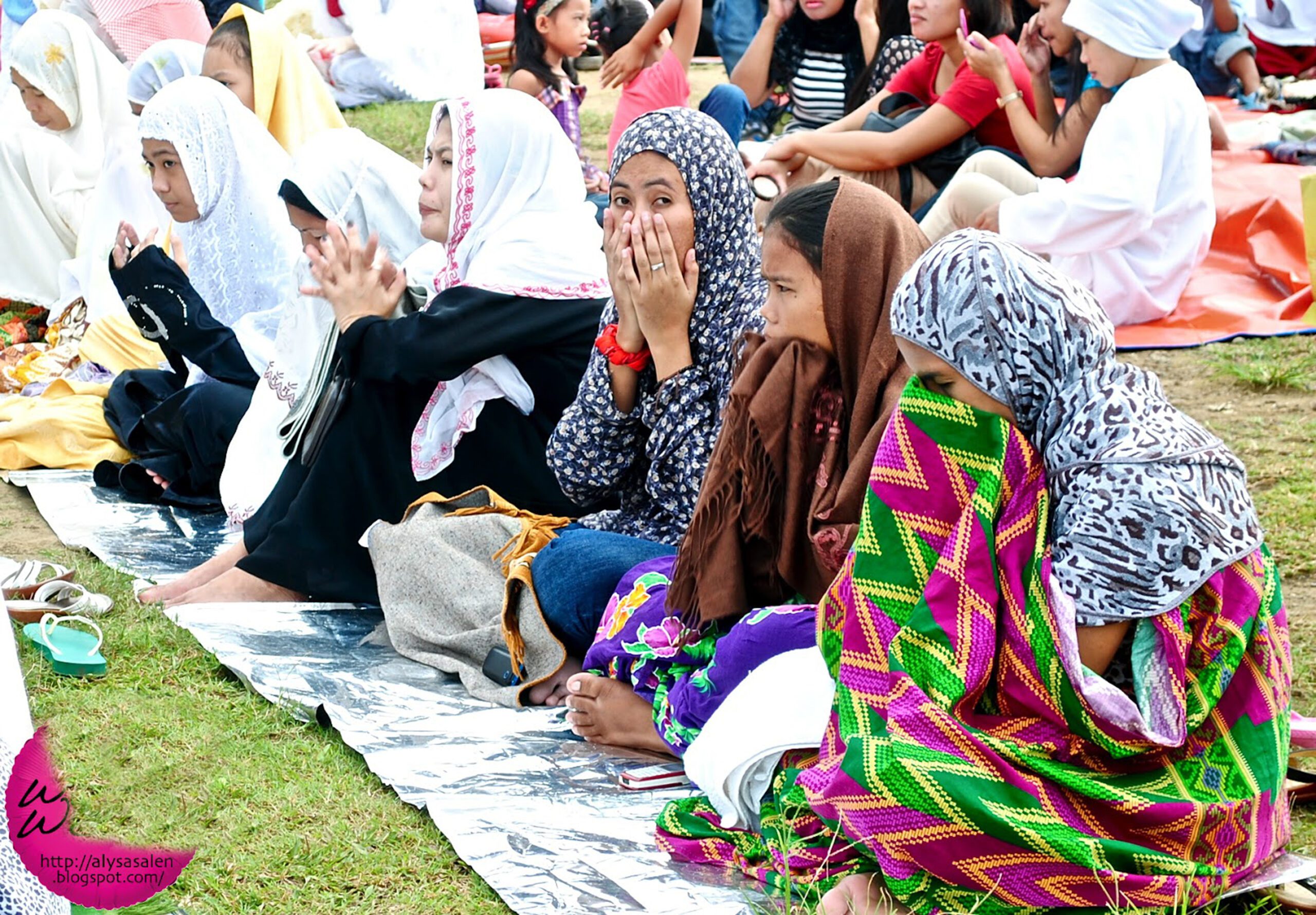
I should point out that there is no single “Filipino” way of mourning. So far, what I’ve discussed is the Filipino Christian customs and, even there, we will have variations among the different ethnolinguistic groups. The differences are even more sharp when it comes to Filipino Muslim groups, that follow a universal Islamic tenet of burying the dead on the day they die, preferably before sunset. In many cases, the dead are buried very simply, in a shroud. These practices reflect Islamic teachings about the body being a temporary home for the soul and that death marks the beginning of real life.
There are many rules around the burial of Muslims, again with variations from one place to another. Some are more strictly enforced, especially in relation to the Islamic faith. For example, the head of the deceased must be buried facing the direction of Mecca, the same direction they use for their five daily prayers. Another strict rule is that Muslims cannot be buried in a cemetery of non-Muslims. Catholic cemeteries have a similar rule, and are, in fact, even stricter, forbidding burial of a Catholic who have committed suicide, or who became Masons.
Until recently, overseas Chinese also preferred having their own cemeteries but this has changed since so many of the ethnic Chinese now consider themselves Filipinos. In fact, there is a kind of diaspora going on right now where the remains of the Chinese in Chinese cemeteries are exhumed and moved to a memorial park or to a Catholic columbarium, an example of how the changing realities of the living affect our death customs.
WEB CAMERAS AND POWERPOINT
Death customs are constantly changing. Some come about because of new technologies. It was St. Peter’s Chapel that first started the e-burol (electronic burol) with web cameras before the coffin, in recognition that many overseas Filipinos will not be able to fly home for a wake and funeral and will have to pay their respects through the Internet.
Another quaint change that’s catching on are powerpoint presentations of photographs of the deceased, from birth to late life, played over and over again during the wake. These presentations can be quite therapeutic for the mourners, as they recall happier times.
Other practices are more complicated, cremation being the prime example. Cremation was practiced in different parts of the Philippines before the Spaniards arrived. The Catholic church disapproved of cremations because this seemed to defile the temple of the Holy Spirit but, in recent years, the ban was lifted. Cremation has since spread across the country, with churches themselves building columbaria for ashes.
There are practical reasons for the shift, given the way cemeteries are now becoming so overcrowded; I actually saw a municipal cemetery with a sign posted, “No Vacancies.” But there has been resistance as well to cremation, especially among older Filipinos. The resistance is not so much theological than an extension of the idea that the dead are still like the living. One older person explained her opposition to cremation: “Patay na, susunugin pa, tapos didikdikin pa ang mga buto.” (“The person’s already dead, then you burn him, and then pound on the bones.”)
Cremation has also posed new challenges on our mourning practices. The cultural scripts were very clear for a burial, including prayers right before entombment. A cremation is different. What does one do during the 2-hour cremation? Some families pray, which can be difficult because it is a long wait. Others eat and chat, which may seem disrespectful to some. Some families allow everyone to attend and others request that it be limited to family members. As usual, I have heard negative responses to the restricting of the cremation to immediate family, again based on the idea that everyone should be allowed in the pahatid but I can understand too that, like our airport goodbyes, Filipinos overdo this goodbye routine with entire clans or barangays participating and with a two-hour wait that can be a logistical nightmare.
I have talked to some people who say that this waiting period needs to be better planned, with more rituals or scripts to help the family. One friend told me how disconcerted the family was, especially the grandchildren, when the deceased’s coffin was suddenly pushed into the crematorium, without warning. There was almost a “whooshing” sound, she said, as if the dead had been sucked into some vacuum. Not only that, the cremation itself, with crackling sounds, can be heard from the outside, which was terribly distressing to older relatives.
Funeral rituals are important because the grief and mourning reaches a high point, as relatives and friends realize they are going to be separated from the deceased. Again, I have seen some changes that are worth propagating.
One funeral I attended had relatives releasing butterflies right before entombment, the butterflies reminding us of how transient life is. That same funeral had a lay person officiating with Catholic rituals. He explained that he was not a priest but had been trained for these rituals. As with any cultural change, I later heard mixed reviews, some people saying they would have preferred a “real priest” while others said it was good to have someone who wasn’t rushing (which is what happens with overworked priests) and who was eloquent and comforting. I think that, in the future, we will see more of such lay people.
People also seem to be realizing that wakes need not be so prolonged, and that it can be stressful, rather than comforting, for the grieving family. I see a trend now of having the burial within two or three days. There are also families that opt to have a cremation shortly after the person dies, with the wake limited to a few days and with the urn and ashes in the chapel, rather than a coffin.
I also see eulogies and memorial services delayed, sometimes even after the burial. This is happening for faculty members at the University of the Philippines. The old practice was to have the coffin of the deceased faculty brought over to the campus, to the Catholic or Protestant church for one service, and then to the professor’s home college for another one. These days, people are more considerate, understanding this can be difficult for the family, so the memorial service is postponed, sometimes even several weeks after the death.
EXCESSIVE EXPENSES
The eulogies, I have to say, are still very “Filipino” – being rather long with flowery speeches. I attended one where, after a eulogy that went from 6 p.m. to close to midnight, the organizers announced there would be a second round the next night.
Culture sometimes needs to be questioned, especially when it becomes dysfunctional. One time, a household helper wanted to borrow P40,000 for her father’s funeral expenses, explaining this was to feed visitors and to buy a memorial park cemetery lot. I asked why the wake was going to be so long (12 days) and why they couldn’t use the municipal cemetery and she frankly said people would think they were poor and what was their relative doing working in Manila and not bringing home money for a more “decent” wake and funeral?
I just had to tell her all the expenses were not going to be appreciated by the dead. In fact, I said maybe her deceased father would turn in his grave seeing how their impoverished family was going into debt just to bury him. But no, she insisted, people would talk if they did not have a “proper” funeral and, besides, this was the “Catholic” custom.
Our priests and cathechists will have to find ways to change this perception that extravagance and prolonged wakes and funerals are “Catholic.” There’s room certainly for a more festive observance of wakes and funerals and November 1, but we need more solemnity, a time to reflect about our existence on earth, of the goodness of the deceased, and how we might want to carry on their legacy. Wakes, funerals and November 1 – they’re as much about the living, as of the dead.