
The work of Mother Teresa of Calcutta and her Missionaries of Charity caught the imagination of a world jaded by personal comfort and self-seeking. The story is told, for example, of a visitor watching Mother Teresa (or was it one of her nuns?) cleaning a particularly repulsive ulcer on a patient in the nuns’ hospice for the dying poor. Appalled, he blurted out: “I would not do that for a million dollars!” To which the nun replied: “Neither would I.” She was doing for love of Christ what neither she nor the visitor would do for any amount of money, and giving witness to her faith in a way which boggles the minds of men and women of today.
Mother Teresa’s Sisters and the many other congregations which care for the sick poor are carrying on a very ancient tradition in Christianity. The First Council of Nicaea, in the year 325, admonished Church people to care for the sick, the poor, widows and strangers, and directed that a hospital be built in every cathedral town. Going back further, we find the wonderful passage in Matthew 25 in which the Lord says that whatever is done, or not done, to the hungry, the naked, the sick and imprisoned, is done or not done to Him. We note also St. Paul organizing a collection for the poor in Jerusalem, in references scattered among his letters.
The tradition was carried on down through the Middle Ages in Europe: hospitals for the poor often being attached to monasteries and serviced by monks and nuns. This is reflected in the old French term for hospital, namely hotel-Dieu or hostel of God. Nor were the early hospitals the squeaky-clean and sanitary institutions of modern times. Caring for patients with all sorts of loathsome and communicable diseases required heroic virtue and a willingness to risk one’s own life.
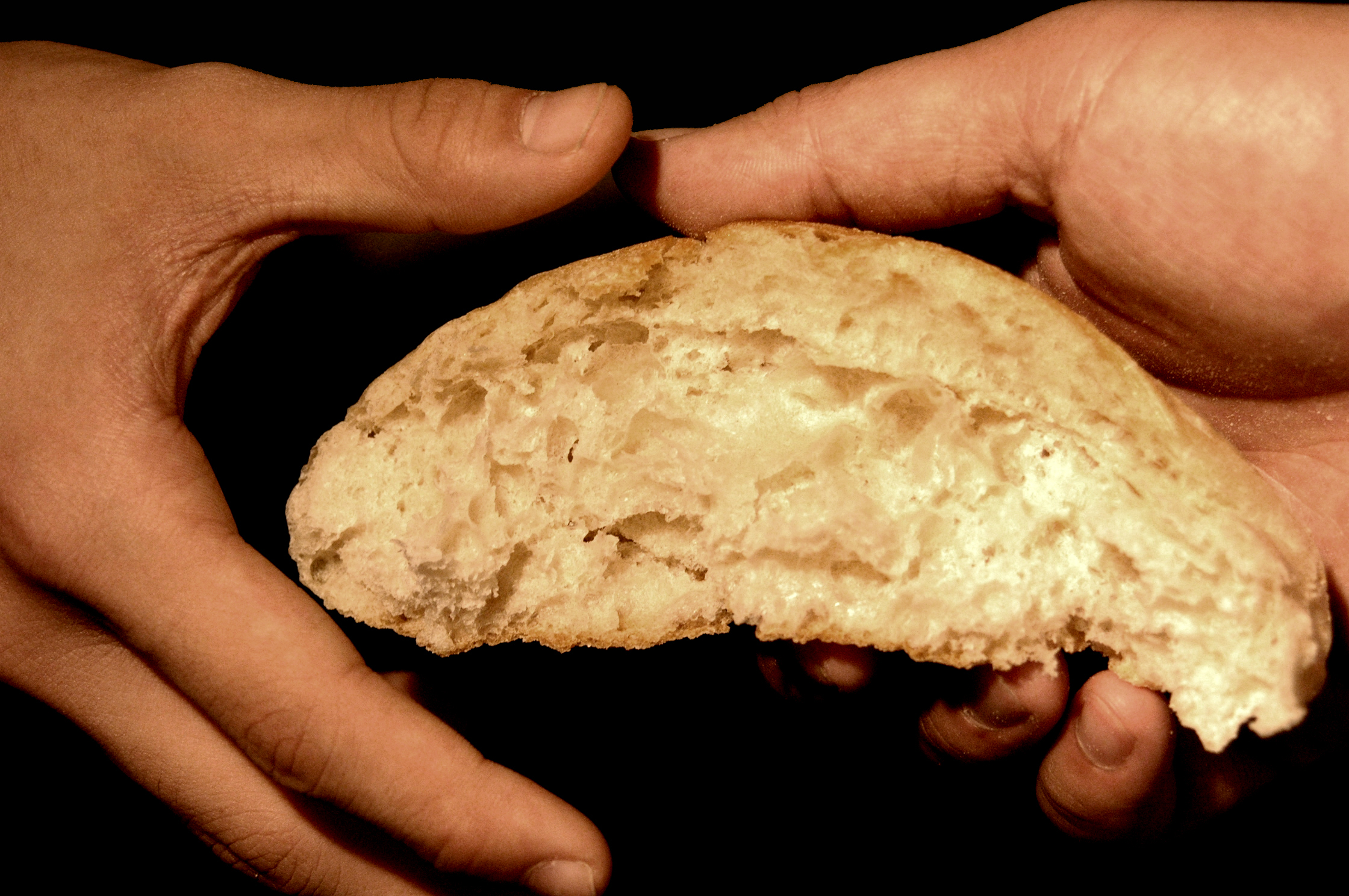
The tradition of dedicated, costly service to those in need – seen as other Christs – lives on today especially in places where the human need is greatest: in Africa and other parts of the developing world, in the slums of great cities, in prisons, in hospitals for AIDS and cancer victims. But note that, in the tradition, there are three elements: the element of service to one in need; service performed at significant cost to oneself; and service performed out of love for the other. Only when all three elements are present, can the act be truly termed an act of charity, i.e., of love.
It is this last element which, according to Pope John Paul II, elevates the natural virtue of solidarity, meaning the sense of belonging to a community, to the level of a Christian virtue:
In the light of faith, solidarity seeks to go beyond itself, to take on the specifically Christian dimension of total gratuity, forgiveness and reconciliation. One’s neighbor is then not only a human being with his or her own rights and a fundamental equality with everyone else, but becomes the living image of God the Father, redeemed by the blood of Jesus Christ and placed under the permanent action of the Holy Spirit. One’s neighbor must, therefore, be loved, even if an enemy, with the same love with which the Lord loves him or her; and for that person’s sake, one must be ready for sacrifice, even the ultimate one: to lay down one’s life for the brethren (cf. 1 Jn 3:16). (Solicitudo rei socialis, No. 40).
COUNTERFEIT CHARITY
In the Gospel, the Lord warns against a form of “charity” which proceeds from a desire for recognition rather than from true love of the neighbor:
Be careful not to parade your good deeds before men to attract their notice: by doing so you will lose all reward from your Father in Heaven. So when you give alms, do not have it trumpeted before you; this is what the hypocrites do in the synagogues and in the streets to win men’s admiration. I tell you solemnly, they have had their reward. But when you give alms, your left hand must not know what your right is doing: your almsgiving must be secret, and your Father who sees all that is done in secret will reward you (Matthew 6:1-4).
The injunction immediately brings to mind the waiting sheds, road repairs and basketball courts scattered around the Philippines and, until recently, the overpasses in Metro Manila, each with the name prominently displayed of the politician who facilitated the release of funds for its construction – his or her “gift” to the people! Aside from the brazen “parading of good deeds before men” there is never a mention that it was not the politician’s money but public funds – the people’s money – which went into the construction.
Behind this is the expectation, here in the Philippines, that elected officials are informal “Departments of Social Welfare,” ready to assist their needy clients with jobs and dole-outs sourced from their “Countryside Development Funds” or other “pork barrel” allocations. Politicians realize that their chances of reelection are related far more to their fulfilling of this expectation than to their performance, let us say, on the floor of Congress. As a result, they have adapted to these expectations and institutionalized their roles as service providers,
Much of this is reminiscent of the city political machines in the United States of a hundred and more years ago. Listen, for example, to the voice of long-time New York State Senator George Washington Plunkitt (1842-1924), who is said to have held “office” sitting on the chair of a shoeshine stand outside New York City Hall:
What tells in holding your grip on your district is to go right down among the poor families and help them. I’ve got a regular system for this. If there’s a fire in Ninth or Tenth or Eleventh Avenue, for example, any hour of the day or night, I’m usually there with some of my election district captains as soon as the fire engines. If a family is burned out, I don’t ask them if they are Republicans or Democrats, and I don’t refer them to the Charity Organization Society, which would investigate their case, in a month or two, and decide if they are worthy of help, about the time they are dead from starvation. I just get quarters for them, buy clothes for them if their clothes were all burned up, and fix them up until they get things running again. It’s philanthropy, but it’s politics too – mighty good politics. Who can tell me how many votes one of those fires brings me? The poor are the most grateful people in the world, and, let me tell you, they have more friends in their neighborhoods than the rich have in theirs… (chnm.gmu.edu/mcpstah/…/wp…/cornet_cartoon-quote-handout.pdf)
More subtle is the “charity” which contributes to the poor in a spirit of condescension, or to make oneself feel virtuous, or to validate one’s self-image and status as an upper-class person. They may indeed be acts of service, but they lack the element of cost to self and heartfelt love of the neighbor which marks real charity.
CHARITY TRANSCENDS JUSTICE
Moreover, counterfeit charity can be harmful to the real interests of those whom it presumably benefits. A politician whose reelection depends on the votes of the poor may well prefer to “keep’em poor and dependent” rather than to see them move up economically and socially. Indeed, the collapse of the political machine to which G. W. Plunkitt belonged has been attributed both to the professionalization of social welfare under President Roosevelt and to the social mobility of the Irish immigrant families who were his constituency – as the grandchildren went to college, moved to the suburbs and (worst of all!) became Republicans.
Corporations which put millions of pesos into programs of “corporate social responsibility” may, at the same time, be driving small farmers off their land, polluting the environment, manipulating prices, putting thousands of people’s lives at risk through unsafe passenger ships and hiding the facts on dangerous products.
Even charity, which is inspired by genuine love of the neighbor and which is devoted to his or her immediate needs, while commendable in itself, can distract us from the structural injustice – in the land-owning system and legal system and educational system and tax system and the rest – which lies at the root of the people’s needs.
Is there, then, a conflict between charity and justice? Pope Benedict XVI, in his encyclical “Caritas in Veritate,” says “no,” and in words echoing those of John Paul II quoted above, he tells us that indeed true charity demands justice but also goes beyond it:
On the one hand, charity demands justice: recognition and respect for the legitimate rights of individuals and peoples. It strives to build the earthly city according to law and justice. On the other hand, charity transcends justice and completes it in the logic of giving and forgiving. The earthly city is promoted not merely by relationships of rights and duties, but to an even greater and more fundamental extent by relationships of gratuitousness, mercy and communion (No. 6).
A SOCIETY LIVING IN SIN
Here, I mention a somewhat embarrassing fact: my predecessors, Jesuits of what is now the Maryland Province of the Society of Jesus, were slaveholders. They owned plantations which supported the mission, plantations manned by Negro slaves. Moreover, in the debates of the time, Jesuits who had been born and raised in the American South defended slavery, while those from Europe opposed it. I cite this bit of American history in order to point out how strongly one’s culture – the way of life and institutions within which one is brought up – can influence one’s moral judgments. What is seen by an outsider – and objectively perhaps – as a gross violation of human dignity, can easily be seen by the “native” as normal and proper.
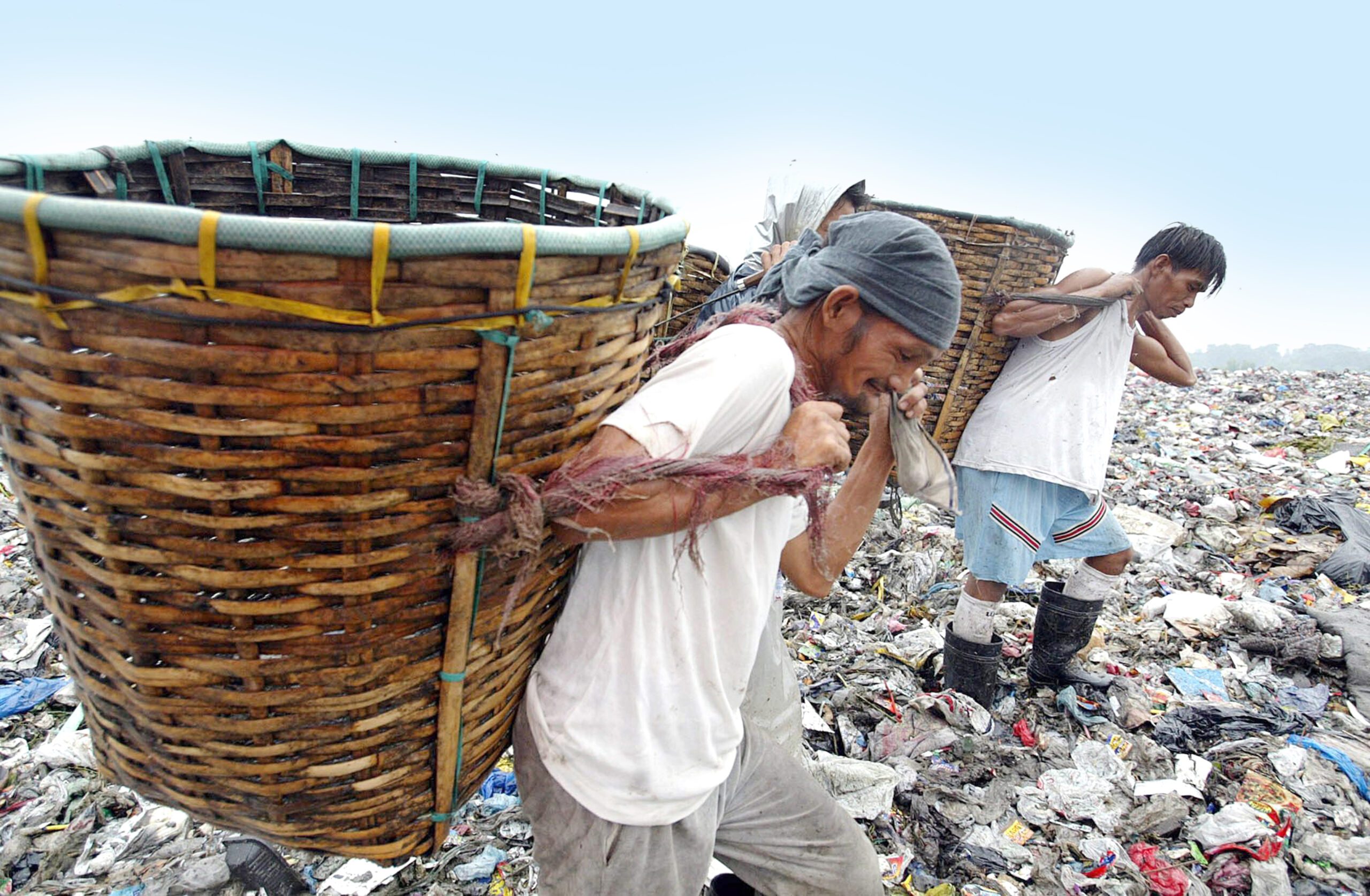
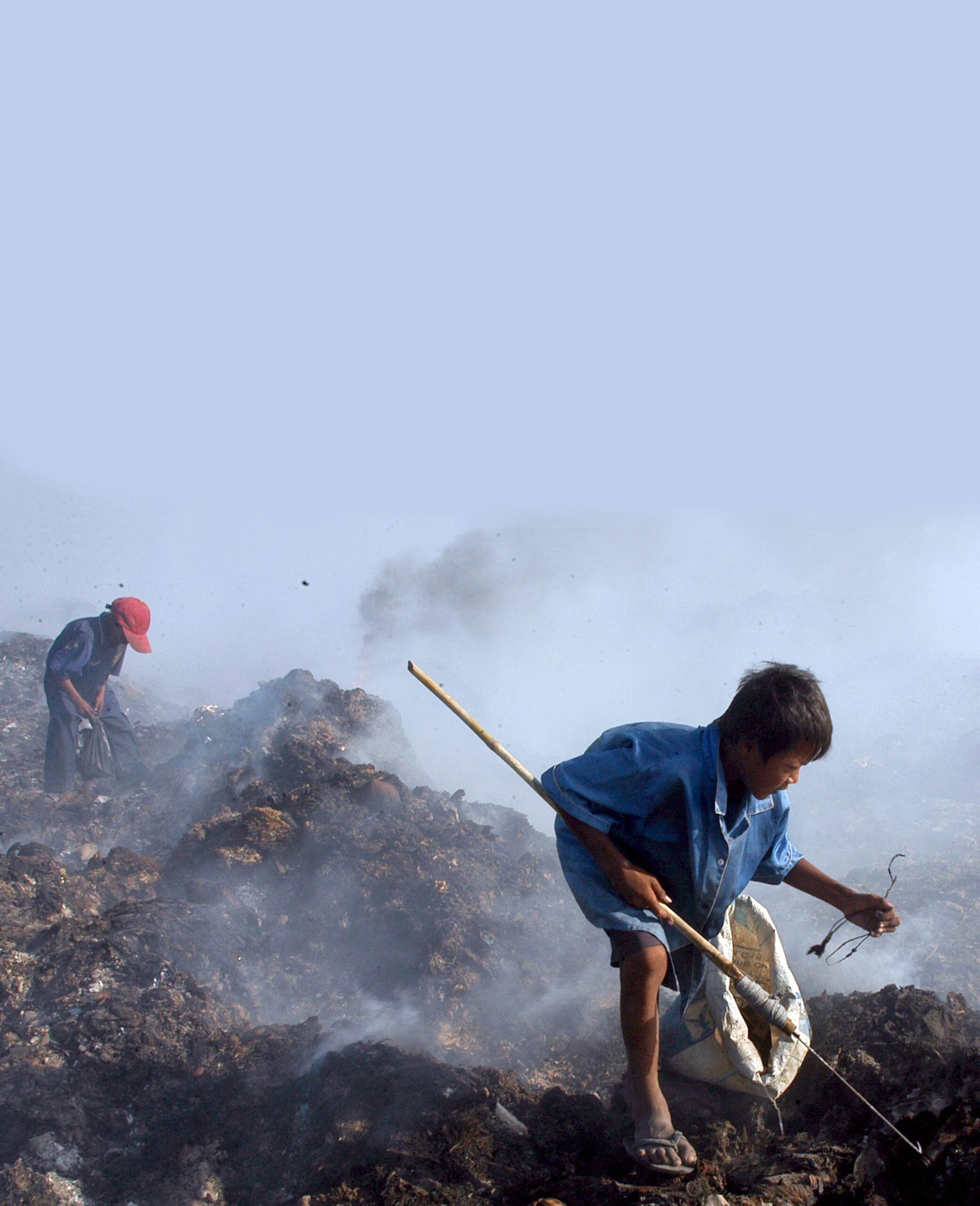
For this reason, it is good for Filipinos and those like myself who have spent the greater part of their lives in the Philippines to imagine that they are taking a visitor around, and the Visitor is none other than Jesus Christ. Bring Him to Payatas to see the scrawny figures of scavengers – children, as well as men and women – scrounging through mountains of garbage. Let Him hear the story of the trash-fall of some 20 years ago, when a mountain of garbage collapsed on the huts of scavengers living beneath it: more than 200 bodies recovered and many still unaccounted for.
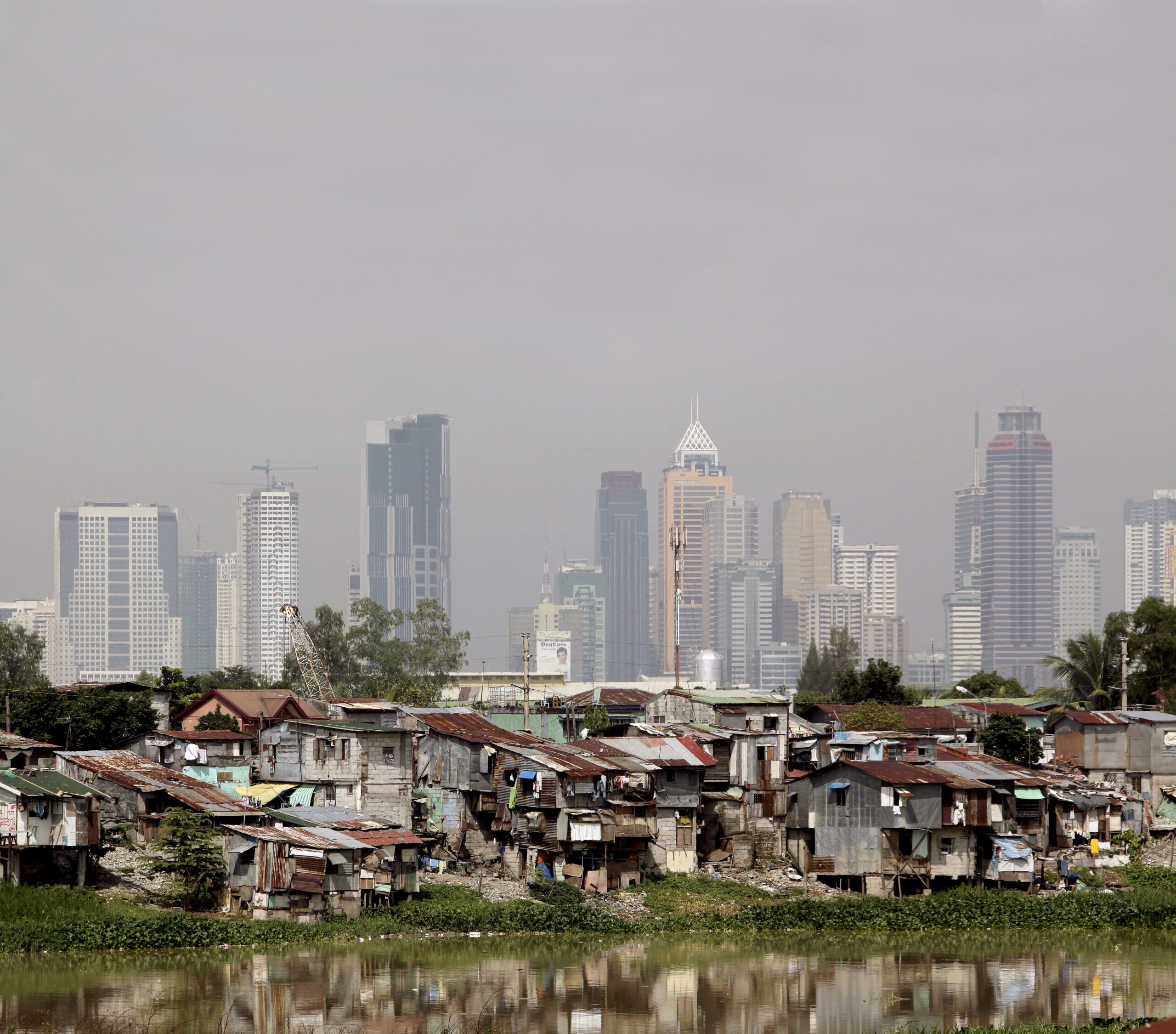
Then take the Visitor to an upscale subdivision to see the massive homes and manicured lawns and swimming pools. Or let Him read the full-page advertisements in the local papers, complete with snob appeal (“You have earned it; you have made your way to the top. Now flaunt your success.”), for villas or condominiums with foreign-sounding names. Then let Christ turn to you and ask: “How can it be that a society which calls itself by My Name, calls itself Christian, can live with such misery and inequality? What of the principle – fundamental to Catholic Social Doctrine – that the goods of the earth are given by the Creator in order that all men and women may live in decency and dignity?”
The inequality in terms of family income here in the Philippines has been measured. A study by Tomas Africa, based on the Family Income and Expenditure Survey, found that the wealthier 50% of families account for 80% of family income, while the poorer 50% receive only 20%. Moreover, and this is very significant, this proportion has remained essentially the same from, 1961 to 2009; whatever economic development has taken place over these 48 years has not changed the income distribution, 80% of it having been appropriated by the top 20% of families. Looking more closely, Africa noted that the income of the top 1% of families equaled that of the lowest 30%.
It is worth noting that the lives of most Filipinos who will read this, and probably most of those in other countries as well, are made more comfortable by the misery of the poor. The newspaper which we read, the paper on which this magazine is printed, would cost more than it does if the scavengers at Payatas collecting old paper for recycling were to get a decent return for their work.
Our houses would have cost far more than they did if the construction workers who built them had been paid enough to afford decent housing themselves rather than to “squat” on someone else’s property and to live with the constant threat of demolition. We are all part of an unjust system, of a society living in sin.
I close then with the words of Pope John Paul II in the pastoral exhortation, Reconciliatio et Paenitentia:
Whenever the Church speaks of situations of sin, or when she condemns as social sins certain situations or the collective behavior of certain social groups, big or small, or even of whole nations and blocs of nations, she knows and she proclaims that such cases of social sin are the result of the accumulation and concentration of many personal sins. It is a case of the very personal sins of those who cause or support evil or who exploit it; of those who are in a position to avoid, eliminate or at least limit certain social evils but who fail to do so out of laziness, fear or the conspiracy of silence, through secret complicity or indifference; of those who take refuge in the supposed impossibility of changing the world, and also of those who sidestep the effort and sacrifice required, producing specious reasons of a higher order. The real responsibility, then, lies with individuals. (No. 16).