
How has Gawad Kalinga (Give Care) started?
– It started out as a faith journey, in search of my soul, as a Filipino and as a Catholic Christian. I wanted to really honor God’s desire for my life, aware that, in the Philippines, religion and citizenship are not practiced in ways that honor God; otherwise, we wouldn’t have so much poverty and corruption. I see poverty both from a spiritual and economic perspective being an economist who is a practicing Catholic. After graduating with an economic degree, I went into marketing with an international company. At the age of 35, I started my faith journey when I joined Couples for Christ with my family. We were renewed as Catholics. I left my job to dedicate myself to the family ministries of Couples for Christ – Youth for Christ, Singles for Christ, Kids for Christ and Handmaids of the Lord. I was searching for a deeper and more meaningful expression of my faith. I realized that I had come from the poor but I had forgotten them. I was repeating the old pattern existing in our country: many of those who are given the privilege of a better education and of a better life oftentimes do not go back to those who do not have the same opportunities in life. I realized that I was disconnected from my past; I had become part of the small minority that had education, success and power and made decisions without caring for the majority of people who continue to suffer from neglect and abandonment.
I realized that my Christianity was not just about me and my children; it was about the bigger community, the entire country which suffers simply because people do not go beyond self and family. I realized that loving my family was natural (love), but loving the poor was divine (love). I had to learn how to see the poor no longer as objects of my charity, or as beggars I give alms to, or as laborers to whom I give wages, or even as thieves and criminals who are a threat from whom I have to protect myself. The usual pattern for people like me is to study hard, get rich and do charity. But there’s hardly any affection, respect, or kinship with the poor.
Your personal experience was leading you…
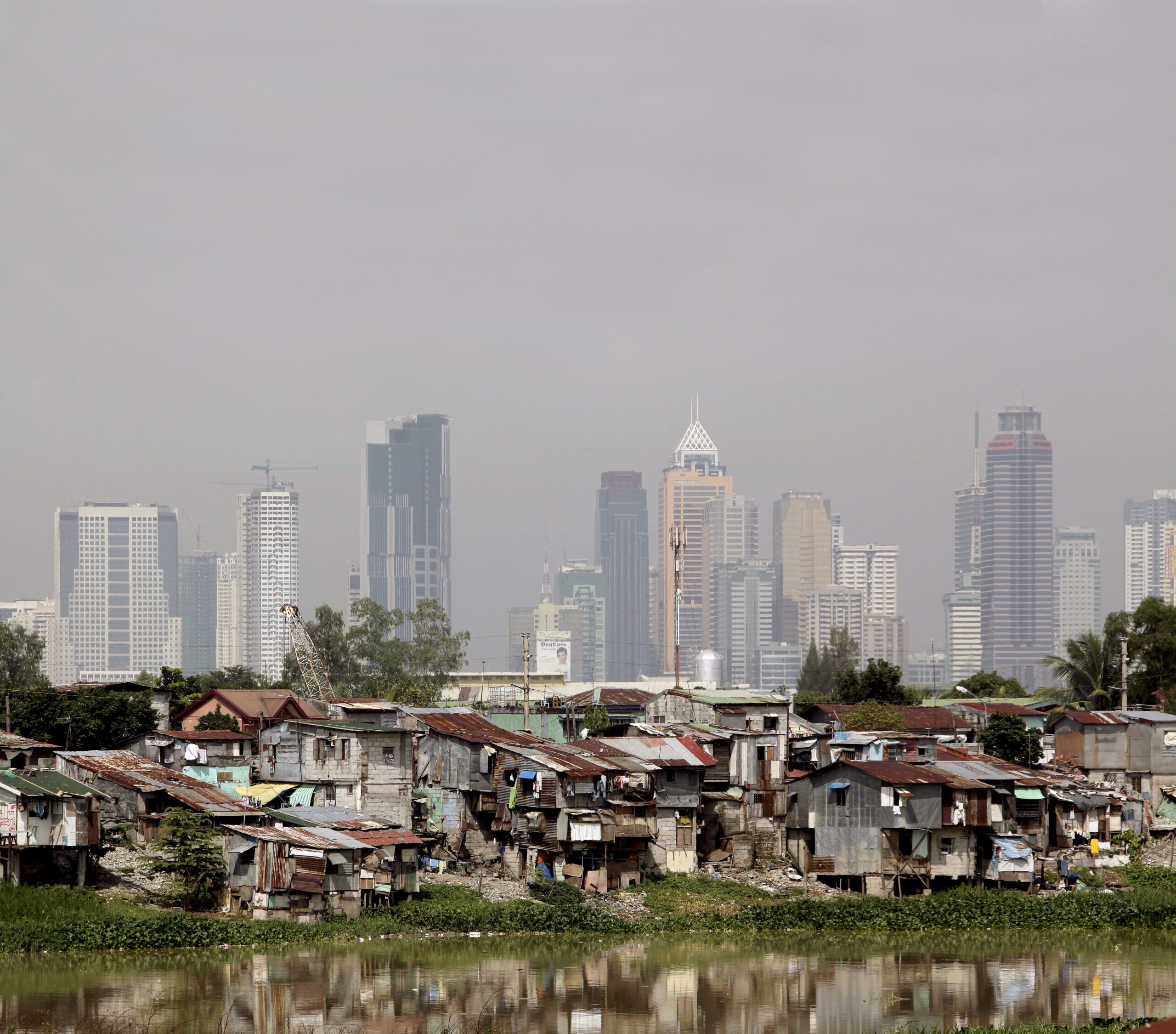
– I felt I had to reconnect with the poor. To do so, I went to work in the biggest slum in the country called Bagong Silang, in 1995. That’s when I finally found a big part of me that was missing. The informal settlers, the criminals, the gang members… were my people, who I had tried to avoid by living in my artificial bubble of affluence called exclusive subdivision and sending my children to exclusive schools and perpetuating an exclusionary culture. But Christianity was about inclusion, not exclusion. I realized that I had to see now the poor as family, as friends, as compatriots, as partners in rebuilding the nation.
Bagong Silang was a very dangerous place. It was probably the country’s biggest university for criminals. Half of the inmates of Caloocan City jail came from there. I started there a youth program – with 127 youth, mostly gang members. I attracted them because young people, whether poor or rich, like food and music. We did a weekend camp. I brought my 16-year-old daughter, who was studying at Ateneo de Manila University, as a way of showing to those people that I considered them important enough and that I felt safe to bring my daughter. And also as a way of showing my God that the poor were precious to me, as much as my daughter.
During that weekend, I was really overwhelmed seeing how she was relating to the girls of her age: one was a gang member who had been in prison because she was very rebellious and had gone into drugs; the other was a prostitute. She was about 16/17 years old and had been raped by her stepfather when she was 13. At 16, she had already made two abortions. My daughter was crying to me during the break saying: “Papa, life is so difficult for them.” I became aware that my daughter could be like them if she had been born in a slum. I felt God telling me: “You have to consider these girls as your daughters as well. Unless you consider the poor as your children, as your heirs, your own children won’t have a future in this country.” In that way, I realized that I had to come back the following day and every day after that.
Gang leaders responded to the food, the music and the talks we gave them. I brought some former drug addicts, gang members to share how they had been transformed. We offered them hope. They gave me trust. When I asked them to offer me what was precious to them, one by one came forward and surrendered their guns, their knives and their brass knuckles. They made themselves vulnerable because they started to have hope.
The following day, I went back before six o’clock – after getting dark, the slum was too dangerous. I kept going there from six to eleven in the evening to meet the young people. I put up a small center to train them in livelihood. Then, we got them into theater and sports. We trained about 80 of them in theater, dance and music. We prepared a musical which we were able to show on stage before the end of that year (1996). It was the first time they were performing on stage and we opened at the AFP Theater to a standing-room crowd. They got a standing ovation, too! Since then, they started to develop self-confidence. Theater was a way of getting them out of the drug habit. Every three months, we would conduct a youth camp. In a year’s time, we had about 500 of them. We developed livelihood programs, like printing shirts. I got the 15 top gang leaders and enrolled them at La Salle night school and encouraged them to look for work. It was a day-to-day process trying to be a father to so many children.
SOCIAL ENGINEERING
You were enlightened…
– I realized that, in the slums, many homes had lost the fathers and that most poverty interventions focused on women. But, criminals, drunkards, rapists, killers, rebels, NPAs…are men. Corrupt politicians are men… If men were the problem, why were we looking at women as the solution? So, I knew that my priority was not really micro-finance or micro-enterprise, because that was mostly for women.
I started thinking how we could transform the men. We had to do social engineering – transform their homes and their physical environment. We got the men to start building houses, schools, roads, providing livelihood and focus on what they could do. I wanted a balanced development. There’s a form of gender bias towards men in our society: since they are more difficult to deal with, most charities just deal with women and children. It was clear to me that I had to go beyond charity. I had to go beyond the usual patterns that cannot transform families and communities.
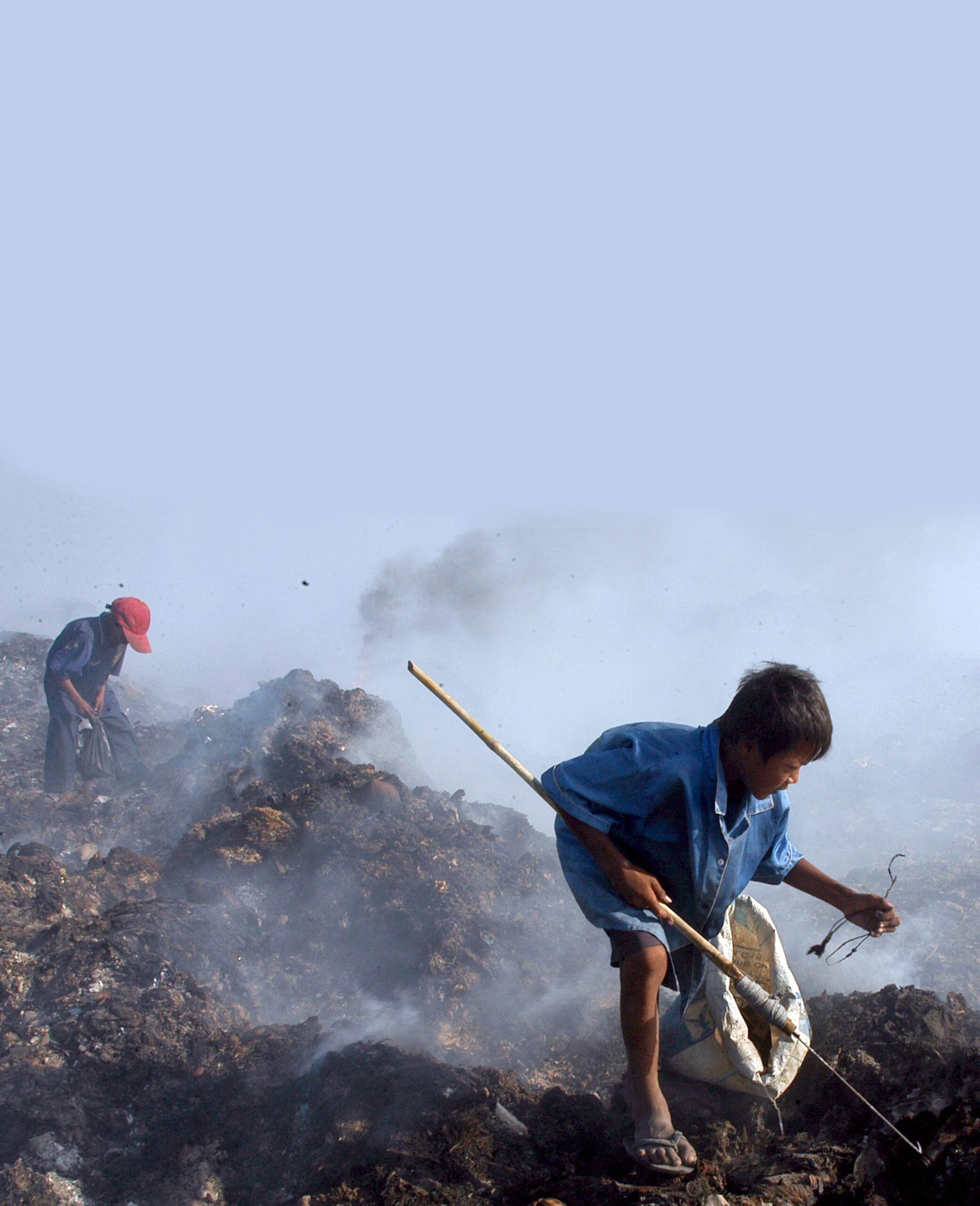
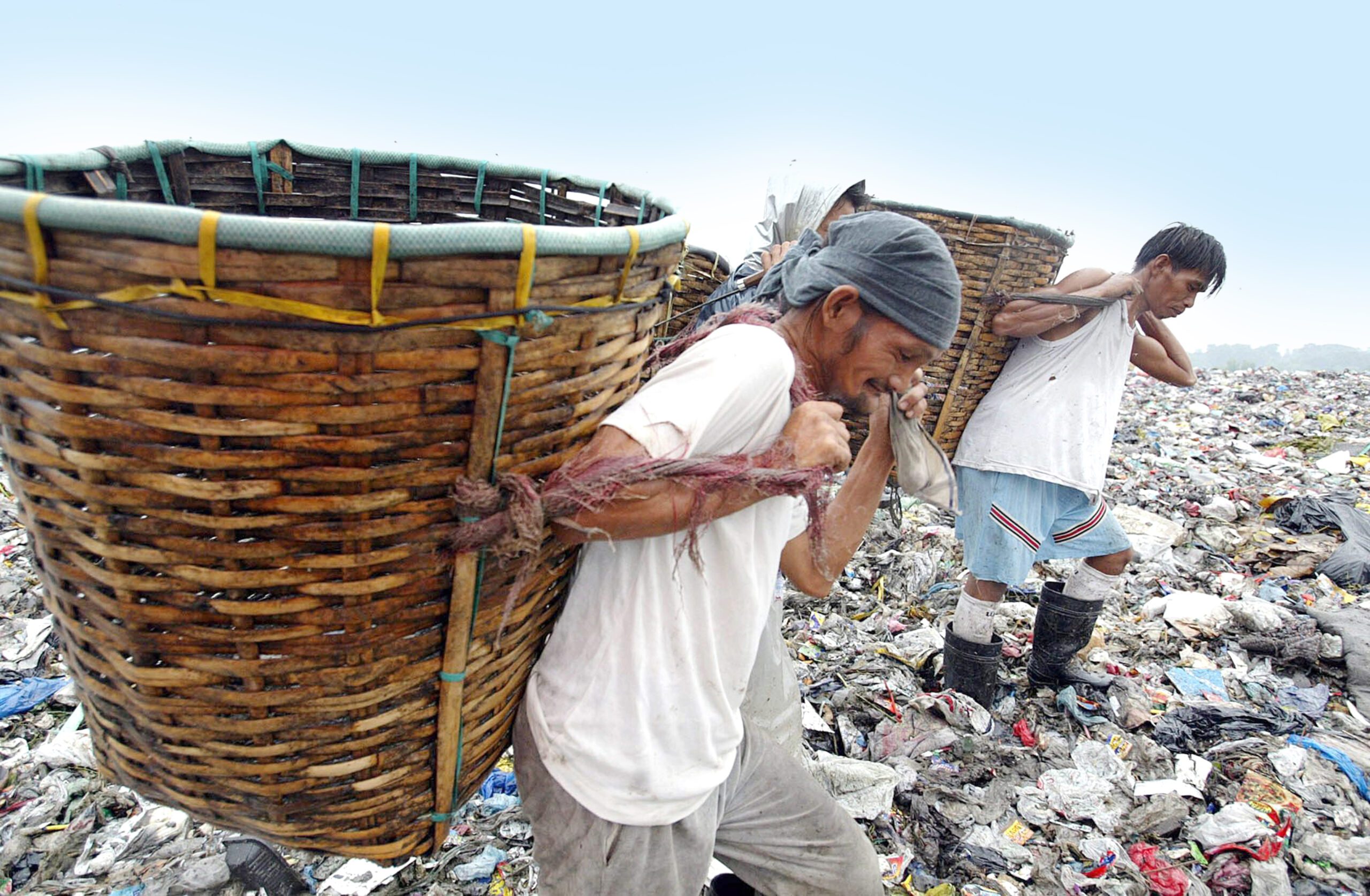
I went into transforming the physical environment because I came to realize that, if a human being is raised in an animal set up, he will think like an animal. We had to rescue people from internalized poverty since most of them are squatters and slum-dwellers living in shanties. I discovered that the problem of poverty is not an economic problem; it is a behavioral problem with economic consequences. Most people think it is economic, so they always talk about livelihood. But what do we do to those people if their environments make them think and behave like animals?
What is the philosophy behind the villages you build?
– It is the build philosophy – aiming at building the community, a faith community where there’s peace, respect and where people have dignity and security (they are no longer squatters that can be evicted any time). We build decent houses, brightly painted – with colors of hope – with landscape gardens, clean water and toilet (many slum-dwellers do not have a toilet in their homes). The communities are a showcase of two very Filipino qualities, but also very Christian: Kalinga (to care) and bayanihan (spirit of cooperation). They have to be practiced, not just preached. As Catholics, we must say that the Church has never been remiss in its preaching role, but we have not been listening and following. We have many religious organizations that want to take on the preaching role, not on the doing role. GK listens to the preaching of the Catholic Church, goes out and practices by loving and caring and sharing – land for the landless, homes for the homeless, food for the hungry, water for the thirsty, light for those in darkness. Providing water is like providing health; light is not only for energy but it is for enlightenment and education; then there’s environment protection… It is all about building viable, sustainable and empowered communities.
What do you require from the poor?
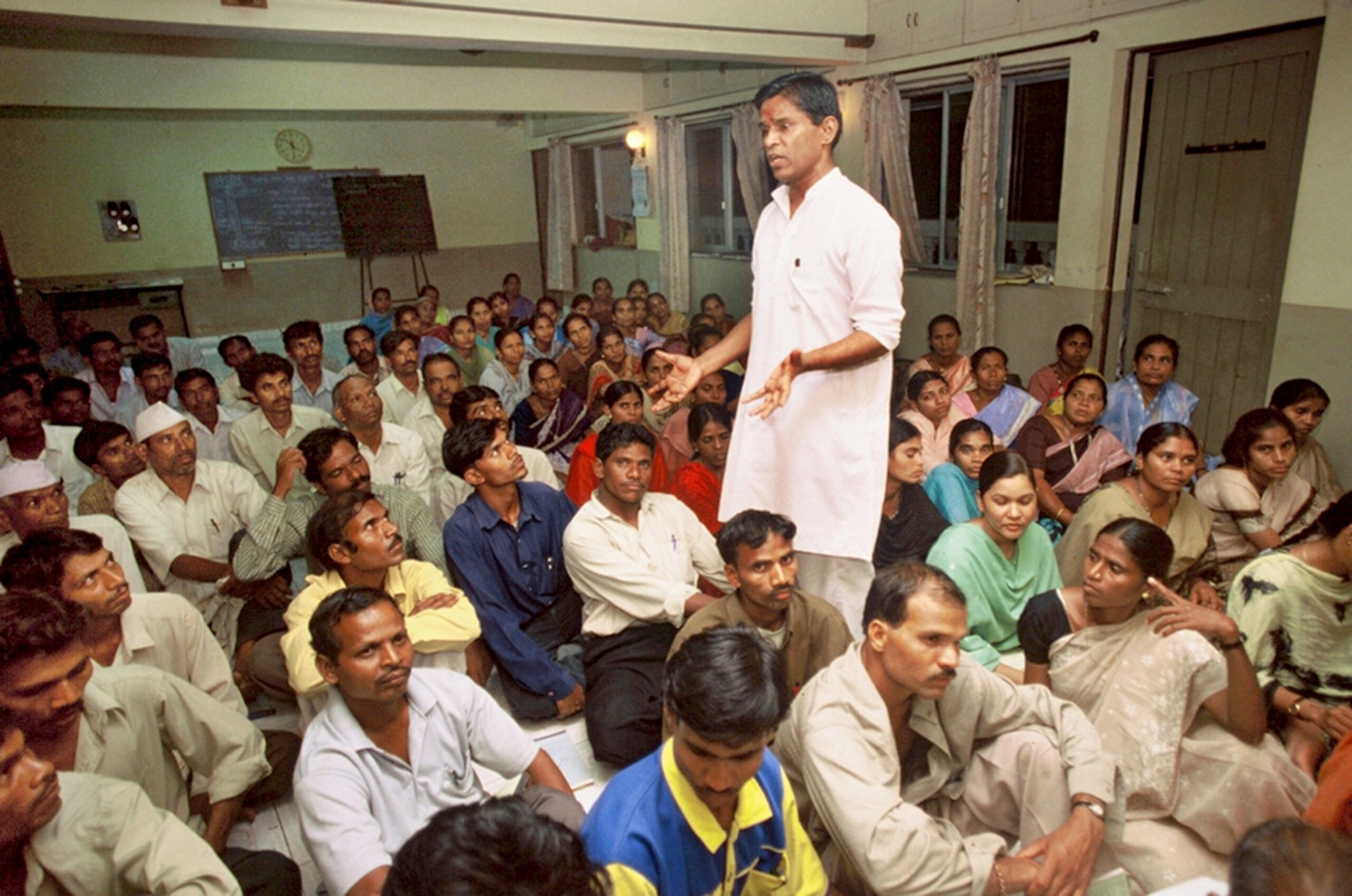
– We require cooperation (bayanihan). They have to put in 1,000 hours of service building other people’s houses to get their own. This is not a dole out. We are able to leverage limited resources. Somebody donates the land, another donates the building materials, the poor provide the labor, we provide the management and the volunteers, local governments provide the road and the water system. A dollar someone donates can become 4 or 5 dollars in development. It is like the multiplication of the loaves of bread and the fish. What can be more Christian than that? Many of the things we are doing are just an expression of what has been preached to us and of what we have read in the Bible.
GLOBAL ENTERPRISE
When did the name Gawad Kalinga Community Development Foundation come about?
– In 1999, I coined the word ANGKOP (meaning, suitable for the needs of the poor). Then I changed it to ANCOP (meaning, a network of the Church of the poor). But, for some people, it sounded too churchy and could exclude other people from helping by making it just a religious outreach. Then it became Gawad Kalinga in 1999, but we launched it officially in 2000 and globally as a movement in 2003.
What does it mean to say that GK went global?
– It means that we are building houses for the poor in Cambodia, Indonesia and Papua New Guinea; and that we are gaining support from people all over the world. From the United States, we received support to build almost 300 villages, from Canada almost 100, from Australia about 40. We opened many doors of opportunity for people, mainly Catholics, to show generosity and solidarity. Many people started to see that GK was a genuine Catholic expression of faith. Late Bishop Francisco Claver even said that GK was “the pearl of the Catholic Church”; it is faith in action. It is about faith and patriotism, love of God and country.
What main difficulties have you encountered on the way?
– When we started to become a big movement, the challenges appeared. What to do with other Churches and Muslims? Do we exclude them or shall we demand they become Catholics before we help them? Is it Christian to impose that? Do we go to Muslim Sulu as a Catholic group and risk the safety of our volunteers? Then, many corporations are not allowed to partner with religious organizations because of the statutes of their cooperation. Do we deprive the poor of help just because we want to brand ourselves as a Catholic ministry? Shall we accept money only from Catholics and build houses only for Catholics? Shall we not accept money from drug companies that want to help save children from tuberculosis or malnutrition? Some started saying that I was moving away from the Catholic Church and that I was anti-life. How come that even bishops and priests buy medicines made by these drug companies? Buying medicines, they are also adding to the companies’ profit. Why can’t I get medicines against tuberculosis from them? I don’t understand this double-standard morality. It’s not even common sense. Saving children from sickness is pro-life. Or is pro-life just saving the unborn? How about the many children who were born but are neglected and abandoned dying due to disease and malnutrition? There were all these many serious issues at stake and I didn’t want to enter in conflict. I just felt that I had to follow what I believed Christ was telling me in the Scripture and what my own Catholic faith was telling me about social justice, because I felt that we have the best social teachings but, as someone once said, they are the best-kept secret of the Church.
We started expanding and going to areas where there were no Couples for Christ, and working with other groups and local governments, schools and going to Muslim areas… We could not impose Catholic religion on them. Being Catholic is not to convert them, but to love them and allow them to see Christ in us in the way we love them. But some people find such an approach difficult. I respect them. Nation-building cannot be exclusive to one organization and cannot be biased towards some people.
THE POOR AS FAMILY
Did Couples for Christ accept such an approach?
– Many members of the Couples for Christ (CFC) didn’t understand or they didn’t believe in what I was doing. But since I was a member of the council and I was in charge of the families’ ministries, particularly Youth and Singles, I was able to bring quite a number of young people with me. For many of them, it was just another outreach, it was just a ministry. I came to realize that caring for God’s people is not only caring for people who come from the same religion or from the same community. I realized that societal renewal should be inclusive, not exclusive – it should include the Muslims, the non-Catholics, even the unbelievers. I was also growing in my faith understanding that my Christianity should be anchored on love and caring following the example of Jesus. He even cared for the Samaritan woman and didn’t discriminate against the tax collectors. He was not exclusionary.
Couples for Christ had a lot of really good people who were doing things out of kindness, out of mercy and charity. But, when we started talking about nation-building and about Christian stewardship, it was difficult for many of them to understand. We were too used to a culture of charity and dole-outs. We had a fund-raising mentality. When we talked about seeing the poor as family, and investing our time, talent and treasure – not making them just objects of our charity – that became a stumbling block for a number of people. That’s the reason I felt we could not bring this country out of poverty. Because it is not the poor who need to change, but the rich, to change their mindsets. We didn’t see the poor as family or friends; we saw them only as an object of our pity. So, we were giving them a pittance and perpetuating a culture of mendicancy.
A lot of people see religion as anchored in guilt and fear, not in love, care and sharing. They don’t see the poor as worthy of investment of our time, talent and treasure. Or that they are equal in dignity to our own children. They tend to accumulate much wealth for them and their families, and they just give a pittance to the poor.
When I started really thinking in going towards community-building as a genuine faith expression and trying to imitate Jesus who was born as a squatter – His father was a carpenter, thus a construction worker – I started seeing that being with the squatters and construction workers, I was following the footsteps of Jesus who is the Master Builder of the universe. I felt that if I were to move forward, I had to really follow the footsteps of the Master Builder.
Today, there are Couples for Christ who believe in GK; others feel otherwise and I respect them.
Do you feel the support of the Church’s hierarchy?
– In general, I have the respect, the trust and the support of many Catholic bishops and Christians.
How is GK financed?
– At the beginning, it was financed by Couples for Christ and other people. There was a foundation called Living for Christ Foundation – made mostly by Filipino-Chinese people – that also helped us. Most of our volunteers belonged to CFC who saw it as a tool for evangelization and a fishing pool to recruit members for the movement. But when we started going to communities, where there was religious and cultural diversity – for instance, when we started working with Muslims – we could not impose that on them. Tension arose among the Couples for Christ.
There’s a lot of corruption, but you do not take political stands, do you?
– No. I don’t judge. The same way Jesus did not judge tax collectors, I do not judge politicians. Even the most corrupt politicians may have at least 10% of good in them. I will connect with that 10%. Even if I am surrounded by dishonest people, I’ll keep being honest and try to inspire them to be honest. Then, we can slowly transform this country. Why should we judge people? The problem is when we become self-righteous: the whole concept of evangelization is lost. Our role is not to judge, but to engage people and remain honest to give them the example that we can do a lot by remaining honest. I work with 400 mayors because I didn’t judge them, and not even one has ever tried to corrupt me. Why should we always see the glass as half empty while it is half full? I am a radical optimist because I believe in Jesus Christ as the Good News. And I believe in the greatness of the Filipino spirit. Why should we always look for the evil in people and not see their potential to do good? If we engage the good in them, we can create a greater good. We should have the courage to be different and should not be afraid of our own people. I go to Sulu, to the Abu Sayyaf territories and build communities for their families. Jesus was not afraid of anyone because good is always more powerful than evil. Love is the most powerful weapon we have against evil.
They were spurring you to run for the presidency. Are you attracted to politics?
I don’t try to flirt with power. When I was invited to consider a Cabinet position, I said “no.” I felt that my call is to be an ordinary citizen and an ordinary Catholic; hopefully, with an extraordinary love for God and my country and give hope to people. One doesn’t need to have power or to accumulate money to make a difference. Jesus didn’t aspire to have wealth and power, but He made a difference. Since I am a disciple, I want to follow in His footsteps.
How do you live?
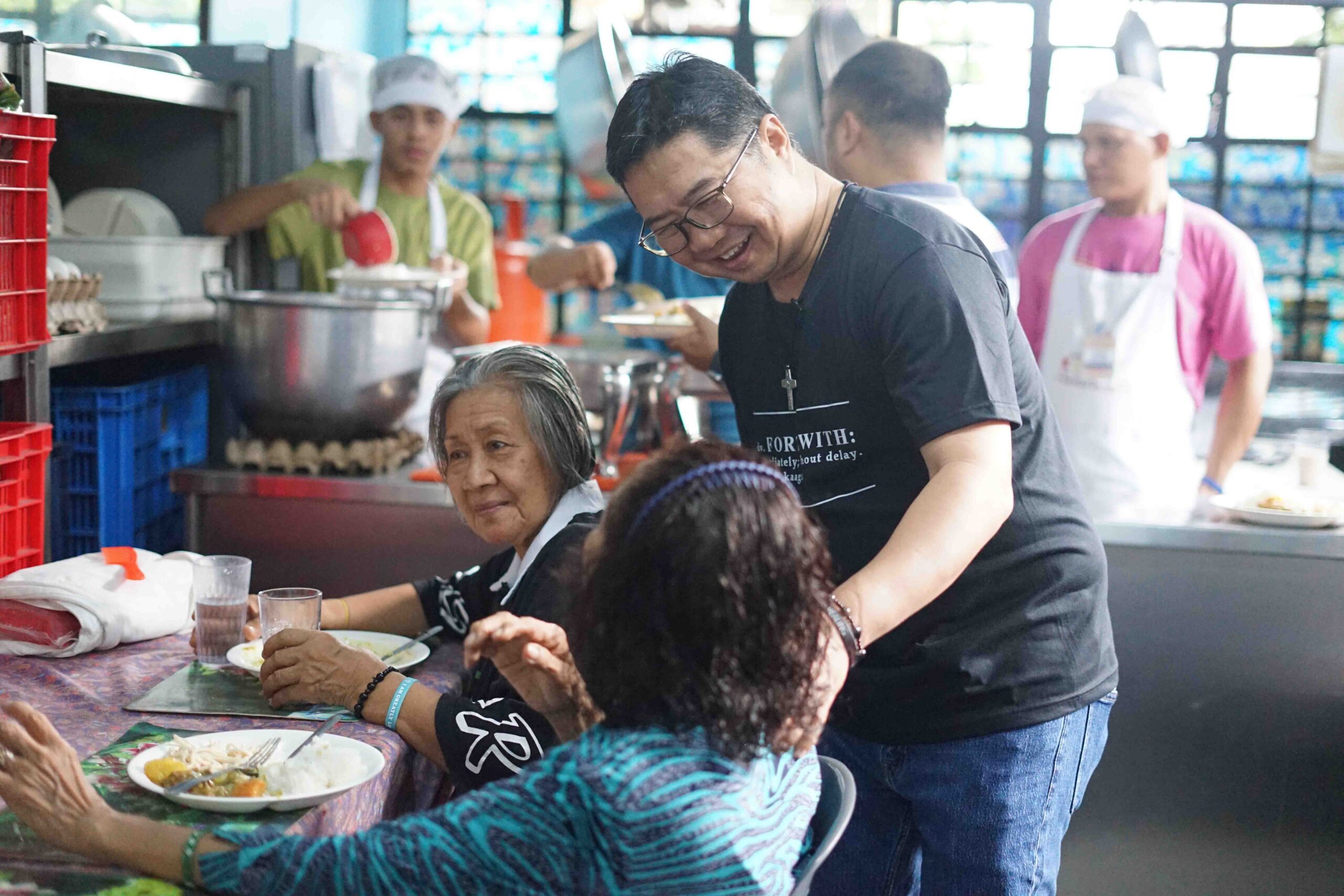
– I live very simply. Since 1996, I do not have a credit card, a check account or carry money in my pocket. Couples for Christ were giving me an allowance at the beginning. Now, I have children who are doing well. I also married someone who had money! We were quite hard-working people and we saved. I like to live simply to detach myself from money and power. Jesus, who could have come into this world as a king or a powerful politician, came instead as homeless. I felt that I had to look at the world from the bottom up, through the eyes of the poor, not only from the eyes of the rich and privileged to whom I belonged, and to believe that it is possible for those at the top and at the bottom to work together in solidarity – rich and poor, Christians and Muslims, government people and citizens. This is the build philosophy: we connect with the good in people, refrain from judging and, instead, engage everyone to do the common good.
END OF POVERTY
Are you hopeful for the future?
– I am definitely very hopeful that poverty will end in my country by 2024. Nobody imagined that GK would be this big by now. We have about 250 employees and about 20,000 regular volunteers. They come from all over the world. Even Manny Pacquiao declared before his last boxing fight in Las Vegas that the greatest fight of his life is to end poverty in the Philippines and that he was joining GK – to build homes and to provide livelihood for the poor. When he endorses a product, he gets 100 million pesos for that. Why would he even endorse us and not global foundations and humanitarian organizations? It is a matter of trust and credibility. We have more than 500 major corporations collaborating with us. They are after investing in development.
There are many charities, but they see that we go beyond charity toward authentic Christian stewardship; they see that we are here not to make the poor more dependent, but to give them justice and healing, self-respect and confidence to help themselves and one another.
We are moving towards empowerment of the poor in all the communities who are around 2,000. We now help groups to build houses because not everything has to be done through us. We have shown people that it can be done in the GK way. That’s why legislation is being crafted to build five million homes. Now, Congress is legislating on nation-building, following GK model. If it becomes a bill, any organization will build following the GK way through public-private partnership, through convergence/synergy. If the aim is nation-building, you make everyone a nation-builder and you make every Catholic practice his/her Christianity.
Is Gk’s organization still on your shoulders?
– I don’t even hold office. I am no longer involved in the operations of GK. I don’t sign checks and I am not in the management team. I am only the chairman of the board. We meet once a month for the board meeting that includes the Ateneo president, Fr. Bienvenido Nebres, and the heads of Globe, Smart and Shell Philippines. I spend my time in the farm where I am building the Center for Social Innovation for countryside development. I am building village universities and countryside outlets for the products of GK communities. We are moving now from the justice phase to the empowerment phase. I am training young people: graduates from top universities to become social entrepreneurs and care for those at the bottom of the pyramid. They are the missing element. (See sidebar story)
We have a lot of generous and successful people who and corporations that want to help the poor, but if we deprive them of education, they cannot do business plans, development research or market development… How can we expect them to fare well? We need young people to stop leaving the country seeking jobs abroad and make them wealth creators and job generators here. We keep losing the brightest and the best of our people to make rich countries richer. We have to educate youth to become patriots, because nation-building is about sacrifice. Jesus demands sacrifice, Christianity implies sacrifice, out of love for God, country and the poor. GK is showing them that we can end poverty and corruption in this country if we practice our Christianity: by loving our country and our people; by being honest; by caring and being generous in sharing our success and achievements with those who haven’t been given the privilege of getting education and/or haven’t been given justice.
My dream is to see our predominantly Christian Philippines rise from poverty. I felt sad when I heard, in a sermon, a priest asking the following rhetorical question: “Are we poor because we are Catholics, or are we Catholics because we are poor?” I wanted to change that because I felt that God didn’t make a mistake when He made me a Filipino and a Catholic. That means that I shouldn’t just be a Catholic in form, but be a Catholic in substance and in essence. Not superficially Catholic, but essentially Catholic. I live in hope and joy every day, that with God’s grace, I will be 74 in 2024, when this country will be out of poverty. I live with that certainty. I am very straightforward because at 61 I don’t have time to beat around the bush. My Christianity is precious to me but I want to understand and practice it every day.