
Since Vatican II, “lay empowerment” has been one of the buzz words of the Church. That the laity makes up more than 99% of the Church makes its importance self-evident. Yet, how or why have we come to a point where we have to re-assert its importance and feel the need for “empowerment”?
This empowerment, by the way, is not just “to give authority to do something” as in “I empower you to help give Communion” or “to sell tickets” but also, and especially, “to promote actualization” of potentialities and capabilities to the fullest possible, to participate, discuss, exert some influence on a given Church matter. The first is what the laity has been subject to for the longest time; the second is what the laity hopes to attain.
This review of “what happened” and the forecast of “what we hope to happen” is divided into three parts: Resourcement which will bring us back for a quick look at the Church from its beginnings up to the eve of Vatican II; Rediscovery of the laity, principally by Vatican II; and Revival, i.e., the current status of the laity and its prospects or outlook for the future.
RESOURCEMENT: It was once a laical Church. Why do we have to go back to the past? We go back because the famous “aggiornamento” of Vatican II had a less-known twin, “resourcement.” Vatican II was not only about opening to the present world but also about reviewing the past and connecting the two for a better future. Contrary to detractors, Vatican II is not a “break” or mindless innovation but a continuation and connection.
For around the first 100 to 200 years, the early Church, also called Apostolic or Jewish Christianity, was a laical Church. There were no “priests,” no pope, no churches. Church was household communities in “house worship,” a “people of God” Church. Laity functions covered an equivalent of the present priestly ministries of the sacraments and of the Word: liturgy, teaching, governance, sacraments, besides fellowship. The laity had common prayers: the Lord’s Prayer; Gospel canticles of Mary, Zachary, Simeon; prayers before and after meals. “Abba” and “Amen” were already used. They were into teaching, preaching, counseling and directions for conversions and catechesis for catechumens. Readings were drawn from the Old and New Testaments, instructions from works like the late first century “Didach.”
All “shared in decision-making, mission priorities and ministry” and practiced the “right to choose their leaders,” elders, presbyters, deacons and bishops. They baptized in the Names of Jesus or of the Father, Son and the Holy Spirit. They anointed the sick and “kept oils at home.” There was “lay confession.” Saintly laity were “on a par with priest and bishop in the forgiveness of sins.” Marriage needed the consent only of partners, with the “presence of clergy unknown” in the early centuries. The center was the “Eucharistic meal,” the “breaking of the bread” in which the words of the Last Supper were “most probably preserved and transmitted.” “They gave Communion to each other and to themselves, keeping Communion in their homes for such purposes.”
Apostolic succession was settled by direct appointments of the Apostles and then by those they appointed and so on down the line. Well-known communities were Antioch, Corinth, Jerusalem, Alexandria, Samaria, Rome.
What might be the marks of this early Church? It was laical with ministries carried out by laypersons. It was local with a community as the basic building block. It was “loose,” relatively democratic and autonomous marked by “pluralism, diversity and variety.”
CHURCH AND STATE UNION
But outliving the Roman and Byzantine Empires, Christianity grew in number and reach. Organization soon became necessary and inevitable. The transition to a tighter structure had begun. Far-reaching developments would bear the Church up and down a checkered history. At least five of them, happening at different times or concurrently, would affect the fate of the laity: great wealth, worldly power, cultural and physical shift to the west; and thorough ecclesiasticalization and sacerdotalization of ministry that would lead to the entrenchment of the Institutional Church. Constantine’s Edict of Milan in 313 united Church and State with Christianity as the state religion.
By the 2nd-3rd centuries, bishops were in place. After the 4th century, came the popes. A ranked hierarchy was on its way. In the 4th-5th centuries, the first seven great Councils; Nicea, Rome, Ephesus, Chalcedon, etc., would determine doctrine and perhaps begin the pattern of dogmatism. In 1208, the ordained priesthood was formalized, spawning clericalism, an offspring that would protect the image and the power of clerics above all. All ministries now belonged to hierarchy and priests. The sacerdotalization and the ecclesiasticalization of the Church was well-nigh complete. This Institutional Church, perceived and purveyed as the Church would prevail for centuries hence.
Crossing paths early on, Hellenic culture penetrated and dominated the Church and as the Germanic tribes overran Europe, this 2nd epoch of the Church would be dubbed Greco-Roman Christianity or Greco-Roman-European Christianity. Was the Church inadvertently carried by or calculatedly riding on the historical wave? For as Europe became the center of Western civilization, the Church moved West, “forgetting” that the Church was born in the Holy Land and that “the roots of Christianity are sunk deeper in the East than in the West.” Rome became the center of the Church; its bishop, the head, a tradition becoming almost ironclad.
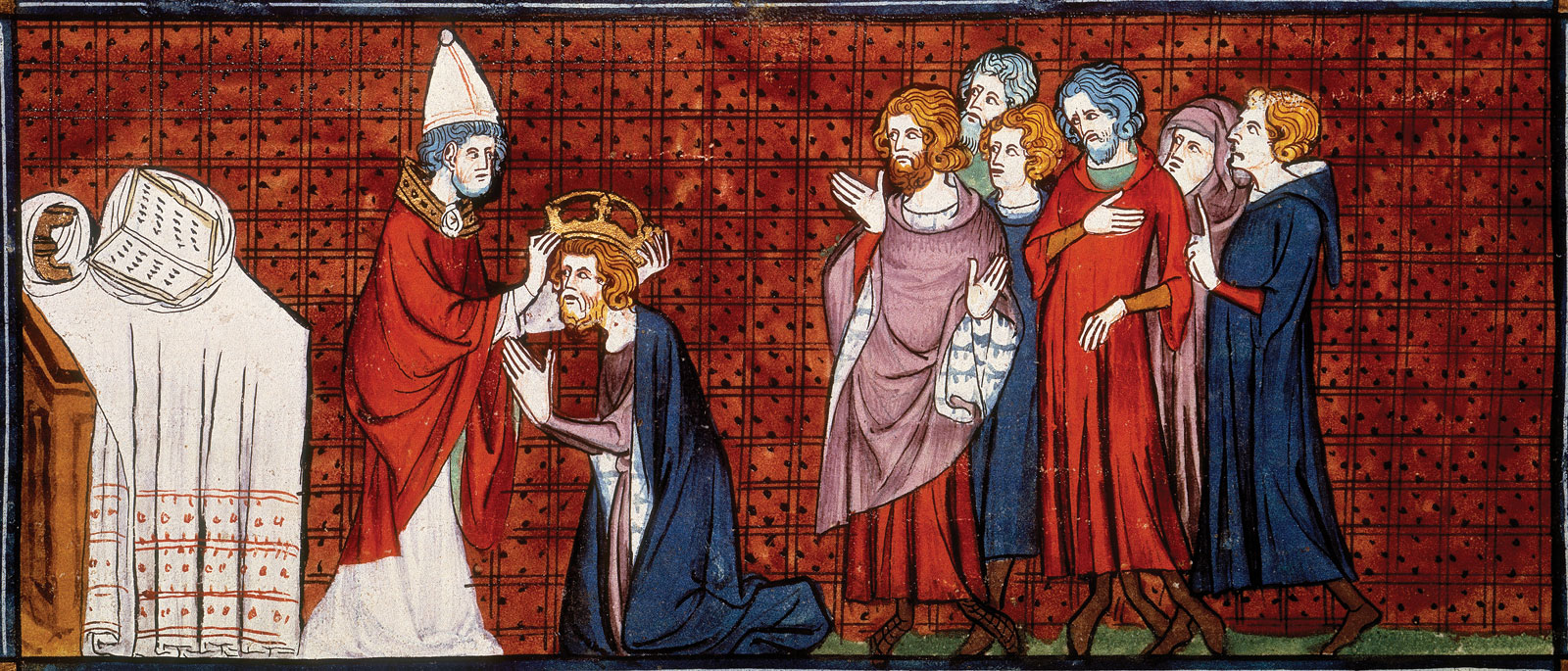
Temporal power and wealth that beckoned the church in the Middle Ages now fully beguiled the Church. The hierarchy mimicked the monarchies of Europe but actually the Church was ahead as she possessed not only temporal, but also the acknowledged superior spiritual power. Bishop and pope were not only spiritual masters but also feudal lords. The crowning of Charlemagne on Christmas, 800 by Pope Leo III, highlighted such powers. Despite serious ups and downs, as will happen in any power play, the Church was a dominant force in the West. What more revealing an example as when popes, by papal bulls, presided over Demarcation Lines dividing the New Worlds in the 1400’s and 1500’s between superpowers Spain and Portugal.
AN ECCLESIOLOGY OF POWER
Such was the hegemony of the Church. From an “ecclesiology of communion” in the early Church, it had inexorably morphed to an “ecclesiology of power.” And what were the marks of this Church? They were quite opposite to those of the early Church. Instead of laical, it was papal – hierarchical – clerical and patriarchal, too. Instead of local and loose; it was monarchic, centralized, authoritative, canonical with strong suggestions of inerrancy and changelessness. It also remained enormously wealthy.
Not to forget, however, that in this somewhat unflattering picture of the Church were many shining “threads” and striking interventions that saved and strengthened the Church like: monastic and religious orders and congregations, missions and missionaries, saints, mystics and martyrs, deep faith and sanctity of the people, great learning and teachers and universities, lay movements and initiatives, pockets of reform and renewal: the Catholic Reformation, separation of Church and State, Catholic Action. But no, not the priceless art, as one doubts if the Church should have gone into art patronage at all.
And despite material and spiritual setbacks like the East-West Schism, the Protestant Reformation, the French Revolution, the Concordats that reduced papal lands in Italy to the Vatican City, the Institutional Church remained substantially intact up to the eve of Vatican II.
The hierarchy was the Church; the Vatican, Rome, was the Church. Even the church building did better. Young and old thought “it” was the Church. Never did it occur to me and my contemporaries that we were Church.
In this centuries-old climate, the laity faded. Stronger words have been used to describe its eclipse: “subordinated,” “powerless,” “downgraded.” It was a 2-tier Church (some will say 2-caste) with priests as first class and superior, and the laity as second class and inferior – and women as third class. There was a divide (some will say chasm) between clergy and laity. Strong words? They are used up to this day. The laity had long been “excluded from functions they had performed,” leaving the laity to support-and-assistantship functions. The mildest way of putting it is: we had a powerful hierarchy and a weak laity. “Pray-pay-obey” became the laity’s lot.
REDISCOVERY: “Promising” Words. As resourcement reveals, Vatican II did not discover the laity. But we certainly owe its re-discovery to Vatican II. Actually, there is no need for external affirmation of empowerment as we have an inherent mandate:
Laity are full members of the People of God and, as such, share directly in the mission of the Church, not simply by leave of the hierarchy, but “from their union with Christ, their Head.
Incorporated into Christ’s Mystical Body through Baptism and strengthened by the power of the Holy Spirit through Confirmation, they are assigned to the apostolate by the Lord Himself.” This apostolate is located principally, but not exclusively, in the temporal order: the world of family, culture, economic affairs, the arts and professions, political institutions and so forth.
But perhaps, so much and so long in the shadows had the laity been, that an affirming mandate for us to come forth was needed. Vatican II’s specific document is the “Decree on the Apostolate of the Laity.” Its message is repeated in the Dogmatic Constitution on the Church, Constitution on Sacred Liturgy, Decrees on Ecumenism, Education and Priests. As even any priest will honestly admit, plowing through ponderous Church documents is hard labor. With its dense foliage, one is apt to miss the forest for the trees. To a good extent, we rely on ecclesiastical and lay commentators and reviewers who ascertain the operative thoughts and words and clarify the drift of the documents. Heartening were the words resurrecting the laity: “empowerment,” “priesthood of the laity,” “co-responsible,” “of equal dignity”; all picked up by the pope-bishop-priest-lay person in every other exhortation.
Conferences of bishops in different countries held their own Councils to implement Vatican II locally. For example, in 1991, the Catholic Bishops Conference of the Philippines (CBCP) held its Second Plenary Council (PCP II) to be for the Philippines what Vatican II was for the world. “Empowerment of the Laity Towards Social Transformation” was one of its top “Nine Pastoral Priorities” which echoed the sentiment of Vatican II:
We shall support and strengthen the exercise of the gifts and charisms of lay people for the fulfillment of their role as co-responsible agents of renewal of society. They must be empowered to engage in greater dialogue and discernment with the clergy and religious concerning social, economic, political and cultural issues, in order to take the leading role in the transformation of society. We shall promote an ever active role of women in the Church and in society, while keeping ourselves open to exploring possible new roles. We shall consult a wide range of women’s experience in different life situations and learn from them new approaches to dialogue and cooperation.
Another noteworthy priority of PCP II was the restructuring of communities into Basic Ecclesial Communities (BEC), a veritable restoration of the earlier “People of God” model. And going strong every election season is the Parish Pastoral Council for Responsible Voting (PPCRV).
In 2006, Pope Benedict XVI, in his first encyclical “Deus Caritas Est” (God is Love), focused on a specific mandate for the laity:
The direct duty to work for a just ordering of society…. is proper to the lay faithful. As citizens of the State, they are called to take part in public life in a personal capacity. So they cannot relinquish their participation “in the many different economic, social, legislative, administrative and cultural areas, which are intended to promote, organically and institutionally, the common good.”
Besides, the above mandates are canonical re-statements in the 1983 Code of Canon Law: Canons 203, 208, 225. Certain motifs arising from the documents bear repeating, even if they seem “too much” to a pre-Vatican disposition that neither had nor missed empowerment:
Lay apostolate is not just a “share in the apostolate of the hierarchy,” but its own reason for being.
Since works of justice and engagement with socio-political life are direct responsibilities of the laity, the latter have to go “out” of the confines of the Church into the marketplace.
The laity is the primary agent for change in social transformation work for which the laity “does not need any authorization, much less any permission from the competent Church authority.”
How incredulous I felt when a well-meaning friend asked me if my commentaries on the Church were “approved by the bishop.” All in all, so promising was the collective mandate. But there were reservations that could turn the genuinely promising to just “promising.” But amidst glad tidings and glowing lip service, who minds the fine print?
REVIVAL: And now? At last or alas! Forty-five years after Vatican II, and 20 years after PCP II, for the Philippines, where are we now? Do we feel empowered? Have we been given space to be so? Do we want to be empowered or prefer to keep things as they have been? Are we now right in there participating as co-responsible partners; discussing and sharing in decision-making in Church affairs, or still kept on the fringes? And beyond that, are we out there with civil society, fairly politicized (distinguished from political) and socially involved in the transformation of the temporal order for which most of us have neither been trained nor really awakened? Plainly, are we still “inside” the Church assisting the priest?
We cannot answer those questions for the laity all over the world. We do not have sufficient knowledge or material for an informed assessment, except for some information on the U.S. and some parts of Europe where we read of polls or surveys or status reports. But any fairly knowledgeable citizen or group can put together a working profile of its country’s laity in terms of empowerment or some other chosen aspect/aspects. In the absence of statistical data, approach has to be empirical, i.e., by observation, experience, reading; and conclusions, relatively tentative. We fill the blanks ourselves. The following chart might help:
Constituency:
– Composition (middle class, urban masses, grass roots, pentecostals, conservatives, nominal, liberal, lay organizations, etc.);
– Characteristics (of each group, and those common to all);
– Typical activities (of each group and those common to all).
Number – influence – strength – ecoclass – age – exits from and entries into the Church – public opinion on Church (answers to this cluster can be revealing, and disturbing).
Interaction between clergy and laity.
Any more norms to add?
In the “activities,” is there any presence or promise of the prophetic work of social transformation pinpointed by PCP II and Benedict XVI’s “Deus Caritas Est”? In our country, for example, how come the three successive calls of CBCP on Jan 28/08, Feb 10/08, Feb 26/08 (besides an earlier one on July 9/05) for “circles of discernment” during our country’s season of corruption, never got off the ground? Did parish priests or parishioners take them seriously?
Meanwhile, devotions, charity work and fund-raising never skipped a bit. Is our laity aware of our socio-political mandate?
The nature of the interaction between clergy and laity is especially sensitive considering centuries of a two-tier Institutional Church and a pervasive culture of clericalism. In the Philippines again, we have no figures, just indicators like unchallenged dictums still in circulation: “Can you say ‘no’ to a priest?” “Priest is king.” If you disobey the Church, something will happen to you.”
“Laity feels ‘inferior’ in Church,” says a newshead in a Catholic paper, “treated like third class citizens,” the item goes on. Which kind of laity is the Church cultivating? “Simple believers” with “simple faith” (and “simple priests,” too) where the numbers and loyalty stay, or “thinking” believers with “adult faith” where they fluctuate? Can the laity speak out now without fear of being called to the principal’s office?
So long have we been compliant backseat riders that it’s like lifting a 300-lb heavyweight to the front seat just to be a co-navigator. In this equation of lay empowerment, is the clergy disposed to give or let go of certain practices and prerogatives; and is the laity disposed to receive and take on certain rights and duties?
PRETTY SILLY WITHOUT THEM
What’s to be done? We don’t know which is more difficult: internal cultural shifts to change attitudes, mindsets and dispositions in both clergy and laity or external, concrete mechanisms like scientific polls to fill the blanks of tentative studies, justice ministries within the parish structure, specifically for civic training and activities, or diocesan and national lay boards (not clones or what’s the use) for honest to goodness consulting-listening-discussing (with a vote or what’s the use). How much is the princely church model changing to today’s pastoral, prophetic model? Worldwide or here-and-there? Royal trappings going or staying?
We may not agree with going so far as to “reorganize diocesan offices so that lay people constitute at least half of the bishop’s principal advisers” or to “create… an international council of laypersons to share functions with the College of Cardinals” or “to admit lay people to the College of Cardinals.” But we fully agree that several policy actions (on sex and money scandals, for example) from the highest levels in Rome to the diocesan and parochial levels could be better “if only a variety of laypersons had been consulted.”
What’s the outlook and the prospects for lay empowerment? Despite one fearless forecast that ours is going to be the “Age of the Laity,” the future partly depends on answers to the gut questions spread out in the forgoing. What is nearer reality: “A laicized Church is far away?” or “A laicized Church is already here?”
Let me close with some thoughts from newly-beatified Cardinal John Henry Newman, whose “on Consulting the Laity in Matters of Faith” (1859, re-published in 1961) did not exactly please Rome. He believed that “the maturity of the Church depended on an educated and vigorous laity.” He sought “to justify a fuller participation of the laity in the life of the wider Church.” He argued that “there is something… which is not in the pastors alone,” and that “the voice of tradition may, in certain cases, express itself, not by Councils, nor Fathers, nor Bishops, but ‘the communis fidelium sensus,’ i.e., the shared sense of the faithful. And down-to-earth as well, he quipped of the laity: “We’d look pretty silly without them.”
* Asunción David Maramba is a retired professor, book editor and an occasional journalist.