
Pakistan’s Gandhi

INTRODUCTION

Everyone has heard about Gandhi, but almost no one knows Abdul Ghaffar Khan. Coming from Pakistan and Afghanistan, he fought for peace and justice with the power of active nonviolence for more than eighty years – and did it all because of his Muslim faith.

WRITTEN BY

SHARE THE WORD

PUBLISHED ON

President Obama, Congress and the Pentagon continue our wars in Afghanistan, Iraq and Pakistan. Thousands of U.S. soldiers march through these impoverished lands, bringing fear and the threat of death, all, of course, in the name of peace, often in the name of Christ. Obama announced that the Afghanistan war will continue at least through 2014. Other reports indicate that the U.S. is dramatically increasing the number of its drone attacks in Pakistan. We must speak out against these plans.

On TV, no one speaks of the need to end these wars immediately, to cut the military budget or to use those funds to rebuild our economy, much less feed the world’s poor, heal the sick and house the homeless. So the killings go on, hundreds of billions of dollars will be wasted, further economic collapse is guaranteed, and the ancient wisdom of nonviolence is once more rejected.

When I hear the lies used to justify our so-called “war on terror” and the bombing of children in Central Asia, or when I hear the stereotypes against Muslims, my thoughts turn to Abdul Ghaffar Khan and I take heart. He’s the best of Pakistan and Afghanistan, one of the greatest peacemakers in modern history, one of our most prominent teachers of active nonviolence.

Everyone knows about Gandhi, few know Ghaffar Khan. Coming from Pakistan and Afghanistan, he fought for peace and justice with the power of active nonviolence for more than eighty years – and did it all because of his Muslim faith. Over the past few months, as I have struggled to pray for and think about the suffering people of Pakistan, Afghanistan and Iraq, I have carried around a favorite book, Nonviolent Soldier of Islam (Nilgiri Press, 1984, 1999, originally titled, A Man to Match His Mountains), a biography of Ghaffar Kahn by the late Eknath Easwaran. The best introduction to Khan, it’s well worth studying. “A devout Muslim, Khan showed in his life a face of Islam which non-Islamic countries seldom see, proving that within the scope of Islam exists a noble alternative to violence,” Easwaran writes. Instead of ignoring his legacy, we should build on it, teach it and practice it ourselves.

THE SERVANTS OF GOD
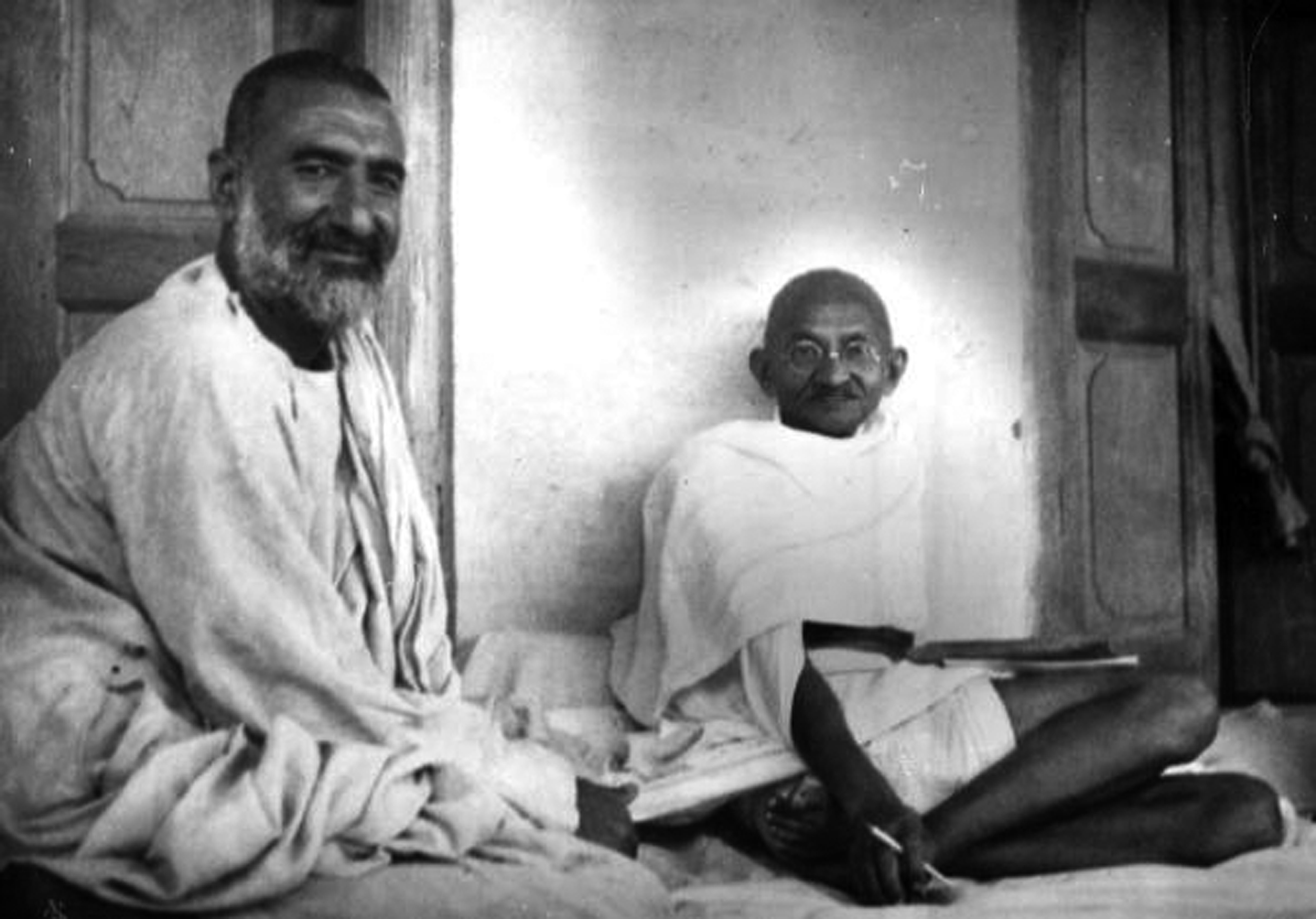
Born in 1890, Abdul Ghaffar Kahn was a Pathan political and spiritual leader who led hundreds of thousands to oppose British rule in Western India and later resisted tyranny in Pakistan and Afghanistan. The Pathans were known throughout Asia as warriors, but Khan was a noble exception who showed how they could become soldiers of nonviolence. After he befriended Gandhi, Khan became known as his most faithful follower. A giant of a man, Khan was as nonviolent, peaceful, prayerful, and revolutionary as Gandhi – but unlike Gandhi who drew from the West and his own Hindu tradition, Kahn learned nonviolence from the Koran and the Prophet Mohammed.

From his youth in far western India, in what became the North-West frontier province of Pakistan, he emerged as a leader. A devout Muslim, he built his first school for peacemaking in 1910, and worked diligently throughout that decade to reform his country by visiting hundreds of villages, building many schools and teaching social transformation. During this time, he became known as “Badshah Khan,” the king of kings. In the early 1920s, he met Gandhi who confirmed Khan’s belief in active nonviolence as the path to social change. In the 1920s, Khan formed “the Servants of God” movement which eventually trained 100,000 Muslims to be full-time nonviolent resisters against British rule along Gandhi’s lines of satyagraha. They organized strikes, sit-ins and other resistance campaigns against British imperialism. In 1930, during a rally, 250 of his followers were unexpectedly surrounded by armed British soldiers. They stood calmly and fearlessly as the British took aim at them. They were all killed. Throughout those years, the British burned the homes and tortured and imprisoned the resisters. “If Badshah Khan could raise a nonviolent army out of a people so steeped in violence as the Pathans,” Easwaran writes, “there is no country on earth where it cannot be done.”

By the 1940s, as the British prepared to leave India, Khan spoke out against the Muslim League’s plan to separate India into two Pakistans. From then on, he was perceived as a subversive threat to the new nation. After partition, civil war and Gandhi’s death, Kahn continued to lead nonviolent campaigns against the violence of the new Pakistani government. In 1948, Kahn was arrested and spent six years in prison. He would spend most of the 1960s and 1970s in prison or exile. In 1973, for example, after denouncing the Pakistani government as “the worst kind of dictatorship,” he was imprisoned. During his lifetime, he survived two assassination attempts, and spent at least 30 years in prison – most of it in hard labor or solitary confinement.

THE SCHOOL OF SUFFERING
“One learns a good deal in the school of suffering,” Khan wrote. “I wonder what would have happened to me if I had had an easy life, and had not had the privilege of tasting the joys of jail and all it means.” In 1985, he was arrested again for speaking out against his government’s violence. When he died in 1988, at the age of 98, he was under house arrest. He asked to be buried in Jalalabad, Afghanistan, as a symbol of reconciliation for his war-torn corner of the world. Tens of thousands marched across national borders to mourn, and a cease-fire was declared. The Afghan civil war stopped for five days in his honor.

“For today’s children and the world, with all this talk of the atomic bomb, my thoughts are that if they accept nonviolence, they can escape destruction and live a life of peace,” he told an interviewer in 1985. “If this doesn’t happen, then the world will be in ruins.” Kahn advocated revolutionary political nonviolence but also a spirituality of nonviolence which he learned from the Koran and his daily prayer. When he first explained the fundamental laws of nonviolence in the Koran to Gandhi in the early 1920s, Gandhi was stunned. “Khan demonstrated conclusively that nonviolence is in perfect harmony with a vigorous, resurgent Islam,” Easwaran writes. “Khan’s simplicity, deep faith, and selfless service represent the Islamic tradition at its purest and most enduring.”

“There is nothing surprising in a Muslim or a Pathan like me subscribing to the creed of nonviolence,” Abdul Ghaffar Khan said. “It is not a new creed. It was followed 1,400 years ago by the Prophet all the time when he was in Mecca. Not to lie, steal, and harm is true Islam,” Khan taught. “From 1910 with the opening of his first school, Khan went on serving, reforming, and resisting tyranny for almost eighty years,” Easwaran concludes. “I cannot imagine finding anywhere in the world’s history a life of more unbroken service in the cause of freedom.”

Abdul Ghaffar Kahn insists that to be Muslim is to be a person of nonviolence. He invited the people of Pakistan, Afghanistan and India to disarm and live up to this spiritual calling of love and peace. In doing so, he challenges every stereotype against Islam. He stands out not only as a heroic Pakistani, but as an exemplar of a peacemaking life.

Ghaffar Kahn’s lifelong pursuit of peace gives me hope for the people of Pakistan and Afghanistan, and ourselves. He points the way forward out of the quagmire of violence in which we are stuck. More, he inspires me to follow Jesus on the journey of nonviolence, come what may, until my last breath. And he reminds me of the blessings that come for loving our enemies. If we befriend those declared to be our “enemies,” we learn so much, especially about peace.

“Today’s world is traveling in some strange direction,” he told a reporter in 1985 while living in Afghanistan. “You see that the world is going toward destruction and violence. And the specialty of violence is to create hatred among people and to create fear. I am a believer in nonviolence and I say that no peace or tranquility will descend upon the people of the world until nonviolence is practiced because nonviolence is love and it stirs courage in people.”

Thank you, Ghaffar Kahn, for your peacemaking life. May we honor you by working to end our wars, reclaim the ancient wisdom of nonviolence, and forge a new frontier of interfaith peace.
www.johndear.org


Share Your Thoughts

All comments are moderated

From The Same Issue

The articles and content about this issue

From The Same Issue

The articles and content about this issue

From This Topic

The articles and content about this topic

From This Topic

The articles and content about this topic

Explore Other Topics

Browse other coverage

Explore Other Topics

Browse other coverage

WM SPECIAL

Presents, discusses and draws readers to reflect on issues of outmost relevance to the world today.


FRONTIERS

Very often, mission is carried out in frontier situations around the world. Those who embrace these situations have much to share.


UNITY IN DIVERSITY

Writer Ilsa Reyes will be exploring the richness of Pope Francis’s latest encyclical Fratelli Tutti with a view of helping our readers to get a grasp of the this beautiful papal document.


FRONTLINE

Puts to the front committed and inspiring people around the world who embrace humanitarian and religious causes with altruism and passion.


IN FOCUS

Focus on a given theme of interest touching upon social, economic and religious issues.


FAITH@50

As the Philippines prepares to celebrate 500 years of the arrival of Christianity. Fr. James Kroeger leads us in this series into a discovery journey of the landmark events in the history of faith in the Philippine archipelago.


INSIGHT

Aims to nurture and inspire our hearts and minds while pondering upon timely themes.


FILIPINO FOCUS

The large archipelago of the Philippines, in its richness of peoples and cultures, offers varied and challenging situations for mission.


FOLLOW ME

Reflections and vocation stories that shape up the lives of young people.


MISSION IS FUN

As humor and goodness of heart are qualities of Christian and missionary life, the new column “Mission is fun” will be publishing some anecdotes and stories that have happened in a missionary context to lighten up the spirits and trigger a smile in our faces.


LIVING COMMUNION

To help readers of World Mission live this year dedicated to Ecumenism, Interreligious Dialogue and Indigenous Peoples, Tita Puangco, writer and lecturer, shares in this section insights on the spirituality of communion.


WINDS OF THE SPIRIT

A historic view of the Catholic movements that emerged from the grassroots as an inspiration by the Holy Spirit.


BRIDGE BUILDERS

On the Year of Ecumenism, Interreligious Dialogue and Indigenous Peoples, radio host and communicator Ilsa Reyes, in her monthly column, encourages Christians and people of good will to be one with their fellow people of other sects, religions and tribes.


INTERVIEW

Questions to a personality of the Church or secular world on matters of interest that touch upon the lives of people.


WORLD TOUCH

News from the Church, the missionary world and environment that inform and form the consciences.


CARE OF THE EARTH

A feature on environmental issues that are affecting the whole world with the view of raising awareness and prompting action.


EDITORIAL

The editor gives his personal take on a given topic related to the life of the Church, the society or the world.


YOUNG HEART

A monthly column on themes touching the lives of young people in the Year of the Youth in the Philippines by radio host and communicator I lsa Reyes.


SCROLL

A missionary living in the Chinese world shares his life-experiences made up of challenges and joyous encounters with common people.


EXTRAORDINARY PEOPLE

Life stories of people who deserve to be known for who they were, what they did and what they stood for in their journey on earth.


ONE BY ONE

Stories of people whom a missionary met in his life and who were touched by Jesus in mysterious ways.


INCREASE OUR FAITH

Critical reflection from a Christian perspective on current issues.


SPECIAL MOMENTS

Comboni missionary Fr. Lorenzo Carraro makes a journey through history pinpointing landmark events that changed the course of humanity.


PROFILE

A biographical sketch of a public person, known for his/her influence in the society and in the Church, showing an exemplary commitment to the service of others.


WM REPORTS

Gives fresh, truthful, and comprehensive information on issues that are of concern to all.


LIFE'S ESSENTIALS

A column aimed at helping the readers live their Christian mission by focusing on what is essential in life and what it entails.


ASIAN FOCUS

Peoples, events, religion, culture and the society of Asia in focus.


THE SEARCHER'S PATH

The human heart always searches for greatness in God’s eyes, treading the path to the fullness of life - no matter what it takes.


INDIAN FOCUS

The subcontinent of India with its richness and variety of cultures and religions is given center stage.


AFRICAN FOCUS

The African continent in focus where Christianity is growing the fastest in the world.


JOURNEY MOMENTS

Well-known writer and public speaker, Fr. Jerry Orbos, accompanies our journey of life and faith with moments of wit and inspiration based on the biblical and human wisdom.


IGNATIUS STEPS

On the year dedicated to St. Ignatius of Loyala, Fr. Lorenzo Carraro walks us through the main themes of the Ignatian spirituality.


THE SEVEN LAST WORDS OF JESUS

Fr. John Taneburgo helps us to meditate every month on each of the Seven Last Words that Jesus uttered from the cross.


INSIDE THE HOLY BOOK

In this section, Fr. Lorenzo delves into the secrets and depths of the Sacred Scriptures opening for us the treasures of the Sacred Book so that the reader may delight in the knowledge of the Word of God.


CONVERSATIONS

Reflections about the synodal journey on a conversational and informal style to trigger reflection and sharing about the synodal path the Church has embarked upon.


VATICAN II

This 'mini-course' series provides a comprehensive exploration of Vatican II, tracing its origins, key moments, and transformative impact on the Catholic Church.


COMBONIS IN ASIA

This series offers an in-depth look at the Comboni Missionaries in Asia, highlighting their communities, apostolates, and the unique priorities guiding their mission. The articles provide insights into the challenges, triumphs, and the enduring values that define the Comboni presence in Asia.


BEYOND THE SYNOD

Following the Synod on Synodality, this series examines how dioceses, parishes, and lay organizations in the Philippines are interpreting and applying the principles of the synod, the challenges encountered, and the diverse voices shaping the synodal journey toward a renewed Church.


A TASTE OF TRADITION

This series introduces the Fathers of the Church, featuring the most prominent figures from the early centuries of Christianity. Each article explores the lives, teachings, and enduring influence of these foundational thinkers, highlighting their contributions the spiritual heritage of the Church.


A YEAR OF PRAYER

In preparation for the 2025 Jubilee Year under the theme “Pilgrims of Hope,” 2024 has been designated a Year of Prayer. World Mission (courtesy of Aleteia) publishes every month a prayer by a saint to help our readers grow in the spirit of prayer in preparation for the Jubilee Year.


OUR WORLD

In Our World, the author explores the main trends shaping contemporary humanity from a critical and ethical perspective. Each article examines pressing issues such as technological advancement, environmental crises, social justice, and shifting cultural values, inviting readers to reflect on the moral implications and challenges of our rapidly changing world.


CATHOLIC SOCIAL DOCTRINE

This series unpacks the principles of Catholic Social Doctrine, offering a deep dive into the Church's teachings on social justice, human dignity, and the common good.


HOPEFUL LIVING

Hopeful Living’ is the new section for 2026, authored by Fr. James Kroeger, who dedicated most of his missionary life to the Philippines. In this monthly contribution, he will explore various aspects of the virtue of hope. His aim is to help readers align their Christian lives more closely with a hopeful outlook.


PHILIPPINE CROSSROADS

Filipino Catholic scholar Jose Bautista writes each month about how the Philippines is at a crossroads, considering the recent flood control issues and other corruption scandals that have engulfed the nation. He incorporates the Church’s response and its moral perspective regarding these social challenges.


BIBLE QUIZ

Test your knowledge and deepen your understanding with our Bible Quiz! Each quiz offers fun and challenging questions that explore key stories, themes, and figures from both the Old and New Testaments.


Shopping Cart