Deforestation Imperils Food Security

INTRODUCTION

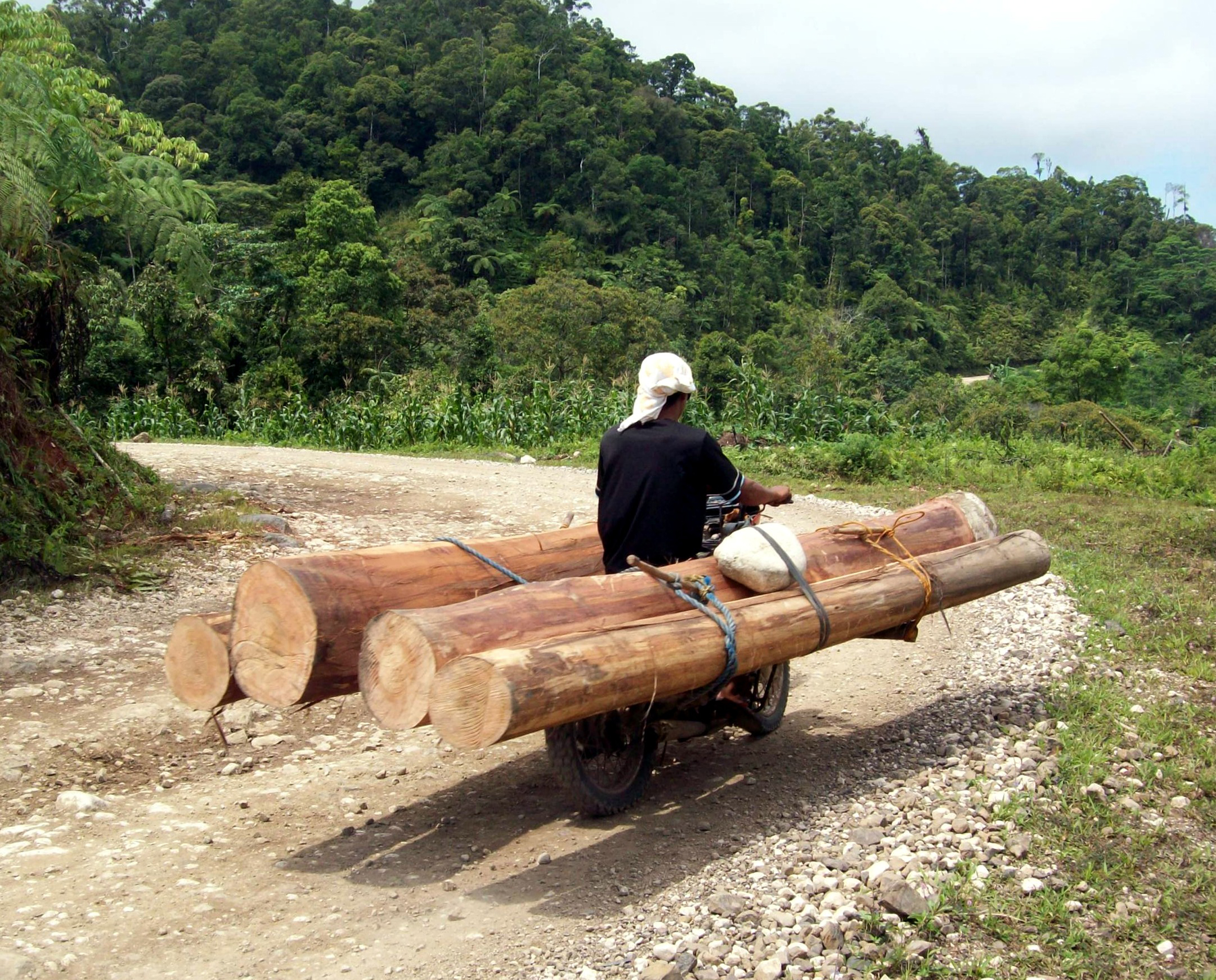
The lost of the once abundant and rich forest cover, that is happening at an alarming rate, is a big threat to the Philippines: Because the forests, above many other functions, have a pivotal role in producing arable soil and retaining water. Unless deforestation is curtailed soon, food crisis looms.

WRITTEN BY

SHARE THE WORD

PUBLISHED ON

A few hundred years ago, at least 95% of the Philippines was covered by rain forest; only a few patches of open woodland and seasonal forest, mostly in Luzon, broke the expanse of moist, verdant land,” reported Dr. Lawrence R. Heaney, an American curator who holds honorary appointments at the Philippine National Museum. By the time Portuguese explorer Ferdinand Magellan rediscovered the country, scattered coastal areas had been cleared for agriculture and villages. Three hundred years later, rainforest still covered about 70% of the country.

In the 1990s, the Catholic Bishops’ Conference of the Philippines warned against an ecological debacle in the country should deforestation continued unabated. No one listened; it was business as usual. “Our natural forests have gone down from 17 million hectares in the early 1900s to less than one million hectares of primary natural forests today,” deplored Blas Tabaranza, Jr., chief operating officer of the environmental group Haribon. “The rate of destruction is very alarming; one day, the future Filipino generations may be deprived of natural resources.”

“Most of the (Philippines’) once rich forest is gone,” said the Sustainable Forest Management published by the Food and Agriculture Organization (FAO). “Forest recovery, through natural and artificial means, never coped with the destruction rate.” In February 2011, President Benigno C. Aquino III, signed Executive Order 23, which declared a moratorium on “the cutting and harvesting of timber in all natural and residual forests” throughout the country. More often than not, deforestation is often equated with calamities like landslides and flash floods. Deforestation is also associated with the persisting disappearance of wildlife resources, particularly those endemic in the country like waling-waling and Philippine eagle.

Most of the country’s forest areas are located in the uplands. In the Philippine context, the uplands are rolling to steep lands, with slopes ranging upward from 18%. About 60% of the country’s total land area of 30 million hectares is upland. Once the securely upland is devoid of its forest cover, soil erosion ensues. According to soil scientists, 58% of the country’s total land area is susceptible to erosion. “For one, the magnitude of soil erosion in cultivated sloping areas has reached an alarming proportion,” deplored Angel C. Alcala, former secretary of the Department of Environment and Natural Resources (DENR).

MORE PRECIOUS THAN GOLD
“The soil is the world’s most precious natural resource,” commented Edouard Saouma, former director-general of the UN Food and Agriculture Organization. “Yet, it is not valued as it should be. Gold, oil, minerals and precious stones command prices which have led us to treat soil as mere dirt.” Soil, aptly described as “the bridge between the inanimate and the living,” consists of weathered and decomposed bedrock, water, air, organic material formed from plant and animal decay, and thousands of different life forms, mainly micro-organisms and insects. All play their part in maintaining the complex ecology of a healthy soil. In the humid tropics, starting from a sandy base, a soil can be formed in as little as 200 years. But the process normally takes far longer. Under most conditions, soil is formed at a rate of one centimeter every 100 to 400 years, and it takes 3,000 to 12,000 years to build enough soil to form productive land.

Under normal conditions, each hectare of land loses somewhere between 0.004 and 0.05 tons of soil to erosion each year – far less than what is replaced by natural soil building processes.

On lands that have been logged or converted to crops and grazing, however, erosion typically takes away 17 tons in a year in the United States or Europe and 30 to 40 tons in Asia, Africa, or South America. On severely degraded land, the hemorrhage can rise to 100 tons in a year. “No other soil phenomenon is more destructive worldwide than soil erosion,” wrote Nyle C. Brady in his book, The Nature and Properties of Soils. “It involves losing water and plant nutrients at rates far higher than those occurring through leaching. More tragically, however, it can result in the loss of the entire soil.”

Soil erosion threatens food production, declare authors Lester R. Brown and Edward C. Wolf. In their collaborative book, Soil Erosion: Quiet Crisis in the World Economy, the two contend: “The loss of topsoil affects the ability to grow food in two ways. It reduces the inherent productivity of land, both through the loss of nutrients and degradation of the physical structure. It also increases the costs of food production.” The two authors continue: “When farmers lose topsoil, they may increase land productivity by substituting energy in the form of fertilizer. Farmers losing topsoil may experience either a loss in land productivity or a rise in costs (of inputs). But if productivity drops too low or costs rise too high, farmers are forced to abandon their land.”

WORSE THAN AN OUTSIDE ENEMY
“Soil erosion is an enemy to any nation – far worse than any outside enemy coming into a country and conquering it is difficult because it is an enemy you cannot see vividly,” warned Harold R. Watson, an American agriculturist who received a Ramon Magsaysay Award in 1985 for peace and international understanding. “It’s a slow creeping enemy that soon possesses the land.”

Another consequence of deforestation with reference to food security is water shortage. Experts claim that without vegetative cover, especially trees, the land’s water absorption capacity is greatly reduced. Water is drawn in two fundamental ways: from wells, tapping underground sources of water called aquifers; or from surface flows – that is, from lakes, rivers, and man-made reservoirs. “Water is the most precious asset on earth,” says Dr. Sandra Postel, director of the Massachusetts-based Global Water Policy Project. “It is the basis of life.”

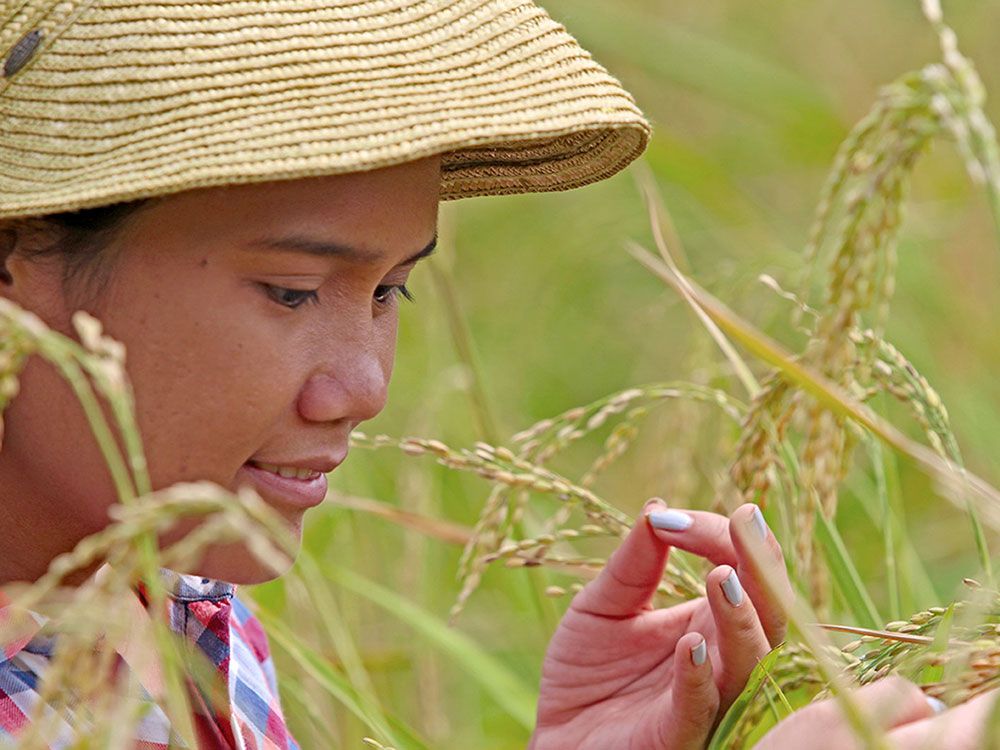
“Water for agriculture is critical for food security,” points out Dr. Mark W. Rosegrant, a senior research fellow at the Washington-based International Food Policy Research Institute. An estimated 40% of today’s agricultural products and 60% of the world’s grain are grown on irrigated land. “Agriculture is, by far, the biggest consumer of water worldwide,” observed the Laguna-based International Rice Research Institute (IRRI). For instance, to raise a ton of rice, a thousand gallons of water is needed. Within the agricultural sector, crop production receives the greatest attention, but fish and livestock also require water. “Animals (including fish) consume a relatively small volume of water in comparison to crop consumption and can produce a very high value of output,” says Dr. Ruth Meinzen-Dick, a development sociologist who has done extensive research on water management. “As worldwide demand for animal products increases, the importance of supplying water for aquaculture and livestock is also likely to increase.”

“The link between water and food is strong,” says Brown, who is the president of Earth Policy Institute. “We drink, in one form or another, nearly 4 liters of water per day. But the food we consume each day requires at least 2,000 liters to produce, 500 times as much.”

Unless deforestation is curtailed soon, food crisis in the Philippines looms!

Share Your Thoughts

All comments are moderated

From The Same Issue

The articles and content about this issue

From The Same Issue

The articles and content about this issue

In Focus

A Model Farm

From This Topic

The articles and content about this topic

From This Topic

The articles and content about this topic

Explore Other Topics

Browse other coverage

Explore Other Topics

Browse other coverage

WM SPECIAL

Presents, discusses and draws readers to reflect on issues of outmost relevance to the world today.


FRONTIERS

Very often, mission is carried out in frontier situations around the world. Those who embrace these situations have much to share.


UNITY IN DIVERSITY

Writer Ilsa Reyes will be exploring the richness of Pope Francis’s latest encyclical Fratelli Tutti with a view of helping our readers to get a grasp of the this beautiful papal document.


FRONTLINE

Puts to the front committed and inspiring people around the world who embrace humanitarian and religious causes with altruism and passion.


IN FOCUS

Focus on a given theme of interest touching upon social, economic and religious issues.


FAITH@50

As the Philippines prepares to celebrate 500 years of the arrival of Christianity. Fr. James Kroeger leads us in this series into a discovery journey of the landmark events in the history of faith in the Philippine archipelago.


INSIGHT

Aims to nurture and inspire our hearts and minds while pondering upon timely themes.


FILIPINO FOCUS

The large archipelago of the Philippines, in its richness of peoples and cultures, offers varied and challenging situations for mission.


FOLLOW ME

Reflections and vocation stories that shape up the lives of young people.


MISSION IS FUN

As humor and goodness of heart are qualities of Christian and missionary life, the new column “Mission is fun” will be publishing some anecdotes and stories that have happened in a missionary context to lighten up the spirits and trigger a smile in our faces.


LIVING COMMUNION

To help readers of World Mission live this year dedicated to Ecumenism, Interreligious Dialogue and Indigenous Peoples, Tita Puangco, writer and lecturer, shares in this section insights on the spirituality of communion.


WINDS OF THE SPIRIT

A historic view of the Catholic movements that emerged from the grassroots as an inspiration by the Holy Spirit.


BRIDGE BUILDERS

On the Year of Ecumenism, Interreligious Dialogue and Indigenous Peoples, radio host and communicator Ilsa Reyes, in her monthly column, encourages Christians and people of good will to be one with their fellow people of other sects, religions and tribes.


INTERVIEW

Questions to a personality of the Church or secular world on matters of interest that touch upon the lives of people.


WORLD TOUCH

News from the Church, the missionary world and environment that inform and form the consciences.


CARE OF THE EARTH

A feature on environmental issues that are affecting the whole world with the view of raising awareness and prompting action.


EDITORIAL

The editor gives his personal take on a given topic related to the life of the Church, the society or the world.


YOUNG HEART

A monthly column on themes touching the lives of young people in the Year of the Youth in the Philippines by radio host and communicator I lsa Reyes.


SCROLL

A missionary living in the Chinese world shares his life-experiences made up of challenges and joyous encounters with common people.


EXTRAORDINARY PEOPLE

Life stories of people who deserve to be known for who they were, what they did and what they stood for in their journey on earth.


ONE BY ONE

Stories of people whom a missionary met in his life and who were touched by Jesus in mysterious ways.


INCREASE OUR FAITH

Critical reflection from a Christian perspective on current issues.


SPECIAL MOMENTS

Comboni missionary Fr. Lorenzo Carraro makes a journey through history pinpointing landmark events that changed the course of humanity.


PROFILE

A biographical sketch of a public person, known for his/her influence in the society and in the Church, showing an exemplary commitment to the service of others.


WM REPORTS

Gives fresh, truthful, and comprehensive information on issues that are of concern to all.


LIFE'S ESSENTIALS

A column aimed at helping the readers live their Christian mission by focusing on what is essential in life and what it entails.


ASIAN FOCUS

Peoples, events, religion, culture and the society of Asia in focus.


THE SEARCHER'S PATH

The human heart always searches for greatness in God’s eyes, treading the path to the fullness of life - no matter what it takes.


INDIAN FOCUS

The subcontinent of India with its richness and variety of cultures and religions is given center stage.


AFRICAN FOCUS

The African continent in focus where Christianity is growing the fastest in the world.


JOURNEY MOMENTS

Well-known writer and public speaker, Fr. Jerry Orbos, accompanies our journey of life and faith with moments of wit and inspiration based on the biblical and human wisdom.


IGNATIUS STEPS

On the year dedicated to St. Ignatius of Loyala, Fr. Lorenzo Carraro walks us through the main themes of the Ignatian spirituality.


THE SEVEN LAST WORDS OF JESUS

Fr. John Taneburgo helps us to meditate every month on each of the Seven Last Words that Jesus uttered from the cross.


INSIDE THE HOLY BOOK

In this section, Fr. Lorenzo delves into the secrets and depths of the Sacred Scriptures opening for us the treasures of the Sacred Book so that the reader may delight in the knowledge of the Word of God.


CONVERSATIONS

Reflections about the synodal journey on a conversational and informal style to trigger reflection and sharing about the synodal path the Church has embarked upon.


VATICAN II

This 'mini-course' series provides a comprehensive exploration of Vatican II, tracing its origins, key moments, and transformative impact on the Catholic Church.


COMBONIS IN ASIA

This series offers an in-depth look at the Comboni Missionaries in Asia, highlighting their communities, apostolates, and the unique priorities guiding their mission. The articles provide insights into the challenges, triumphs, and the enduring values that define the Comboni presence in Asia.


BEYOND THE SYNOD

Following the Synod on Synodality, this series examines how dioceses, parishes, and lay organizations in the Philippines are interpreting and applying the principles of the synod, the challenges encountered, and the diverse voices shaping the synodal journey toward a renewed Church.


A TASTE OF TRADITION

This series introduces the Fathers of the Church, featuring the most prominent figures from the early centuries of Christianity. Each article explores the lives, teachings, and enduring influence of these foundational thinkers, highlighting their contributions the spiritual heritage of the Church.


A YEAR OF PRAYER

In preparation for the 2025 Jubilee Year under the theme “Pilgrims of Hope,” 2024 has been designated a Year of Prayer. World Mission (courtesy of Aleteia) publishes every month a prayer by a saint to help our readers grow in the spirit of prayer in preparation for the Jubilee Year.


OUR WORLD

In Our World, the author explores the main trends shaping contemporary humanity from a critical and ethical perspective. Each article examines pressing issues such as technological advancement, environmental crises, social justice, and shifting cultural values, inviting readers to reflect on the moral implications and challenges of our rapidly changing world.


CATHOLIC SOCIAL DOCTRINE

This series unpacks the principles of Catholic Social Doctrine, offering a deep dive into the Church's teachings on social justice, human dignity, and the common good.


HOPEFUL LIVING

Hopeful Living’ is the new section for 2026, authored by Fr. James Kroeger, who dedicated most of his missionary life to the Philippines. In this monthly contribution, he will explore various aspects of the virtue of hope. His aim is to help readers align their Christian lives more closely with a hopeful outlook.


PHILIPPINE CROSSROADS

Filipino Catholic scholar Jose Bautista writes each month about how the Philippines is at a crossroads, considering the recent flood control issues and other corruption scandals that have engulfed the nation. He incorporates the Church’s response and its moral perspective regarding these social challenges.


BIBLE QUIZ

Test your knowledge and deepen your understanding with our Bible Quiz! Each quiz offers fun and challenging questions that explore key stories, themes, and figures from both the Old and New Testaments.


Shopping Cart