
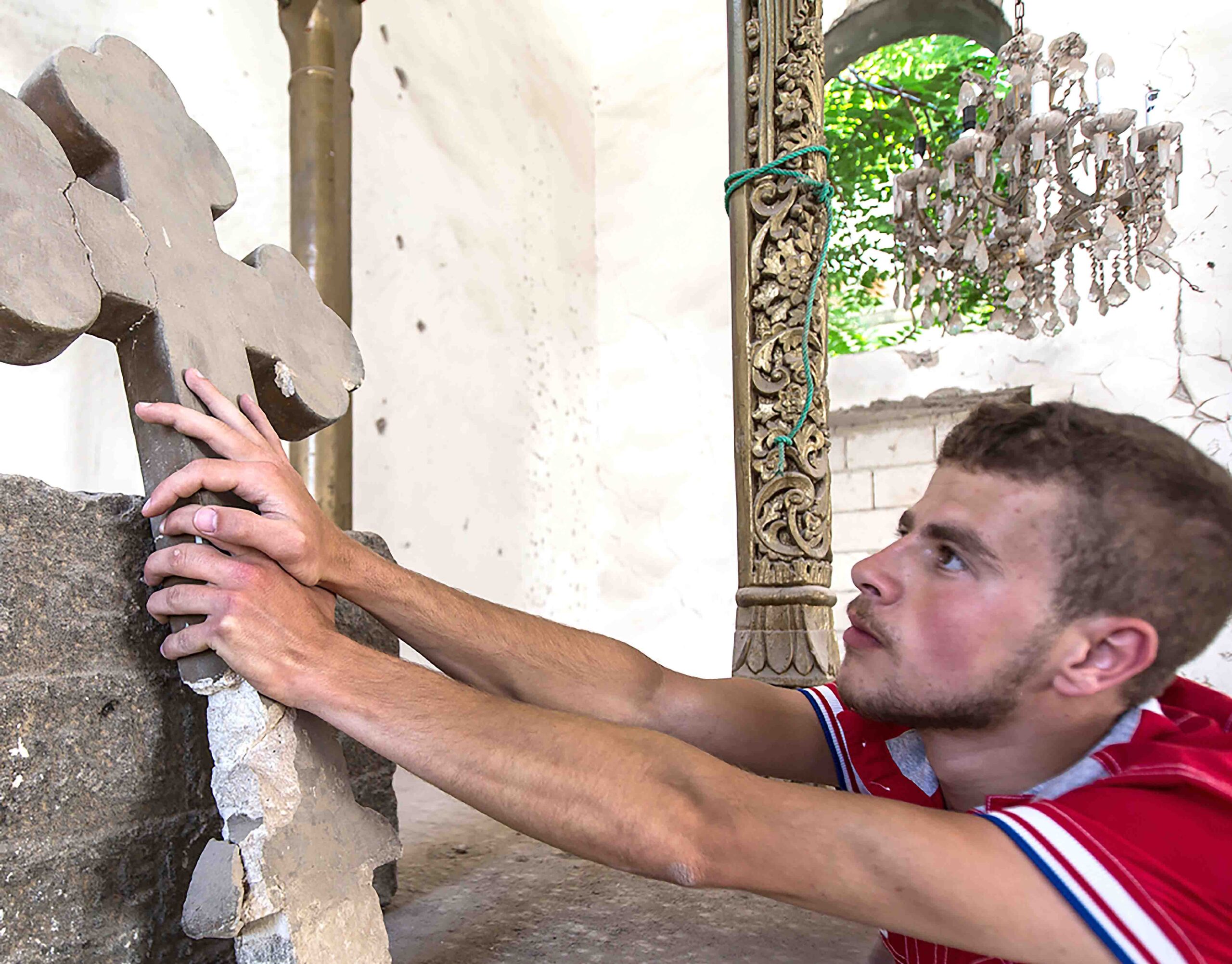
As the 20th century ended, much of the world seemed optimistic. Europe was enjoying the longest period of peace in its history, after the horrors of the bloodthirsty nazi and soviet regimes, with their track record of political, racial and religious persecution, and a new era of freedom beckoned. Religious freedom was curtailed in many places, but to many Western minds it seemed only a matter of time until faith itself faded into the background, making the issue redundant.
A quarter of a century later, that optimism has crumbled. War has returned to Europe, with rumors of worse to come; dictatorships have returned to continental Latin America, and democracies both north and south of the Panama Canal are polarized to the point of almost open conflict. Africa is a boiling cauldron of conflict, and Asia is also simmering, with an increasingly potent China eyeing its neighbors’ territories and clamping down on freedoms even in Macau and Hong Kong.
In this context, it is no surprise that religious freedom has also taken a turn for the worse. According to the Religious Freedom in the World Report (RFR), compiled by pontifical foundation ACN and launched in October 2025, close to 5.4 billion people–that is almost two thirds of humanity–live in countries where there are serious violations of religious freedom.
PERSECUTION
Twenty-four countries in the world were ranked as suffering from “persecution,” the worst category in the report, and these are home to 4.1 billion people, with a further 38 classified as “religious discrimination,” which affects 1.3 billion people. Naturally, not all people who live in these countries suffer directly from persecution, which tends to affect minorities disproportionately.
Several factors contribute to this state of affairs, but the worst enemy of religious freedom tends to be authoritarianism, which has gained ground over the past few years. Countries such as China and Eritrea, or even worse, North Korea, are old offenders in this regard, but others have been joining the gang, such as Nicaragua and Russia.
In other cases, the major difficulty is jihadi Islam, which after having grown less worrying in the Middle East is now a major threat in many African countries, such as the Sahel region, with countries like Burkina Faso, Niger and Mali, or even the north of Mozambique, seeing troubling amounts of terrorist activity by groups seeking to impose a strict and intolerant version of Islam.
RELIGIOUS NATIONALISM
A relatively new phenomenon is ethnoreligious nationalism, which is a serious issue in countries like India, where Hindu nationalism feeds an atmosphere of persecution for Christians and members of other religious minorities, or the Burmese Buddhist nationalism of Myanmar, which fuels a violent and seemingly endless civil war with multiple fronts, in which Christians and Muslim communities also suffer.
Religious discrimination, though, is often just one in a cocktail of factors that affect a certain country. Nigeria is an example of this. The largest country in Africa–in demographic terms–has been in the news recently with American president Donald Trump threatening to intervene militarily to halt what many people consider to be genocide of Christians.
However, things are considerably more complicated when you examine the matter closely. While jihadist groups such as Boko Haram and its offshoot Islamic State–South West Africa Province are active in the northern states of Nigeria, targeting Christians and moderate Muslims alike, the worst of the violence affecting Christians is in the country’s Middle Belt, where the majority Muslim north meets the majority Christian south, and where age-old ethnic and social rivalries have flared up again, with traditionally nomadic herders from the Fulani tribe and settled farming communities vying for fertile land.
The fact that the Fulani are a Muslim tribe with a rich and often violent history in the region, and the farming communities tend to be Christian, is clearly a factor in the violence, but it is not always easy to determine if it is the main motivator of the conflicts, or an aggravating factor. Of course, all this is made much worse by the astonishing inefficiency of often deeply corrupt federal and local governments.
Religious freedom is also falling prey to other enemies, such as organized criminal gangs which spread terror and thrive on lawlessness in countries such as Mexico, and even technological advances such as artificial intelligence which allows for more efficient monitoring of populations and censorship of religious content in countries such as China and Pakistan.
ANTI-MUSLIM DISCRIMINATION
It would be a mistake to think that only Christians are persecuted in the world. Other religions are also suffering and 2025 saw a worrying increase in antisemitic incidents as well as anti-Muslim discrimination. In some regions Muslims are persecuted en masse, such as in China and Myanmar, and Jews have become more wary of public displays of religiosity even in the previously safe environments of Europe and North America.
The developed West, often considered a safe haven for religious freedom, is also seeing worrying trends, especially concerning respect for conscience and free-speech. France has enshrined the right to abortion in its constitution, which is expected to have consequences for those, especially health-care workers, who object to the practice, and in countries where euthanasia has been made legal, which now includes Canada, conscientious objection has also suffered severe limitations.
In Finland, for example, a former member of parliament is still waiting for a verdict in a case where she is accused of hate speech for publishing quotes from the Bible that condemn homosexual practices. France saw over 1000 incidents of anti-christian violence in 2025, with many cases of arson in churches, and at least 24 churches were intentionally burned down in Canada over the past five years. Similar trends have been seen in the USA and even heavily Christian nations such as Greece, Croatia and Italy.
Remarkably, in some countries we are seeing people arrested for silent prayer, or holding signs offering support. People have been criminally charged for standing near an abortion clinic.
Sadly, although many people in the world are still free to worship as they please, it is not possible to claim that religious freedom is safe in 2026.