

Speaking on the occasion of the 25th anniversary of the Pontifical Council for Culture, the Pope urged the “Church to promote cultural development.” And explained: “It is, therefore, even more urgent for the Church to promote cultural development, targeting the human and spiritual quality of its messages and content, since culture today is also inevitably affected by the globalization which, unless constantly accompanied by vigilant discernment, can turn against man, ending by impoverishing him instead of enriching him. And what great challenges evangelization has to face in this field!”
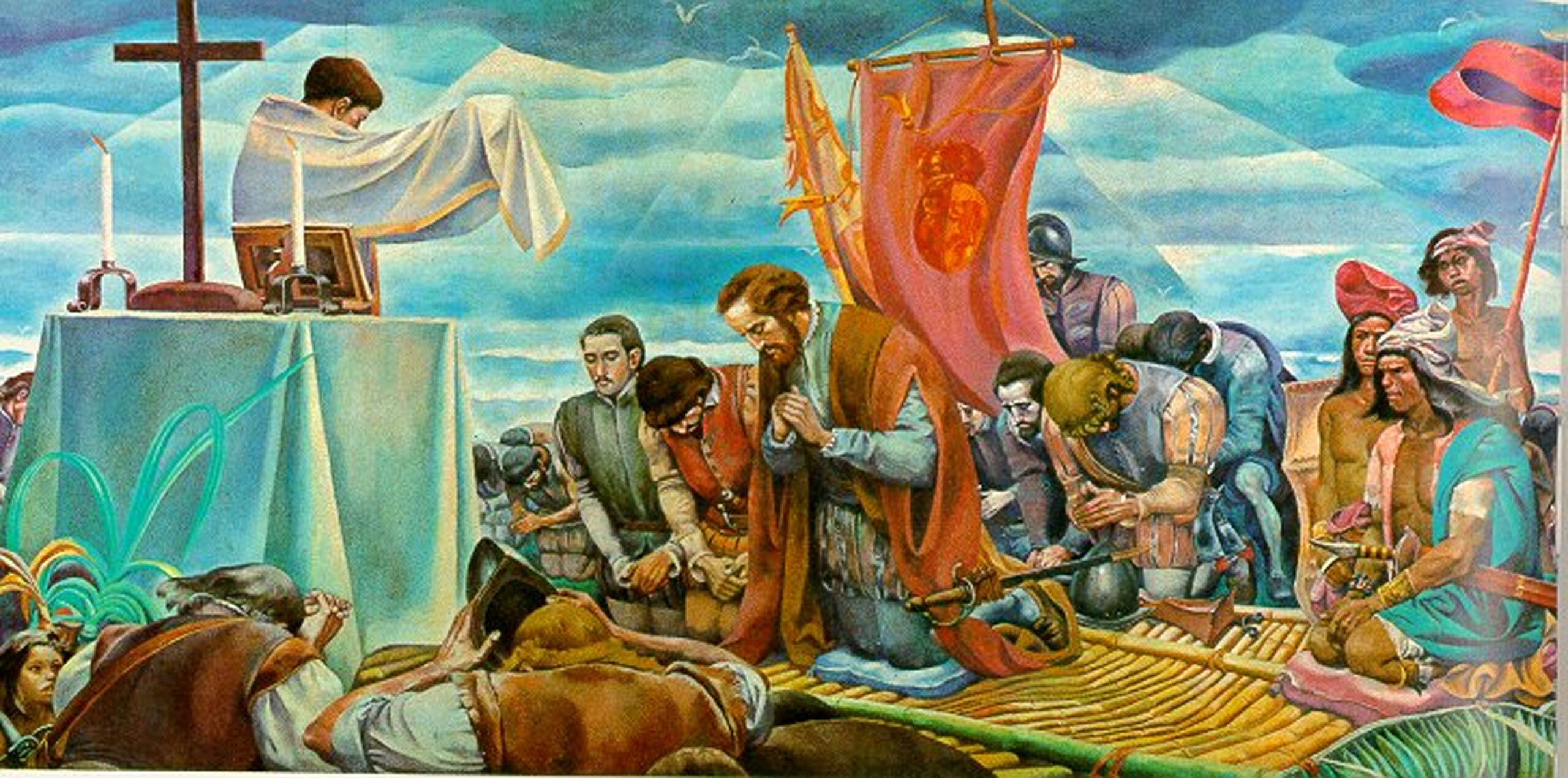
Benedict XVI underlined the globalization challenges: “Sometimes we listen to speak of our culture as being the best, incomparable! Certainly, people speak out of ignorance. The culture is not fixed once for ever. Actually, local cultures are changing rapidly under the influence of globalization.” And gave an example: “The Philippines, considered a Christian country, is more subjected to globalization standards than Gospel influence.”
CAPACITY FOR RENEWING
In a meeting with Cardinal Paul Poupard, president of the Pontifical Council for Culture, the Pope recalled that “the history of the Church is inseparably linked to the history of culture and art.” The Holy Father made reference to various works, “such as the Summa Theologiae of St. Thomas Aquinas, the ‘Divine Comedy,’ the Cathedral of Chartres, the Sistine Chapel and the cantatas of Johannes Sebastian Bach – These constitute incomparable syntheses of the Christian life and of human expression.”
Benedict XVI clarified: “If, indeed, these are, so to speak, pinnacles of the synthesis between faith and culture, their encounter is realized daily in the life and the work of the baptized, in that hidden work of art which is the love story of each individual with the living God and with one’s neighbor, in the joy and toil of following Christ in everyday life. In the cultural arena, Christianity has to offer everyone its powerful capacity for renewing and lifting up, that is, the love of God that becomes human love.”
Interreligious Dialogue
At a summer course on the thought of the Pope held last year in Spain, Cardinal Poupard remembered that interreligious and intercultural dialogue are linked. The Cardinal underlined the vastness and complexity of the field of culture and its numerous definitions because this concept “refers to a complex phenomenon which cannot be defined in categories of a dictionary.” We refer to elements which characterize a people defining its identity: languages, customs, grade of education, behavior, patrimony inherited in the centuries, art, architecture, literature… the great vision of mankind brought by Christ and proposed by the Church can never put cultures that open to the Gospel in crisis. The history of Covenant teaches that God “speaks to man in languages he can understand. And the Church, in order to make the Good News of Christ heard and understood, must speak the languages of peoples and help them understand the language of God.”
“To evangelize cultures, it is necessary to identify and discern the challenges facing the evangelizer in our day,” the Cardinal said mentioning globalization, and its positive and negative aspects (“the human person is no longer considered the goal of economy and finance, progress in science and technology, education and politics …”). This poses a problem of the identity of people and their legitimate cultural diversities and can lead people to reject the Church as an expression of a foreign culture, and this is certainly an obstacle to evangelization. There is also the challenge of cultural pluralism, accompanied by spreading urbanization which gives rise to new forms of culture.
Another challenge is posed by the encounter with Islam which should lead Christians to “deeper awareness of the joy of being Christians, adorers of the one God, not a solitary point, but a source from which there springs the eternal and infinite love of the Father, the Son and the Spirit. (…) Dialogue with Islam must help Christians become more aware of the beauty of the Christian faith founded on the Incarnation of God who became man to enable mankind to become God”.